Pollinator planting recipe · 12 species

Top Honeybee Mix

Twelve plants selected from a nectar and pollen calendar for honey bees, combining spring blossom, summer flowers and mature autumn ivy across a spacious garden or farm edge.

Sunny flower patches · space for trees and managed edgesTemperate European gardens and farm edges
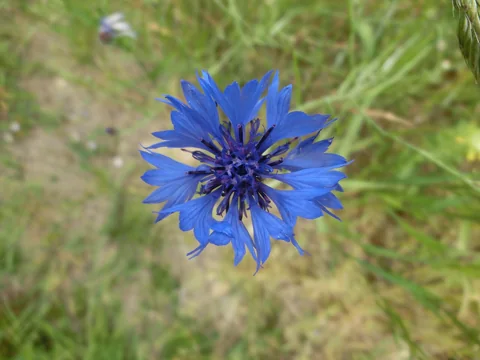
A blue flower head of Centaurea cyanus.
Orikrin1998 · Wikimedia Commons · CC BY 3.0
Why these plants

Build a sequence of flowers

The supplied calendar rates every selected plant at least 3/6 for nectar and 2/5 for pollen. Field maple, small-leaved lime and viper’s bugloss reach 6/6 for nectar; cornelian cherry and goat willow supply the early-season balance. Cornflower, clovers and oregano extend the summer selection, followed by adult ivy. “Top” describes this curated selection for complementary seasons and planting roles; it is not a measured ranking of honey yield.

The plant choices draw on the cited source material. The combination and layout are design suggestions, not a trialled plant community or a guarantee of pollinator numbers. [1] [2]

Follow the season

Flowering overlap

These are the original catalogue months, shown as a planning guide. Sources may use broader seasons or different regional dates. Weather, plant age and management affect actual flowering.

Swipe the calendar to see all months

Indicative catalogue flowering periods · 12 species
PlantJanFebMarAprMayJunJulAugSepOctNovDec
1 Cornus mas January: no flowering recordedFebruary: recorded floweringMarch: recorded floweringApril: no flowering recordedMay: no flowering recordedJune: no flowering recordedJuly: no flowering recordedAugust: no flowering recordedSeptember: no flowering recordedOctober: no flowering recordedNovember: no flowering recordedDecember: no flowering recorded
2 Salix caprea January: no flowering recordedFebruary: no flowering recordedMarch: recorded floweringApril: recorded floweringMay: no flowering recordedJune: no flowering recordedJuly: no flowering recordedAugust: no flowering recordedSeptember: no flowering recordedOctober: no flowering recordedNovember: no flowering recordedDecember: no flowering recorded
3 Prunus avium January: no flowering recordedFebruary: no flowering recordedMarch: no flowering recordedApril: recorded floweringMay: recorded floweringJune: no flowering recordedJuly: no flowering recordedAugust: no flowering recordedSeptember: no flowering recordedOctober: no flowering recordedNovember: no flowering recordedDecember: no flowering recorded
4 Acer campestre January: no flowering recordedFebruary: no flowering recordedMarch: no flowering recordedApril: no flowering recordedMay: recorded floweringJune: recorded floweringJuly: no flowering recordedAugust: no flowering recordedSeptember: no flowering recordedOctober: no flowering recordedNovember: no flowering recordedDecember: no flowering recorded
5 Rubus idaeus January: no flowering recordedFebruary: no flowering recordedMarch: no flowering recordedApril: no flowering recordedMay: recorded floweringJune: recorded floweringJuly: recorded floweringAugust: recorded floweringSeptember: recorded floweringOctober: recorded floweringNovember: no flowering recordedDecember: no flowering recorded
6 Trifolium repens January: no flowering recordedFebruary: no flowering recordedMarch: no flowering recordedApril: no flowering recordedMay: recorded floweringJune: recorded floweringJuly: recorded floweringAugust: recorded floweringSeptember: recorded floweringOctober: recorded floweringNovember: no flowering recordedDecember: no flowering recorded
7 Tilia cordata January: no flowering recordedFebruary: no flowering recordedMarch: no flowering recordedApril: no flowering recordedMay: no flowering recordedJune: recorded floweringJuly: recorded floweringAugust: no flowering recordedSeptember: no flowering recordedOctober: no flowering recordedNovember: no flowering recordedDecember: no flowering recorded
8 Centaurea cyanus January: no flowering recordedFebruary: no flowering recordedMarch: no flowering recordedApril: no flowering recordedMay: no flowering recordedJune: recorded floweringJuly: recorded floweringAugust: recorded floweringSeptember: no flowering recordedOctober: no flowering recordedNovember: no flowering recordedDecember: no flowering recorded
9 Echium vulgare January: no flowering recordedFebruary: no flowering recordedMarch: no flowering recordedApril: no flowering recordedMay: recorded floweringJune: recorded floweringJuly: recorded floweringAugust: recorded floweringSeptember: recorded floweringOctober: no flowering recordedNovember: no flowering recordedDecember: no flowering recorded
10 Melilotus officinalis January: no flowering recordedFebruary: no flowering recordedMarch: no flowering recordedApril: no flowering recordedMay: no flowering recordedJune: no flowering recordedJuly: recorded floweringAugust: recorded floweringSeptember: recorded floweringOctober: no flowering recordedNovember: no flowering recordedDecember: no flowering recorded
11 Origanum vulgare January: no flowering recordedFebruary: no flowering recordedMarch: no flowering recordedApril: no flowering recordedMay: no flowering recordedJune: recorded floweringJuly: recorded floweringAugust: recorded floweringSeptember: recorded floweringOctober: no flowering recordedNovember: no flowering recordedDecember: no flowering recorded
12 Hedera helix January: no flowering recordedFebruary: no flowering recordedMarch: no flowering recordedApril: no flowering recordedMay: no flowering recordedJune: no flowering recordedJuly: no flowering recordedAugust: no flowering recordedSeptember: recorded floweringOctober: recorded floweringNovember: recorded floweringDecember: no flowering recorded
Species recorded in flower012257766310

Months with no recorded flowers: Jan, Dec.

The live catalogue currently indicates flowers from February to November, with gaps in December and January. Regional timing varies; raspberry’s long catalogue window depends on cultivar and management. November coverage relies on mature flowering ivy, and new trees and juvenile ivy will not provide the full display immediately. The diagram counts species in flower, not available forage quantity or colony carrying capacity.

Give every plant a place

Suggested planting zones

Treat this as a planting palette for several connected spaces. Place the trees where their mature crowns fit, retain a sunny boundary for raspberry and flowering ivy, and keep open flower patches beside a separately managed clover strip.

Flowering trees and shrubs

Allow mature crowns to develop without shading the sunny flower patches.

Open sunny flower patches

Keep space for annual and biennial renewal beside the perennial oregano.

Separately managed edges

Give raspberry its own strip, ivy a suitable support, and flowering clover a separate mowing regime.

Conceptual arrangement, not to scale. Choose quantities and spacing from the available area and mature plant spread.

Establish and manage the planting

Establish trees and shrubs with appropriate watering and retain flowering wood. Give raspberry and white clover the fresher, drained areas, and reserve leaner open ground for viper’s bugloss. Renew annual cornflowers and biennial flower patches as needed. Mow the clover strip in sections, allow oregano to flower, manage self-seeding, and avoid pesticide exposure.

The complete selection

All 12 plants and their roles

Every plant links to its existing database profile. Original nectar and pollen ratings remain on those profiles; the references here do not certify those numeric values.

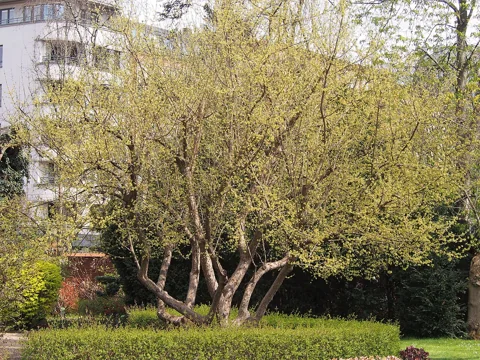
Cornus mas shrub with many small yellow flowers in a botanical garden.
A cultivated cornelian cherry with yellow spring flowers.
Agnieszka Kwiecień, Nova · Wikimedia Commons · CC BY-SA 4.0
1

Cornus mas

Early pollen-rich blossom

Sun or partial shade in moist, well-drained soil. Give this large shrub room to mature.

Catalogue flowering: Feb–Mar

Workbook rating: nectar 3/6 · pollen 5/5 (source row 6)

Evidence for this selection

RHS includes Cornus mas in its Plants for Pollinators guidance.

Listed as attracting: specialized bees.

Plant profile and reviewed observations

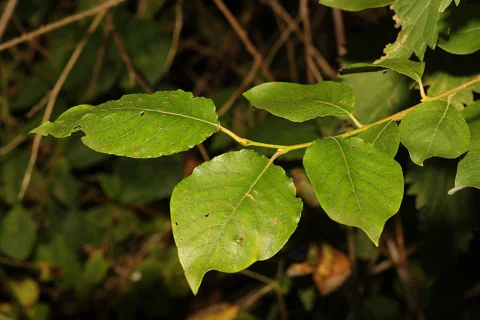
Leaves of Salix caprea.
Stephen James McWilliam · Wikimedia Commons · CC0
2

Salix caprea

Spring catkins for honey bees

Use a male goat willow when both pollen and nectar are wanted; female trees supply nectar but no pollen. Allow space for a tree and retain flowering shoots.

Catalogue flowering: Mar–Apr

Workbook rating: nectar 5/6 · pollen 5/5 (source row 10)

Evidence for this selection

RHS includes Salix caprea in its Plants for Pollinators guidance.

Listed as attracting: butterflies, pollinators, specialized bees.

Plant profile and reviewed observations

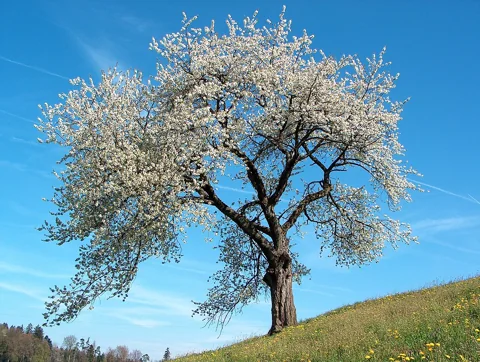
Prunus avium tree covered in white blossom against a blue sky.
A sweet cherry tree in spring blossom.
Benjamin Gimmel, BenHur · Wikimedia Commons · CC BY-SA 3.0
3

Prunus avium

Spring cherry blossom

A sunny position with space for the mature tree. This selection is for flowers; fruit production needs a separate cultivar and pollination plan.

Catalogue flowering: Apr–May

Workbook rating: nectar 4/6 · pollen 4/5 (source row 27)

Evidence for this selection

RHS includes Prunus avium in its Plants for Pollinators guidance.

Listed as attracting: butterflies, pollinators.

Plant profile and reviewed observations

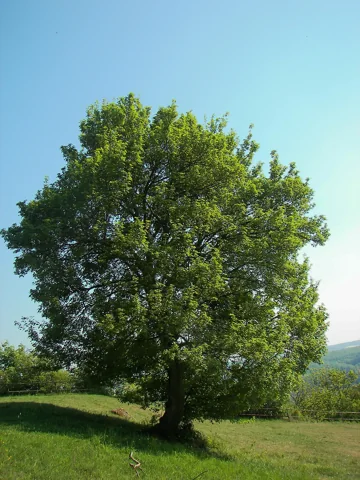
A Acer campestre tree.
Willow · Wikimedia Commons · CC BY-SA 2.5
4

Acer campestre

High workbook nectar rating

Sun and draining soil. Allow the field maple to flower; a tightly clipped hedge will not provide the same flowering display.

Catalogue flowering: May–Jun

Workbook rating: nectar 6/6 · pollen 2/5 (source row 53)

Evidence for this selection

RHS includes Acer campestre in its Plants for Pollinators guidance.

Listed as attracting: butterflies, moths, pollinators.

Plant profile and reviewed observations

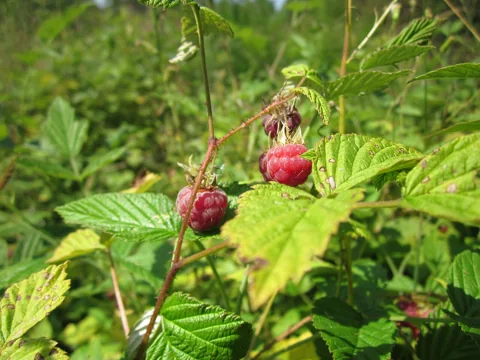
A fruiting Rubus idaeus plant.
AnRo0002 · Wikimedia Commons · CC0
5

Rubus idaeus

Raspberry flowers along a sunny edge

Keep raspberry canes in a separate, accessible strip with draining soil. Prune for the chosen fruiting type; the broad catalogue window does not mean every cane flowers from May to October.

Catalogue flowering: May–Oct

Workbook rating: nectar 4/6 · pollen 3/5 (source row 63)

Evidence for this selection

RHS includes Rubus idaeus in its Plants for Pollinators guidance.

Listed as attracting: bees, butterflies, pollinators.

Plant profile and reviewed observations

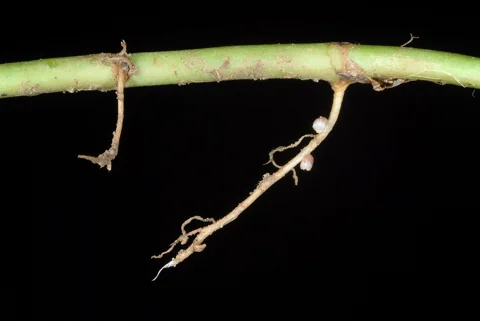
A creeping stem of Trifolium repens with roots at its nodes.
Douglas Goldman · Wikimedia Commons · CC BY-SA 4.0
6

Trifolium repens

Low clover patches left to flower

Keep white clover in its own sunny, moisture-retaining, drained strip. Mow sections at different times so some flowers remain available.

Catalogue flowering: May–Oct

Workbook rating: nectar 4/6 · pollen 3/5 (source row 78)

Evidence for this selection

RHS includes Trifolium repens in its Plants for Pollinators guidance.

Listed as attracting: bees, butterflies, moths, pollinators.

Plant profile and reviewed observations

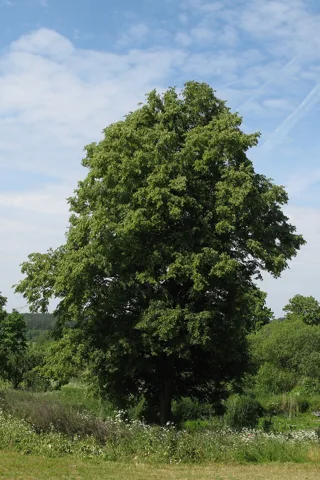
A Tilia cordata tree.
ImreKiss · Wikimedia Commons · CC BY 3.0
7

Tilia cordata

Summer lime blossom

Reserve a generous position for a mature lime tree in moist, draining soil. Keep its eventual shade away from the open flower patches.

Catalogue flowering: Jun–Jul

Workbook rating: nectar 6/6 · pollen 3/5 (source row 82)

Evidence for this selection

RHS includes Tilia cordata in its Plants for Pollinators guidance.

Listed as attracting: bees, butterflies, hummingbirds, pollinators.

Plant profile and reviewed observations

A blue flower head of Centaurea cyanus.
Orikrin1998 · Wikimedia Commons · CC BY 3.0
8

Centaurea cyanus

Annual cornflowers for summer

Sow in an open sunny patch with draining soil. Renew the annual display by sowing or allowing controlled self-seeding.

Catalogue flowering: Jun–Aug

Workbook rating: nectar 5/6 · pollen 4/5 (source row 85)

Evidence for this selection

RHS includes Centaurea cyanus in its Plants for Pollinators guidance.

Listed as attracting: butterflies, pollinators.

Plant profile and reviewed observations

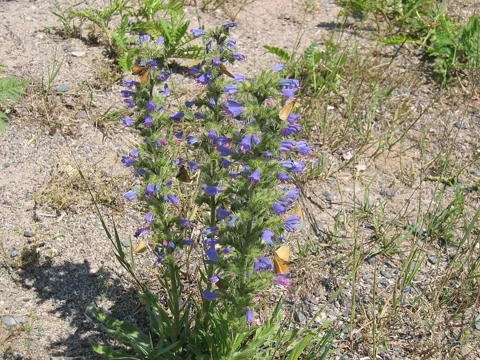
Echium vulgare growing and flowering on open ground.
Emily Kloosterman · Wikimedia Commons · CC BY 2.5
9

Echium vulgare

Nectar-rich viper’s bugloss

Give this usually biennial plant full sun, lean, freely draining soil and open ground for renewal. Keep it out of the regularly mown clover strip.

Catalogue flowering: May–Sep

Workbook rating: nectar 6/6 · pollen 2/5 (source row 101)

Evidence for this selection

RHS includes Echium vulgare in its Plants for Pollinators guidance.

Listed as attracting: bees, butterflies.

Plant profile and reviewed observations

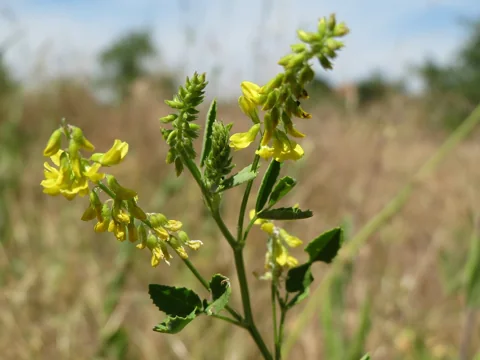
Yellow flowering branches of Melilotus officinalis.
AnRo0002 · Wikimedia Commons · CC0
10

Melilotus officinalis

Tall sweet-clover flowers

A sunny, well-drained patch with room for tall growth. Manage biennial renewal and self-seeding separately from the low clover edge.

Catalogue flowering: Jul–Sep

Workbook rating: nectar 4/6 · pollen 3/5 (source row 117)

Evidence for this selection

Listed as attracting: bees.

Plant profile and reviewed observations

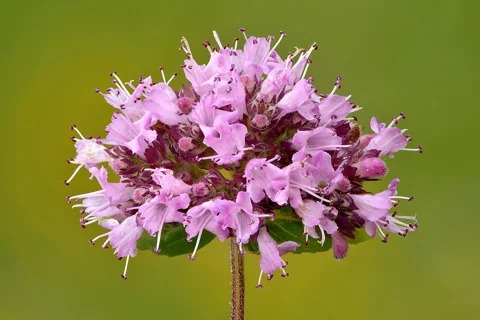
Flowers of Origanum vulgare.
Ivar Leidus · Wikimedia Commons · CC BY-SA 4.0
11

Origanum vulgare

Flowering oregano through summer

Sun and good drainage. Leave some stems unharvested to bloom and contain spreading clumps.

Catalogue flowering: Jun–Sep

Workbook rating: nectar 4/6 · pollen 2/5 (source row 127)

Evidence for this selection

RHS includes Origanum vulgare in its Plants for Pollinators guidance.

Listed as attracting: bees, butterflies, moths, pollinators.

Plant profile and reviewed observations

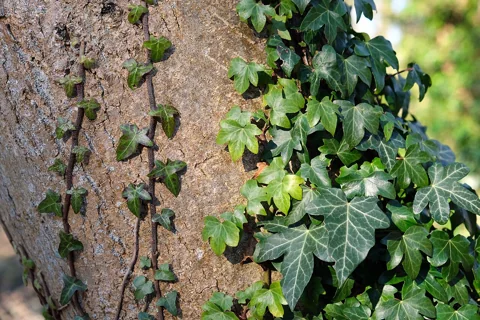
Leafy stems of Hedera helix climbing a tree.
kallerna · Wikimedia Commons · CC BY-SA 4.0
12

Hedera helix

Mature ivy for autumn forage

Retain adult flowering growth on a suitable boundary or support with access to light. Juvenile ground cover does not flower; ivy may take around ten years to reach flowering maturity.

Catalogue flowering: Sep–Nov

Workbook rating: nectar 5/6 · pollen 4/5 (source row 140)

Evidence for this selection

RHS includes Hedera helix in its Plants for Pollinators guidance.

Plant profile and reviewed observations

Read the supporting material

Sources and scope

General guidance supports the design principles. Plant references support individual traits or recorded flower visitors. A source does not endorse this complete planting recipe. Review date: 2026-09-09.

  1. Drachtkalender — supplied nectar and pollen ratingsUser-provided workbook

    drachtkalender.xlsx · Drachtkalender · B2:F140

    Selection from the 139 plant rows in Drachtkalender. Columns D and E record nectar and pollen respectively; Legende!A2:A4 defines nectar 0–6 and pollen 0–5, from lowest to highest. The selected row is shown with each plant. These supplied ratings are not independent measurements or the catalogue’s 0–3 assessment scale. The workbook’s author and publication date are not stated.

  2. Plants for PollinatorsRoyal Horticultural Society

    Recommends plants across seasons and simple, accessible flowers. This is general planting guidance, not a trial of these combinations.

  3. RHS Plants for Pollinators — Garden PlantsRoyal Horticultural Society

    Recommended pollinator plants; some entries apply to a whole genus.

  4. Cornus mas — Plant ToolboxNC State Extension

    Published plant guidance or recorded flower visitors for this selection. These observations do not certify the supplied workbook’s numeric ratings.

  5. RHS Plants for Pollinators — WildflowersRoyal Horticultural Society

    Recommended pollinator plants; some entries apply to a whole genus.

  6. Salix caprea — Plant ToolboxNC State Extension

    Published plant guidance or recorded flower visitors for this selection. These observations do not certify the supplied workbook’s numeric ratings.

  7. Floral reward, advertisement and attractiveness to honey bees in dioecious Salix capreaDötterl et al., PLOS ONE

    Experiments with honey bees distinguish male goat-willow flowers, which offer pollen and nectar, from female flowers, which offer nectar only. This supports the planting-sex note, not a numeric workbook rating.

  8. RHS Plants for Pollinators — Plants Of The WorldRoyal Horticultural Society

    Recommended pollinator plants; some entries apply to a whole genus.

  9. Prunus avium — Plant ToolboxNC State Extension

    Published plant guidance or recorded flower visitors for this selection. These observations do not certify the supplied workbook’s numeric ratings.

  10. Acer campestre — Plant ToolboxNC State Extension

    Published plant guidance or recorded flower visitors for this selection. These observations do not certify the supplied workbook’s numeric ratings.

  11. Rubus idaeus — Plant ToolboxNC State Extension

    Growing conditions and reported flower visitors for the named plant.

  12. How to grow raspberriesRoyal Horticultural Society

    Raspberries need fertile, well-drained soil. Summer- and autumn-fruiting types use different canes and pruning regimes; a broad catalogue window does not describe every cultivar.

  13. Trifolium repens — Plant ToolboxNC State Extension

    Growing conditions and reported flower visitors for the named plant.

  14. Tilia cordata — Plant ToolboxNC State Extension

    Published plant guidance or recorded flower visitors for this selection. These observations do not certify the supplied workbook’s numeric ratings.

  15. Centaurea cyanus — Plant ToolboxNC State Extension

    Published plant guidance or recorded flower visitors for this selection. These observations do not certify the supplied workbook’s numeric ratings.

  16. Echium vulgare — Plant ToolboxNC State Extension

    Published plant guidance or recorded flower visitors for this selection. These observations do not certify the supplied workbook’s numeric ratings.

  17. Melilotus officinalis — Plant ToolboxNC State Extension

    Published plant guidance or recorded flower visitors for this selection. These observations do not certify the supplied workbook’s numeric ratings.

  18. Origanum vulgare — Plant ToolboxNC State Extension

    Growing conditions and reported flower visitors for the named plant.

  19. Hedera helix — Plant ToolboxNC State Extension

    Growing conditions and reported flower visitors for the named plant.

  20. Ivy on trees and as groundcoverRoyal Horticultural Society

    Hedera helix flowers on mature growth in autumn; reaching the flowering stage can take around ten years.

← Explore the other pollinator recipes