Oregano
Origanum vulgare
Linked agroforestry plant dataPlant photos
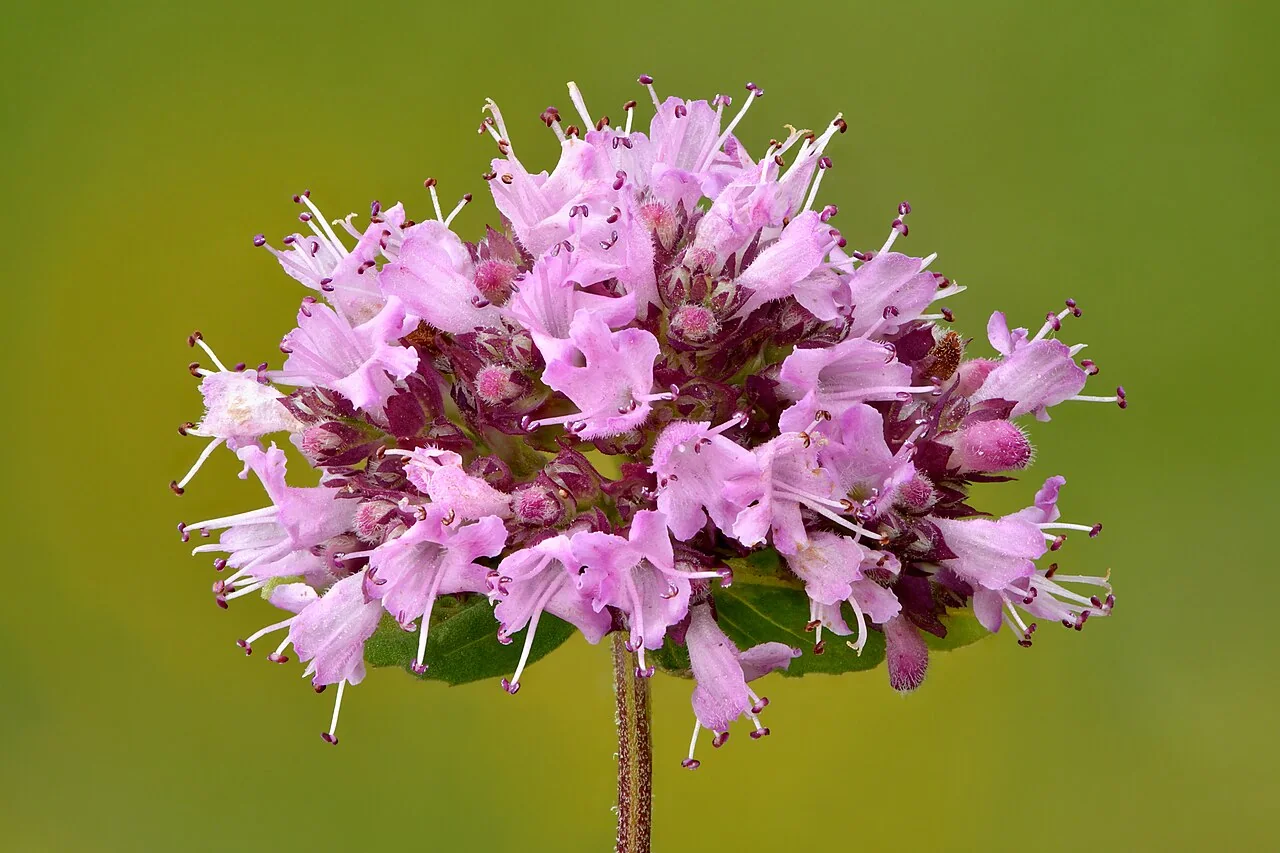
2 photos · Select to enlarge
Flowers of Origanum vulgare.
Ivar Leidus / Wikimedia Commons / CC BY-SA 4.0
Photo details
Resized and converted to WebP. No content edits.
Source: File:Origanum vulgare inflorescence - Keila.jpg
Reviewed . Source identification, photograph and license reviewed. The image illustrates the named plant; it does not verify dimensions or other plant traits.
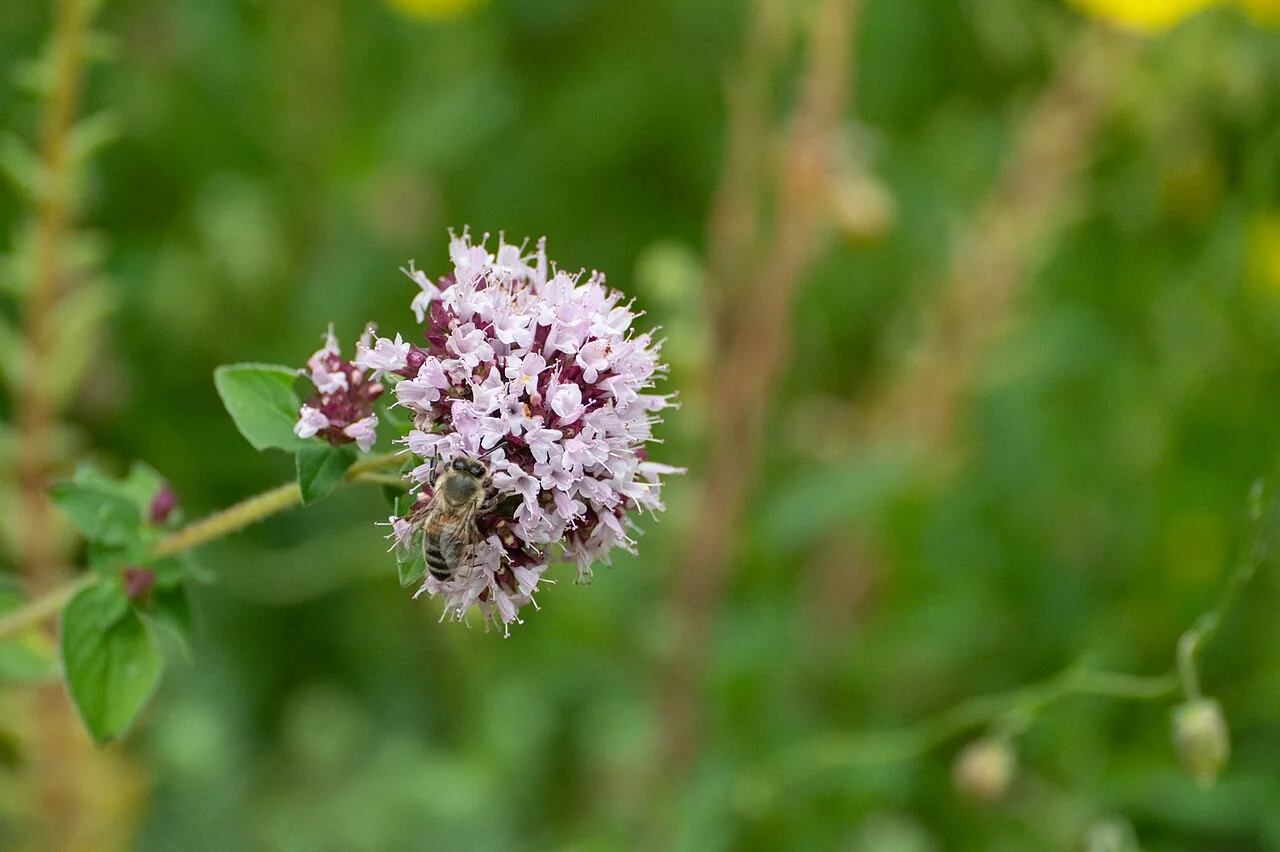
Flowers of Origanum vulgare.
Mickaël Schauli / Wikimedia Commons / CC BY-SA 4.0
Photo details
Resized and converted to WebP. No content edits.
Source: File:PN - Origanum vulgare L. - Origan - par Mickael Schauli.jpg
Reviewed . Source identification, photograph and license reviewed. The image illustrates the named plant; it does not verify dimensions or other plant traits.
Common names
17 namesNames recorded in our plant catalogue and botanical sources, grouped by language. Usage can vary by region.
- Dutch
-
- Oregano
- Palingkruid
- Wilde marjolein[2]
- French
-
- Origan
- Origan commun[2]
- Italian
-
- Origano comune[2]
- Portuguese
-
- Orégão[2]
- Spanish
-
- Orégano del Mediterráneo[2]
Numbered references identify names recorded by an external source. Other names are from our plant catalogue.
NC State Extension Gardener Plant Toolbox; English common names in a United States horticultural reference.
Source records
- Oregano — ul#common_names > li:nth-of-type(2); heading: Common Name(s):; Origanum vulgare.
- English Marjoram — ul#common_names > li:nth-of-type(1); heading: Common Name(s):; Origanum vulgare.
- Winter sweet — ul#common_names > li:nth-of-type(3); heading: Common Name(s):; Origanum vulgare.
Community-curated iNaturalist taxonomy. This is a common-name attestation, not an independent botanical determination.
Source records
- Oregano — results[0].names[1]; taxon id 61396; Origanum vulgare.
- Wilde marjolein — results[0].names[37]; taxon id 61396; Origanum vulgare.
- Echter Dost — results[0].names[12]; taxon id 61396; Origanum vulgare.
- Gewöhnlicher Dost — results[0].names[25]; taxon id 61396; Origanum vulgare.
- Oregano — results[0].names[26]; taxon id 61396; Origanum vulgare.
- Wilder Majoran — results[0].names[46]; taxon id 61396; Origanum vulgare.
- Wild Marjoram — results[0].names[4]; taxon id 61396; Origanum vulgare.
- Orégano del Mediterráneo — results[0].names[2]; taxon id 61396; Origanum vulgare.
- Origan commun — results[0].names[10]; taxon id 61396; Origanum vulgare.
- Origano comune — results[0].names[28]; taxon id 61396; Origanum vulgare.
- Orégão — results[0].names[5]; taxon id 61396; Origanum vulgare.
Names retained from the referenced botanical profile or table.
Source records
- wild marjoram — Page 2, column 1, row top 202 pt; common-name cell after Origanum vulgare.; Origanum vulgare.
Names retained from the referenced botanical profile or table.
Source records
- wild marjoram — Page 4, column 1, row top 262 pt; common-name cell after Origanum vulgare.; Origanum vulgare.
Source-backed information
Published observations for this plant. Each reference supports the information beside it.
- Taxonomy
-
Origanum vulgare is an accepted species in Catalogue of Life.
Taxonomic treatment in the August 2026 release; the catalogue record name is preserved.
Sources [1] - Botanical family
-
Lamiaceae
Family in the cited taxonomic treatment.
Sources [1] - Mature height
-
0.3–0.91 m
NC State Extension profile. Converted from the source range in feet and inches; mature size varies with growing conditions.
Sources [2] - Mature spread
-
0.3–0.61 m
NC State Extension profile. Converted from the source range in feet and inches; mature size varies with growing conditions.
Sources [2] - Plant habit
-
Cascading; Horizontal; Multi-stemmed; Spreading
NC State Extension profile.
Sources [2] - Life cycle
-
Perennial
NC State Extension profile.
Sources [2] - Growth rate
-
Medium
NC State Extension profile.
Sources [2] - Foliage
-
Deciduous
NC State Extension profile.
Sources [2] - Light
-
Full sun (6 or more hours of direct sunlight a day); Partial Shade (Direct sunlight only part of the day, 2-6 hours)
NC State Extension profile.
Sources [2] - Moisture and drainage
-
Good Drainage; Moist; Occasionally Dry
NC State Extension profile.
Sources [2] - Soil texture
-
Clay; Loam (Silt); Sand
NC State Extension profile.
Sources [2] - Soil pH
-
Acid (<6.0); Alkaline (>8.0); Neutral (6.0-8.0)
NC State Extension profile. These source categories do not certify the catalogue’s numeric pH interval.
Sources [2] - Flowering season
-
Spring; Summer
NC State Extension profile. Seasons reflect the source region and do not verify the catalogue’s exact flowering months.
Sources [2] - Native range
-
Europe, Macaronesia to China
NC State Extension profile. Origin reported by the source; this is not a claim of local nativeness.
Sources [2] - Reported wildlife attraction
-
Listed as attracting: bees, butterflies, moths, pollinators.
NC State Extension profile. Broad wildlife categories; this does not establish flower visits by a named bee species or quantify nectar and pollen.
Sources [2]
Who this plant supports
Complete plant information
Structure
- Vegetation layer
- Herbaceous, Ground cover
- Size
- Small
- Dimensions
- 0.60 m high × 0.80 m wide
- Growth rate
- Moderate
- Lifecycle
- Perennial
Site conditions
- USDA hardiness
- 4-10
- Moisture
- Well-drained, Moist
- Soil
- Sandy, Loamy, Clay
- pH
- Acid, Neutral, Alkaline
- Light
- Partial shade, Sun
Uses
- Edible parts
- Leaves, Tea
- Functions
- Dye, Essential oil, Parasiticide, Repellent, Pollinator plant, Ground cover, Fragrant
- Edibility
- 4 out of 5
- Medicinal value
- 3 out of 5
Leaves can be eaten both raw and cooked as a vegetable. Oregano is an important herb in Mediterranean cuisine and is often used instead of fresh oregano in dishes. The leaves are commonly used in salad dressings, vegetables, legumes, and in dishes with chili peppers, garlic, and onions. It is common for commercially available dried oregano to come from different plants such as Lippia graveolens, L. Palmeri, and Origanum Syriacum, which are not related to the oregano plant. The dried leaves and flowering stems can be used to make herbal tea.
Sources and references
References for the information marked with source numbers on this page.
-
Catalogue of Life
Origanum vulgare — Catalogue of Life COL26.8
COL26.8 (2026-08-20). Contributing checklist: Synonymic Checklists of the Vascular Plants of the World. This is taxonomic evidence, not an independent ecological study.
Relevant sections
- Taxonomy: NameUsage.tsv line 2364232; ID 6T7B5; rank species; status accepted
- Botanical family: NameUsage.tsv line 2364232; ID 6T7B5; rank species; status accepted
Source checked on .
Source data licence: CC BY 4.0.
-
NC State Extension
Origanum vulgare — Plant Toolbox
NC State Extension Gardener Plant Toolbox. Growing conditions and seasons reflect its United States horticultural context.
Supports: Mature heightMature spreadPlant habitLife cycleGrowth rateFoliageLightMoisture and drainageSoil textureSoil pHFlowering seasonNative rangeReported wildlife attractionRelevant sections
- Mature height: Dimensions / Height
- Mature spread: Dimensions / Width
- Plant habit: Habit/Form
- Life cycle: Life Cycle
- Growth rate: Growth Rate
- Foliage: Woody Plant Leaf Characteristics
- Light: Light
- Moisture and drainage: Soil Drainage
- Soil texture: Soil Texture
- Soil pH: Soil pH
- Flowering season: Flower Bloom Time
- Native range: Country Or Region Of Origin
- Reported wildlife attraction: Attracts
Source checked on .
-
Royal Horticultural Society
RHS Plants for Pollinators — Wildflowers
RHS planting guidance; applicable flower-form restrictions are retained. General recommendations do not measure local nectar or pollen production.
Supports: Pollinator guidanceRelevant sections
- Pollinator guidance: Page 4, column 1, entry Origanum vulgare (top 262 pt)
Source checked on .
-
Royal Horticultural Society
RHS Plants for Pollinators — Plants Of The World
RHS planting guidance; applicable flower-form restrictions are retained. General recommendations do not measure local nectar or pollen production.
Supports: Pollinator guidanceRelevant sections
- Pollinator guidance: Page 2, column 1, entry Origanum vulgare (top 202 pt)
Source checked on .