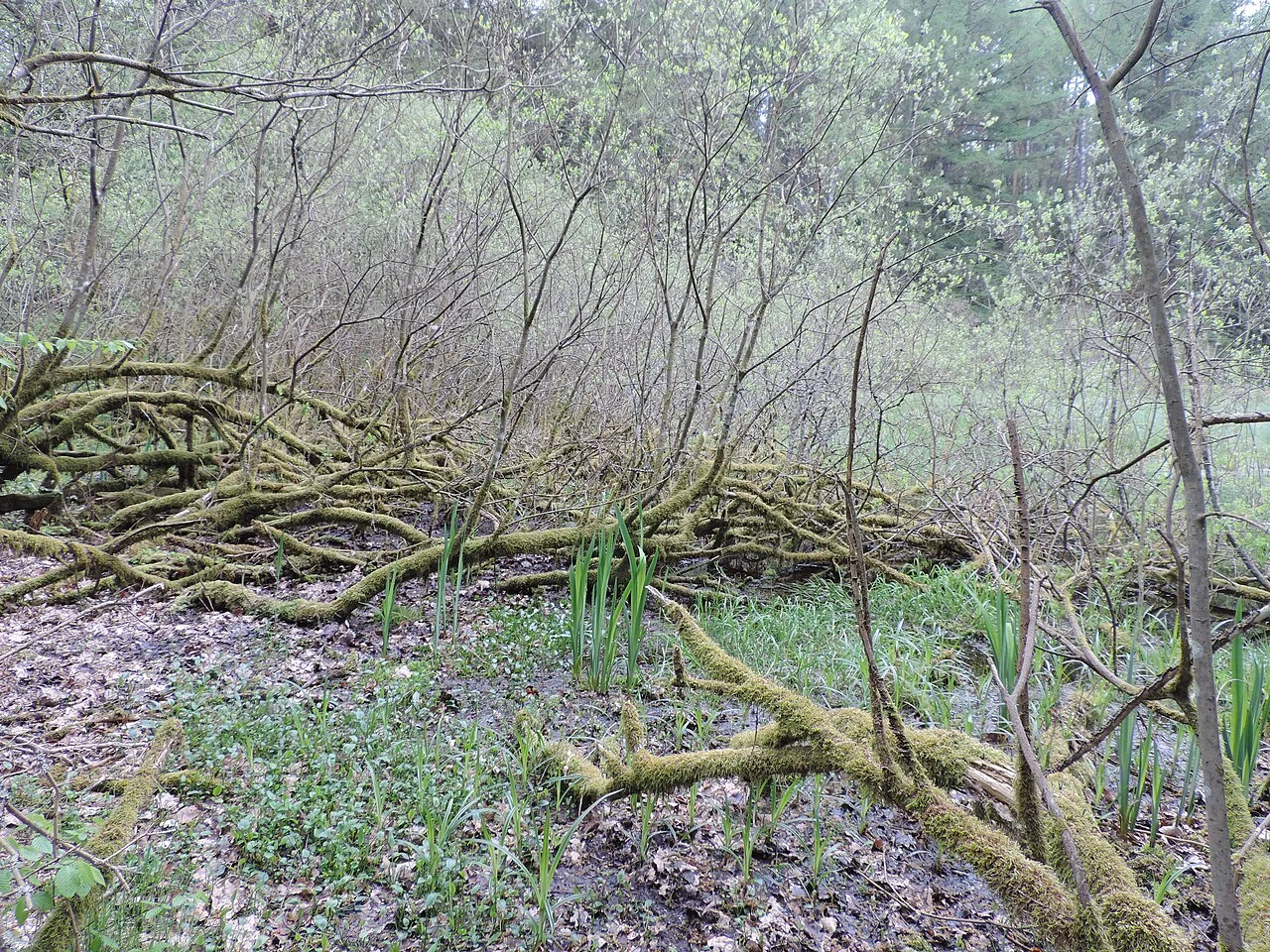
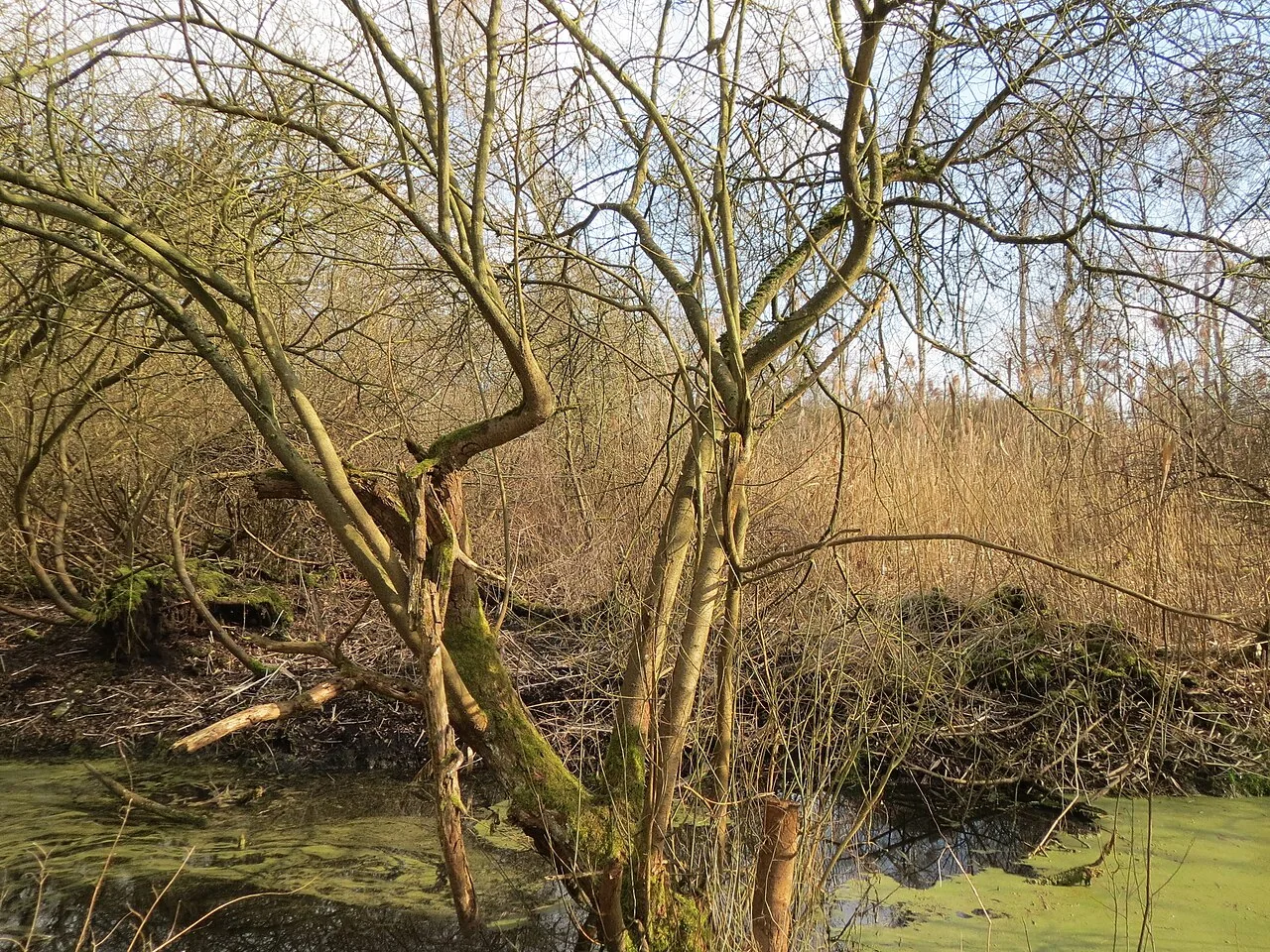
Pollinator plant

Grey Willow

Salix cinerea

Linked agroforestry plant data
Pollinator recipe

Common names

34 names · 26 languages
EnglishYour language
  • Common Sallow
  • European Gray Willow[1][2]
  • Grey Sallow[1][2]
+2 more namesShow fewer names
  • Grey Willow[1][2]
  • Large gray willow
Other languages (25)
Dutch
French
Asturian
Basque
  • Sahats hauskara[2]
Belarusian
  • Вярба попельная або шэрая, ці Лаза[2]
Chinese (Simplified)
Chinese (Traditional)
Czech
  • vrba popelavá[2]
Danish
Estonian
  • tuhkur paju[2]
Finnish
German
Hungarian
  • Hamvas fűz[2]
  • rekettyefűz[2]
Italian
Latvian
  • pelēkais kārkls[2]
Lithuanian
  • Pilkasis karklas[2]
Norwegian
Polish
  • Wierzba szara[2]
Russian
  • Ива пепельная[2]
Slovak
  • vŕba popolavá[2]
Slovenian
  • pepelnatosiva vrba[2]
Spanish
Swedish
Turkish
  • Boz Söğüt[2]
Ukrainian
  • Верба попеляста[2]
Sources & name notes (2)

Names recorded in our plant catalogue and botanical sources, grouped by language. Usage can vary by region.

Catalogue language labels are reviewed separately from botanical source records.

Numbered references identify names recorded by an external source. Other names are from our plant catalogue.

[1] Salix cinerea — iNaturalist taxon names ↗

Community-curated iNaturalist taxonomy. This is a common-name attestation, not an independent botanical determination.

Source records
  • Grey Willow — results[0].names[1]; taxon id 168326; Salix cinerea.
  • Grauwe wilg — results[0].names[12]; taxon id 168326; Salix cinerea.
  • Saule cendré — results[0].names[4]; taxon id 168326; Salix cinerea.
  • Asch-Weide — results[0].names[6]; taxon id 168326; Salix cinerea.
  • Grau-Weide — results[0].names[10]; taxon id 168326; Salix cinerea.
  • European Gray Willow — results[0].names[3]; taxon id 168326; Salix cinerea.
  • Grey Sallow — results[0].names[2]; taxon id 168326; Salix cinerea.
  • sauce ceniciento — results[0].names[8]; taxon id 168326; Salix cinerea.
  • Saule gris — results[0].names[5]; taxon id 168326; Salix cinerea.
  • salice grigio — results[0].names[7]; taxon id 168326; Salix cinerea.
  • Grauwe wilg s.s. — results[0].names[31]; taxon id 168326; Salix cinerea.
[2] Salix cinerea — iNaturalist taxon names ↗

Community-curated iNaturalist taxonomy; common-name attestation, not an independent botanical determination.

Source records
  • Grey Willow — results[0].names[1]; taxon id 168326; Salix cinerea.
  • Grauwe wilg — results[0].names[12]; taxon id 168326; Salix cinerea.
  • Saule cendré — results[0].names[4]; taxon id 168326; Salix cinerea.
  • Asch-Weide — results[0].names[6]; taxon id 168326; Salix cinerea.
  • Grau-Weide — results[0].names[10]; taxon id 168326; Salix cinerea.
  • European Gray Willow — results[0].names[3]; taxon id 168326; Salix cinerea.
  • Grey Sallow — results[0].names[2]; taxon id 168326; Salix cinerea.
  • sauce ceniciento — results[0].names[8]; taxon id 168326; Salix cinerea.
  • Saule gris — results[0].names[5]; taxon id 168326; Salix cinerea.
  • salice grigio — results[0].names[7]; taxon id 168326; Salix cinerea.
  • Grauwe wilg s.s. — results[0].names[31]; taxon id 168326; Salix cinerea.
  • vrba popelavá — results[0].names[9]; taxon id 168326; Salix cinerea.
  • Grå-pil — results[0].names[11]; taxon id 168326; Salix cinerea.
  • Ива пепельная — results[0].names[14]; taxon id 168326; Salix cinerea.
  • Tuhkapaju — results[0].names[15]; taxon id 168326; Salix cinerea.
  • gråselje — results[0].names[16]; taxon id 168326; Salix cinerea.
  • Pilkasis karklas — results[0].names[17]; taxon id 168326; Salix cinerea.
  • Wierzba szara — results[0].names[18]; taxon id 168326; Salix cinerea.
  • salgueira — results[0].names[19]; taxon id 168326; Salix cinerea.
  • tuhkur paju — results[0].names[20]; taxon id 168326; Salix cinerea.
  • gråvide — results[0].names[21]; taxon id 168326; Salix cinerea.
  • 灰柳 — results[0].names[22]; taxon id 168326; Salix cinerea.
  • 灰柳 — results[0].names[23]; taxon id 168326; Salix cinerea.
  • Sahats hauskara — results[0].names[24]; taxon id 168326; Salix cinerea.
  • Верба попеляста — results[0].names[25]; taxon id 168326; Salix cinerea.
  • Вярба попельная або шэрая, ці Лаза — results[0].names[26]; taxon id 168326; Salix cinerea.
  • Hamvas fűz — results[0].names[27]; taxon id 168326; Salix cinerea.
  • rekettyefűz — results[0].names[28]; taxon id 168326; Salix cinerea.
  • vŕba popolavá — results[0].names[29]; taxon id 168326; Salix cinerea.
  • Boz Söğüt — results[0].names[30]; taxon id 168326; Salix cinerea.
  • pepelnatosiva vrba — results[0].names[32]; taxon id 168326; Salix cinerea.
  • pelēkais kārkls — results[0].names[33]; taxon id 168326; Salix cinerea.
Plant references

Source-backed information

Published observations for this plant. Each reference supports the information beside it.

Botanical family
Salicaceae

Genus-level classification for Salix; this does not confirm the complete catalogue name.

Sources [1]
Native range
Europe to SW. Siberia and Caucasus, Morocco.

Explicit native locality records in Kew WCVP v16; introduced and doubtful distributions excluded. Continent conversion follows the documented geographic mapping.

Sources [2]
Catalogue ratings

Who this plant supports

Honey bees

High suitability
Nectar value High
Pollen value High
Agroforestry database

Complete plant information

Open full plant profile

Structure

Vegetation layer
Shrub
Size
Medium
Dimensions
5.00 m high × 5.00 m wide
Growth rate
Slow
Lifecycle
Perennial
Foliage
Deciduous

Site conditions

USDA hardiness
2-7
Moisture
Wet, Moist
Soil
Sandy, Loamy, Clay
pH
Acid, Neutral, Alkaline
Light
Sun

Uses

Functions
Pioneer plant, Windbreak, Timber
Edibility
0 out of 5
Medicinal value
0 out of 5

Land use: Border, Mass, Specimen. The plants have an extensive root system and are used to stabilize waste piles and old slag heaps. The seeds are very light and can travel long distances in the wind. Therefore, the plant can spread to areas such as deforested regions where the soil has been disturbed. Seedlings will grow quickly, even under exposed conditions, and the plant will provide good shelter for the establishment of forest plants. As a result, it is a good pioneer species and, except in wetter and peaty soils, will eventually be largely overshadowed by other forest trees. The main disadvantage as a pioneer species is that it has an extensive root system and is quite a greedy plant, which means it does not help to enrich the soil for other forest plants as much as other pioneer species like alder, Alnus species. Special features: Not a native North American plant, plant for wet areas, attractive flowers. Dynamic accumulator.

Sources and references

References for the information marked with source numbers on this page.

Sources checked
  1. Catalogue of Life Salix — Catalogue of Life COL26.8

    COL26.8 (2026-08-20). Contributing checklist: Synonymic Checklists of the Vascular Plants of the World. This is taxonomic evidence, not an independent ecological study.

    Supports: Botanical family
    Relevant sections
    • Botanical family: NameUsage.tsv line 2689067; ID 7BWB; rank genus; status accepted

    Source checked on .

    Source data licence: CC BY 4.0.

  2. Royal Botanic Gardens, Kew Salix cinerea — Kew WCVP native distribution

    Native distribution and taxonomic treatment from the official WCVP v16 export (4 June 2026). The link opens the corresponding POWO taxon. Source rows are retained in the native-range audit archive.

    Supports: Native range
    Relevant sections
    • Native range: WCVP v16; wcvp_names.csv lines 1427341; wcvp_distribution.csv native locality lines 1493626, 1493627, 1493628, 1493629, 1493630, 1493631, 1493632, 1493633, 1493634, 1493635, 1493636, 1493637, 1493638, 1493639, 1493640, 1493641, 1493642, 1493643, 1493644, 1493645, 1493646, 1493647, 1493648, 1493649, 1493650, 1493651, 1493652, 1493653, 1493654, 1493655, 1493656, 1493657, 1493658, 1493659, 1493660

    Source checked on .

    Source data licence: CC BY 3.0.