Salix cinerea
Grey Willow, Large gray willow
Explore the size, hardiness, soil, light, harvest period and uses of Salix cinerea.
Plant photos
2 photos · Select to enlarge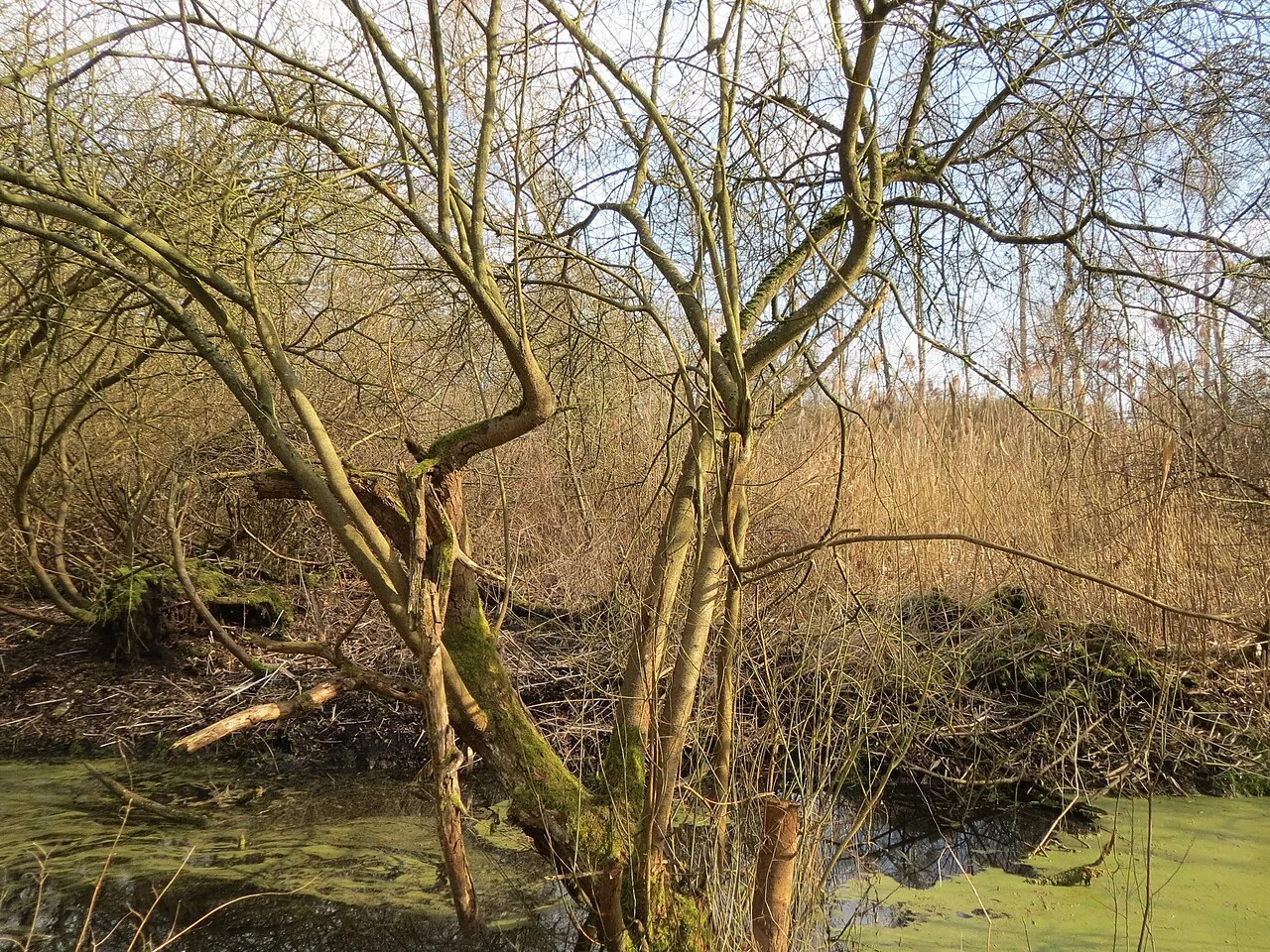
The leafless branches of Salix cinerea.
AnRo0002 / Wikimedia Commons / CC0

Photo details
Resized and converted to WebP. No content edits.
Source: File:20150312Salix cinerea01.jpg
Reviewed . Source identification, photograph and license reviewed. The image illustrates the named plant; it does not verify dimensions or other plant traits.
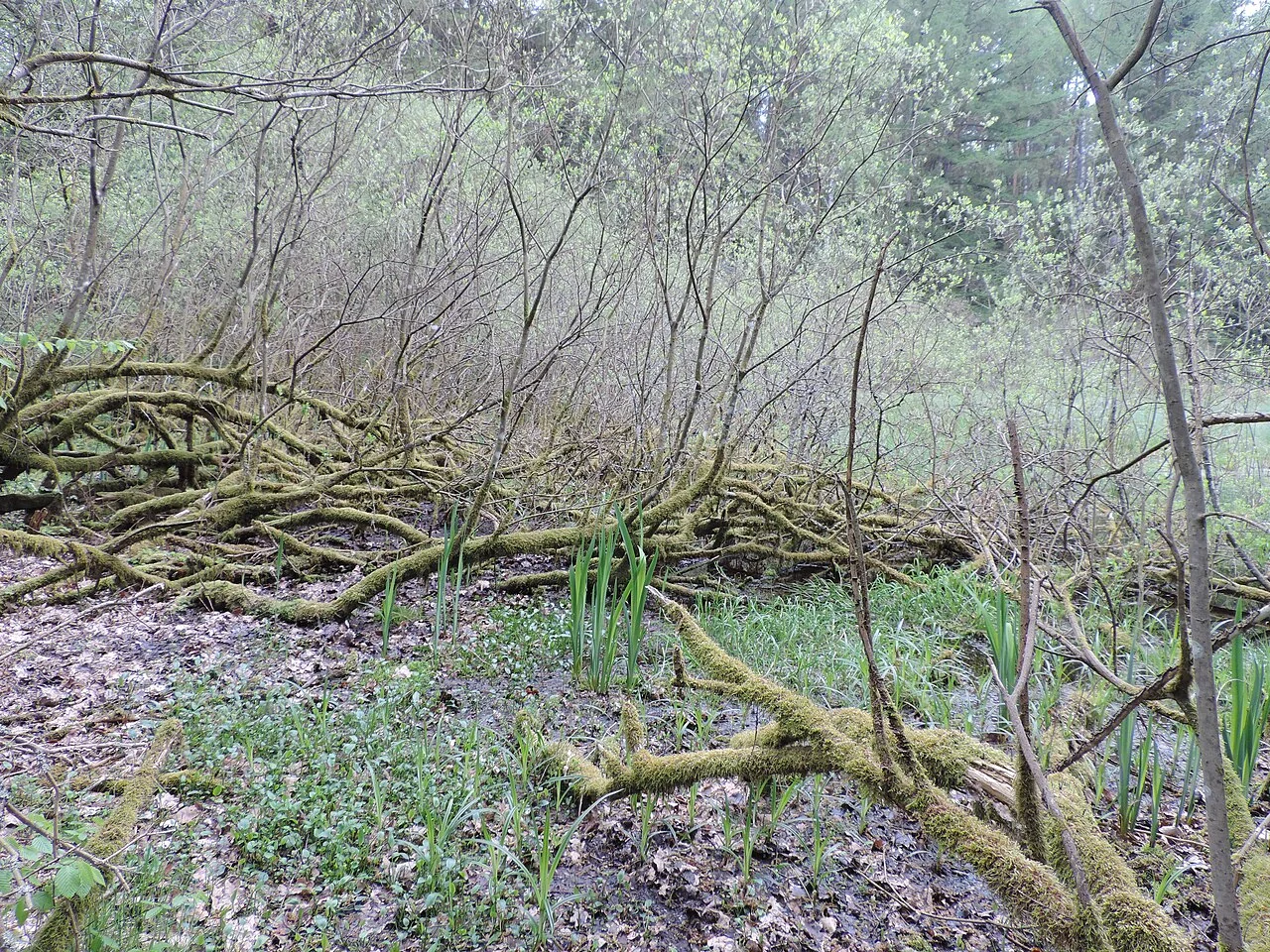
Moss-covered stems of old Salix cinerea plants beside a swamp.
Krzysztof Ziarnek, Kenraiz / Wikimedia Commons / CC BY-SA 4.0

Photo details
Resized and converted to WebP. No content edits.
Source: File:Salix cinerea kz15.jpg
Reviewed . Source identification, photograph and license reviewed. The image illustrates the named plant; it does not verify dimensions or other plant traits.
Common names
33 names · 26 languagesOther languages (25)
- Asturian
-
- salgueira[1]
- Basque
-
- Sahats hauskara[1]
- Belarusian
-
- Вярба попельная або шэрая, ці Лаза[1]
- Chinese (Simplified)
-
- 灰柳[1]
- Chinese (Traditional)
-
- 灰柳[1]
- Czech
-
- vrba popelavá[1]
- Danish
-
- Grå-pil[1]
- Estonian
-
- tuhkur paju[1]
- Finnish
-
- Tuhkapaju[1]
- Italian
-
- salice grigio[1]
- Latvian
-
- pelēkais kārkls[1]
- Lithuanian
-
- Pilkasis karklas[1]
- Norwegian
-
- gråselje[1]
- Polish
-
- Wierzba szara[1]
- Russian
-
- Ива пепельная[1]
- Slovak
-
- vŕba popolavá[1]
- Slovenian
-
- pepelnatosiva vrba[1]
- Spanish
-
- sauce ceniciento[1]
- Swedish
-
- gråvide[1]
- Turkish
-
- Boz Söğüt[1]
- Ukrainian
-
- Верба попеляста[1]
Sources & name notes (1)
Names recorded in our plant catalogue and botanical sources, grouped by language. Usage can vary by region.
Numbered references identify names recorded by an external source. Other names are from our plant catalogue.
Community-curated iNaturalist taxonomy; common-name attestation, not an independent botanical determination.
Source records
- Grey Willow — results[0].names[1]; taxon id 168326; Salix cinerea.
- Grey Sallow — results[0].names[2]; taxon id 168326; Salix cinerea.
- European Gray Willow — results[0].names[3]; taxon id 168326; Salix cinerea.
- Saule cendré — results[0].names[4]; taxon id 168326; Salix cinerea.
- Saule gris — results[0].names[5]; taxon id 168326; Salix cinerea.
- Asch-Weide — results[0].names[6]; taxon id 168326; Salix cinerea.
- salice grigio — results[0].names[7]; taxon id 168326; Salix cinerea.
- sauce ceniciento — results[0].names[8]; taxon id 168326; Salix cinerea.
- vrba popelavá — results[0].names[9]; taxon id 168326; Salix cinerea.
- Grau-Weide — results[0].names[10]; taxon id 168326; Salix cinerea.
- Grå-pil — results[0].names[11]; taxon id 168326; Salix cinerea.
- Grauwe wilg — results[0].names[12]; taxon id 168326; Salix cinerea.
- Ива пепельная — results[0].names[14]; taxon id 168326; Salix cinerea.
- Tuhkapaju — results[0].names[15]; taxon id 168326; Salix cinerea.
- gråselje — results[0].names[16]; taxon id 168326; Salix cinerea.
- Pilkasis karklas — results[0].names[17]; taxon id 168326; Salix cinerea.
- Wierzba szara — results[0].names[18]; taxon id 168326; Salix cinerea.
- salgueira — results[0].names[19]; taxon id 168326; Salix cinerea.
- tuhkur paju — results[0].names[20]; taxon id 168326; Salix cinerea.
- gråvide — results[0].names[21]; taxon id 168326; Salix cinerea.
- 灰柳 — results[0].names[22]; taxon id 168326; Salix cinerea.
- 灰柳 — results[0].names[23]; taxon id 168326; Salix cinerea.
- Sahats hauskara — results[0].names[24]; taxon id 168326; Salix cinerea.
- Верба попеляста — results[0].names[25]; taxon id 168326; Salix cinerea.
- Вярба попельная або шэрая, ці Лаза — results[0].names[26]; taxon id 168326; Salix cinerea.
- Hamvas fűz — results[0].names[27]; taxon id 168326; Salix cinerea.
- rekettyefűz — results[0].names[28]; taxon id 168326; Salix cinerea.
- vŕba popolavá — results[0].names[29]; taxon id 168326; Salix cinerea.
- Boz Söğüt — results[0].names[30]; taxon id 168326; Salix cinerea.
- Grauwe wilg s.s. — results[0].names[31]; taxon id 168326; Salix cinerea.
- pepelnatosiva vrba — results[0].names[32]; taxon id 168326; Salix cinerea.
- pelēkais kārkls — results[0].names[33]; taxon id 168326; Salix cinerea.
General information
Accepted in the cited Kew taxonomic treatment.
Sources [1]Plant characteristics
Growing conditions
Wet, Moist
Sand (light) Loam (medium) Clay (heavy)
Acidic Neutral Alkaline
Full sun
Uses
-
Pioneer species, Windbreak, Wood
Description
Land use: Border, Mass, Specimen. The plants have an extensive root system and are used to stabilize waste piles and old slag heaps. The seeds are very light and can travel long distances in the wind. Therefore, the plant can spread to areas such as deforested regions where the soil has been disturbed. Seedlings will grow quickly, even under exposed conditions, and the plant will provide good shelter for the establishment of forest plants. As a result, it is a good pioneer species and, except in wetter and peaty soils, will eventually be largely overshadowed by other forest trees. The main disadvantage as a pioneer species is that it has an extensive root system and is quite a greedy plant, which means it does not help to enrich the soil for other forest plants as much as other pioneer species like alder, Alnus species. Special features: Not a native North American plant, plant for wet areas, attractive flowers. Dynamic accumulator.
Harvest
Sources and references
References for the information marked with source numbers on this page.
-
Royal Botanic Gardens, Kew
World Checklist of Vascular Plants, version 16, extracted 4 June 2026
Relevant sections
- Botanical family: WCVP v16, wcvp_names.csv row 1427267; name ID 2918656; Salix L.. Family column.
- Taxonomy: WCVP v16, wcvp_names.csv row 1427341; name ID 2919014; Salix cinerea L..
Source checked on .
Source data licence: CC BY 3.0.
-
Native Plant Trust; Go Botany
Salix cinerea — Go Botany
Supports: Foliage
Relevant sections
- Foliage: Leaf duration
Source checked on .