Pollinator plant

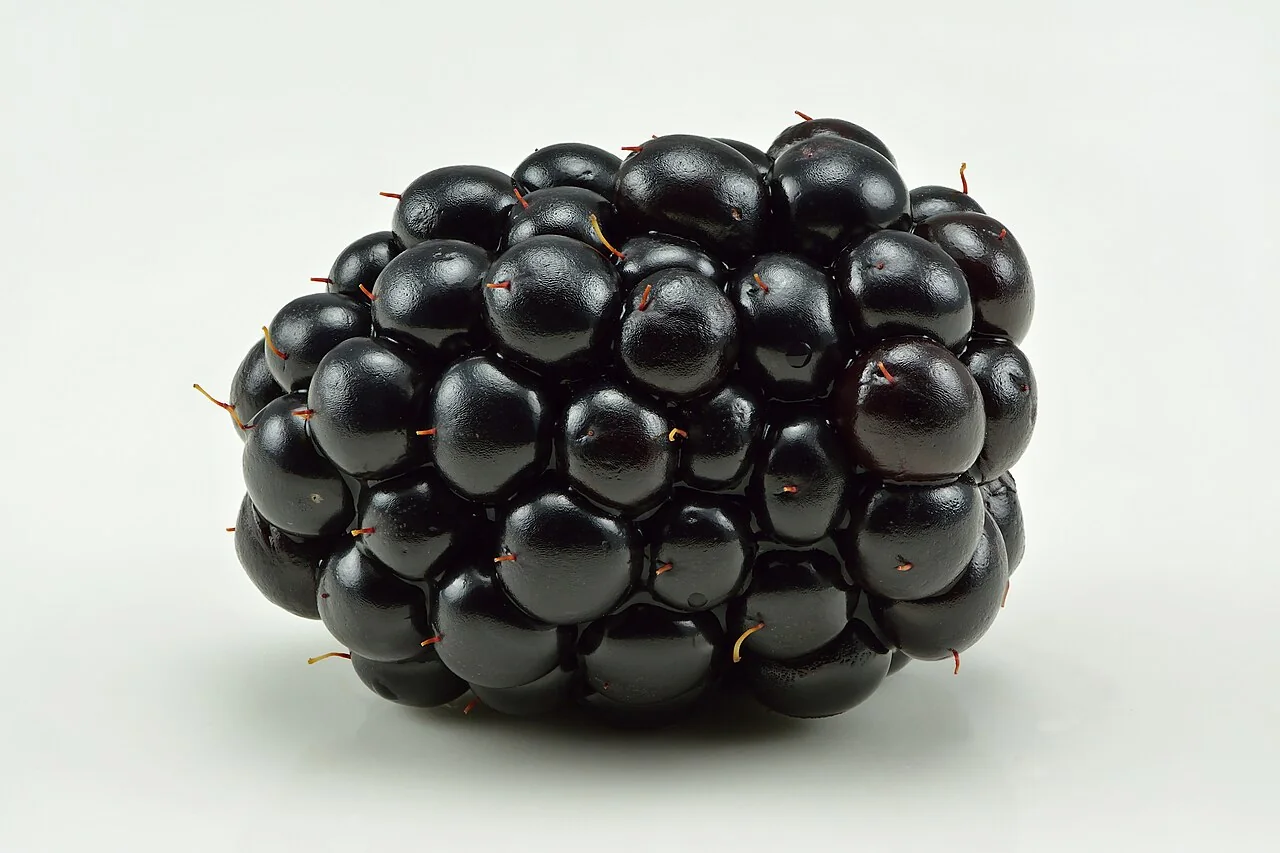
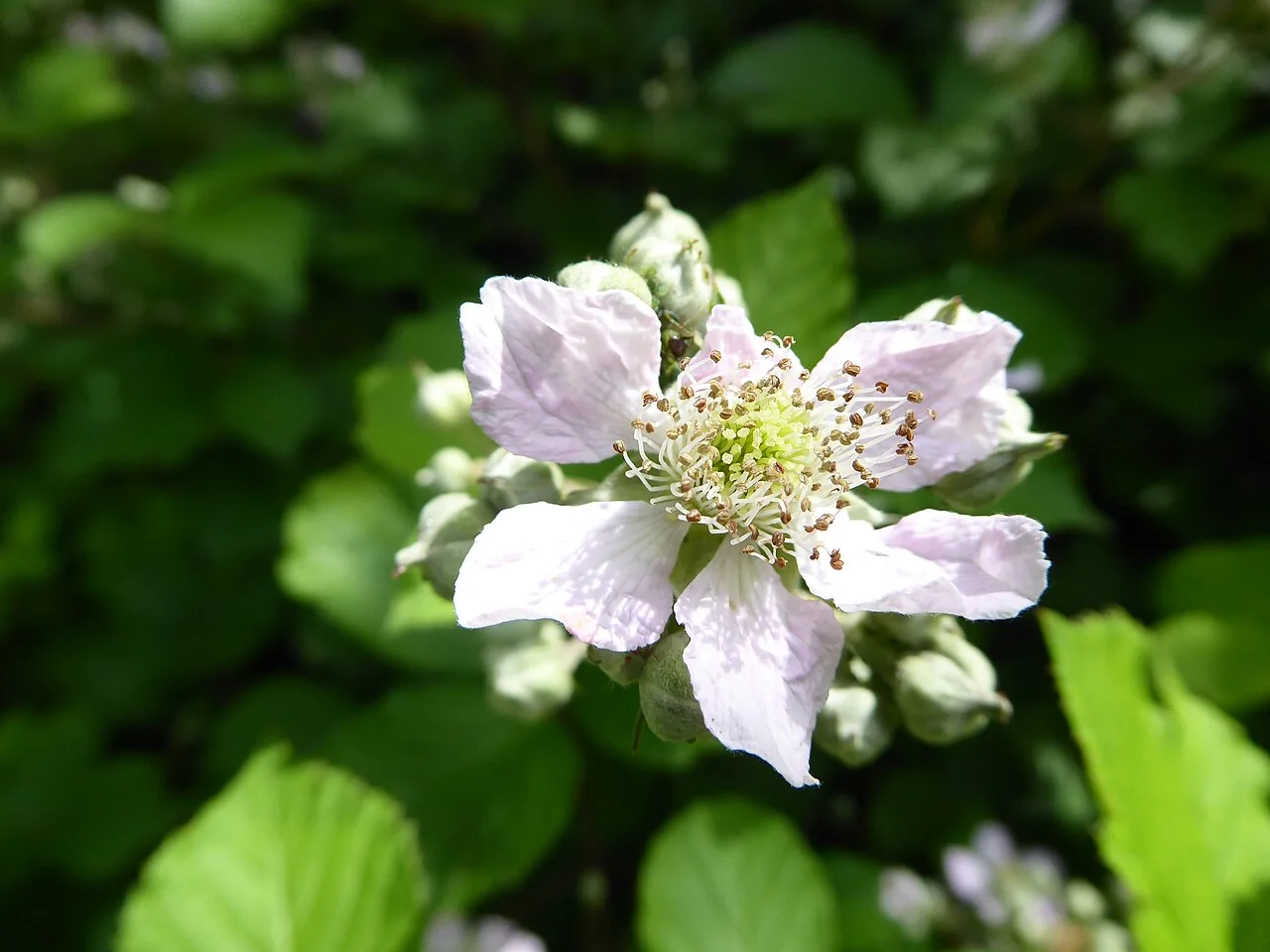
Blackberry

Rubus fruticosus

Linked agroforestry plant data
Pollinator recipe

Common names

30 names · 19 languages
EnglishYour language
Other languages (18)
Dutch
  • Bosbraam
  • Braam
  • Geplooide stokbraam[3][4]
+3 more namesShow fewer names
French
+1 more nameShow fewer names
Afrikaans
  • Braambessie[4]
Chinese (Simplified)
Czech
  • ostružiník řasnatý[4]
Danish
  • Almindelig brombær[4]
Finnish
  • poimuvatukka[4]
German
Hungarian
  • földi szeder[4]
Korean
  • 서양오엽딸기[4]
Norwegian
  • søtbjørnebær[4]
Polish
  • Jeżyna krzewiasta[4]
Russian
  • Ежевика кустарниковая[4]
  • Ежевика складчатый[4]
Slovak
  • ostružina obyčajná[4]
Spanish
Swedish
  • sötbjörnbär[4]
Turkish
  • böğürtlen[4]
Welsh
  • Llwyn mwyar duon[4]
Sources & name notes (4)

Names recorded in our plant catalogue and botanical sources, grouped by language. Usage can vary by region.

Numbered references identify names recorded by an external source. Other names are from our plant catalogue.

[1] Royal Horticultural Society — common names ↗

Names retained from the referenced botanical profile or table.

Source records
  • blackberry — Page 2, column 1, row top 292 pt; common-name cell after Rubus fruticosus.; Rubus fruticosus.
[2] Royal Horticultural Society — common names ↗

Names retained from the referenced botanical profile or table.

Source records
  • blackberry — Page 2, column 2, row top 562 pt; common-name cell after Rubus fruticosus.; Rubus fruticosus.
[3] Rubus fruticosus — iNaturalist taxon names ↗

Community-curated iNaturalist taxonomy. This is a common-name attestation, not an independent botanical determination.

Source records
  • Falten-Brombeere — results[1].names[7]; taxon id 1090496; Rubus fruticosus.
  • European blackberry — results[1].names[2]; taxon id 1090496; Rubus fruticosus.
  • pilated-leaved blackberry — results[1].names[1]; taxon id 1090496; Rubus fruticosus.
  • Zarzamora — results[1].names[14]; taxon id 1090496; Rubus fruticosus.
  • Ronce commune — results[1].names[20]; taxon id 1090496; Rubus fruticosus.
  • Ronce de Bertram — results[1].names[19]; taxon id 1090496; Rubus fruticosus.
  • Ronce ligneuse — results[1].names[18]; taxon id 1090496; Rubus fruticosus.
  • Geplooide stokbraam — results[1].names[11]; taxon id 1090496; Rubus fruticosus.
  • Grillige braam — results[1].names[16]; taxon id 1090496; Rubus fruticosus.
  • Haakhaagbraam — results[1].names[17]; taxon id 1090496; Rubus fruticosus.
[4] Rubus fruticosus — iNaturalist taxon names ↗

Community-curated iNaturalist taxonomy; common-name attestation, not an independent botanical determination.

Source records
  • Falten-Brombeere — results[1].names[7]; taxon id 1090496; Rubus fruticosus.
  • European blackberry — results[1].names[2]; taxon id 1090496; Rubus fruticosus.
  • pilated-leaved blackberry — results[1].names[1]; taxon id 1090496; Rubus fruticosus.
  • Zarzamora — results[1].names[14]; taxon id 1090496; Rubus fruticosus.
  • Ronce commune — results[1].names[20]; taxon id 1090496; Rubus fruticosus.
  • Ronce de Bertram — results[1].names[19]; taxon id 1090496; Rubus fruticosus.
  • Ronce ligneuse — results[1].names[18]; taxon id 1090496; Rubus fruticosus.
  • Geplooide stokbraam — results[1].names[11]; taxon id 1090496; Rubus fruticosus.
  • Grillige braam — results[1].names[16]; taxon id 1090496; Rubus fruticosus.
  • Haakhaagbraam — results[1].names[17]; taxon id 1090496; Rubus fruticosus.
  • böğürtlen — results[1].names[3]; taxon id 1090496; Rubus fruticosus.
  • Braambessie — results[1].names[4]; taxon id 1090496; Rubus fruticosus.
  • Ежевика кустарниковая — results[1].names[5]; taxon id 1090496; Rubus fruticosus.
  • Ежевика складчатый — results[1].names[6]; taxon id 1090496; Rubus fruticosus.
  • ostružiník řasnatý — results[1].names[8]; taxon id 1090496; Rubus fruticosus.
  • søtbjørnebær — results[1].names[9]; taxon id 1090496; Rubus fruticosus.
  • Almindelig brombær — results[1].names[10]; taxon id 1090496; Rubus fruticosus.
  • poimuvatukka — results[1].names[12]; taxon id 1090496; Rubus fruticosus.
  • sötbjörnbär — results[1].names[13]; taxon id 1090496; Rubus fruticosus.
  • Jeżyna krzewiasta — results[1].names[15]; taxon id 1090496; Rubus fruticosus.
  • földi szeder — results[1].names[21]; taxon id 1090496; Rubus fruticosus.
  • 서양오엽딸기 — results[1].names[22]; taxon id 1090496; Rubus fruticosus.
  • 黑莓 — results[1].names[23]; taxon id 1090496; Rubus fruticosus.
  • Llwyn mwyar duon — results[1].names[24]; taxon id 1090496; Rubus fruticosus.
  • ostružina obyčajná — results[1].names[25]; taxon id 1090496; Rubus fruticosus.
Plant references

Source-backed information

Published observations for this plant. Each reference supports the information beside it.

Taxonomy
Catalogue of Life treats Rubus fruticosus as a synonym of Rubus cochinchinensis.

Taxonomic treatment in the August 2026 release; the catalogue record name is preserved.

Sources [1] [2]
Botanical family
Rosaceae

Family in the cited taxonomic treatment.

Sources [2]
Pollinator guidance
RHS includes Rubus fruticosus in its Plants for Pollinators guidance.

RHS planting guidance. Choose accessible flowers with pollen and nectar; reduced-resource and double-flowered forms may be unsuitable.

Sources [3] [4]
Catalogue ratings

Who this plant supports

Honey bees

High suitability
Nectar value High
Pollen value High
Agroforestry database

Complete plant information

Open full plant profile

Structure

Vegetation layer
Shrub
Size
Small
Dimensions
3.00 m high × 3.00 m wide
Growth rate
Fast
Lifecycle
Perennial
Foliage
Deciduous

Site conditions

USDA hardiness
5-9
Moisture
Moist
Soil
Sandy, Loamy, Clay
pH
Acid, Neutral, Alkaline
Light
Shade, Partial shade, Sun

Uses

Edible parts
Leaves, Fruit, Tea, Root
Functions
Dye, Fibre, Pioneer plant, Pollinator plant
Edibility
5 out of 5
Medicinal value
3 out of 5

Fruit - fresh or cooked. The best varieties offer delicious fruits. There are different types, making it possible to obtain ripe fruits from late July to November. The fruit is also used to make syrup, jam, and preserves. Some people may experience stomach discomfort if they eat the fruit before it is very ripe and soft. Root - cooked. The root should not be too young or too old and requires sufficient cooking time. Tea is made from the dried leaves, with the young leaves being the best. The leaves are often used in herbal tea mixtures. Young shoots - raw. These are harvested in the spring as soon as they appear above the ground, peeled, and added to salads.

Sources and references

References for the information marked with source numbers on this page.

Sources checked
  1. Catalogue of Life Rubus fruticosus — Catalogue of Life COL26.8

    COL26.8 (2026-08-20). Contributing checklist: Synonymic Checklists of the Vascular Plants of the World. This is taxonomic evidence, not an independent ecological study.

    Supports: Taxonomy
    Relevant sections
    • Taxonomy: NameUsage.tsv line 1159351; ID 4TK7L; rank species; status synonym

    Source checked on .

    Source data licence: CC BY 4.0.

  2. Catalogue of Life Rubus cochinchinensis — Catalogue of Life COL26.8

    COL26.8 (2026-08-20). Contributing checklist: Synonymic Checklists of the Vascular Plants of the World. This is taxonomic evidence, not an independent ecological study.

    Supports: TaxonomyBotanical family
    Relevant sections
    • Taxonomy: NameUsage.tsv line 1159036; ID 4TJSS; rank species; status accepted
    • Botanical family: NameUsage.tsv line 1159036; ID 4TJSS; rank species; status accepted

    Source checked on .

    Source data licence: CC BY 4.0.

  3. Royal Horticultural Society RHS Plants for Pollinators — Wildflowers

    RHS planting guidance; applicable flower-form restrictions are retained. General recommendations do not measure local nectar or pollen production.

    Relevant sections
    • Pollinator guidance: Page 2, column 2, entry Rubus fruticosus (top 562 pt)

    Source checked on .

  4. Royal Horticultural Society RHS Plants for Pollinators — Plants Of The World

    RHS planting guidance; applicable flower-form restrictions are retained. General recommendations do not measure local nectar or pollen production.

    Relevant sections
    • Pollinator guidance: Page 2, column 1, entry Rubus fruticosus (top 292 pt)

    Source checked on .