Rubus fruticosus
Blackberry
Explore the size, hardiness, soil, light, edible uses and harvest period of Rubus fruticosus.
Plant photos
2 photos · Select to enlarge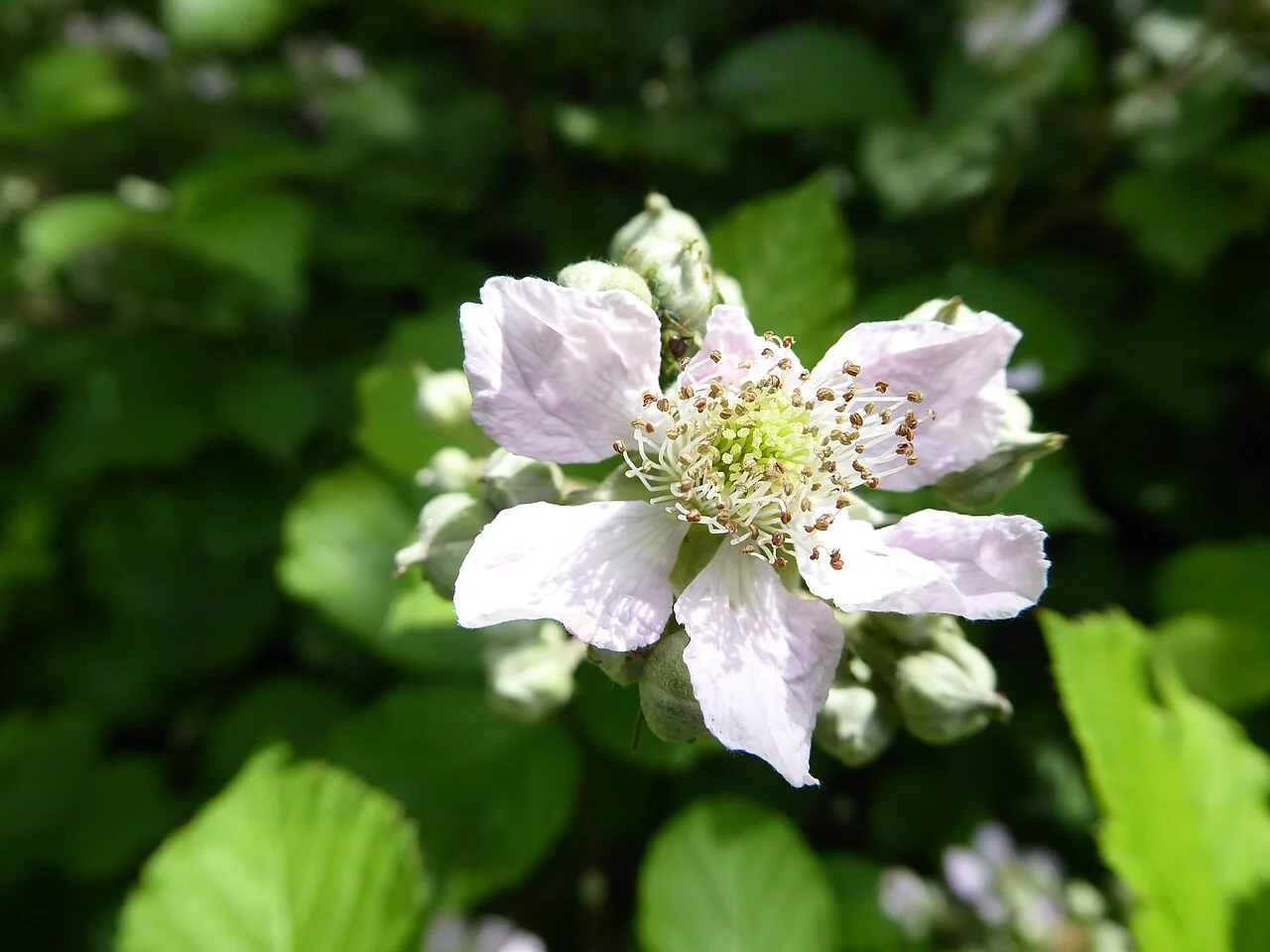
A close view of a Rubus fruticosus flower.
Rosa-Maria Rinkl / Wikimedia Commons / CC BY 4.0

Photo details
Resized and converted to WebP. No content edits.
Source: File:Brombeerenblüte.jpg
Reviewed . Source identification, photograph and license reviewed. The image illustrates the named plant; it does not verify dimensions or other plant traits.
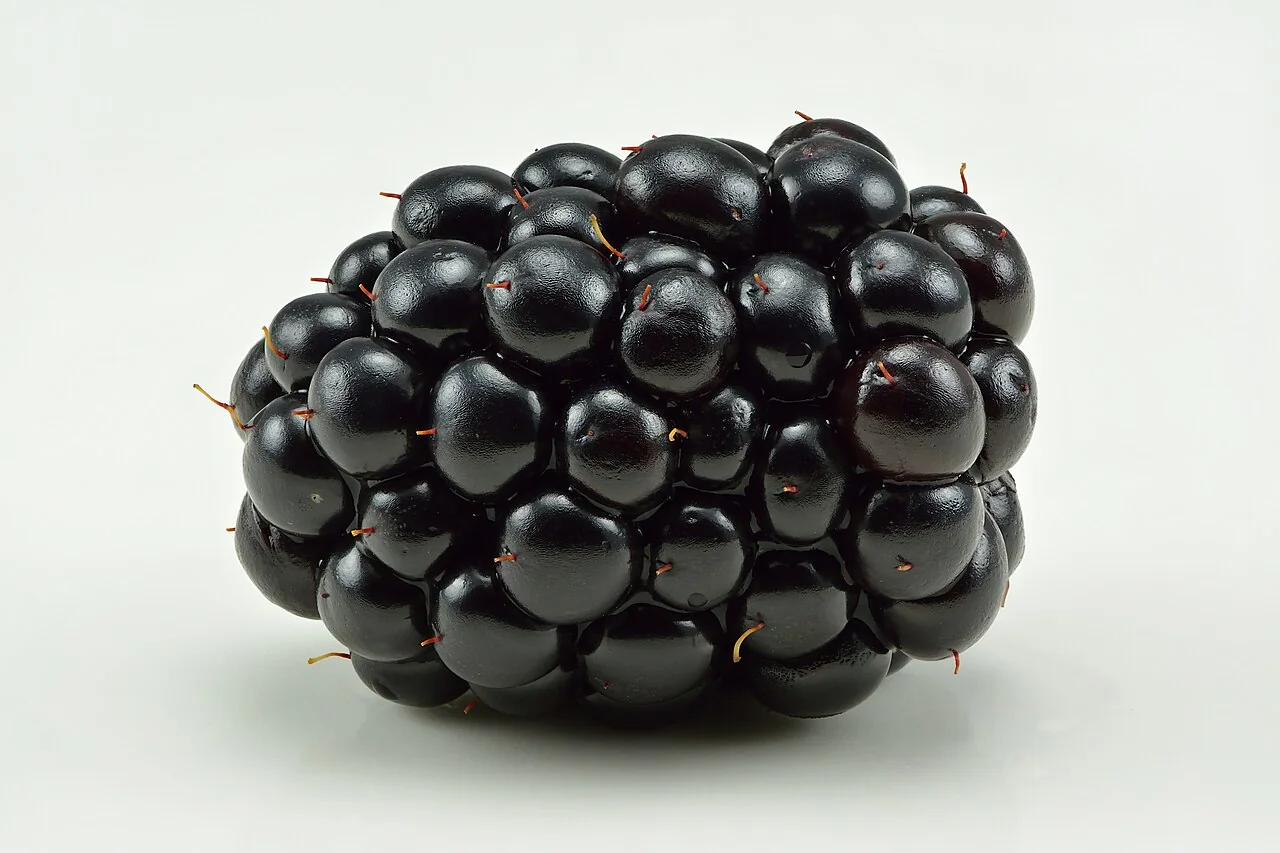
Fruit of Rubus fruticosus.
Ivar Leidus / Wikimedia Commons / CC BY-SA 4.0
.jpg)
Photo details
Resized and converted to WebP. No content edits.
Source: File:Blackberry (Rubus fruticosus).jpg
Reviewed . Source identification, photograph and license reviewed. The image illustrates the named plant; it does not verify dimensions or other plant traits.
Common names
30 names · 19 languagesOther languages (18)
- Dutch
-
- Bosbraam
- Braam
- Geplooide stokbraam[1]
- Afrikaans
-
- Braambessie[1]
- Chinese (Simplified)
-
- 黑莓[1]
- Czech
-
- ostružiník řasnatý[1]
- Danish
-
- Almindelig brombær[1]
- Finnish
-
- poimuvatukka[1]
- German
-
- Falten-Brombeere[1]
- Hungarian
-
- földi szeder[1]
- Korean
-
- 서양오엽딸기[1]
- Norwegian
-
- søtbjørnebær[1]
- Polish
-
- Jeżyna krzewiasta[1]
- Slovak
-
- ostružina obyčajná[1]
- Spanish
-
- Zarzamora[1]
- Swedish
-
- sötbjörnbär[1]
- Turkish
-
- böğürtlen[1]
- Welsh
-
- Llwyn mwyar duon[1]
Sources & name notes (1)
Names recorded in our plant catalogue and botanical sources, grouped by language. Usage can vary by region.
Numbered references identify names recorded by an external source. Other names are from our plant catalogue.
Community-curated iNaturalist taxonomy; common-name attestation, not an independent botanical determination.
Source records
- pilated-leaved blackberry — results[1].names[1]; taxon id 1090496; Rubus fruticosus.
- European blackberry — results[1].names[2]; taxon id 1090496; Rubus fruticosus.
- böğürtlen — results[1].names[3]; taxon id 1090496; Rubus fruticosus.
- Braambessie — results[1].names[4]; taxon id 1090496; Rubus fruticosus.
- Ежевика кустарниковая — results[1].names[5]; taxon id 1090496; Rubus fruticosus.
- Ежевика складчатый — results[1].names[6]; taxon id 1090496; Rubus fruticosus.
- Falten-Brombeere — results[1].names[7]; taxon id 1090496; Rubus fruticosus.
- ostružiník řasnatý — results[1].names[8]; taxon id 1090496; Rubus fruticosus.
- søtbjørnebær — results[1].names[9]; taxon id 1090496; Rubus fruticosus.
- Almindelig brombær — results[1].names[10]; taxon id 1090496; Rubus fruticosus.
- Geplooide stokbraam — results[1].names[11]; taxon id 1090496; Rubus fruticosus.
- poimuvatukka — results[1].names[12]; taxon id 1090496; Rubus fruticosus.
- sötbjörnbär — results[1].names[13]; taxon id 1090496; Rubus fruticosus.
- Zarzamora — results[1].names[14]; taxon id 1090496; Rubus fruticosus.
- Jeżyna krzewiasta — results[1].names[15]; taxon id 1090496; Rubus fruticosus.
- Grillige braam — results[1].names[16]; taxon id 1090496; Rubus fruticosus.
- Haakhaagbraam — results[1].names[17]; taxon id 1090496; Rubus fruticosus.
- Ronce ligneuse — results[1].names[18]; taxon id 1090496; Rubus fruticosus.
- Ronce de Bertram — results[1].names[19]; taxon id 1090496; Rubus fruticosus.
- Ronce commune — results[1].names[20]; taxon id 1090496; Rubus fruticosus.
- földi szeder — results[1].names[21]; taxon id 1090496; Rubus fruticosus.
- 서양오엽딸기 — results[1].names[22]; taxon id 1090496; Rubus fruticosus.
- 黑莓 — results[1].names[23]; taxon id 1090496; Rubus fruticosus.
- Llwyn mwyar duon — results[1].names[24]; taxon id 1090496; Rubus fruticosus.
- ostružina obyčajná — results[1].names[25]; taxon id 1090496; Rubus fruticosus.
General information
Accepted in the cited Kew taxonomic treatment.
Sources [1]Plant characteristics
Growing conditions
Moist
Sand (light) Loam (medium) Clay (heavy)
Acidic Neutral Alkaline
Shade, Partial shade, Full sun
Uses
Leaves, Fruit, Tea, Root
Dye, Fibre, Pioneer species, Bee forage
Description
Fruit - fresh or cooked. The best varieties offer delicious fruits. There are different types, making it possible to obtain ripe fruits from late July to November. The fruit is also used to make syrup, jam, and preserves. Some people may experience stomach discomfort if they eat the fruit before it is very ripe and soft. Root - cooked. The root should not be too young or too old and requires sufficient cooking time. Tea is made from the dried leaves, with the young leaves being the best. The leaves are often used in herbal tea mixtures. Young shoots - raw. These are harvested in the spring as soon as they appear above the ground, peeled, and added to salads.
Harvest
Sources and references
References for the information marked with source numbers on this page.
-
Royal Botanic Gardens, Kew
World Checklist of Vascular Plants, version 16, extracted 4 June 2026
Relevant sections
- Botanical family: WCVP v16, wcvp_names.csv row 372272; name ID 2976315; Rubus L.. Family column.
- Taxonomy: WCVP v16, wcvp_names.csv row 376730; name ID 2980303; Rubus fruticosus L..
Source checked on .
Source data licence: CC BY 3.0.