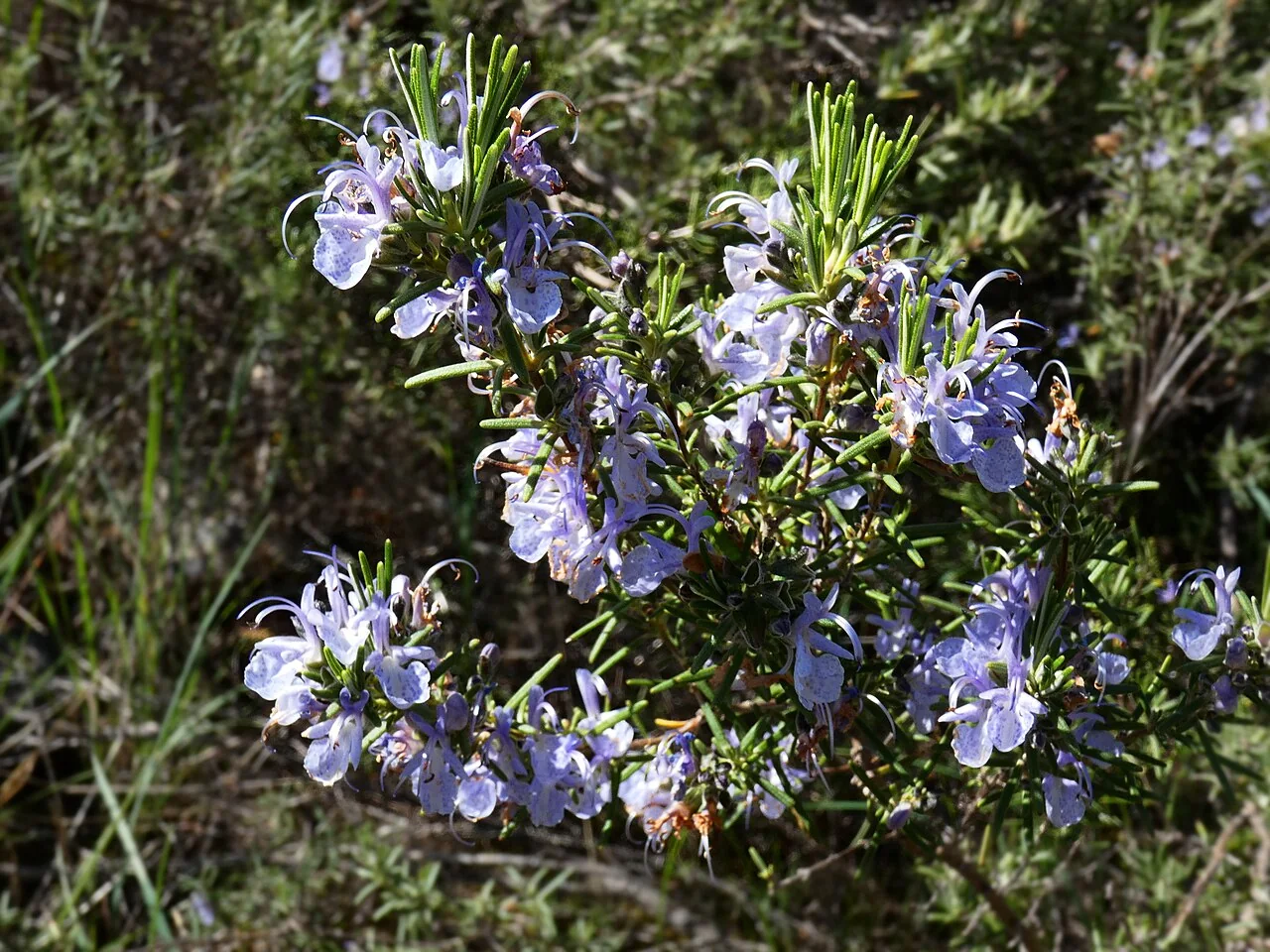
Pollinator plant

Rosemary

Rosmarinus officinalis

Linked agroforestry plant data
Pollinator recipe

Common names

14 names · 7 languages
EnglishYour language
Other languages (6)
Dutch
  • Rozemarijn[2]
French
  • Romarin[3]
  • Romarin officinal[6]
  • Romarin officinal, Romarin[6]
+1 more nameShow fewer names
  • Romarin, Romarin officinal[6]
German
Italian
Portuguese
Spanish
Sources & name notes (6)

Names recorded in our plant catalogue and botanical sources, grouped by language. Usage can vary by region.

Numbered references identify names recorded by an external source. Other names are from our plant catalogue.

[1] Rosmarinus officinalis — GBIF vernacular names (United Kingdom Species Inventory (UKSI)) ↗

GBIF aggregation of United Kingdom Species Inventory (UKSI). The original upstream source was not independently inspected; this is a sourced vernacular-name attestation, not a botanical determination.

Source records
  • Rosemary — results[28] at https://api.gbif.org/v1/species/2926634/vernacularNames?limit=1000&offset=0; taxonKey 2926634; sourceTaxonKey 180124569; Rosmarinus officinalis.
[2] Rosmarinus officinalis — GBIF vernacular names (Checklist Dutch Species Register - Nederlands Soortenregister) ↗

GBIF aggregation of Checklist Dutch Species Register - Nederlands Soortenregister. The original upstream source was not independently inspected; this is a sourced vernacular-name attestation, not a botanical determination.

Source records
  • Rozemarijn — results[29] at https://api.gbif.org/v1/species/2926634/vernacularNames?limit=1000&offset=0; taxonKey 2926634; sourceTaxonKey 152468695; Rosmarinus officinalis.
[3] Rosmarinus officinalis — GBIF vernacular names (GRIN Taxonomy) ↗

GBIF aggregation of GRIN Taxonomy. The original upstream source was not independently inspected; this is a sourced vernacular-name attestation, not a botanical determination.

Source records
  • romarin — results[18] at https://api.gbif.org/v1/species/2926634/vernacularNames?limit=1000&offset=0; taxonKey 2926634; sourceTaxonKey 101380097; Rosmarinus officinalis.
  • Rosmarin — results[9] at https://api.gbif.org/v1/species/2926634/vernacularNames?limit=1000&offset=0; taxonKey 2926634; sourceTaxonKey 101380097; Rosmarinus officinalis.
  • romero — results[19] at https://api.gbif.org/v1/species/2926634/vernacularNames?limit=1000&offset=0; taxonKey 2926634; sourceTaxonKey 101380097; Rosmarinus officinalis.
  • osmarini — results[16] at https://api.gbif.org/v1/species/2926634/vernacularNames?limit=1000&offset=0; taxonKey 2926634; sourceTaxonKey 101380097; Rosmarinus officinalis.
  • rosmarino — results[27] at https://api.gbif.org/v1/species/2926634/vernacularNames?limit=1000&offset=0; taxonKey 2926634; sourceTaxonKey 101380097; Rosmarinus officinalis.
  • alecrim — results[14] at https://api.gbif.org/v1/species/2926634/vernacularNames?limit=1000&offset=0; taxonKey 2926634; sourceTaxonKey 101380097; Rosmarinus officinalis.
[4] Rosmarinus officinalis — GBIF vernacular names (Integrated Taxonomic Information System (ITIS)) ↗

GBIF aggregation of Integrated Taxonomic Information System (ITIS). The original upstream source was not independently inspected; this is a sourced vernacular-name attestation, not a botanical determination.

Source records
  • romero — results[20] at https://api.gbif.org/v1/species/2926634/vernacularNames?limit=1000&offset=0; taxonKey 2926634; sourceTaxonKey 102254219; Rosmarinus officinalis.
[5] Rosmarinus officinalis — GBIF vernacular names (Flora e Funga do Brasil - Lista Oficial) ↗

GBIF aggregation of Flora e Funga do Brasil - Lista Oficial. The original upstream source was not independently inspected; this is a sourced vernacular-name attestation, not a botanical determination.

Source records
  • roméro — results[21] at https://api.gbif.org/v1/species/2926634/vernacularNames?limit=1000&offset=0; taxonKey 2926634; sourceTaxonKey 176308278; Rosmarinus officinalis.
  • rosmarino — results[26] at https://api.gbif.org/v1/species/2926634/vernacularNames?limit=1000&offset=0; taxonKey 2926634; sourceTaxonKey 176308278; Rosmarinus officinalis.
[6] Rosmarinus officinalis — GBIF vernacular names (TAXREF) ↗

GBIF aggregation of TAXREF. The original upstream source was not independently inspected; this is a sourced vernacular-name attestation, not a botanical determination.

Source records
  • Romarin officinal — results[1] at https://api.gbif.org/v1/species/2926634/vernacularNames?limit=1000&offset=0; taxonKey 2926634; sourceTaxonKey 221909080; Rosmarinus officinalis.
  • Romarin officinal, Romarin — results[4] at https://api.gbif.org/v1/species/2926634/vernacularNames?limit=1000&offset=0; taxonKey 2926634; sourceTaxonKey 221909080; Rosmarinus officinalis.
  • Romarin, Romarin officinal — results[5] at https://api.gbif.org/v1/species/2926634/vernacularNames?limit=1000&offset=0; taxonKey 2926634; sourceTaxonKey 221909080; Rosmarinus officinalis.
Plant references

Source-backed information

Published observations for this plant. Each reference supports the information beside it.

Taxonomy
Catalogue of Life treats Rosmarinus officinalis as a synonym of Salvia rosmarinus subsp. rosmarinus.

Taxonomic treatment in the August 2026 release; the catalogue record name is preserved.

Sources [1] [2]
Botanical family
Lamiaceae

Family in the cited taxonomic treatment.

Sources [2]
Native range
Medit.

Explicit native locality records in Kew WCVP v16; introduced and doubtful distributions excluded. Continent conversion follows the documented geographic mapping.

Sources [3]
Catalogue ratings

Who this plant supports

Honey bees

Low suitability
Nectar value Low
Pollen value Unknown
Agroforestry database

Complete plant information

Open full plant profile

Structure

Vegetation layer
Shrub
Size
Small
Dimensions
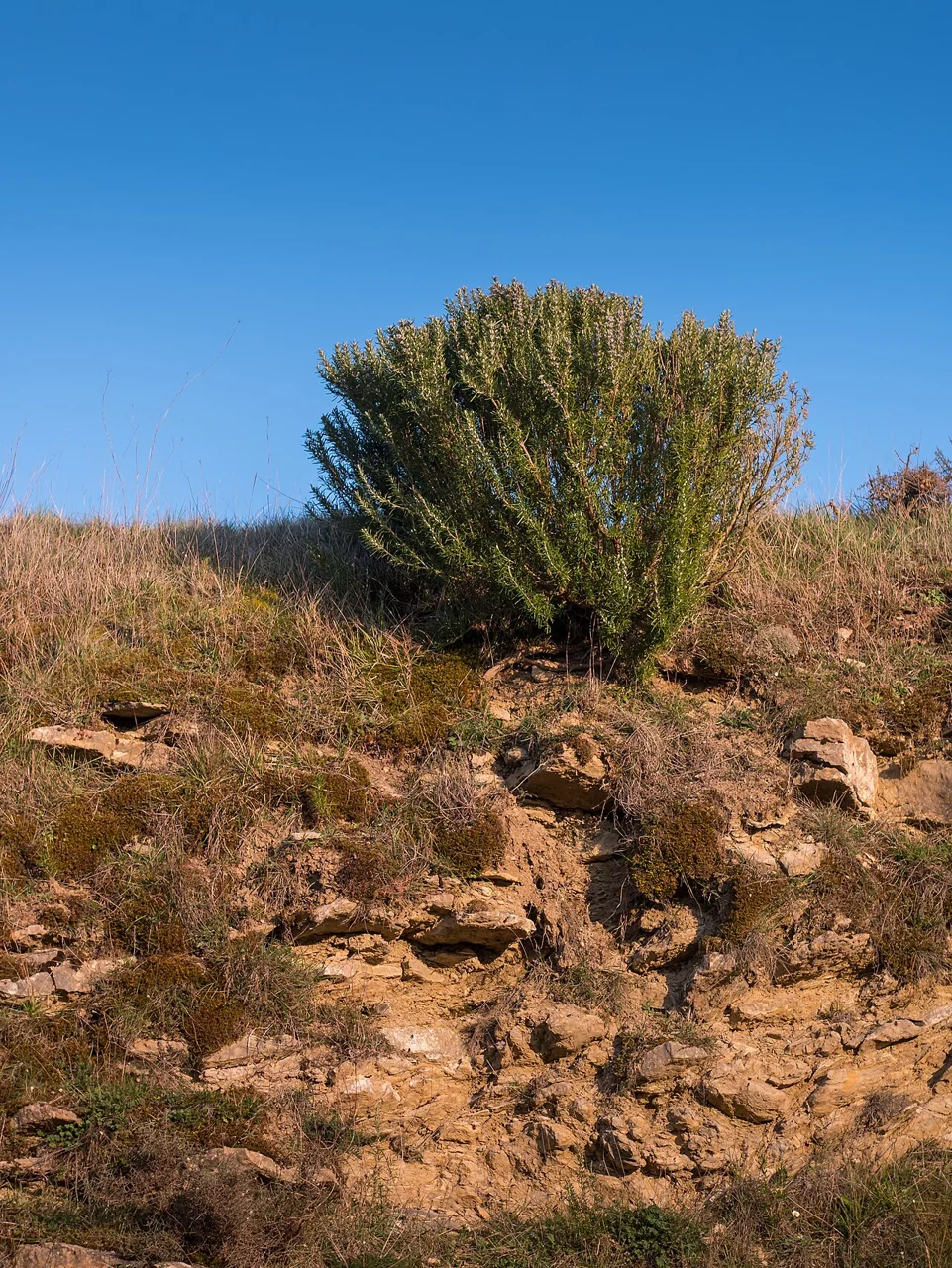
1.50 m high × 1.50 m wide
Growth rate
Moderate
Lifecycle
Perennial
Foliage
Evergreen

Site conditions

USDA hardiness
6-9
Moisture
Well-drained, Moist
Soil
Sandy, Loamy, Clay
pH
Acid, Neutral, Alkaline
Light
Sun

Uses

Edible parts
Leaves, Seasoning, Tea
Functions
Dye, Essential oil, Hedge, Incense, Repellent, Pollinator plant, Ground cover, Fragrant
Edibility
2 out of 5
Medicinal value
3 out of 5

Young shoots, leaves, and flowers of this plant can be eaten both raw and cooked. The leaves have a very strong, bitter, and somewhat resinous taste, while the flowers are slightly less intense. They are used in small amounts as a flavoring in soups, stews with vegetables such as peas and spinach, but also in sweet dishes like cakes, cookies, jam, and jelly. The leaves can be used both fresh and dried, but due to their tough texture, they should be finely chopped or the stems can be removed after cooking. A fragrant tea can be made from fresh or dried leaves, which is considered extra delicious when mixed with wormwood.

Sources and references

References for the information marked with source numbers on this page.

Sources checked
  1. Catalogue of Life Rosmarinus officinalis — Catalogue of Life COL26.8

    COL26.8 (2026-08-20). Contributing checklist: Synonymic Checklists of the Vascular Plants of the World. This is taxonomic evidence, not an independent ecological study.

    Supports: Taxonomy
    Relevant sections
    • Taxonomy: NameUsage.tsv line 1156289; ID 4TFBR; rank species; status synonym

    Source checked on .

    Source data licence: CC BY 4.0.

  2. Catalogue of Life Salvia rosmarinus subsp. rosmarinus — Catalogue of Life COL26.8

    COL26.8 (2026-08-20). Contributing checklist: Synonymic Checklists of the Vascular Plants of the World. This is taxonomic evidence, not an independent ecological study.

    Supports: TaxonomyBotanical family
    Relevant sections
    • Taxonomy: NameUsage.tsv line 4800001; ID DNX5M; rank subspecies; status accepted
    • Botanical family: NameUsage.tsv line 4800001; ID DNX5M; rank subspecies; status accepted

    Source checked on .

    Source data licence: CC BY 4.0.

  3. Royal Botanic Gardens, Kew Salvia rosmarinus — Kew WCVP native distribution

    Native distribution and taxonomic treatment from the official WCVP v16 export (4 June 2026). The link opens the corresponding POWO taxon. Source rows are retained in the native-range audit archive.

    Supports: Native range
    Relevant sections
    • Native range: WCVP v16; wcvp_names.csv lines 162304, 1094240; wcvp_distribution.csv native locality lines 239415, 239416, 239417, 239418, 239419, 239420, 239421, 239423, 239424, 239426, 239427, 239429, 239430, 239431, 239432, 239433, 239438, 239439, 239441

    Source checked on .

    Source data licence: CC BY 3.0.