Rosmarinus officinalis
Rosemary
Explore the size, hardiness, soil, light, edible uses and harvest period of Rosmarinus officinalis.
Plant photos
2 photos · Select to enlarge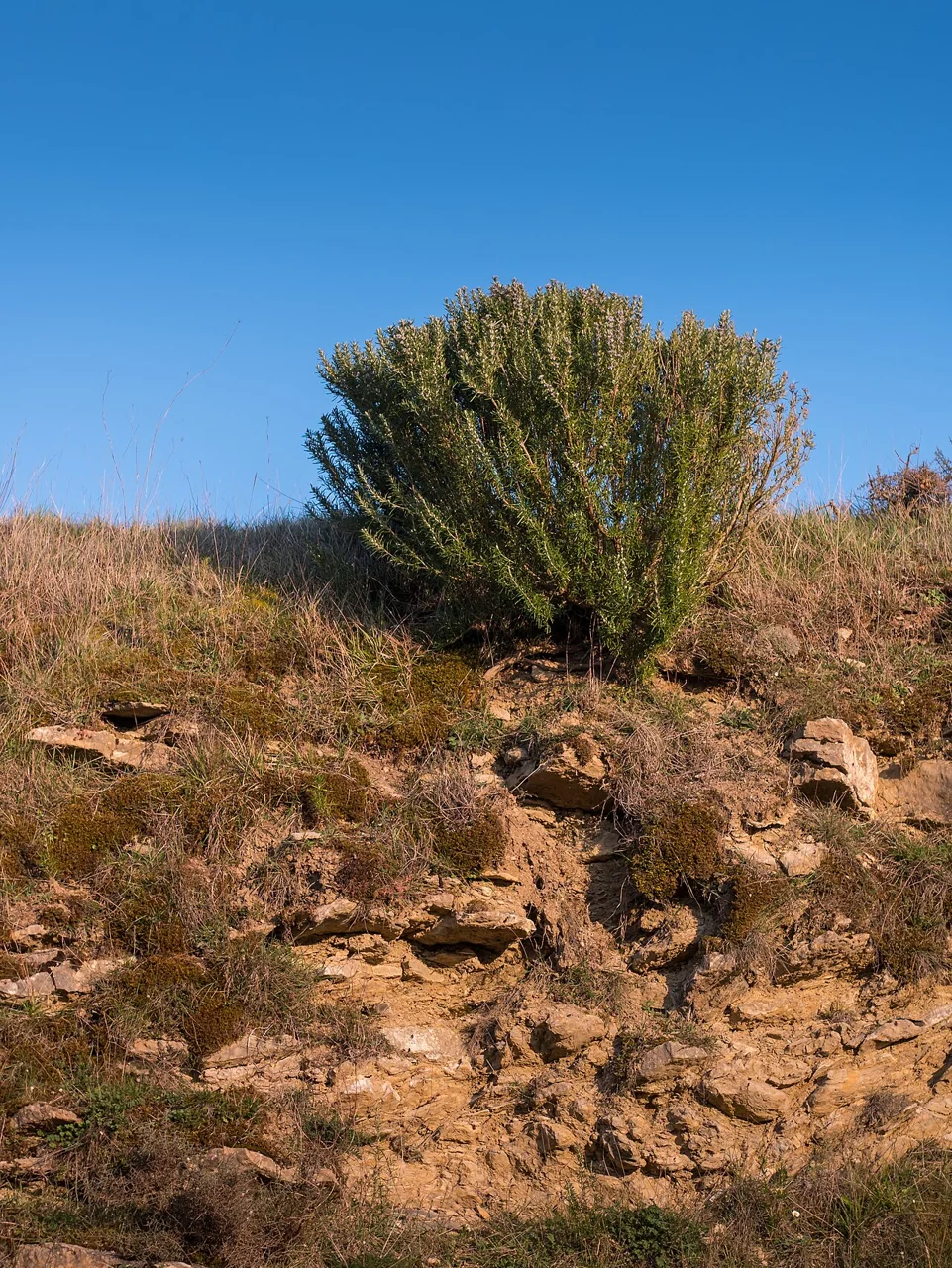
The branching growth of Salvia rosmarinus.
Basotxerri / Wikimedia Commons / CC BY-SA 4.0

Photo details
Resized and converted to WebP. No content edits.
Source: File:Vitoria - Olarizu - Cantera - Romero 01.jpg
Reviewed . Source identification, photograph and license reviewed. The image illustrates the named plant; it does not verify dimensions or other plant traits.
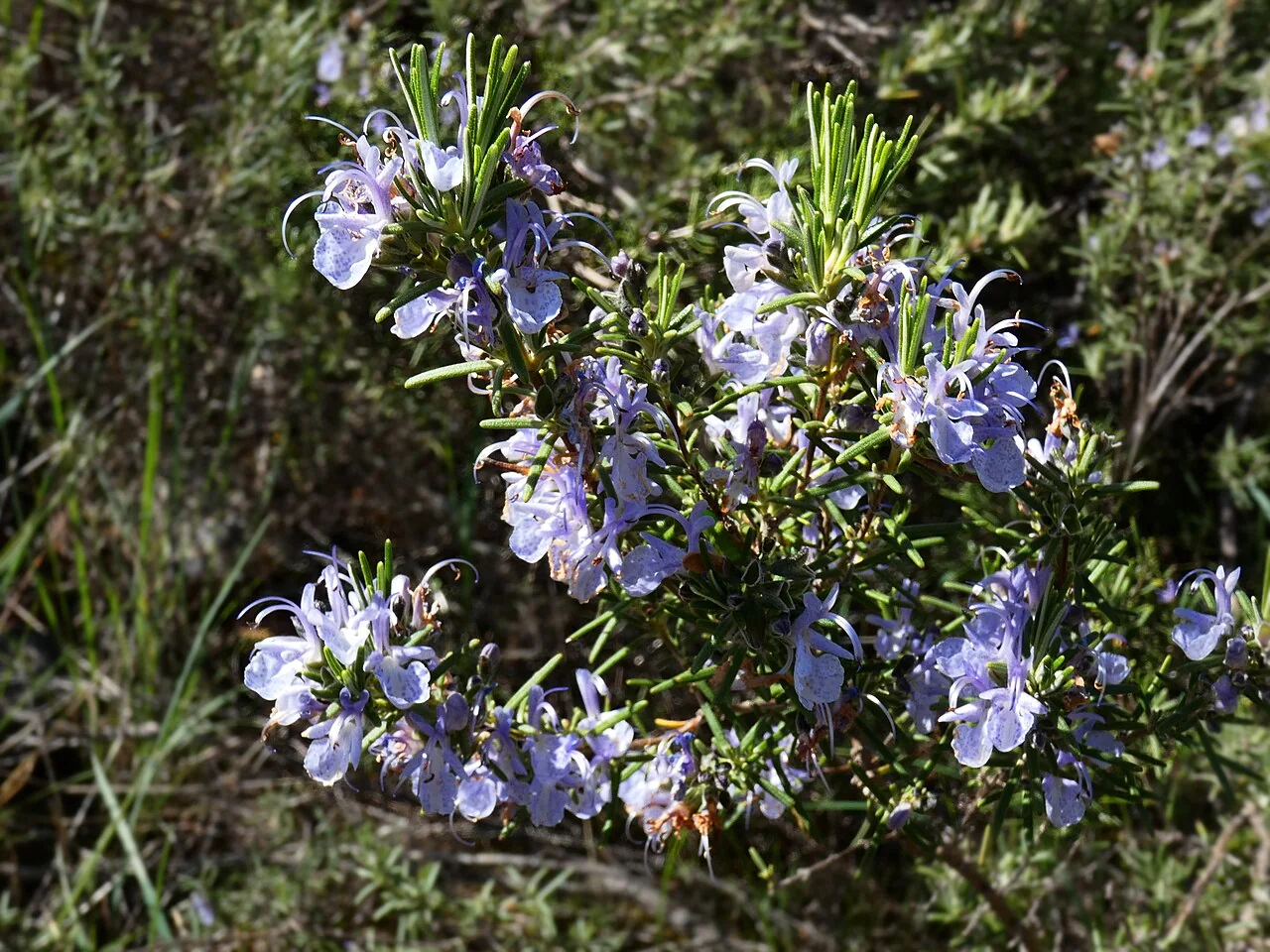
Flowers of Salvia rosmarinus.
Miguel Angel Masegosa Martínez / Wikimedia Commons / CC BY 2.0
-Rosmarinus_officinalis_(41960388224).jpg)
Photo details
Resized and converted to WebP. No content edits.
Source: File:P1090247(4x3)-Rosmarinus officinalis (41960388224).jpg
Reviewed . Source identification, photograph and license reviewed. The image illustrates the named plant; it does not verify dimensions or other plant traits.
Common names
3 names · 3 languages- EnglishYour language
-
- Rosemary
Other languages (2)
- Dutch
-
- Rozemarijn
- French
-
- Romarin
Sources & name notes
Names recorded in our plant catalogue, grouped by language. Usage can vary by region.
General information
Accepted in the cited taxonomic treatment. Botanical references may use alternative names.
Sources [1]Plant characteristics
NC State landscape size range; converted from feet and inches. Size varies with site, age and management.
Sources [2]NC State landscape size range; converted from feet and inches. Size varies with site, age and management.
Sources [2]Whole-plant habit and form as described by NC State.
Sources [2]Uses
Leaves, Condiment, Tea
Dye, Essential oil, Hedge, Incense, Repellent, Bee forage, Ground cover, Fragrant
Description
Young shoots, leaves, and flowers of this plant can be eaten both raw and cooked. The leaves have a very strong, bitter, and somewhat resinous taste, while the flowers are slightly less intense. They are used in small amounts as a flavoring in soups, stews with vegetables such as peas and spinach, but also in sweet dishes like cakes, cookies, jam, and jelly. The leaves can be used both fresh and dried, but due to their tough texture, they should be finely chopped or the stems can be removed after cooking. A fragrant tea can be made from fresh or dried leaves, which is considered extra delicious when mixed with wormwood.
Harvest
Sources and references
References for the information marked with source numbers on this page.
-
Royal Botanic Gardens, Kew
World Checklist of Vascular Plants, version 16, extracted 4 June 2026
Relevant sections
- Taxonomy: WCVP version 16, wcvp_names.csv: Rosmarinus officinalis L., name ID 179873, row 1094240; Salvia rosmarinus Spenn., name ID 183733, row 162304
- Botanical family: WCVP v16, wcvp_names.csv row 1095753; name ID 179854; Rosmarinus L.. Family column.
Source checked on .
Source data licence: CC BY 3.0.
-
NC State Extension, North Carolina State University
Salvia rosmarinus — Extension Gardener Plant Toolbox
Supports: HeightSpreadGrowth rateFoliageGrowth habitLightSoil moistureSoil textureSoil pHUSDA hardiness
Relevant sections
- Height: Dimensions > Height; Height: 4 ft. 0 in. - 5 ft. 0 in.
- Spread: Dimensions > Width; Width: 3 ft. 0 in. - 4 ft. 0 in.
- Growth rate: Growth Rate
- Foliage: Woody Plant Leaf Characteristics
- Growth habit: Habit/Form
- Light: Light
- Soil moisture: Soil Drainage
- Soil texture: Soil Texture
- Soil pH: Soil pH
- USDA hardiness: USDA Plant Hardiness Zone
Source checked on .