Pollinator plant

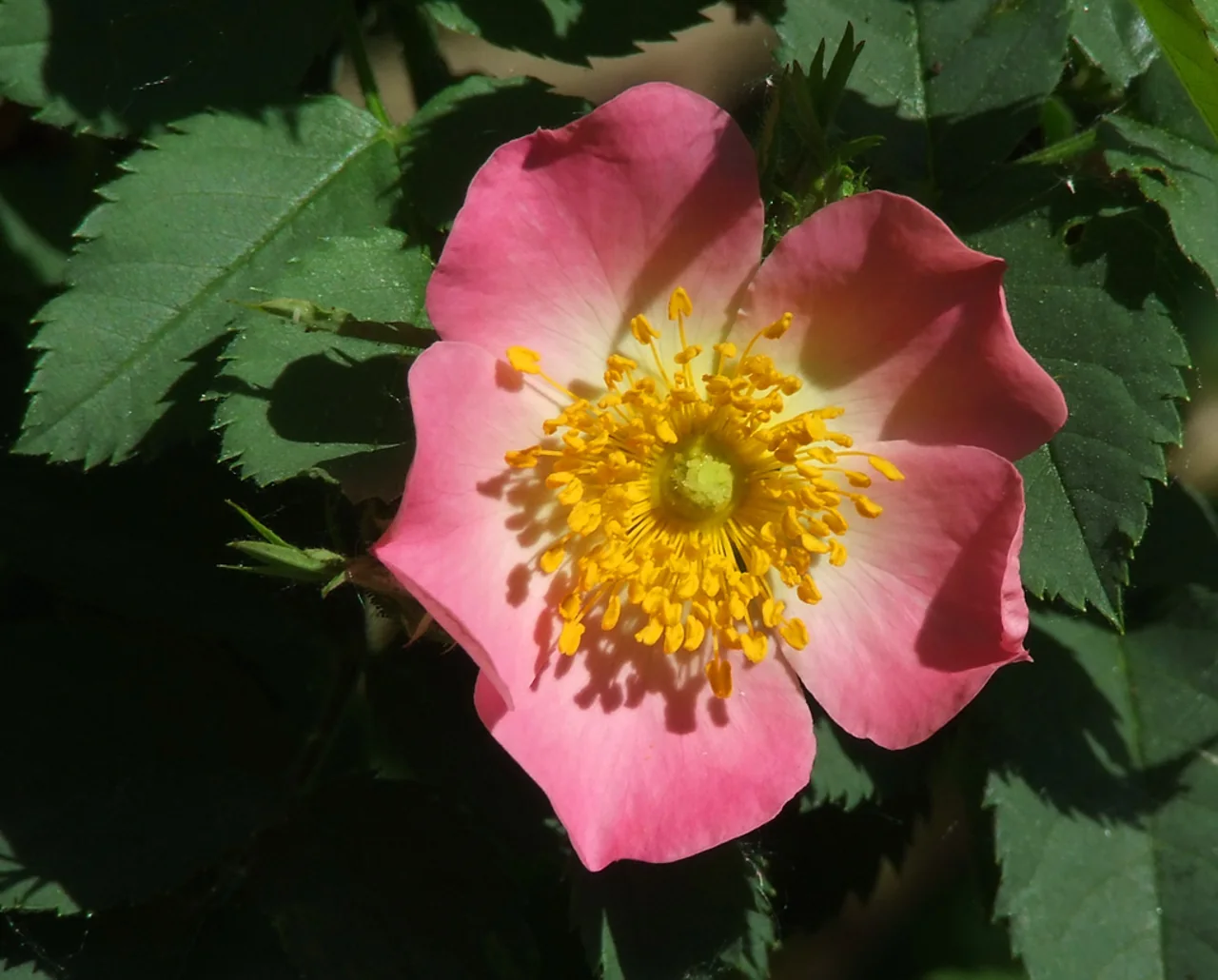
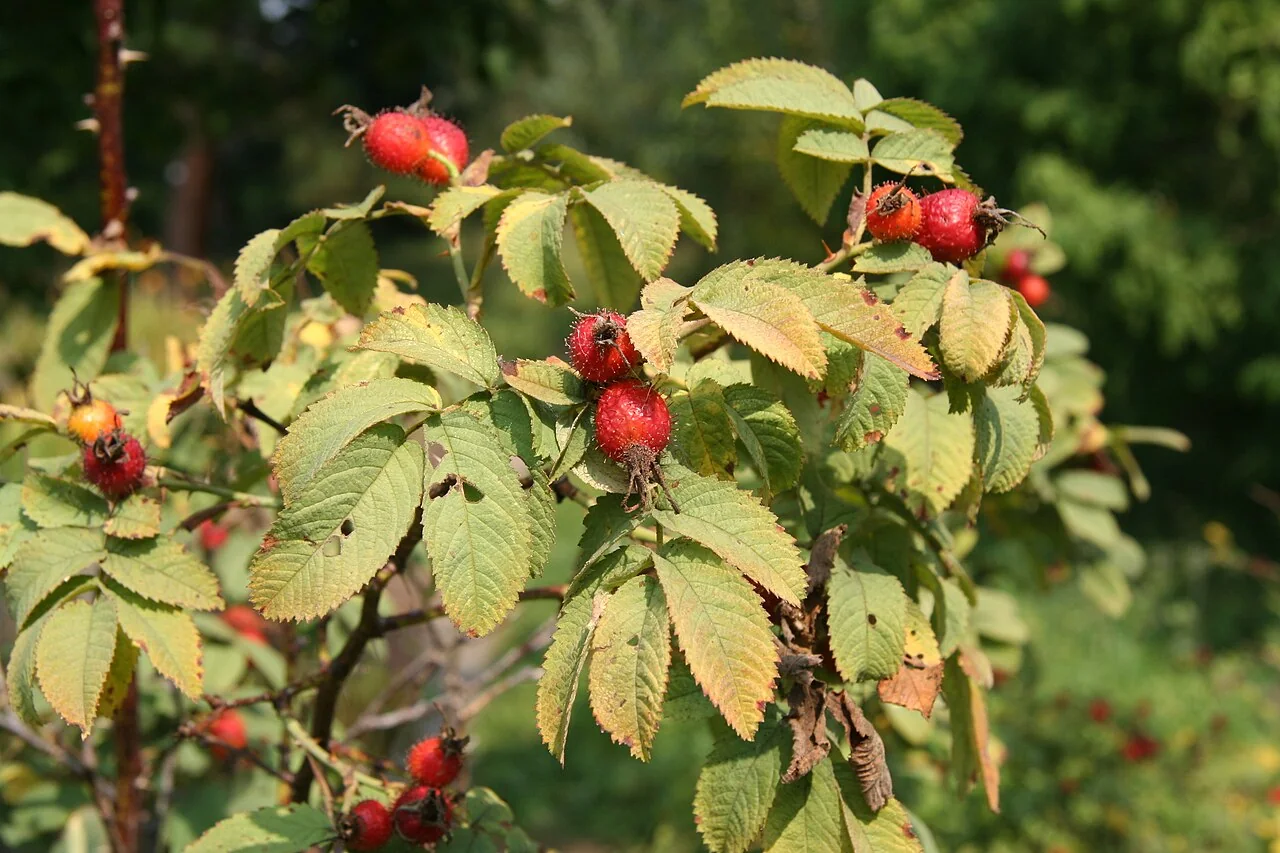
Apple Rose

Rosa villosa

Linked agroforestry plant data
Pollinator recipe

Common names

22 names · 17 languages
EnglishYour language
Other languages (16)
Dutch
French
  • Rosier velu[2][3]
  • Rosier à pommes
Chinese (Simplified)
  • 苹果薔薇[3]
Chinese (Traditional)
  • 蘋果薔薇[3]
Czech
  • růže měkká[3]
Danish
  • Spansk hyben-rose[3]
Finnish
  • luumuruusu[3]
German
Hungarian
  • gyapjas rózsa[3]
Lithuanian
  • Stambiavaisis erškėtis[3]
Norwegian
  • plommenype[3]
Polish
  • Róża jabłkowata[3]
Russian
  • Шиповник мохнатый[3]
Slovak
  • ruža jabĺčková[3]
Swedish
Ukrainian
  • Шипшина волохата[3]
Sources & name notes (3)

Names recorded in our plant catalogue and botanical sources, grouped by language. Usage can vary by region.

Numbered references identify names recorded by an external source. Other names are from our plant catalogue.

[1] Rosa villosa — Plant Toolbox common names ↗

NC State Extension Gardener Plant Toolbox; English common names in a United States horticultural reference.

Source records
  • Apple Rose — ul#common_names > li:nth-of-type(1); heading: Common Name(s):; Rosa villosa.
  • Shaggy Rose — ul#common_names > li:nth-of-type(2); heading: Common Name(s):; Rosa villosa.
[2] Rosa villosa — iNaturalist taxon names ↗

Community-curated iNaturalist taxonomy. This is a common-name attestation, not an independent botanical determination.

Source records
  • Apple Rose — results[0].names[1]; taxon id 167996; Rosa villosa.
  • Viltroos — results[0].names[5]; taxon id 167996; Rosa villosa.
  • Bottelroos — results[0].names[4]; taxon id 167996; Rosa villosa.
  • Apfelrose — results[0].names[8]; taxon id 167996; Rosa villosa.
  • villous downy-rose — results[0].names[9]; taxon id 167996; Rosa villosa.
  • Rosier velu — results[0].names[2]; taxon id 167996; Rosa villosa.
[3] Rosa villosa — iNaturalist taxon names ↗

Community-curated iNaturalist taxonomy; common-name attestation, not an independent botanical determination.

Source records
  • Apple Rose — results[0].names[1]; taxon id 167996; Rosa villosa.
  • Viltroos — results[0].names[5]; taxon id 167996; Rosa villosa.
  • Bottelroos — results[0].names[4]; taxon id 167996; Rosa villosa.
  • Apfelrose — results[0].names[8]; taxon id 167996; Rosa villosa.
  • villous downy-rose — results[0].names[9]; taxon id 167996; Rosa villosa.
  • Rosier velu — results[0].names[2]; taxon id 167996; Rosa villosa.
  • růže měkká — results[0].names[3]; taxon id 167996; Rosa villosa.
  • plommenype — results[0].names[6]; taxon id 167996; Rosa villosa.
  • Шиповник мохнатый — results[0].names[7]; taxon id 167996; Rosa villosa.
  • Stambiavaisis erškėtis — results[0].names[10]; taxon id 167996; Rosa villosa.
  • hartsros — results[0].names[11]; taxon id 167996; Rosa villosa.
  • plommonros — results[0].names[12]; taxon id 167996; Rosa villosa.
  • 蘋果薔薇 — results[0].names[13]; taxon id 167996; Rosa villosa.
  • 苹果薔薇 — results[0].names[14]; taxon id 167996; Rosa villosa.
  • Шипшина волохата — results[0].names[15]; taxon id 167996; Rosa villosa.
  • gyapjas rózsa — results[0].names[16]; taxon id 167996; Rosa villosa.
  • Spansk hyben-rose — results[0].names[17]; taxon id 167996; Rosa villosa.
  • Róża jabłkowata — results[0].names[18]; taxon id 167996; Rosa villosa.
  • luumuruusu — results[0].names[19]; taxon id 167996; Rosa villosa.
  • ruža jabĺčková — results[0].names[20]; taxon id 167996; Rosa villosa.
Plant references

Source-backed information

Published observations for this plant. Each reference supports the information beside it.

Botanical family
Rosaceae

Genus-level classification for Rosa; this does not confirm the complete catalogue name.

Sources [1]
Taxonomy
NC State Extension publishes a profile under Rosa villosa.

Profile-name match; no accepted-name status is asserted.

Sources [2]
Mature height
1.22–2.44 m

NC State Extension profile. Converted from the source range in feet and inches; mature size varies with growing conditions.

Sources [2]
Mature spread
1.52–1.83 m

NC State Extension profile. Converted from the source range in feet and inches; mature size varies with growing conditions.

Sources [2]
Plant habit
Arching; Dense; Multi-stemmed

NC State Extension profile.

Sources [2]
Life cycle
Perennial

NC State Extension profile.

Sources [2]
Growth rate
Medium

NC State Extension profile.

Sources [2]
Foliage
Deciduous

NC State Extension profile.

Sources [2]
Light
Full sun (6 or more hours of direct sunlight a day); Partial Shade (Direct sunlight only part of the day, 2-6 hours)

NC State Extension profile.

Sources [2]
Moisture and drainage
Good Drainage; Moist

NC State Extension profile.

Sources [2]
Soil texture
Clay; Loam (Silt); Sand

NC State Extension profile.

Sources [2]
Soil pH
Acid (<6.0); Alkaline (>8.0); Neutral (6.0-8.0)

NC State Extension profile. These source categories do not certify the catalogue’s numeric pH interval.

Sources [2]
Flowering season
Autumn; Summer

NC State Extension profile. Seasons reflect the source region and do not verify the catalogue’s exact flowering months.

Sources [2]
Native range
Europe: Scandinavia south to Spain and west to the Caucasus.

NC State Extension profile. Origin reported by the source; this is not a claim of local nativeness.

Sources [2]
Catalogue ratings

Who this plant supports

Honey bees

High suitability
Nectar value Unknown
Pollen value High
Agroforestry database

Complete plant information

Open full plant profile

Structure

Vegetation layer
Shrub
Size
Small
Dimensions
1.80 m high × 0.00 m wide
Growth rate
Fast
Lifecycle
Perennial
Foliage
Deciduous

Site conditions

USDA hardiness
4-8
Moisture
Moist
Soil
Sandy, Loamy, Clay
pH
Acid, Neutral, Alkaline
Light
Partial shade, Sun

Uses

Edible parts
Fruit, Tea, Seed
Functions
Hedge, Fragrant
Edibility
4 out of 5
Medicinal value
1 out of 5

Fruits - edible both raw and cooked. They have a pleasantly sour pulp and can be used to make jam and jelly. The fruits are about 30 mm in diameter but have only a thin layer of flesh surrounding many seeds. They are rich in vitamin C, with 1303 mg per 100 g (fresh weight). Be cautious when eating these fruits due to potential hazards; refer to the explanation above. The seeds are a good source of vitamin E and can be ground into powder to add to flour or other foods as a supplement. Make sure to remove the seed hairs. The leaves can be used as a coffee substitute. A pleasant fruit-flavored tea is made from the dried fruits.

Sources and references

References for the information marked with source numbers on this page.

Sources checked
  1. Catalogue of Life Rosa — Catalogue of Life COL26.8

    COL26.8 (2026-08-20). Contributing checklist: Synonymic Checklists of the Vascular Plants of the World. This is taxonomic evidence, not an independent ecological study.

    Supports: Botanical family
    Relevant sections
    • Botanical family: NameUsage.tsv line 1900906; ID 63S6D; rank genus; status accepted

    Source checked on .

    Source data licence: CC BY 4.0.

  2. NC State Extension Rosa villosa — Plant Toolbox

    NC State Extension Gardener Plant Toolbox. Growing conditions and seasons reflect its United States horticultural context.

    Relevant sections
    • Taxonomy: Main botanical heading (h1)
    • Mature height: Dimensions / Height
    • Mature spread: Dimensions / Width
    • Plant habit: Habit/Form
    • Life cycle: Life Cycle
    • Growth rate: Growth Rate
    • Foliage: Woody Plant Leaf Characteristics
    • Light: Light
    • Moisture and drainage: Soil Drainage
    • Soil texture: Soil Texture
    • Soil pH: Soil pH
    • Flowering season: Flower Bloom Time
    • Native range: Country Or Region Of Origin

    Source checked on .