Rosa villosa
Apple Rose
Explore the size, hardiness, soil, light, edible uses and harvest period of Rosa villosa.
Plant photos
2 photos · Select to enlarge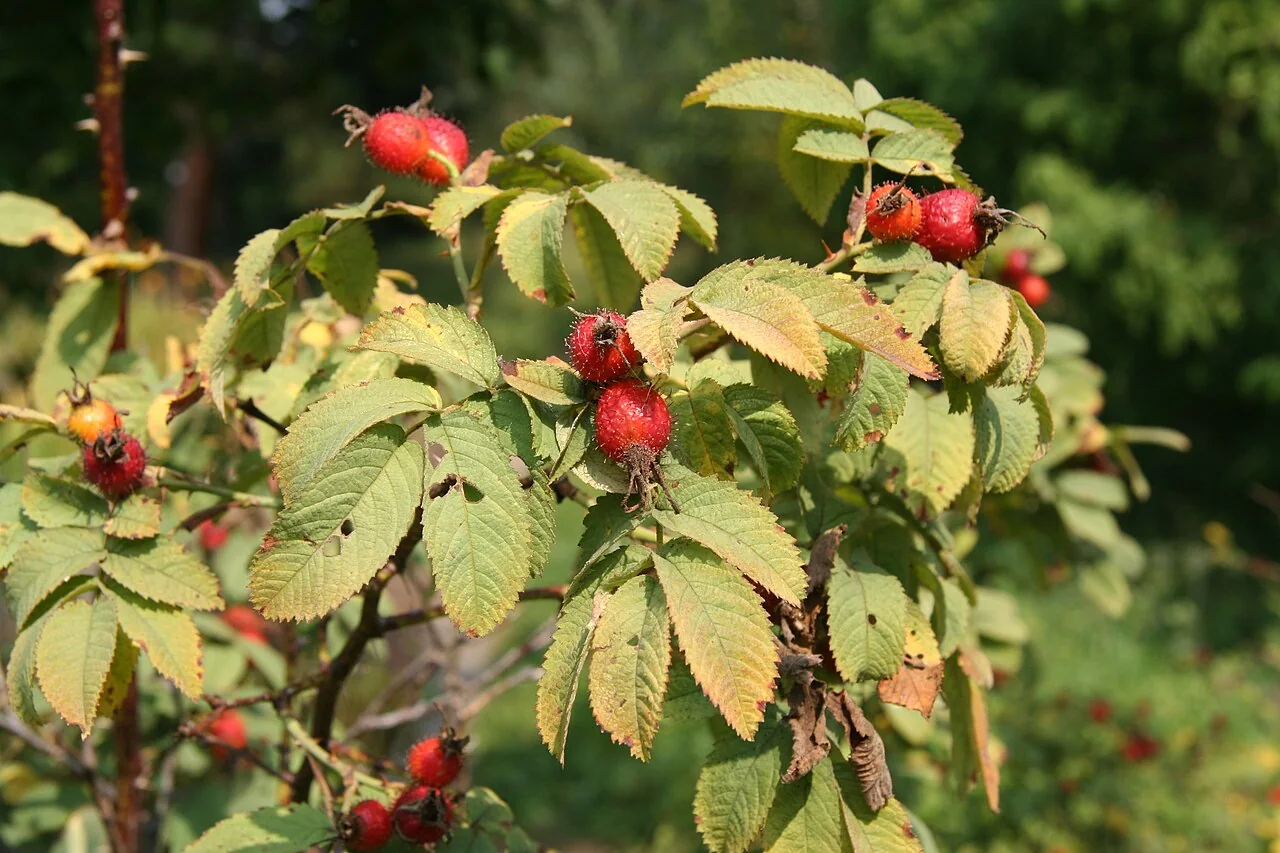
A fruiting Rosa villosa plant.
Michael Wolf / Wikimedia Commons / CC BY-SA 3.0

Photo details
Resized and converted to WebP. No content edits.
Source: File:Rosa villosa fruit 01.jpg
Reviewed . Source identification, photograph and license reviewed. The image illustrates the named plant; it does not verify dimensions or other plant traits.
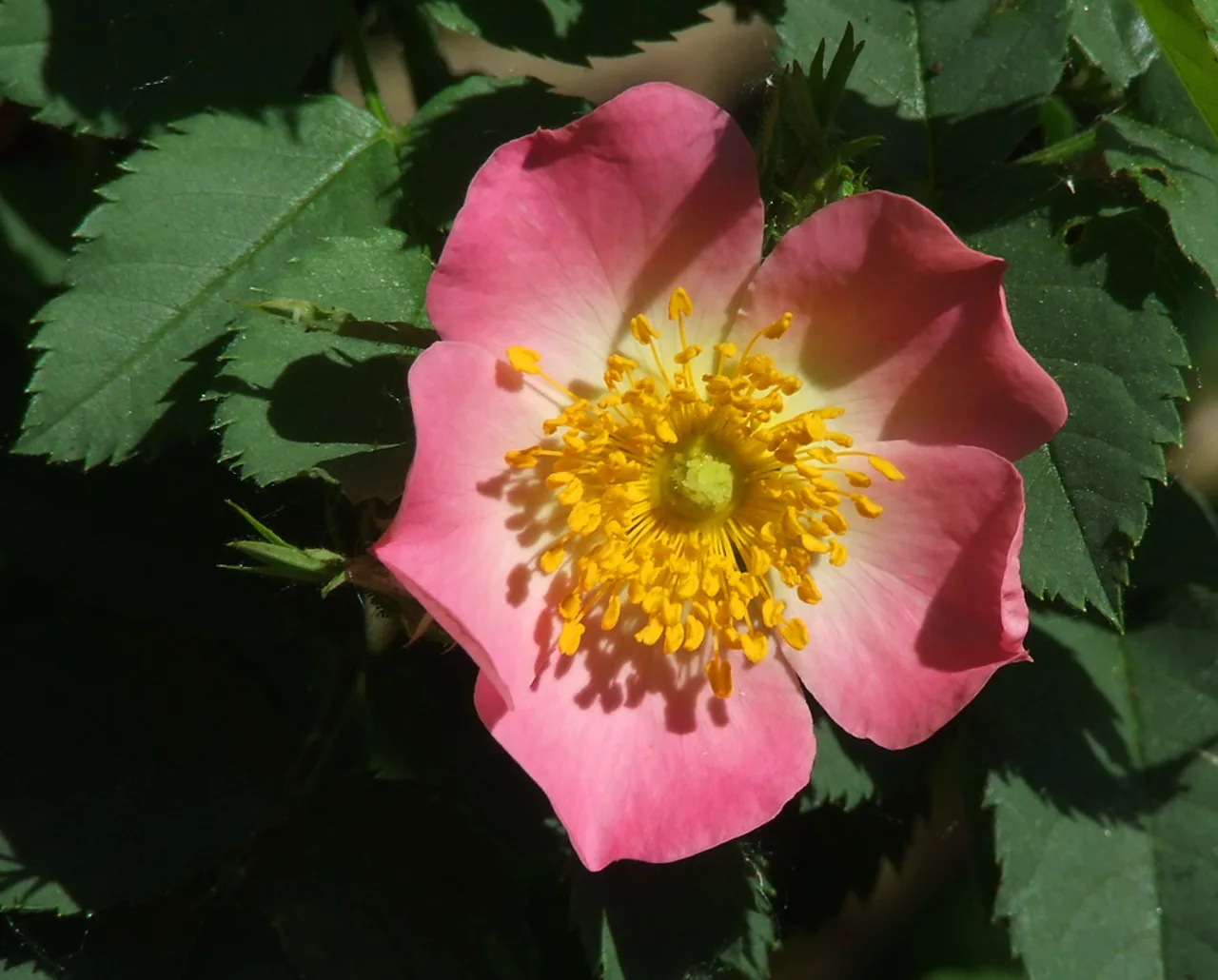
A close view of a Rosa villosa flower.
I, Manfred Heyde / Wikimedia Commons / CC BY-SA 3.0

Photo details
Resized and converted to WebP. No content edits.
Source: File:Rosa villosa.jpg
Reviewed . Source identification, photograph and license reviewed. The image illustrates the named plant; it does not verify dimensions or other plant traits.
Common names
21 names · 17 languagesOther languages (16)
- French
-
- Rosier velu[1]
- Rosier à pommes
- Chinese (Simplified)
-
- 苹果薔薇[1]
- Chinese (Traditional)
-
- 蘋果薔薇[1]
- Czech
-
- růže měkká[1]
- Danish
-
- Spansk hyben-rose[1]
- Finnish
-
- luumuruusu[1]
- German
-
- Apfelrose[1]
- Hungarian
-
- gyapjas rózsa[1]
- Lithuanian
-
- Stambiavaisis erškėtis[1]
- Norwegian
-
- plommenype[1]
- Polish
-
- Róża jabłkowata[1]
- Russian
-
- Шиповник мохнатый[1]
- Slovak
-
- ruža jabĺčková[1]
- Ukrainian
-
- Шипшина волохата[1]
Sources & name notes (1)
Names recorded in our plant catalogue and botanical sources, grouped by language. Usage can vary by region.
Numbered references identify names recorded by an external source. Other names are from our plant catalogue.
Community-curated iNaturalist taxonomy; common-name attestation, not an independent botanical determination.
Source records
- Apple Rose — results[0].names[1]; taxon id 167996; Rosa villosa.
- Rosier velu — results[0].names[2]; taxon id 167996; Rosa villosa.
- růže měkká — results[0].names[3]; taxon id 167996; Rosa villosa.
- Bottelroos — results[0].names[4]; taxon id 167996; Rosa villosa.
- Viltroos — results[0].names[5]; taxon id 167996; Rosa villosa.
- plommenype — results[0].names[6]; taxon id 167996; Rosa villosa.
- Шиповник мохнатый — results[0].names[7]; taxon id 167996; Rosa villosa.
- Apfelrose — results[0].names[8]; taxon id 167996; Rosa villosa.
- villous downy-rose — results[0].names[9]; taxon id 167996; Rosa villosa.
- Stambiavaisis erškėtis — results[0].names[10]; taxon id 167996; Rosa villosa.
- hartsros — results[0].names[11]; taxon id 167996; Rosa villosa.
- plommonros — results[0].names[12]; taxon id 167996; Rosa villosa.
- 蘋果薔薇 — results[0].names[13]; taxon id 167996; Rosa villosa.
- 苹果薔薇 — results[0].names[14]; taxon id 167996; Rosa villosa.
- Шипшина волохата — results[0].names[15]; taxon id 167996; Rosa villosa.
- gyapjas rózsa — results[0].names[16]; taxon id 167996; Rosa villosa.
- Spansk hyben-rose — results[0].names[17]; taxon id 167996; Rosa villosa.
- Róża jabłkowata — results[0].names[18]; taxon id 167996; Rosa villosa.
- luumuruusu — results[0].names[19]; taxon id 167996; Rosa villosa.
- ruža jabĺčková — results[0].names[20]; taxon id 167996; Rosa villosa.
General information
Accepted in the cited Kew taxonomic treatment.
Sources [1]Plant characteristics
NC State landscape size range; converted from feet and inches. Size varies with site, age and management.
Sources [2]NC State landscape size range; converted from feet and inches. Size varies with site, age and management.
Sources [2]Whole-plant habit and form as described by NC State.
Sources [2]Growing conditions
USDA zones listed by NC State; winter survival does not establish reliable cropping.
Sources [2]Uses
Fruit, Tea, Seed
Hedge, Fragrant
Description
Fruits - edible both raw and cooked. They have a pleasantly sour pulp and can be used to make jam and jelly. The fruits are about 30 mm in diameter but have only a thin layer of flesh surrounding many seeds. They are rich in vitamin C, with 1303 mg per 100 g (fresh weight). Be cautious when eating these fruits due to potential hazards; refer to the explanation above. The seeds are a good source of vitamin E and can be ground into powder to add to flour or other foods as a supplement. Make sure to remove the seed hairs. The leaves can be used as a coffee substitute. A pleasant fruit-flavored tea is made from the dried fruits.
Harvest
Sources and references
References for the information marked with source numbers on this page.
-
Royal Botanic Gardens, Kew
World Checklist of Vascular Plants, version 16, extracted 4 June 2026
Relevant sections
- Botanical family: WCVP v16, wcvp_names.csv row 846416; name ID 2964569; Rosa L.. Family column.
- Taxonomy: WCVP v16, wcvp_names.csv row 370789; name ID 2975792; Rosa villosa L..
Source checked on .
Source data licence: CC BY 3.0.
-
NC State Extension, North Carolina State University
Rosa villosa — Extension Gardener Plant Toolbox
Supports: HeightSpreadGrowth rateFoliageGrowth habitLife cycleLightSoil moistureSoil textureSoil pHUSDA hardiness
Relevant sections
- Height: Dimensions > Height; Height: 4 ft. 0 in. - 8 ft. 0 in.
- Spread: Dimensions > Width; Width: 5 ft. 0 in. - 6 ft. 0 in.
- Growth rate: Growth Rate
- Foliage: Woody Plant Leaf Characteristics
- Growth habit: Habit/Form
- Life cycle: Life Cycle
- Light: Light
- Soil moisture: Soil Drainage
- Soil texture: Soil Texture
- Soil pH: Soil pH
- USDA hardiness: USDA Plant Hardiness Zone
Source checked on .