Apricot
Prunus armeniaca
Linked agroforestry plant dataPlant photos
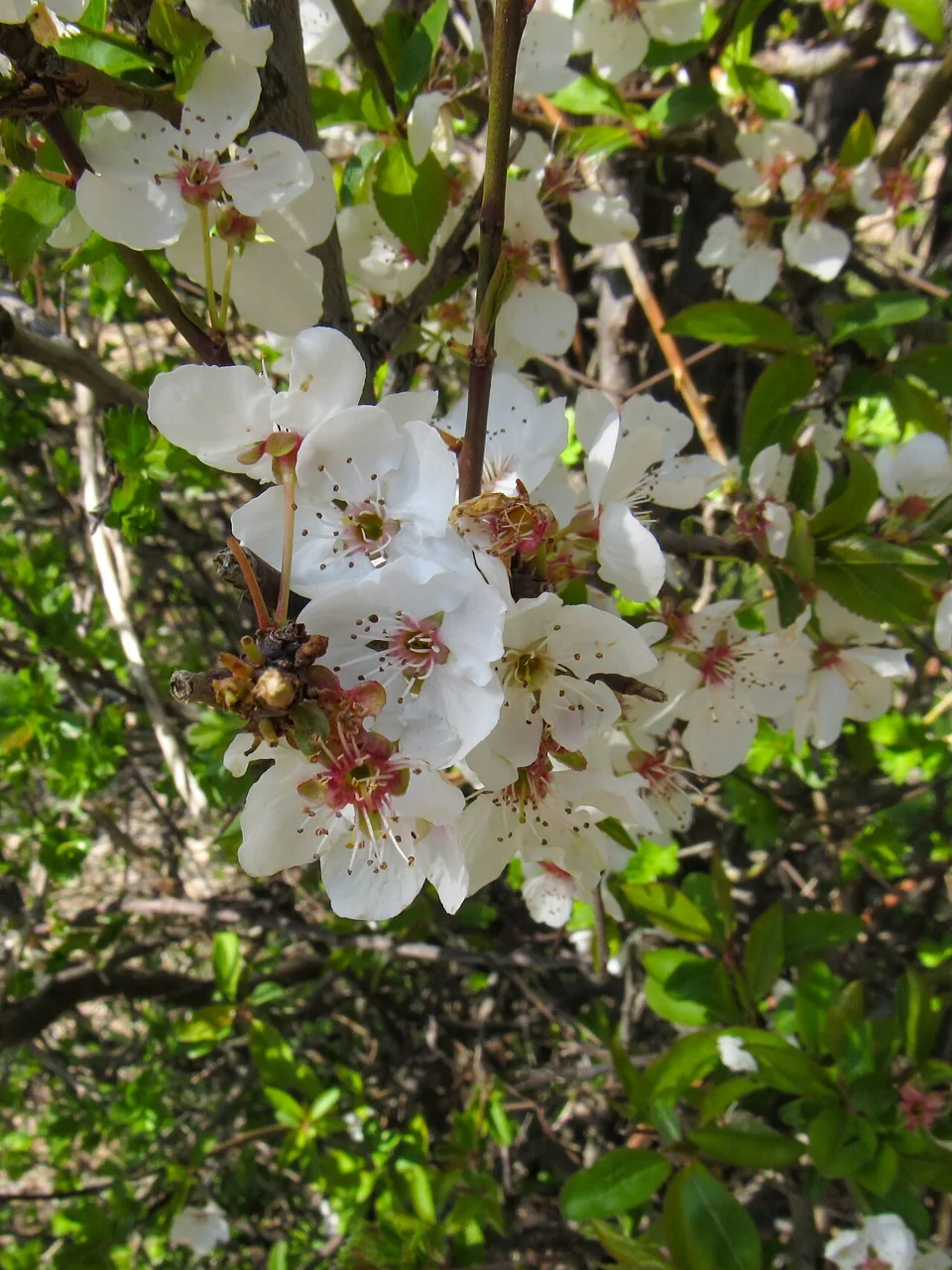
2 photos · Select to enlarge
Flowers of Prunus armeniaca.
Nikolai Bulykin / Wikimedia Commons / CC BY-SA 4.0
Photo details
Resized and converted to WebP. No content edits.
Source: File:Ургут, цветы абрикоса в верхней части города.jpg
Reviewed . Source identification, photograph and license reviewed. The image illustrates the named plant; it does not verify dimensions or other plant traits.
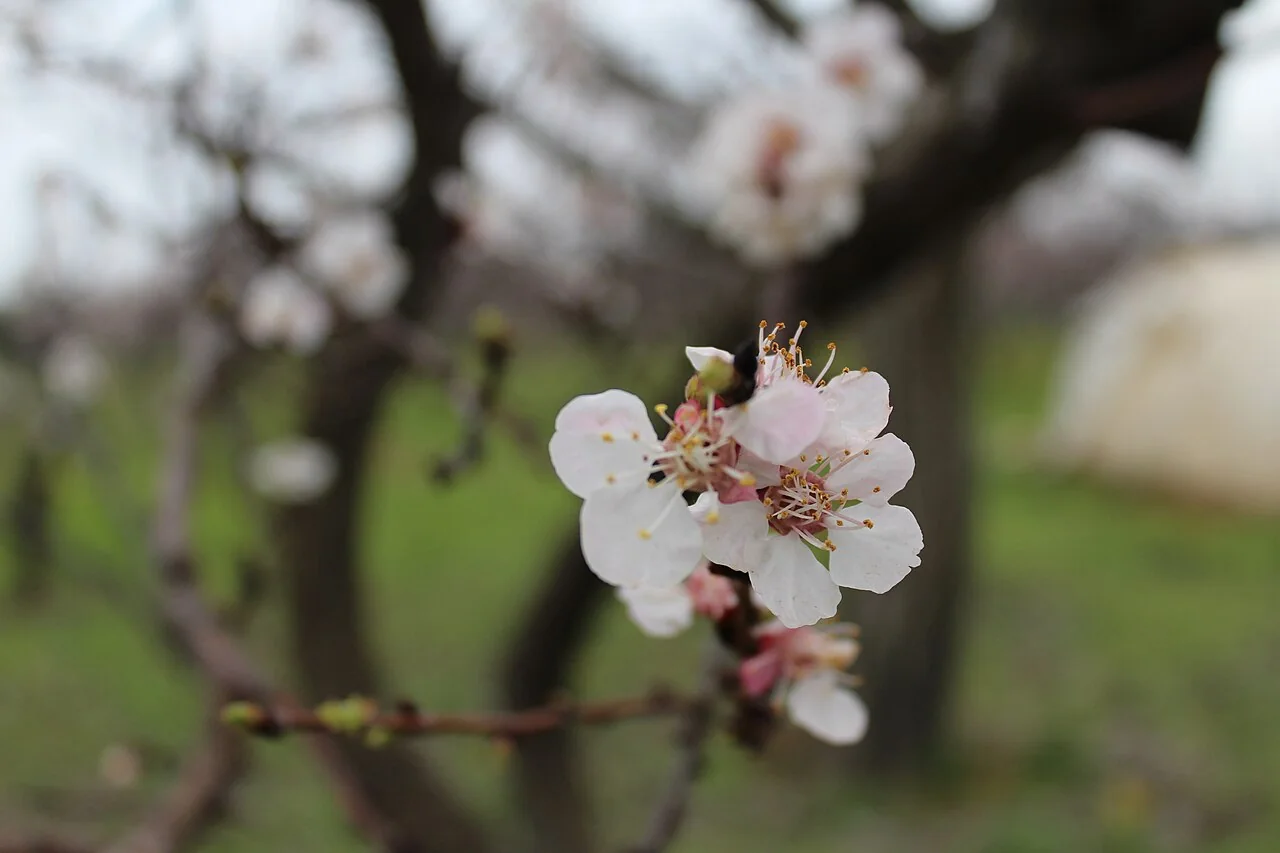
A close view of a Prunus armeniaca flower.
Nur Çağlar / Wikimedia Commons / CC BY-SA 4.0
Photo details
Resized and converted to WebP. No content edits.
Source: File:Prunus armeniaca in Hatay, Altınözü.jpg
Reviewed . Source identification, photograph and license reviewed. The image illustrates the named plant; it does not verify dimensions or other plant traits.
Common names
50 names · 33 languagesOther languages (32)
- Arabic
-
- مشمش[4]
- Arapaho
-
- hecesbiisib[4]
- Armenian
-
- Ծիրան[4]
- Catalan
-
- Albercoquer[4]
- Chinese (Traditional)
-
- 杏[4]
- Czech
-
- meruňka obecná[4]
- Danish
-
- Abrikos[4]
- Estonian
-
- harilik aprikoosipuu[4]
- Finnish
-
- aprikoosi[4]
- Greek
-
- Βερικοκιά[4]
- Korean
-
- 개살구나무[4]
- Kurdish
-
- قەیسی[4]
- Laadan
-
- thuyu[4]
- Polish
-
- Morela pospolita[4]
- Romanian
-
- Cais[4]
- Russian
-
- Абрикос обыкновенный[4]
- Slovak
-
- marhuľa obyčajná[4]
- Sotho
-
- Apolekose, Aprikose[4]
- Swedish
-
- aprikos[4]
- Turkish
-
- kayısı[4]
- Ukrainian
-
- Абрикоса[4]
Sources & name notes (4)
Names recorded in our plant catalogue and botanical sources, grouped by language. Usage can vary by region.
Numbered references identify names recorded by an external source. Other names are from our plant catalogue.
NC State Extension Gardener Plant Toolbox; English common names in a United States horticultural reference.
Source records
- Apricot — ul#common_names > li:nth-of-type(2); heading: Common Name(s):; Prunus armeniaca.
- Ansu Apricot — ul#common_names > li:nth-of-type(1); heading: Common Name(s):; Prunus armeniaca.
- Armenean Plum — ul#common_names > li:nth-of-type(3); heading: Common Name(s):; Prunus armeniaca.
- Siberian Apricot — ul#common_names > li:nth-of-type(4); heading: Common Name(s):; Prunus armeniaca.
- Tibetan Apricot — ul#common_names > li:nth-of-type(5); heading: Common Name(s):; Prunus armeniaca.
Community-curated iNaturalist taxonomy. This is a common-name attestation, not an independent botanical determination.
Source records
- apricot — results[0].names[1]; taxon id 135331; Prunus armeniaca.
- Abrikoos — results[0].names[7]; taxon id 135331; Prunus armeniaca.
- Aprikose — results[0].names[5]; taxon id 135331; Prunus armeniaca.
- Malete — results[0].names[45]; taxon id 135331; Prunus armeniaca.
- Marille — results[0].names[12]; taxon id 135331; Prunus armeniaca.
- Common Apricot — results[0].names[28]; taxon id 135331; Prunus armeniaca.
- Albaricoque — results[0].names[15]; taxon id 135331; Prunus armeniaca.
- chabacano — results[0].names[2]; taxon id 135331; Prunus armeniaca.
- Abricotier — results[0].names[9]; taxon id 135331; Prunus armeniaca.
- Albicocco — results[0].names[19]; taxon id 135331; Prunus armeniaca.
- Damasqueiro — results[0].names[3]; taxon id 135331; Prunus armeniaca.
Common names from World Plants, version 26.05, reproduced in Catalogue of Life 2026-08-20. License: CC BY.
Source records
- Apricot (EN) — VernacularName.tsv, line 168387; taxon 4N8NW.
- Abricot (FR) — VernacularName.tsv, line 168386; taxon 4N8NW.
- Aprikose (DE) — VernacularName.tsv, line 168388; taxon 4N8NW.
Community-curated iNaturalist taxonomy; common-name attestation, not an independent botanical determination.
Source records
- apricot — results[0].names[1]; taxon id 135331; Prunus armeniaca.
- Abrikoos — results[0].names[7]; taxon id 135331; Prunus armeniaca.
- Aprikose — results[0].names[5]; taxon id 135331; Prunus armeniaca.
- Malete — results[0].names[45]; taxon id 135331; Prunus armeniaca.
- Marille — results[0].names[12]; taxon id 135331; Prunus armeniaca.
- Common Apricot — results[0].names[28]; taxon id 135331; Prunus armeniaca.
- Albaricoque — results[0].names[15]; taxon id 135331; Prunus armeniaca.
- chabacano — results[0].names[2]; taxon id 135331; Prunus armeniaca.
- Abricotier — results[0].names[9]; taxon id 135331; Prunus armeniaca.
- Albicocco — results[0].names[19]; taxon id 135331; Prunus armeniaca.
- Damasqueiro — results[0].names[3]; taxon id 135331; Prunus armeniaca.
- meruňka obecná — results[0].names[4]; taxon id 135331; Prunus armeniaca.
- משמש — results[0].names[6]; taxon id 135331; Prunus armeniaca.
- harilik aprikoosipuu — results[0].names[8]; taxon id 135331; Prunus armeniaca.
- Абрикос обыкновенный — results[0].names[10]; taxon id 135331; Prunus armeniaca.
- Абрикоса — results[0].names[11]; taxon id 135331; Prunus armeniaca.
- アンズ — results[0].names[13]; taxon id 135331; Prunus armeniaca.
- 杏 — results[0].names[14]; taxon id 135331; Prunus armeniaca.
- Ծիրան — results[0].names[16]; taxon id 135331; Prunus armeniaca.
- aprikos — results[0].names[17]; taxon id 135331; Prunus armeniaca.
- hecesbiisib — results[0].names[18]; taxon id 135331; Prunus armeniaca.
- thuyu — results[0].names[20]; taxon id 135331; Prunus armeniaca.
- 杏 — results[0].names[21]; taxon id 135331; Prunus armeniaca.
- 개살구나무 — results[0].names[22]; taxon id 135331; Prunus armeniaca.
- kayısı — results[0].names[23]; taxon id 135331; Prunus armeniaca.
- Appelkoos — results[0].names[24]; taxon id 135331; Prunus armeniaca.
- Abrikos — results[0].names[25]; taxon id 135331; Prunus armeniaca.
- Cais — results[0].names[26]; taxon id 135331; Prunus armeniaca.
- gewone appelkoos — results[0].names[27]; taxon id 135331; Prunus armeniaca.
- Apolekose, Aprikose — results[0].names[29]; taxon id 135331; Prunus armeniaca.
- marhuľa obyčajná — results[0].names[30]; taxon id 135331; Prunus armeniaca.
- مشمش — results[0].names[31]; taxon id 135331; Prunus armeniaca.
- משמש מצוי — results[0].names[32]; taxon id 135331; Prunus armeniaca.
- 普通杏 — results[0].names[33]; taxon id 135331; Prunus armeniaca.
- 杏子 — results[0].names[34]; taxon id 135331; Prunus armeniaca.
- kajszibarack — results[0].names[35]; taxon id 135331; Prunus armeniaca.
- Morela pospolita — results[0].names[36]; taxon id 135331; Prunus armeniaca.
- sárgabarack — results[0].names[37]; taxon id 135331; Prunus armeniaca.
- 杏儿 — results[0].names[38]; taxon id 135331; Prunus armeniaca.
- 杏树 — results[0].names[39]; taxon id 135331; Prunus armeniaca.
- 唐桃 — results[0].names[40]; taxon id 135331; Prunus armeniaca.
- aprikoosi — results[0].names[41]; taxon id 135331; Prunus armeniaca.
- Albercoquer — results[0].names[42]; taxon id 135331; Prunus armeniaca.
- Βερικοκιά — results[0].names[43]; taxon id 135331; Prunus armeniaca.
- قەیسی — results[0].names[44]; taxon id 135331; Prunus armeniaca.
Source-backed information
Published observations for this plant. Each reference supports the information beside it.
- Taxonomy
-
Prunus armeniaca is an accepted species in Catalogue of Life.
Taxonomic treatment in the August 2026 release; the catalogue record name is preserved.
Sources [1] - Botanical family
-
Rosaceae
Family in the cited taxonomic treatment.
Sources [1] - Mature height
-
6.1–12.19 m
NC State Extension profile. Converted from the source range in feet and inches; mature size varies with growing conditions.
Sources [2] - Mature spread
-
6.1–12.19 m
NC State Extension profile. Converted from the source range in feet and inches; mature size varies with growing conditions.
Sources [2] - Plant habit
-
Broad; Dense
NC State Extension profile.
Sources [2] - Growth rate
-
Medium
NC State Extension profile.
Sources [2] - Foliage
-
Deciduous
NC State Extension profile.
Sources [2] - Light
-
Full sun (6 or more hours of direct sunlight a day)
NC State Extension profile.
Sources [2] - Moisture and drainage
-
Good Drainage; Moist
NC State Extension profile.
Sources [2] - Soil texture
-
Clay; Loam (Silt); Sand
NC State Extension profile.
Sources [2] - Soil pH
-
Acid (<6.0); Alkaline (>8.0); Neutral (6.0-8.0)
NC State Extension profile. These source categories do not certify the catalogue’s numeric pH interval.
Sources [2] - Flowering season
-
Spring
NC State Extension profile. Seasons reflect the source region and do not verify the catalogue’s exact flowering months.
Sources [2] - Reported wildlife attraction
-
Listed as attracting: butterflies, pollinators.
NC State Extension profile. Broad wildlife categories; this does not establish flower visits by a named bee species or quantify nectar and pollen.
Sources [2] - Pollinator guidance
-
RHS includes Prunus species in its Plants for Pollinators guidance.
Genus-level guidance, not a rating for this individual species or a particular cultivar. RHS planting guidance. Choose accessible flowers with pollen and nectar; reduced-resource and double-flowered forms may be unsuitable.
Sources [3] - Native range
-
Central Asia.
Europe is added solely from Kriti (Crete), contrary to Kew native-range narrative Central Asia to China and RHS Plant Range Central Asia. Prefer the independently corroborated origin; retain the distribution discrepancy in the audit. Reviewed against the current institutional native-range statement.
Sources [4]
Who this plant supports
Complete plant information
Structure
- Vegetation layer
- Fruit tree
- Size
- S,M
- Dimensions
- 9.00 m high × 6.00 m wide
- Growth rate
- Moderate
- Lifecycle
- Perennial
- Foliage
- Deciduous
Site conditions
- USDA hardiness
- 5-7
- Moisture
- Moist
- Soil
- Sandy, Loamy, Clay
- pH
- Acid, Neutral, Alkaline
- Light
- Partial shade, Sun
Uses
- Edible parts
- Fruit, Oil, Seed
- Functions
- Adhesive, Dye, Gum, Oil, Timber, Carbon farming
- Edibility
- 4 out of 5
- Medicinal value
- 3 out of 5
Fruits can be eaten raw, cooked, or dried for later use. The best fruits are soft and juicy with a delightful, rich flavor. Wild trees in the Himalayas produce more than 47.5 kg of fruit per year. The fruits of the wild form contain approximately 6.3% sugar, 0.7% protein, 2.5% ash, and 2.5% pectin. Every 100 g of the fruit contains about 10 mg of vitamin C in the flesh. The fruit is about 5 cm in diameter and contains one large seed. The seeds can be eaten both raw and cooked. Bitter seeds should be consumed in moderation, while sweeter seeds can be eaten freely. Bitter seeds can serve as a substitute for bitter almonds when making marzipan. Edible gum can also be obtained from the trunk. The seed contains up to 50% of an edible, semi-drying oil.
Sources and references
References for the information marked with source numbers on this page.
-
Catalogue of Life
Prunus armeniaca — Catalogue of Life COL26.8
COL26.8 (2026-08-20). Contributing checklist: Synonymic Checklists of the Vascular Plants of the World. This is taxonomic evidence, not an independent ecological study.
Relevant sections
- Taxonomy: NameUsage.tsv line 1041494; ID 4N8NW; rank species; status accepted
- Botanical family: NameUsage.tsv line 1041494; ID 4N8NW; rank species; status accepted
Source checked on .
Source data licence: CC BY 4.0.
-
NC State Extension
Prunus armeniaca — Plant Toolbox
NC State Extension Gardener Plant Toolbox. Growing conditions and seasons reflect its United States horticultural context.
Supports: Mature heightMature spreadPlant habitGrowth rateFoliageLightMoisture and drainageSoil textureSoil pHFlowering seasonReported wildlife attractionRelevant sections
- Mature height: Dimensions / Height
- Mature spread: Dimensions / Width
- Plant habit: Habit/Form
- Growth rate: Growth Rate
- Foliage: Woody Plant Leaf Characteristics
- Light: Light
- Moisture and drainage: Soil Drainage
- Soil texture: Soil Texture
- Soil pH: Soil pH
- Flowering season: Flower Bloom Time
- Reported wildlife attraction: Attracts
Source checked on .
-
Royal Horticultural Society
RHS Plants for Pollinators — Garden Plants
RHS planting guidance; applicable flower-form restrictions are retained. General recommendations do not measure local nectar or pollen production.
Supports: Pollinator guidanceRelevant sections
- Pollinator guidance: Page 2, column 2, entry Prunus species (top 202 pt)
Source checked on .
-
Royal Horticultural Society
Prunus armeniaca — RHS Plant Profile
Supports: Native range
Relevant sections
- Native range: Botanical Details > Plant Range
Source checked on .