Prunus armeniaca
Apricot
Explore the size, hardiness, soil, light, edible uses and harvest period of Prunus armeniaca.
Plant photos
2 photos · Select to enlarge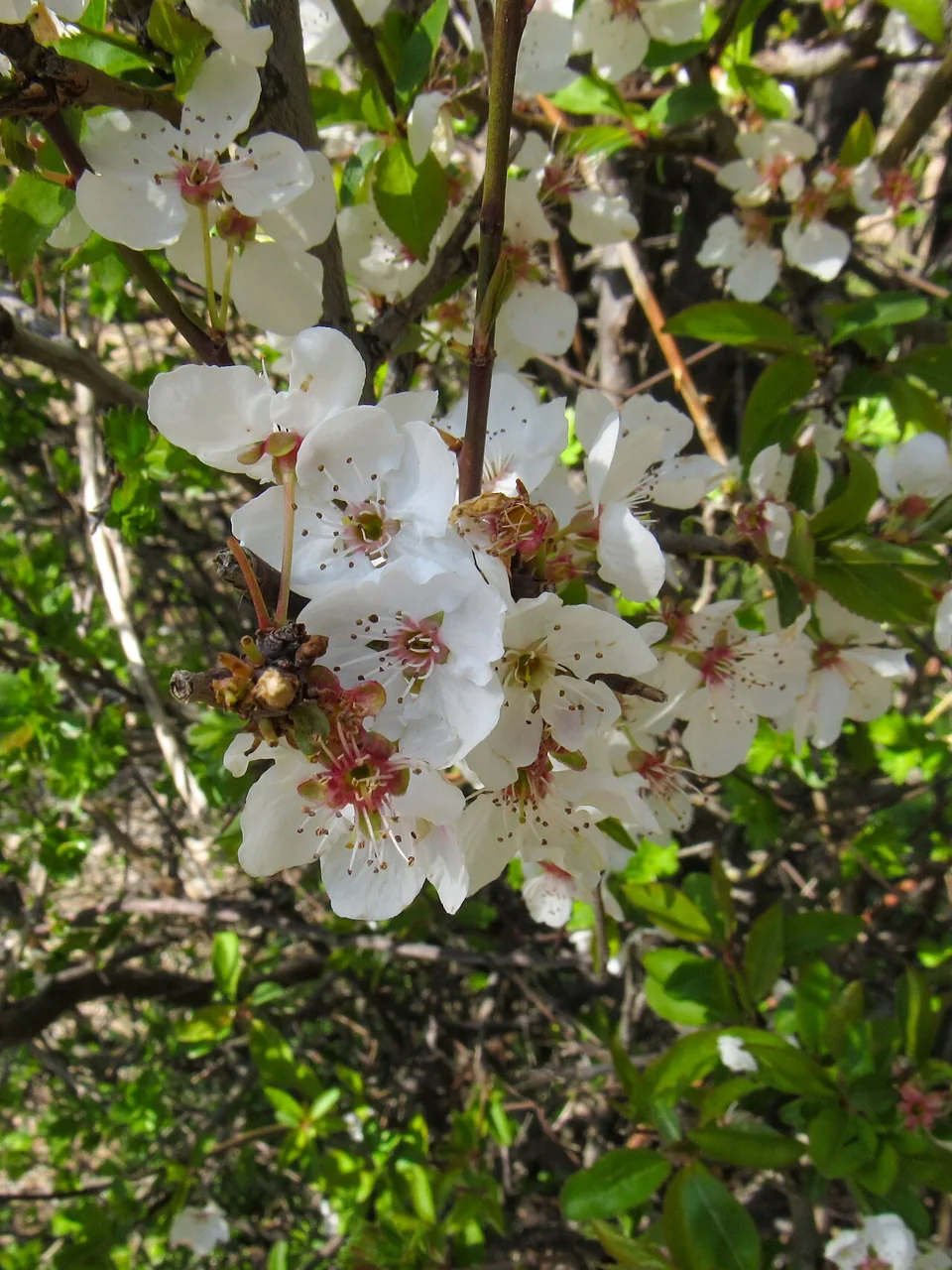
Flowers of Prunus armeniaca.
Nikolai Bulykin / Wikimedia Commons / CC BY-SA 4.0

Photo details
Resized and converted to WebP. No content edits.
Source: File:Ургут, цветы абрикоса в верхней части города.jpg
Reviewed . Source identification, photograph and license reviewed. The image illustrates the named plant; it does not verify dimensions or other plant traits.
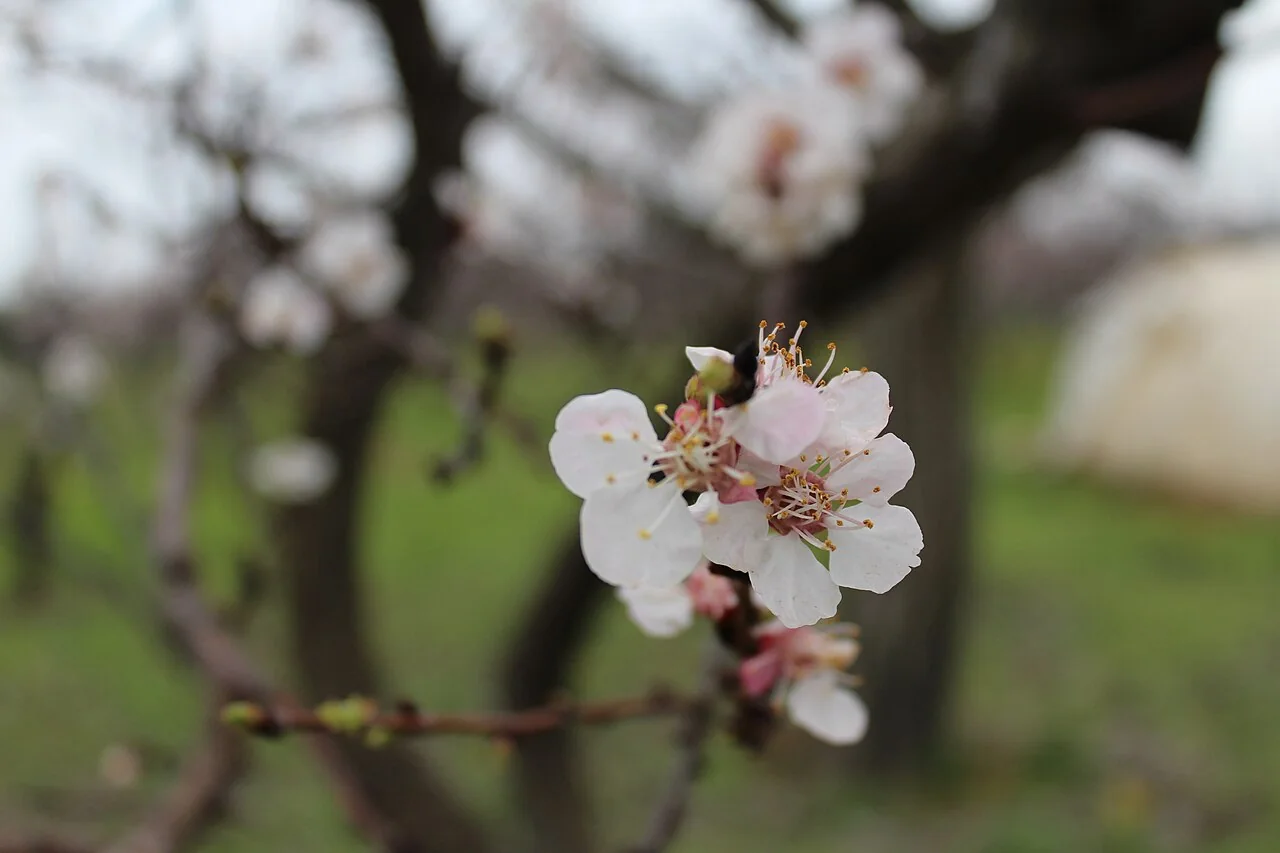
A close view of a Prunus armeniaca flower.
Nur Çağlar / Wikimedia Commons / CC BY-SA 4.0

Photo details
Resized and converted to WebP. No content edits.
Source: File:Prunus armeniaca in Hatay, Altınözü.jpg
Reviewed . Source identification, photograph and license reviewed. The image illustrates the named plant; it does not verify dimensions or other plant traits.
Common names
46 names · 33 languagesOther languages (32)
- Dutch
-
- Abrikoos[2]
- Arabic
-
- مشمش[2]
- Arapaho
-
- hecesbiisib[2]
- Armenian
-
- Ծիրան[2]
- Catalan
-
- Albercoquer[2]
- Chinese (Traditional)
-
- 杏[2]
- Czech
-
- meruňka obecná[2]
- Danish
-
- Abrikos[2]
- Estonian
-
- harilik aprikoosipuu[2]
- Finnish
-
- aprikoosi[2]
- Greek
-
- Βερικοκιά[2]
- Italian
-
- Albicocco[2]
- Korean
-
- 개살구나무[2]
- Kurdish
-
- قەیسی[2]
- Laadan
-
- thuyu[2]
- Polish
-
- Morela pospolita[2]
- Portuguese
-
- Damasqueiro[2]
- Romanian
-
- Cais[2]
- Russian
-
- Абрикос обыкновенный[2]
- Slovak
-
- marhuľa obyčajná[2]
- Sotho
-
- Apolekose, Aprikose[2]
- Swedish
-
- aprikos[2]
- Turkish
-
- kayısı[2]
- Ukrainian
-
- Абрикоса[2]
Sources & name notes (2)
Names recorded in our plant catalogue and botanical sources, grouped by language. Usage can vary by region.
Numbered references identify names recorded by an external source. Other names are from our plant catalogue.
Common names from World Plants, version 26.05, reproduced in Catalogue of Life 2026-08-20. License: CC BY.
Source records
- Abricot (FR) — VernacularName.tsv, line 168386; taxon 4N8NW.
- Apricot (EN) — VernacularName.tsv, line 168387; taxon 4N8NW.
- Aprikose (DE) — VernacularName.tsv, line 168388; taxon 4N8NW.
Community-curated iNaturalist taxonomy; common-name attestation, not an independent botanical determination.
Source records
- apricot — results[0].names[1]; taxon id 135331; Prunus armeniaca.
- chabacano — results[0].names[2]; taxon id 135331; Prunus armeniaca.
- Damasqueiro — results[0].names[3]; taxon id 135331; Prunus armeniaca.
- meruňka obecná — results[0].names[4]; taxon id 135331; Prunus armeniaca.
- Aprikose — results[0].names[5]; taxon id 135331; Prunus armeniaca.
- משמש — results[0].names[6]; taxon id 135331; Prunus armeniaca.
- Abrikoos — results[0].names[7]; taxon id 135331; Prunus armeniaca.
- harilik aprikoosipuu — results[0].names[8]; taxon id 135331; Prunus armeniaca.
- Abricotier — results[0].names[9]; taxon id 135331; Prunus armeniaca.
- Абрикос обыкновенный — results[0].names[10]; taxon id 135331; Prunus armeniaca.
- Абрикоса — results[0].names[11]; taxon id 135331; Prunus armeniaca.
- Marille — results[0].names[12]; taxon id 135331; Prunus armeniaca.
- アンズ — results[0].names[13]; taxon id 135331; Prunus armeniaca.
- 杏 — results[0].names[14]; taxon id 135331; Prunus armeniaca.
- Albaricoque — results[0].names[15]; taxon id 135331; Prunus armeniaca.
- Ծիրան — results[0].names[16]; taxon id 135331; Prunus armeniaca.
- aprikos — results[0].names[17]; taxon id 135331; Prunus armeniaca.
- hecesbiisib — results[0].names[18]; taxon id 135331; Prunus armeniaca.
- Albicocco — results[0].names[19]; taxon id 135331; Prunus armeniaca.
- thuyu — results[0].names[20]; taxon id 135331; Prunus armeniaca.
- 杏 — results[0].names[21]; taxon id 135331; Prunus armeniaca.
- 개살구나무 — results[0].names[22]; taxon id 135331; Prunus armeniaca.
- kayısı — results[0].names[23]; taxon id 135331; Prunus armeniaca.
- Appelkoos — results[0].names[24]; taxon id 135331; Prunus armeniaca.
- Abrikos — results[0].names[25]; taxon id 135331; Prunus armeniaca.
- Cais — results[0].names[26]; taxon id 135331; Prunus armeniaca.
- gewone appelkoos — results[0].names[27]; taxon id 135331; Prunus armeniaca.
- Common Apricot — results[0].names[28]; taxon id 135331; Prunus armeniaca.
- Apolekose, Aprikose — results[0].names[29]; taxon id 135331; Prunus armeniaca.
- marhuľa obyčajná — results[0].names[30]; taxon id 135331; Prunus armeniaca.
- مشمش — results[0].names[31]; taxon id 135331; Prunus armeniaca.
- משמש מצוי — results[0].names[32]; taxon id 135331; Prunus armeniaca.
- 普通杏 — results[0].names[33]; taxon id 135331; Prunus armeniaca.
- 杏子 — results[0].names[34]; taxon id 135331; Prunus armeniaca.
- kajszibarack — results[0].names[35]; taxon id 135331; Prunus armeniaca.
- Morela pospolita — results[0].names[36]; taxon id 135331; Prunus armeniaca.
- sárgabarack — results[0].names[37]; taxon id 135331; Prunus armeniaca.
- 杏儿 — results[0].names[38]; taxon id 135331; Prunus armeniaca.
- 杏树 — results[0].names[39]; taxon id 135331; Prunus armeniaca.
- 唐桃 — results[0].names[40]; taxon id 135331; Prunus armeniaca.
- aprikoosi — results[0].names[41]; taxon id 135331; Prunus armeniaca.
- Albercoquer — results[0].names[42]; taxon id 135331; Prunus armeniaca.
- Βερικοκιά — results[0].names[43]; taxon id 135331; Prunus armeniaca.
- قەیسی — results[0].names[44]; taxon id 135331; Prunus armeniaca.
- Malete — results[0].names[45]; taxon id 135331; Prunus armeniaca.
General information
Plant characteristics
NC State landscape size range; converted from feet and inches. Size varies with site, age and management.
Sources [1]NC State landscape size range; converted from feet and inches. Size varies with site, age and management.
Sources [1]Growing conditions
USDA zones listed by NC State; winter survival does not establish reliable cropping.
Sources [1]Moist, Well-drained
Uses
Fruit, Oil, Seed
Adhesive, Dye, Gum, Oil, Wood, Carbon farming
Description
Prunus armeniaca is a deciduous fruit tree. Its fruit flesh can be eaten fresh, cooked or dried. Apricot kernels can release cyanide and should not be presented as freely edible, including sweet kernels. This kernel hazard is distinct from ordinary consumption of the fruit flesh.
Harvest
Crown
Sources and references
References for the information marked with source numbers on this page.
-
NC State Extension
Prunus armeniaca | Extension Gardener Plant Toolbox
Supports: DescriptionSoil moistureHeightSpreadGrowth rateFoliageGrowth habitLightSoil textureSoil pHUSDA hardiness
Relevant sections
- Description: Description; Whole Plant Traits; Edibility; Poison Symptoms and Toxic Principle, where applicable
- Soil moisture: Cultural Conditions: Soil Drainage
- Height: Dimensions > Height; Height: 20 ft. 0 in. - 40 ft. 0 in.
- Spread: Dimensions > Width; Width: 20 ft. 0 in. - 40 ft. 0 in.
- Growth rate: Growth Rate
- Foliage: Woody Plant Leaf Characteristics
- Growth habit: Habit/Form
- Light: Light
- Soil texture: Soil Texture
- Soil pH: Soil pH
- USDA hardiness: USDA Plant Hardiness Zone
Source checked on .
-
European Food Safety Authority
Apricot kernels pose risk of cyanide poisoning
Supports: Description
Relevant sections
- Description: Apricot kernel cyanide risk and distinction from fruit flesh
Source checked on .
-
Health Canada
Cyanide in apricot kernels
Supports: Description
Relevant sections
- Description: Health risks and distinction between bitter and sweet apricot kernels
Source checked on .
-
Royal Horticultural Society
Prunus armeniaca | RHS Plant Profile
Relevant sections
- Soil moisture: Growing conditions: Moisture; Cultivation
- Crown shape: Description: tree crown
Source checked on .
-
Royal Botanic Gardens, Kew
World Checklist of Vascular Plants, version 16, extracted 4 June 2026
Relevant sections
- Botanical family: WCVP v16, wcvp_names.csv row 343710; name ID 2958711; Prunus L.. Family column.
- Taxonomy: WCVP v16, wcvp_names.csv row 170982; name ID 2901800; Prunus armeniaca L..
Source checked on .
Source data licence: CC BY 3.0.
-
Catalogue of Life
Catalogue of Life 2026-08-20 — Prunus armeniaca
Taxonomic data from World Plants, version 26.05, reproduced in Catalogue of Life 2026-08-20.
Supports: TaxonomyRelevant sections
- Taxonomy: COL 2026-08-20, NameUsage.tsv line 1041494, ID 4N8NW: Prunus armeniaca L. (accepted).
Source checked on .