
Honey bees
Nectar value
Unknown
Pollen value
High
Rosa pimpinellifolia
Linked agroforestry plant data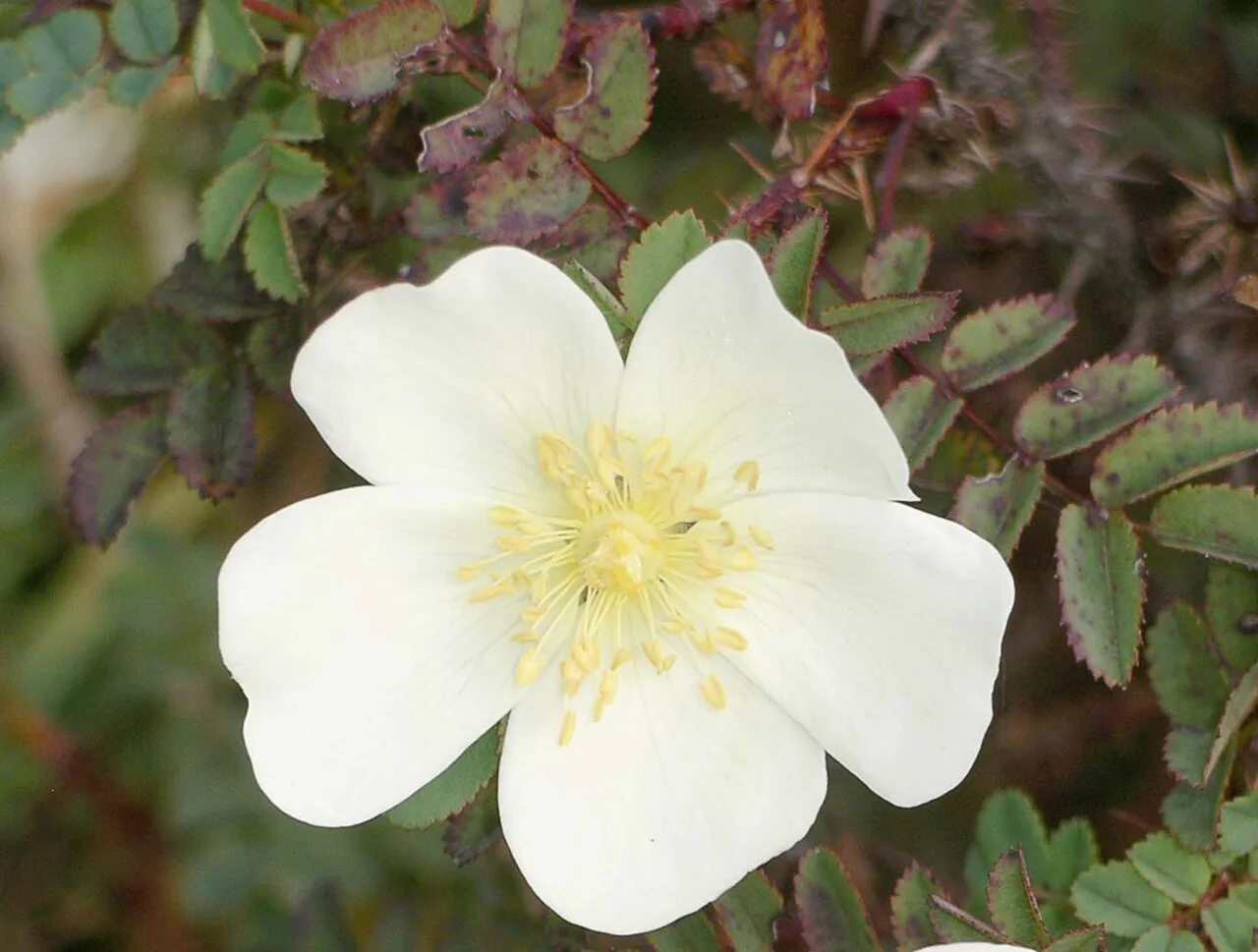
Creamy white flower of Rosa pimpinellifolia.
Velela / Wikimedia Commons / CC BY-SA 2.5
Resized and converted to WebP. No content edits.
Source: File:Rosa pimpinellifolia.jpg
Reviewed . The actual photograph, source identification and reuse license were reviewed. The image illustrates the source-identified plant; it does not verify measurements or pollinator ratings.
Names recorded in our plant catalogue and botanical sources, grouped by language. Usage can vary by region.
Numbered references identify names recorded by an external source. Other names are from our plant catalogue.
Names retained from the referenced botanical profile or table.
Published observations for this plant. Each reference supports the information beside it.
Genus-level classification for Rosa; this does not confirm the complete catalogue name.
Sources [1]Fruit - edible in both raw and cooked form. Despite its small size of up to 15 mm, this fruit has an unusually sweet and pleasant taste. Note that there is little flesh around the many seeds. The seed is notable for its high vitamin E content. It can be ground into powder and mixed with flour or added as a supplement to other foods. Be sure to remove the seed hairs thoroughly before consumption. A delicious tea can be made from these fruits with a fruity flavor, which is very rich in vitamin C, even richer than that of R. canina.
References for the information marked with source numbers on this page.
COL26.8 (2026-08-20). Contributing checklist: Synonymic Checklists of the Vascular Plants of the World. This is taxonomic evidence, not an independent ecological study.
Source checked on .
Source data licence: CC BY 4.0.