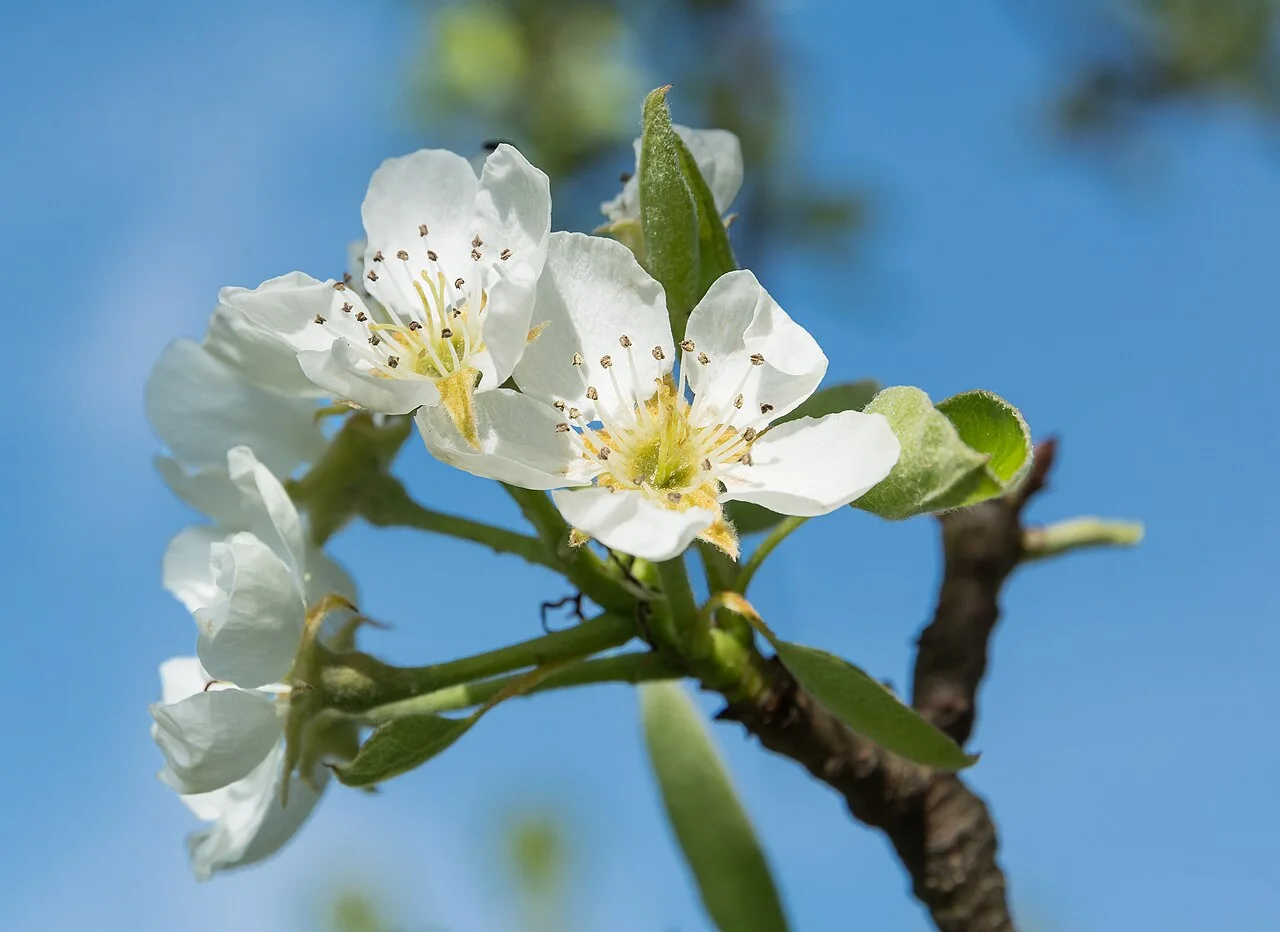
Pollinator plant

Pear

Pyrus communis

Linked agroforestry plant data
Pollinator recipe

Common names

47 names · 33 languages
EnglishYour language
Other languages (32)
Dutch
French
Afrikaans
Arabic
  • إجاص أوروبي[4]
  • كمثرى[4]
  • كمثرى أوروبي[4]
+1 more nameShow fewer names
  • كمثرى شائعة[4]
Belarusian
  • Груша звычайная[4]
Bulgarian
  • Питомна круша[4]
Catalan
Cherokee
  • ᏎᏗᏳᏍᏗ[4]
Chinese (Simplified)
Chinese (Traditional)
Czech
  • hrušeň obecná[4]
Danish
Estonian
  • harilik pirnipuu[4]
Finnish
  • satopäärynäpuu[4]
German
Hebrew
  • אגס תרבותי[4]
Hungarian
  • Nemes körte[4]
Italian
Japanese
  • セイヨウナシ[4]
  • 洋なし[4]
  • 洋ナシ[4]
+1 more nameShow fewer names
Korean
  • 서양배나무[4]
Kurdish
  • هەرمێ[4]
Lithuanian
  • Paprastoji kriaušė[4]
Polish
  • Grusza pospolita[4]
Portuguese
Russian
  • Груша обыкновенная[4]
Slovak
  • hruška obyčajná[4]
Slovenian
  • navadna hruška[4]
Spanish
Swedish
Turkish
Ukrainian
  • Груша звичайна[4]
Welsh
  • Coeden ellyg[4]
Sources & name notes (4)

Names recorded in our plant catalogue and botanical sources, grouped by language. Usage can vary by region.

Catalogue language labels are reviewed separately from botanical source records.

Numbered references identify names recorded by an external source. Other names are from our plant catalogue.

[1] Pyrus communis — Plant Toolbox common names ↗

NC State Extension Gardener Plant Toolbox; English common names in a United States horticultural reference.

Source records
  • Pear — ul#common_names > li:nth-of-type(3); heading: Common Name(s):; Pyrus communis.
  • Common Pear — ul#common_names > li:nth-of-type(1); heading: Common Name(s):; Pyrus communis.
  • European Pear — ul#common_names > li:nth-of-type(2); heading: Common Name(s):; Pyrus communis.
[2] Royal Horticultural Society — common names ↗

Names retained from the referenced botanical profile or table.

Source records
  • pear — Page 2, column 2, row top 232 pt; common-name cell after Pyrus communis.; Pyrus communis.
[3] Pyrus communis — iNaturalist taxon names ↗

Community-curated iNaturalist taxonomy. This is a common-name attestation, not an independent botanical determination.

Source records
  • Pear — results[0].names[5]; taxon id 63951; Pyrus communis.
  • Peer — results[0].names[13]; taxon id 63951; Pyrus communis.
  • Common Pear — results[0].names[1]; taxon id 63951; Pyrus communis.
  • Birnbaum — results[0].names[9]; taxon id 63951; Pyrus communis.
  • Kultur-Birne — results[0].names[8]; taxon id 63951; Pyrus communis.
  • European Pear — results[0].names[2]; taxon id 63951; Pyrus communis.
  • Pera — results[0].names[21]; taxon id 63951; Pyrus communis.
  • Peral — results[0].names[3]; taxon id 63951; Pyrus communis.
  • Poirier commun — results[0].names[7]; taxon id 63951; Pyrus communis.
  • Pero — results[0].names[15]; taxon id 63951; Pyrus communis.
  • Pereira — results[0].names[6]; taxon id 63951; Pyrus communis.
  • pêra-européia — results[0].names[43]; taxon id 63951; Pyrus communis.
  • pêra-manteigosa — results[0].names[42]; taxon id 63951; Pyrus communis.
[4] Pyrus communis — iNaturalist taxon names ↗

Community-curated iNaturalist taxonomy; common-name attestation, not an independent botanical determination.

Source records
  • Pear — results[0].names[5]; taxon id 63951; Pyrus communis.
  • Peer — results[0].names[13]; taxon id 63951; Pyrus communis.
  • Common Pear — results[0].names[1]; taxon id 63951; Pyrus communis.
  • Birnbaum — results[0].names[9]; taxon id 63951; Pyrus communis.
  • Kultur-Birne — results[0].names[8]; taxon id 63951; Pyrus communis.
  • European Pear — results[0].names[2]; taxon id 63951; Pyrus communis.
  • Pera — results[0].names[21]; taxon id 63951; Pyrus communis.
  • Peral — results[0].names[3]; taxon id 63951; Pyrus communis.
  • Poirier commun — results[0].names[7]; taxon id 63951; Pyrus communis.
  • Pero — results[0].names[15]; taxon id 63951; Pyrus communis.
  • Pereira — results[0].names[6]; taxon id 63951; Pyrus communis.
  • pêra-européia — results[0].names[43]; taxon id 63951; Pyrus communis.
  • pêra-manteigosa — results[0].names[42]; taxon id 63951; Pyrus communis.
  • Grusza pospolita — results[0].names[10]; taxon id 63951; Pyrus communis.
  • hrušeň obecná — results[0].names[11]; taxon id 63951; Pyrus communis.
  • Pære — results[0].names[12]; taxon id 63951; Pyrus communis.
  • Груша обыкновенная — results[0].names[14]; taxon id 63951; Pyrus communis.
  • satopäärynäpuu — results[0].names[16]; taxon id 63951; Pyrus communis.
  • Paprastoji kriaušė — results[0].names[17]; taxon id 63951; Pyrus communis.
  • セイヨウナシ — results[0].names[18]; taxon id 63951; Pyrus communis.
  • Perera — results[0].names[19]; taxon id 63951; Pyrus communis.
  • harilik pirnipuu — results[0].names[20]; taxon id 63951; Pyrus communis.
  • كمثرى أوروبي — results[0].names[22]; taxon id 63951; Pyrus communis.
  • كمثرى — results[0].names[23]; taxon id 63951; Pyrus communis.
  • كمثرى شائعة — results[0].names[24]; taxon id 63951; Pyrus communis.
  • إجاص أوروبي — results[0].names[25]; taxon id 63951; Pyrus communis.
  • 西洋梨 — results[0].names[26]; taxon id 63951; Pyrus communis.
  • päron — results[0].names[27]; taxon id 63951; Pyrus communis.
  • 西洋梨 — results[0].names[28]; taxon id 63951; Pyrus communis.
  • armut — results[0].names[29]; taxon id 63951; Pyrus communis.
  • Питомна круша — results[0].names[30]; taxon id 63951; Pyrus communis.
  • navadna hruška — results[0].names[31]; taxon id 63951; Pyrus communis.
  • Груша звычайная — results[0].names[32]; taxon id 63951; Pyrus communis.
  • Груша звичайна — results[0].names[33]; taxon id 63951; Pyrus communis.
  • peer — results[0].names[34]; taxon id 63951; Pyrus communis.
  • hruška obyčajná — results[0].names[35]; taxon id 63951; Pyrus communis.
  • Nemes körte — results[0].names[36]; taxon id 63951; Pyrus communis.
  • 서양배나무 — results[0].names[37]; taxon id 63951; Pyrus communis.
  • 洋梨 — results[0].names[38]; taxon id 63951; Pyrus communis.
  • 洋梨 — results[0].names[39]; taxon id 63951; Pyrus communis.
  • 洋ナシ — results[0].names[40]; taxon id 63951; Pyrus communis.
  • 洋なし — results[0].names[41]; taxon id 63951; Pyrus communis.
  • ᏎᏗᏳᏍᏗ — results[0].names[44]; taxon id 63951; Pyrus communis.
  • אגס תרבותי — results[0].names[45]; taxon id 63951; Pyrus communis.
  • هەرمێ — results[0].names[46]; taxon id 63951; Pyrus communis.
  • Coeden ellyg — results[0].names[47]; taxon id 63951; Pyrus communis.
Plant references

Source-backed information

Published observations for this plant. Each reference supports the information beside it.

Botanical family
Rosaceae

Genus-level classification for Pyrus; this does not confirm the complete catalogue name.

Sources [1]
Taxonomy
NC State Extension publishes a profile under Pyrus communis.

Profile-name match; no accepted-name status is asserted.

Sources [2]
Mature height
12.19–15.24 m

NC State Extension profile. Converted from the source range in feet and inches; mature size varies with growing conditions.

Sources [2]
Mature spread
7.62–10.67 m

NC State Extension profile. Converted from the source range in feet and inches; mature size varies with growing conditions.

Sources [2]
Plant habit
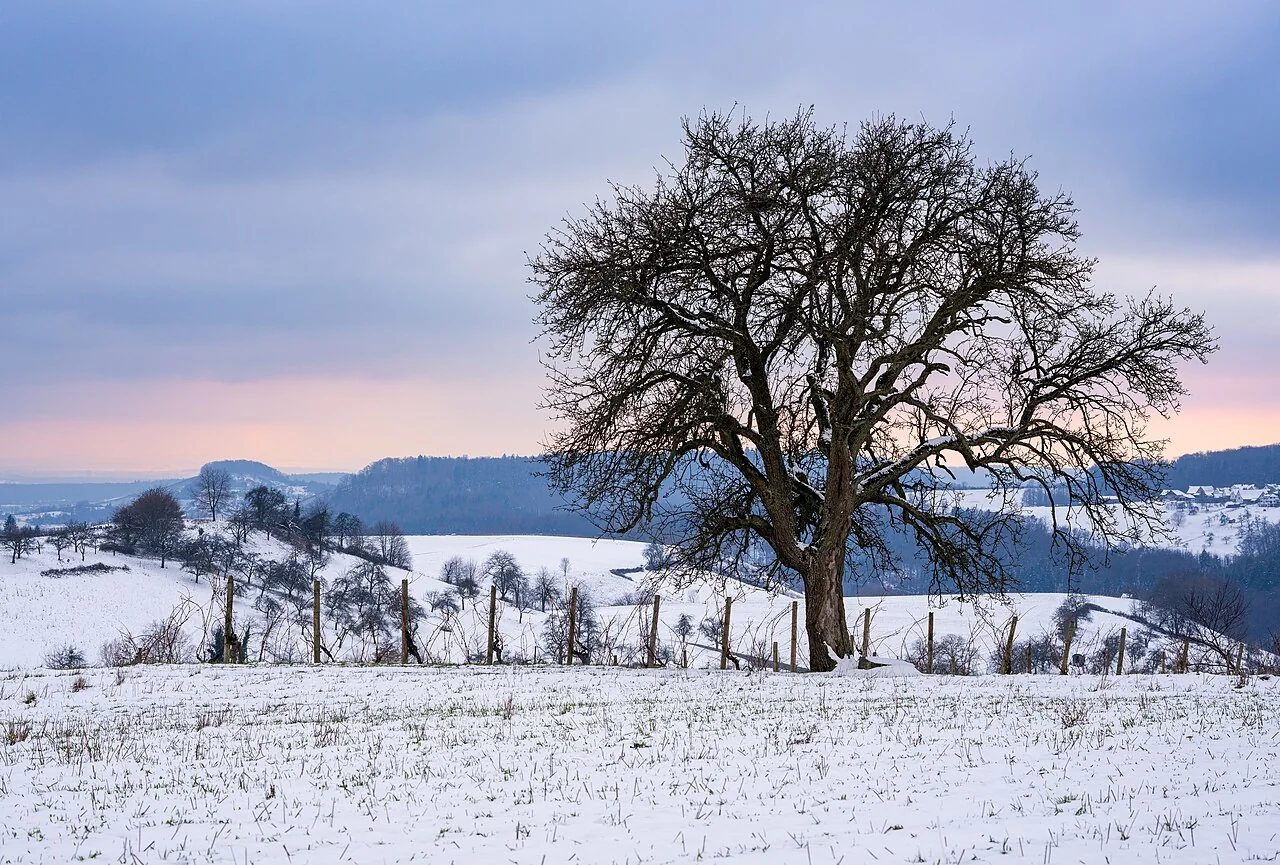
Erect; Spreading

NC State Extension profile.

Sources [2]
Foliage
Deciduous

NC State Extension profile.

Sources [2]
Light
Full sun (6 or more hours of direct sunlight a day)

NC State Extension profile.

Sources [2]
Moisture and drainage
Good Drainage; Occasionally Dry

NC State Extension profile.

Sources [2]
Soil texture
Clay; Loam (Silt); Sand

NC State Extension profile.

Sources [2]
Soil pH
Neutral (6.0-8.0)

NC State Extension profile. These source categories do not certify the catalogue’s numeric pH interval.

Sources [2]
Flowering season
Spring

NC State Extension profile. Seasons reflect the source region and do not verify the catalogue’s exact flowering months.

Sources [2]
Reported wildlife attraction
Listed as attracting: bees, butterflies, pollinators.

NC State Extension profile. Broad wildlife categories; this does not establish flower visits by a named bee species or quantify nectar and pollen.

Sources [2]
Pollinator guidance
RHS includes Pyrus communis in its Plants for Pollinators guidance.

RHS planting guidance. Choose accessible flowers with pollen and nectar; reduced-resource and double-flowered forms may be unsuitable.

Sources [3]
Native range
Europe to N. Iraq.

Explicit native locality records in Kew WCVP v16; introduced and doubtful distributions excluded. Continent conversion follows the documented geographic mapping.

Sources [4]
Catalogue ratings

Who this plant supports

Honey bees

High suitability
Nectar value High
Pollen value High
Agroforestry database

Complete plant information

Open full plant profile

Structure

Vegetation layer
Fruit tree
Size
Small
Dimensions
13.00 m high × 8.00 m wide
Growth rate
Moderate
Lifecycle
Perennial
Foliage
Deciduous

Site conditions

USDA hardiness
4-9
Moisture
Moist
Soil
Sandy, Loamy, Clay
pH
Acid, Neutral, Alkaline
Light
Partial shade, Sun

Uses

Edible parts
Fruit
Functions
Dye, Windbreak, Timber
Edibility
5 out of 5
Medicinal value
2 out of 5

Fruit - raw or cooked. Wild pears are often difficult to eat unless they are overripe. They are more suitable for use in pastries and desserts. The fruit is about 5 cm large.

Sources and references

References for the information marked with source numbers on this page.

Sources checked
  1. Catalogue of Life Pyrus — Catalogue of Life COL26.8

    COL26.8 (2026-08-20). Contributing checklist: Synonymic Checklists of the Vascular Plants of the World. This is taxonomic evidence, not an independent ecological study.

    Supports: Botanical family
    Relevant sections
    • Botanical family: NameUsage.tsv line 2585507; ID 7689; rank genus; status accepted

    Source checked on .

    Source data licence: CC BY 4.0.

  2. NC State Extension Pyrus communis — Plant Toolbox

    NC State Extension Gardener Plant Toolbox. Growing conditions and seasons reflect its United States horticultural context.

    Relevant sections
    • Taxonomy: Main botanical heading (h1)
    • Mature height: Dimensions / Height
    • Mature spread: Dimensions / Width
    • Plant habit: Habit/Form
    • Foliage: Woody Plant Leaf Characteristics
    • Light: Light
    • Moisture and drainage: Soil Drainage
    • Soil texture: Soil Texture
    • Soil pH: Soil pH
    • Flowering season: Flower Bloom Time
    • Reported wildlife attraction: Attracts

    Source checked on .

  3. Royal Horticultural Society RHS Plants for Pollinators — Garden Plants

    RHS planting guidance; applicable flower-form restrictions are retained. General recommendations do not measure local nectar or pollen production.

    Relevant sections
    • Pollinator guidance: Page 2, column 2, entry Pyrus communis (top 232 pt)

    Source checked on .

  4. Royal Botanic Gardens, Kew Pyrus communis — Kew WCVP native distribution

    Native distribution and taxonomic treatment from the official WCVP v16 export (4 June 2026). The link opens the corresponding POWO taxon. Source rows are retained in the native-range audit archive.

    Supports: Native range
    Relevant sections
    • Native range: WCVP v16; wcvp_names.csv lines 327631; wcvp_distribution.csv native locality lines 1529628, 1529629, 1529630, 1529631, 1529632, 1529633, 1529634, 1529635, 1529636, 1529637, 1529639, 1529640, 1529641, 1529642, 1529643, 1529644, 1529646, 1529647, 1529648, 1529649, 1529650, 1529651, 1529652, 1529653, 1529654, 1529655, 1529656, 1529664, 1529665, 1529666, 1529667, 1529668, 1529669

    Source checked on .

    Source data licence: CC BY 3.0.