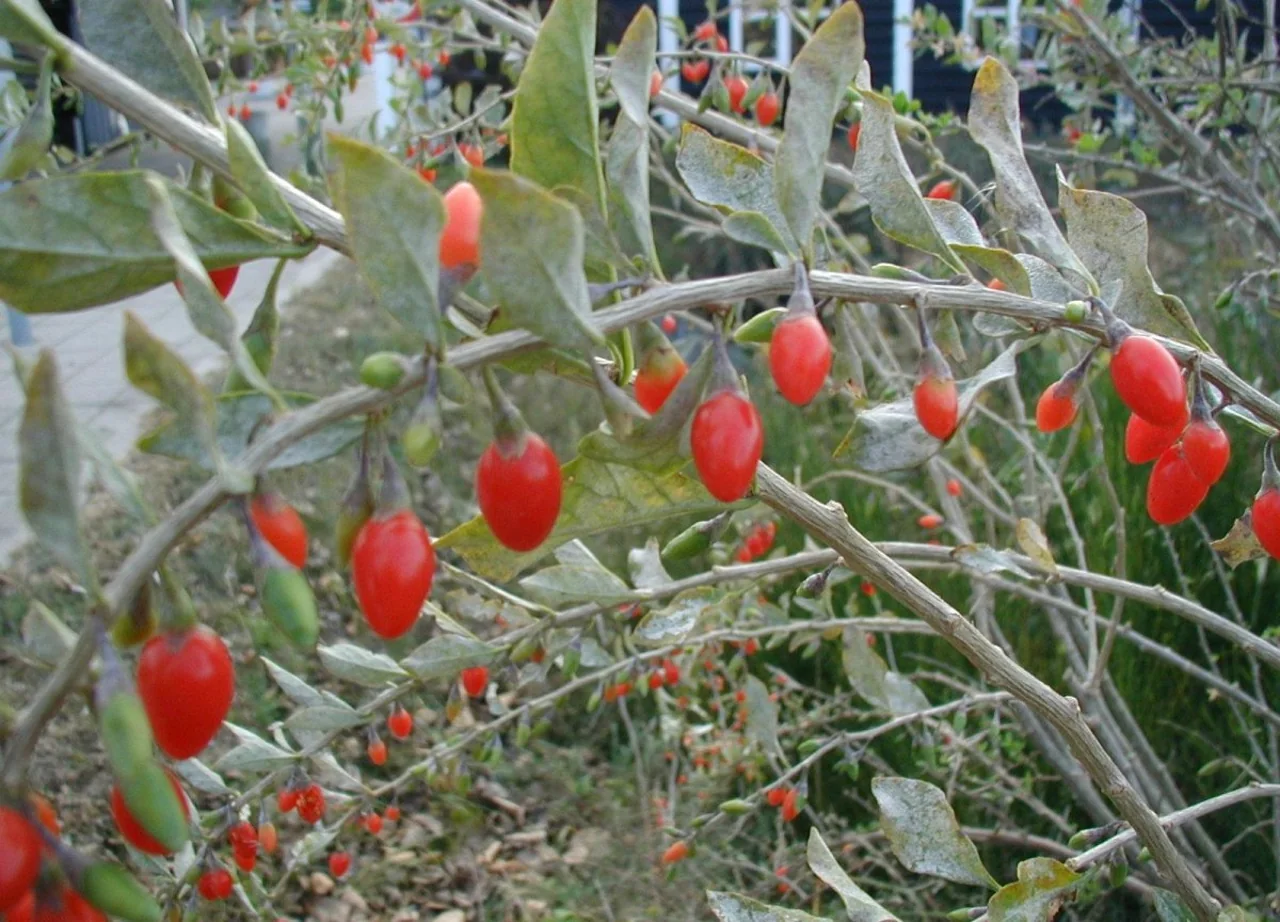
Pollinator plant

Goji

Lycium barbarum

Linked agroforestry plant data
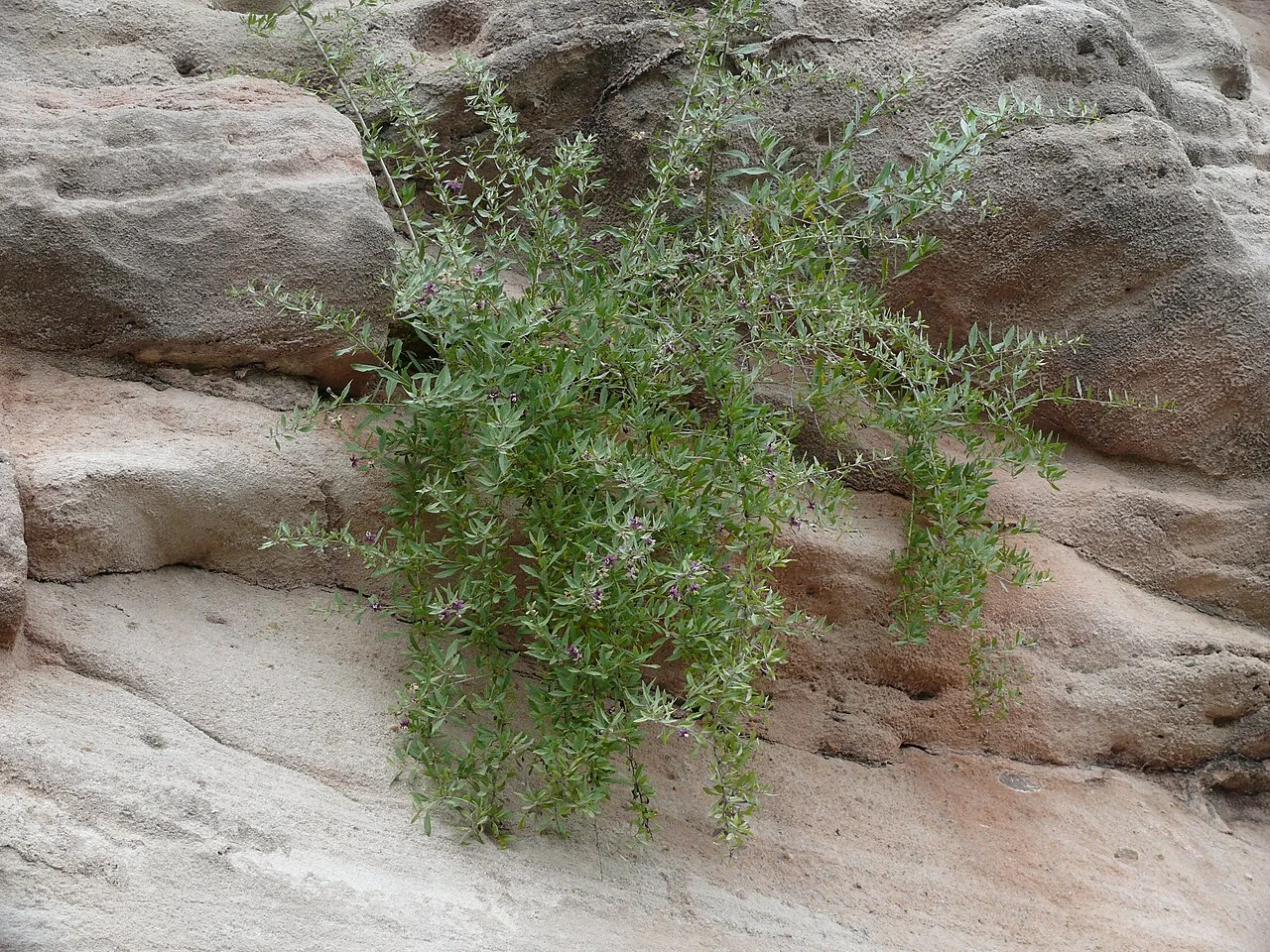
Pollinator recipe

Common names

38 names · 28 languages
EnglishYour language
  • Box Thorn
  • Chinese Boxthorn[1][2]
  • Duke of Argyll's Teaplant[1][2]
+3 more namesShow fewer names
Other languages (27)
Dutch
French
  • Baies de Goji
  • Lyciet commun[1][2]
  • Lyciet de Barbarie[1][2]
Arabic
  • توت الذئب الصيني[2]
  • توت القوجي[2]
Armenian
  • Հազազ բերբերի[2]
Chinese (Simplified)
  • 宁夏枸杞[2]
Chinese (Traditional)
  • 寧夏枸杞[2]
Czech
  • kustovnice cizí[2]
Danish
Finnish
  • aitapukinpensas[2]
German
Hebrew
  • אטד פראי[2]
Hungarian
  • közönséges ördögcérna[2]
Italian
  • Spina santa di Barberia[1][2]
Japanese
  • ナガバクコ[2]
Korean
  • 긴잎구기자나무[2]
Latvian
  • Godži[2]
  • Parastā līcija[2]
Lithuanian
  • Dygliuotasis ožerškis[2]
Norwegian
Polish
  • Kolcowój pospolity[2]
Romanian
  • Cătină de garduri[2]
Russian
  • Дереза обыкновенная[2]
Slovak
  • kustovnica cudzia[2]
Slovenian
  • navadna kustovnica[2]
Swedish
  • bocktörne[2]
Thai
  • เก๋ากี้[2]
Turkish
Ukrainian
  • Дереза звичайна[2]
Sources & name notes (2)

Names recorded in our plant catalogue and botanical sources, grouped by language. Usage can vary by region.

Numbered references identify names recorded by an external source. Other names are from our plant catalogue.

[1] Lycium barbarum — iNaturalist taxon names ↗

Community-curated iNaturalist taxonomy. This is a common-name attestation, not an independent botanical determination.

Source records
  • matrimony vine — results[0].names[1]; taxon id 77902; Lycium barbarum.
  • Boksdoorn — results[0].names[11]; taxon id 77902; Lycium barbarum.
  • Gemeiner Bocksdorn — results[0].names[8]; taxon id 77902; Lycium barbarum.
  • Chinese Boxthorn — results[0].names[5]; taxon id 77902; Lycium barbarum.
  • Duke of Argyll's Teaplant — results[0].names[2]; taxon id 77902; Lycium barbarum.
  • Goji berry — results[0].names[4]; taxon id 77902; Lycium barbarum.
  • Lyciet commun — results[0].names[6]; taxon id 77902; Lycium barbarum.
  • Lyciet de Barbarie — results[0].names[7]; taxon id 77902; Lycium barbarum.
  • Spina santa di Barberia — results[0].names[32]; taxon id 77902; Lycium barbarum.
[2] Lycium barbarum — iNaturalist taxon names ↗

Community-curated iNaturalist taxonomy; common-name attestation, not an independent botanical determination.

Source records
  • matrimony vine — results[6].names[1]; taxon id 77902; Lycium barbarum.
  • Boksdoorn — results[6].names[11]; taxon id 77902; Lycium barbarum.
  • Gemeiner Bocksdorn — results[6].names[8]; taxon id 77902; Lycium barbarum.
  • Chinese Boxthorn — results[6].names[5]; taxon id 77902; Lycium barbarum.
  • Duke of Argyll's Teaplant — results[6].names[2]; taxon id 77902; Lycium barbarum.
  • Goji berry — results[6].names[4]; taxon id 77902; Lycium barbarum.
  • Lyciet commun — results[6].names[6]; taxon id 77902; Lycium barbarum.
  • Lyciet de Barbarie — results[6].names[7]; taxon id 77902; Lycium barbarum.
  • Spina santa di Barberia — results[6].names[32]; taxon id 77902; Lycium barbarum.
  • kustovnice cizí — results[6].names[9]; taxon id 77902; Lycium barbarum.
  • Bukketorn — results[6].names[10]; taxon id 77902; Lycium barbarum.
  • Дереза звичайна — results[6].names[12]; taxon id 77902; Lycium barbarum.
  • bukketorn — results[6].names[13]; taxon id 77902; Lycium barbarum.
  • Дереза обыкновенная — results[6].names[14]; taxon id 77902; Lycium barbarum.
  • 긴잎구기자나무 — results[6].names[15]; taxon id 77902; Lycium barbarum.
  • אטד פראי — results[6].names[16]; taxon id 77902; Lycium barbarum.
  • aitapukinpensas — results[6].names[17]; taxon id 77902; Lycium barbarum.
  • Kolcowój pospolity — results[6].names[18]; taxon id 77902; Lycium barbarum.
  • Dygliuotasis ožerškis — results[6].names[19]; taxon id 77902; Lycium barbarum.
  • ナガバクコ — results[6].names[20]; taxon id 77902; Lycium barbarum.
  • 寧夏枸杞 — results[6].names[21]; taxon id 77902; Lycium barbarum.
  • 宁夏枸杞 — results[6].names[22]; taxon id 77902; Lycium barbarum.
  • توت القوجي — results[6].names[23]; taxon id 77902; Lycium barbarum.
  • توت الذئب الصيني — results[6].names[24]; taxon id 77902; Lycium barbarum.
  • Հազազ բերբերի — results[6].names[25]; taxon id 77902; Lycium barbarum.
  • bocktörne — results[6].names[26]; taxon id 77902; Lycium barbarum.
  • เก๋ากี้ — results[6].names[27]; taxon id 77902; Lycium barbarum.
  • Cătină de garduri — results[6].names[28]; taxon id 77902; Lycium barbarum.
  • Parastā līcija — results[6].names[29]; taxon id 77902; Lycium barbarum.
  • Godži — results[6].names[30]; taxon id 77902; Lycium barbarum.
  • közönséges ördögcérna — results[6].names[31]; taxon id 77902; Lycium barbarum.
  • kustovnica cudzia — results[6].names[33]; taxon id 77902; Lycium barbarum.
  • navadna kustovnica — results[6].names[34]; taxon id 77902; Lycium barbarum.
  • Atlangaç — results[6].names[35]; taxon id 77902; Lycium barbarum.
Plant references

Source-backed information

Published observations for this plant. Each reference supports the information beside it.

Botanical family
Solanaceae

Genus-level classification for Lycium; this does not confirm the complete catalogue name.

Sources [1]
Native range
N. & C. China.

Explicit native locality records in Kew WCVP v16; introduced and doubtful distributions excluded. Continent conversion follows the documented geographic mapping.

Sources [2]
Catalogue ratings

Who this plant supports

Honey bees

Medium suitability
Nectar value Medium
Pollen value Medium
Agroforestry database

Complete plant information

Open full plant profile

Structure

Vegetation layer
Shrub
Size
Small
Dimensions
2.50 m high × 4.00 m wide
Growth rate
Moderate
Lifecycle
Perennial
Foliage
Deciduous

Site conditions

USDA hardiness
6-9
Moisture
Moist
Soil
Sandy, Loamy, Clay
pH
Acid, Neutral, Alkaline
Light
Partial shade, Sun

Uses

Edible parts
Fruit, Leaves, Tea
Functions
Hedge
Edibility
4 out of 5
Medicinal value
3 out of 5

Fruit - raw or cooked. The fruit is a berry of about 2 cm in diameter with a mild sweet licorice flavor. Only fully ripe fruits should be eaten. Young shoots can be cooked and are mainly used as a flavoring. They can also be lightly boiled for 3-4 minutes and used as a vegetable. The taste is somewhat cherry-like, but some also find it mint-like. The leaves should be used quickly after harvesting and may require caution. The leaves can be used as a tea substitute. Please refer to the notes at the top of the page for more information.

Sources and references

References for the information marked with source numbers on this page.

Sources checked
  1. Catalogue of Life Lycium — Catalogue of Life COL26.8

    COL26.8 (2026-08-20). Contributing checklist: Synonymic Checklists of the Vascular Plants of the World. This is taxonomic evidence, not an independent ecological study.

    Supports: Botanical family
    Relevant sections
    • Botanical family: NameUsage.tsv line 1557494; ID 5HK4; rank genus; status accepted

    Source checked on .

    Source data licence: CC BY 4.0.

  2. Royal Botanic Gardens, Kew Lycium barbarum — Kew WCVP native distribution

    Native distribution and taxonomic treatment from the official WCVP v16 export (4 June 2026). The link opens the corresponding POWO taxon. Source rows are retained in the native-range audit archive.

    Supports: Native range
    Relevant sections
    • Native range: WCVP v16; wcvp_names.csv lines 236172; wcvp_distribution.csv native locality lines 977202, 977203, 977204, 977205, 977206

    Source checked on .

    Source data licence: CC BY 3.0.