Japanese Raisin Tree
Hovenia dulcis
Linked agroforestry plant dataPlant photos
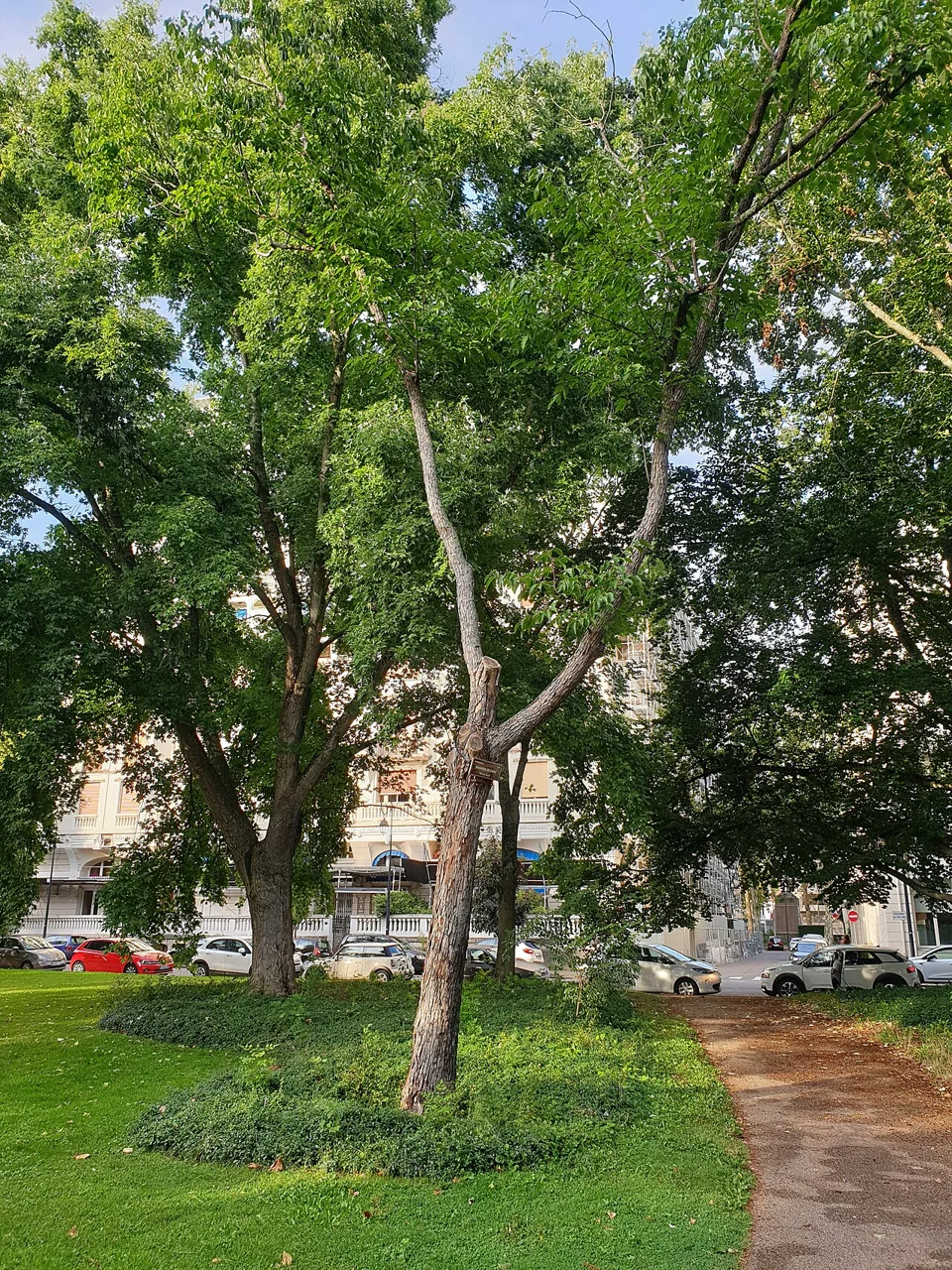
2 photos · Select to enlarge
A Hovenia dulcis tree.
TCY / Wikimedia Commons / CC BY-SA 4.0
Photo details
Resized and converted to WebP. No content edits.
Source: File:Raisinier de Chine, parc Napoléon III, Vichy.jpg
Reviewed . Source identification, photograph and license reviewed. The image illustrates the named plant; it does not verify dimensions or other plant traits.
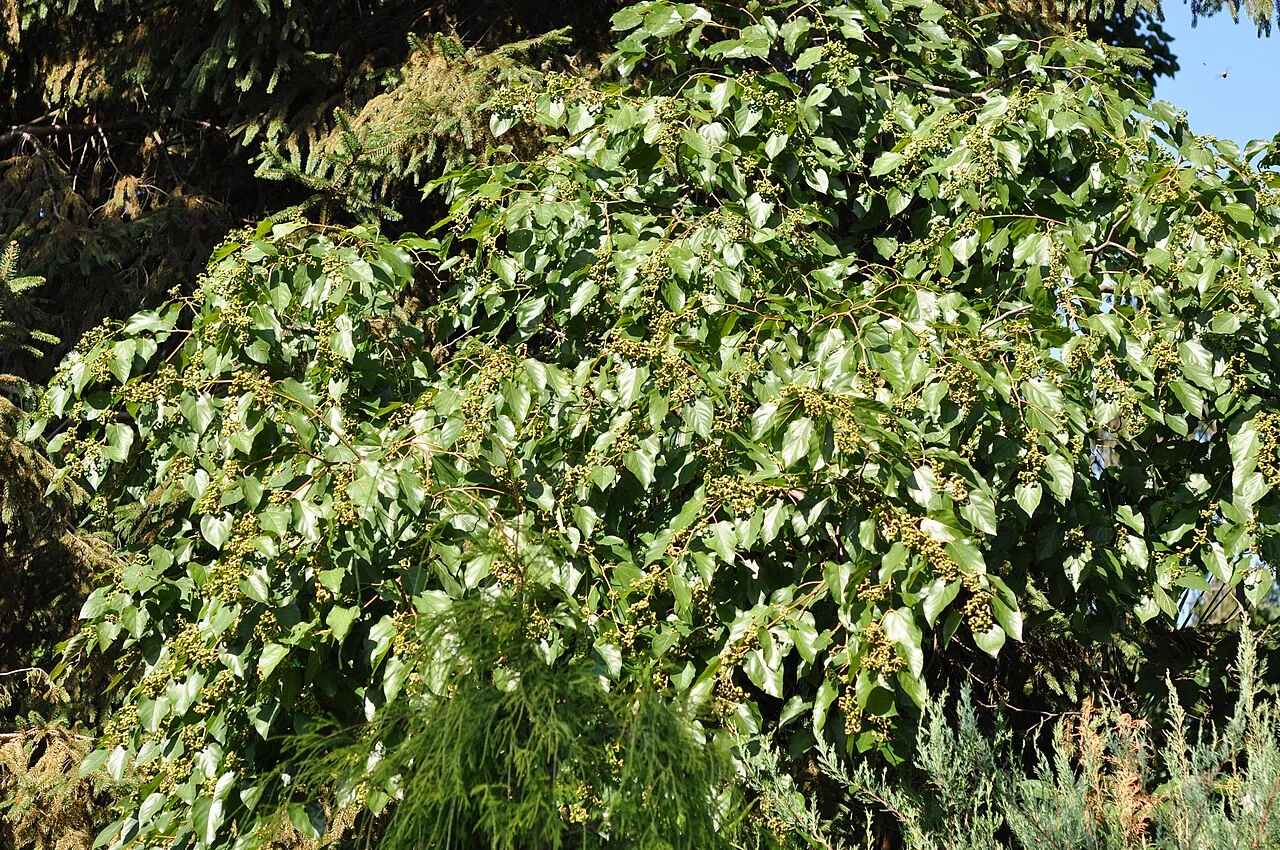
Leaves of Hovenia dulcis.
Lazaregagnidze / Wikimedia Commons / CC BY-SA 4.0
Photo details
Resized and converted to WebP. No content edits.
Source: File:Hovenia dulcis Japanese Raisin Tree ყუნწშაქარა.JPG
Reviewed . Source identification, photograph and license reviewed. The image illustrates the named plant; it does not verify dimensions or other plant traits.
Common names
22 names · 13 languagesOther languages (12)
Sources & name notes (4)
Names recorded in our plant catalogue and botanical sources, grouped by language. Usage can vary by region.
Numbered references identify names recorded by an external source. Other names are from our plant catalogue.
NC State Extension Gardener Plant Toolbox; English common names in a United States horticultural reference.
Source records
- Japanese Raisin Tree — ul#common_names > li:nth-of-type(2); heading: Common Name(s):; Hovenia dulcis.
- Japanese Raisintree — ul#common_names > li:nth-of-type(1); heading: Common Name(s):; Hovenia dulcis.
- Oriental Raisin Tree — ul#common_names > li:nth-of-type(3); heading: Common Name(s):; Hovenia dulcis.
- Raisin hovenia — ul#common_names > li:nth-of-type(4); heading: Common Name(s):; Hovenia dulcis.
- Sweet Stick — ul#common_names > li:nth-of-type(5); heading: Common Name(s):; Hovenia dulcis.
Community-curated iNaturalist taxonomy. This is a common-name attestation, not an independent botanical determination.
Source records
- Japanese Raisin Tree — results[0].names[1]; taxon id 163847; Hovenia dulcis.
- Palo dulce — results[0].names[8]; taxon id 163847; Hovenia dulcis.
- uva-do-japão — results[0].names[9]; taxon id 163847; Hovenia dulcis.
- uva-japonesa — results[0].names[15]; taxon id 163847; Hovenia dulcis.
Community-curated iNaturalist taxonomy; common-name attestation, not an independent botanical determination.
Source records
- Japanese Raisin Tree — results[0].names[1]; taxon id 163847; Hovenia dulcis.
- Palo dulce — results[0].names[8]; taxon id 163847; Hovenia dulcis.
- uva-do-japão — results[0].names[9]; taxon id 163847; Hovenia dulcis.
- uva-japonesa — results[0].names[15]; taxon id 163847; Hovenia dulcis.
- 헛개나무 — results[0].names[2]; taxon id 163847; Hovenia dulcis.
- dužistopka sladká — results[0].names[3]; taxon id 163847; Hovenia dulcis.
- ケンポナシ — results[0].names[4]; taxon id 163847; Hovenia dulcis.
- 北枳椇 — results[0].names[5]; taxon id 163847; Hovenia dulcis.
- 拐枣 — results[0].names[6]; taxon id 163847; Hovenia dulcis.
- 鸡爪梨 — results[0].names[7]; taxon id 163847; Hovenia dulcis.
- Говения сладкая — results[0].names[10]; taxon id 163847; Hovenia dulcis.
- 北枳椇 — results[0].names[11]; taxon id 163847; Hovenia dulcis.
- עץ הצימוק היפני — results[0].names[12]; taxon id 163847; Hovenia dulcis.
- הובניה מתוקה — results[0].names[13]; taxon id 163847; Hovenia dulcis.
- hovénia sladká — results[0].names[14]; taxon id 163847; Hovenia dulcis.
Common names from World Plants, version 26.05, reproduced in Catalogue of Life 2026-08-20. License: CC BY.
Source records
- Japanese raisintree — VernacularName.tsv, line 167968; taxon 3MRB8.
Source-backed information
Published observations for this plant. Each reference supports the information beside it.
- Taxonomy
-
Hovenia dulcis is an accepted species in Catalogue of Life.
Taxonomic treatment in the August 2026 release; the catalogue record name is preserved.
Sources [1] - Botanical family
-
Rhamnaceae
Family in the cited taxonomic treatment.
Sources [1] - Plant habit
-
Ascending; Erect; Open; Oval; Rounded
NC State Extension profile.
Sources [2] - Growth rate
-
Medium
NC State Extension profile.
Sources [2] - Foliage
-
Deciduous
NC State Extension profile.
Sources [2] - Light
-
Dappled Sunlight (Shade through upper canopy all day); Full sun (6 or more hours of direct sunlight a day)
NC State Extension profile.
Sources [2] - Moisture and drainage
-
Good Drainage; Moist
NC State Extension profile.
Sources [2] - Soil texture
-
Loam (Silt); Sand
NC State Extension profile.
Sources [2] - Soil pH
-
Acid (<6.0); Alkaline (>8.0); Neutral (6.0-8.0)
NC State Extension profile. These source categories do not certify the catalogue’s numeric pH interval.
Sources [2] - Flowering season
-
Summer
NC State Extension profile. Seasons reflect the source region and do not verify the catalogue’s exact flowering months.
Sources [2] - Reported wildlife attraction
-
Listed as attracting: bees.
NC State Extension profile. Broad wildlife categories; this does not establish flower visits by a named bee species or quantify nectar and pollen.
Sources [2] - Native range
-
C. & S. China to Japan.
Explicit native locality records in Kew WCVP v16; introduced and doubtful distributions excluded. Continent conversion follows the documented geographic mapping.
Sources [3]
Who this plant supports
Complete plant information
Structure
- Vegetation layer
- Fruit tree
- Size
- Medium
- Dimensions
- 10.00 m high × 7.00 m wide
- Growth rate
- Moderate
- Lifecycle
- Perennial
- Foliage
- Deciduous
Site conditions
- USDA hardiness
- 5-9
- Moisture
- Moist
- Soil
- Sandy, Loamy, Clay
- pH
- Acid, Neutral, Alkaline
- Light
- Sun
Uses
- Edible parts
- Fruit
- Functions
- Timber, Voedselbos, Fragrant
- Edibility
- 3 out of 5
- Medicinal value
- 2 out of 5
Fruit - raw or cooked. They can be dried like raisins and have a sweet taste and texture, allowing them to be used in the same way. The fruit has a sweet, pear-like flavor and a pleasant aroma. The fruit body is sweet and juicy, although it is not technically a true fruit, but rather a swollen vessel. The fruit body can grow up to 3 cm long and contains 11.4% glucose, 4.7% fructose, and 12.6% sucrose. A sweet extract made from the seeds, branches, and young leaves can be used as a substitute for honey. The seeds contain 15% protein and 7.8% fat.
Sources and references
References for the information marked with source numbers on this page.
-
Catalogue of Life
Hovenia dulcis — Catalogue of Life COL26.8
COL26.8 (2026-08-20). Contributing checklist: Synonymic Checklists of the Vascular Plants of the World. This is taxonomic evidence, not an independent ecological study.
Relevant sections
- Taxonomy: NameUsage.tsv line 393054; ID 3MRB8; rank species; status accepted
- Botanical family: NameUsage.tsv line 393054; ID 3MRB8; rank species; status accepted
Source checked on .
Source data licence: CC BY 4.0.
-
NC State Extension
Hovenia dulcis — Plant Toolbox
NC State Extension Gardener Plant Toolbox. Growing conditions and seasons reflect its United States horticultural context.
Supports: Plant habitGrowth rateFoliageLightMoisture and drainageSoil textureSoil pHFlowering seasonReported wildlife attractionRelevant sections
- Plant habit: Habit/Form
- Growth rate: Growth Rate
- Foliage: Woody Plant Leaf Characteristics
- Light: Light
- Moisture and drainage: Soil Drainage
- Soil texture: Soil Texture
- Soil pH: Soil pH
- Flowering season: Flower Bloom Time
- Reported wildlife attraction: Attracts
Source checked on .
-
Royal Botanic Gardens, Kew
Hovenia dulcis — Kew WCVP native distribution
Native distribution and taxonomic treatment from the official WCVP v16 export (4 June 2026). The link opens the corresponding POWO taxon. Source rows are retained in the native-range audit archive.
Supports: Native rangeRelevant sections
- Native range: WCVP v16; wcvp_names.csv lines 1412158; wcvp_distribution.csv native locality lines 1440770, 1440771, 1440772, 1440773, 1440774
Source checked on .
Source data licence: CC BY 3.0.