Meadowsweet
Filipendula ulmaria
Linked agroforestry plant dataPlant photos
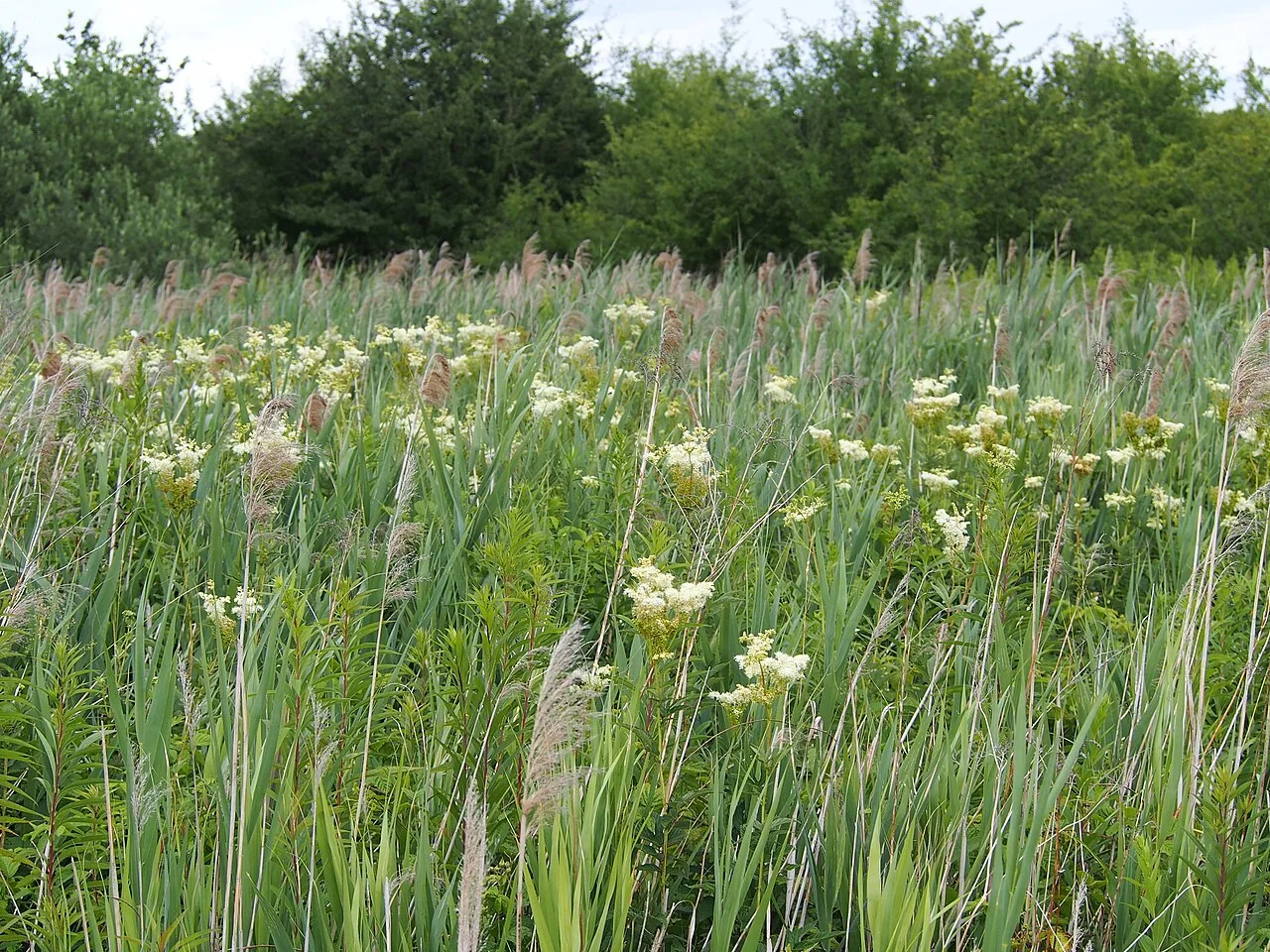
2 photos · Select to enlarge
The growth habit of Filipendula ulmaria.
Agnieszka Kwiecień, Nova / Wikimedia Commons / CC BY-SA 4.0
Photo details
Resized and converted to WebP. No content edits.
Source: File:Filipendula ulmaria Wiązówka błotna 2022-07-10 Sołtysowice 01.jpg
Reviewed . Source identification, photograph and license reviewed. The image illustrates the named plant; it does not verify dimensions or other plant traits.
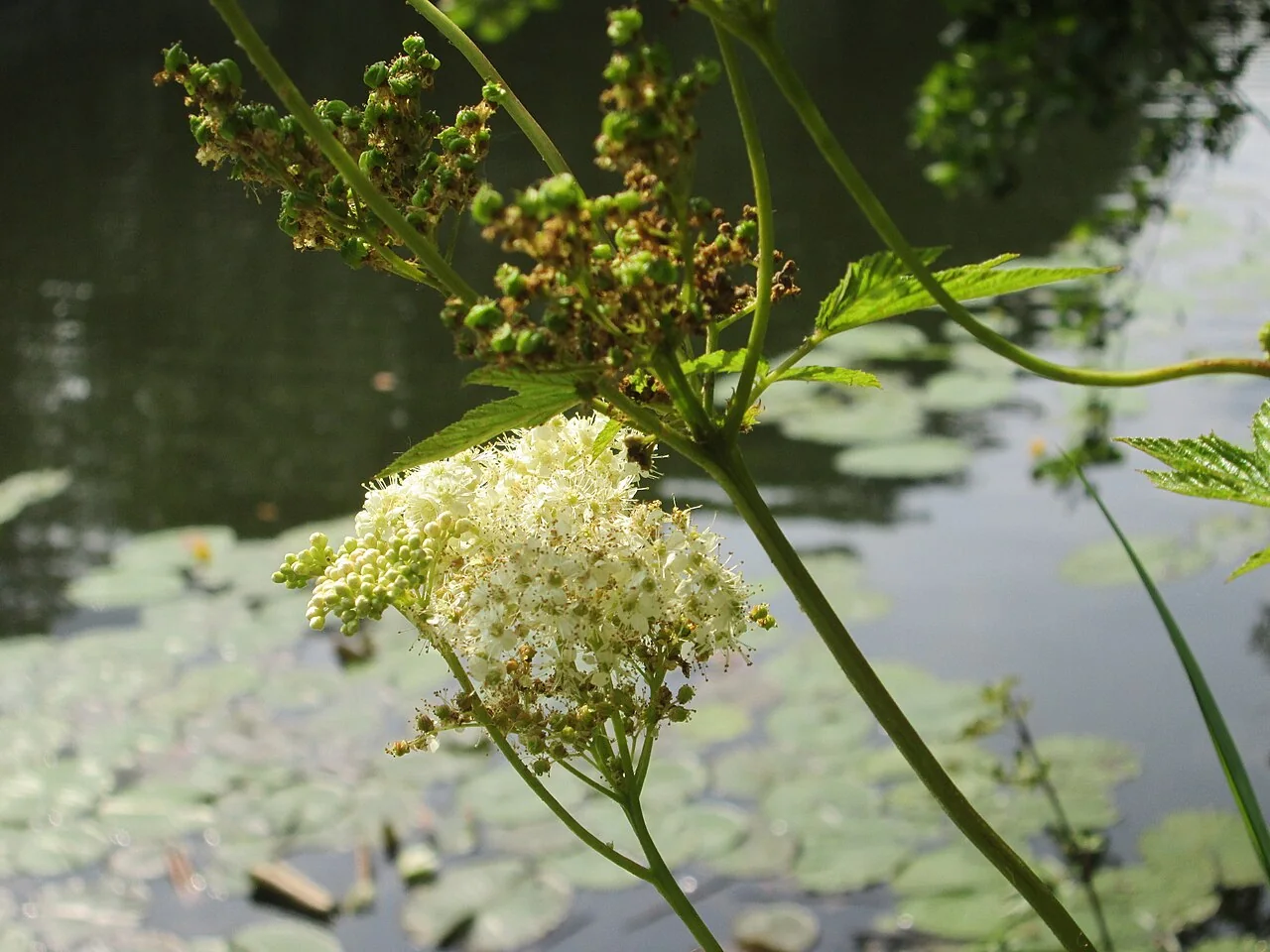
Flowers of Filipendula ulmaria.
AnRo0002 / Wikimedia Commons / CC0
Photo details
Resized and converted to WebP. No content edits.
Source: File:20190713Filipendula ulmaria1.jpg
Reviewed . Source identification, photograph and license reviewed. The image illustrates the named plant; it does not verify dimensions or other plant traits.
Common names
15 namesNames recorded in our plant catalogue and botanical sources, grouped by language. Usage can vary by region.
- English
- Dutch
-
- Moerasspirea[3]
- French
- German
-
- Echtes Mädesüß[3]
- Italian
-
- Olmaria comune[3]
- Portuguese
-
- Ulmária[3]
Numbered references identify names recorded by an external source. Other names are from our plant catalogue.
NC State Extension Gardener Plant Toolbox; English common names in a United States horticultural reference.
Source records
- Meadowsweet — ul#common_names > li:nth-of-type(3); heading: Common Name(s):; Filipendula ulmaria.
- Double Lady of the Meadow — ul#common_names > li:nth-of-type(1); heading: Common Name(s):; Filipendula ulmaria.
- European Meadowsweet — ul#common_names > li:nth-of-type(2); heading: Common Name(s):; Filipendula ulmaria.
- Queen of the Meadow — ul#common_names > li:nth-of-type(4); heading: Common Name(s):; Filipendula ulmaria.
Names retained from the referenced botanical profile or table.
Source records
- meadowsweet — Page 4, column 1, row top 592 pt; common-name cell after Filipendula ulmaria.; Filipendula ulmaria.
Community-curated iNaturalist taxonomy. This is a common-name attestation, not an independent botanical determination.
Source records
- Meadowsweet — results[0].names[1]; taxon id 63134; Filipendula ulmaria.
- Moerasspirea — results[0].names[15]; taxon id 63134; Filipendula ulmaria.
- Reine des prés — results[0].names[43]; taxon id 63134; Filipendula ulmaria.
- Echtes Mädesüß — results[0].names[2]; taxon id 63134; Filipendula ulmaria.
- European Meadowsweet — results[0].names[35]; taxon id 63134; Filipendula ulmaria.
- Queen of the Meadow — results[0].names[7]; taxon id 63134; Filipendula ulmaria.
- altarreina — results[0].names[19]; taxon id 63134; Filipendula ulmaria.
- reina de los prados — results[0].names[47]; taxon id 63134; Filipendula ulmaria.
- Filipendule ulmaire — results[0].names[40]; taxon id 63134; Filipendula ulmaria.
- Reine-des-prés — results[0].names[12]; taxon id 63134; Filipendula ulmaria.
- Reine-des-prés Grande — results[0].names[13]; taxon id 63134; Filipendula ulmaria.
- Spirée Ulmaire — results[0].names[39]; taxon id 63134; Filipendula ulmaria.
- Olmaria comune — results[0].names[21]; taxon id 63134; Filipendula ulmaria.
- Ulmária — results[0].names[38]; taxon id 63134; Filipendula ulmaria.
Source-backed information
Published observations for this plant. Each reference supports the information beside it.
- Taxonomy
-
Filipendula ulmaria is an accepted species in Catalogue of Life.
Taxonomic treatment in the August 2026 release; the catalogue record name is preserved.
Sources [1] - Botanical family
-
Rosaceae
Family in the cited taxonomic treatment.
Sources [1] - Mature height
-
0.91–1.83 m
NC State Extension profile. Converted from the source range in feet and inches; mature size varies with growing conditions.
Sources [2] - Mature spread
-
0.3–0.91 m
NC State Extension profile. Converted from the source range in feet and inches; mature size varies with growing conditions.
Sources [2] - Plant habit
-
Clumping; Erect
NC State Extension profile.
Sources [2] - Life cycle
-
Perennial
NC State Extension profile.
Sources [2] - Growth rate
-
Medium
NC State Extension profile.
Sources [2] - Light
-
Dappled Sunlight (Shade through upper canopy all day); Full sun (6 or more hours of direct sunlight a day); Partial Shade (Direct sunlight only part of the day, 2-6 hours)
NC State Extension profile.
Sources [2] - Moisture and drainage
-
Moist; Occasionally Wet
NC State Extension profile.
Sources [2] - Soil texture
-
Clay; Loam (Silt); Sand
NC State Extension profile.
Sources [2] - Soil pH
-
Alkaline (>8.0); Neutral (6.0-8.0)
NC State Extension profile. These source categories do not certify the catalogue’s numeric pH interval.
Sources [2] - Flowering season
-
Spring; Summer
NC State Extension profile. Seasons reflect the source region and do not verify the catalogue’s exact flowering months.
Sources [2] - Native range
-
Siberia, Asia, Mongolia
NC State Extension profile. Origin reported by the source; this is not a claim of local nativeness.
Sources [2] - Reported wildlife attraction
-
Listed as attracting: bees.
NC State Extension profile. Broad wildlife categories; this does not establish flower visits by a named bee species or quantify nectar and pollen.
Sources [2] - Pollinator guidance
-
RHS includes Filipendula ulmaria in its Plants for Pollinators guidance.
RHS planting guidance. Choose accessible flowers with pollen and nectar; reduced-resource and double-flowered forms may be unsuitable.
Sources [3]
Who this plant supports
Complete plant information
Structure
- Vegetation layer
- Herbaceous
- Size
- Small
- Dimensions
- 1.20 m high × 0.40 m wide
- Growth rate
- Moderate
- Lifecycle
- Perennial
Site conditions
- USDA hardiness
- 3-9
- Moisture
- Moist, Wet
- Soil
- Sandy, Loamy, Clay
- pH
- Neutral, Alkaline
- Light
- Partial shade, Sun
Uses
- Edible parts
- Leaves, Flowers, Seasoning, Root, Tea
- Functions
- Dye, Essential oil, Pollinator plant, Fragrant
- Edibility
- 3 out of 5
- Medicinal value
- 3 out of 5
Carrot: Cooked carrots are soft in texture and have a mild flavor. Young leaves: These can be cooked and used as flavor enhancers in soups. The dried leaves serve as a seasoning, such as in herbal tea. Flowers: They can be used as flavorings in alcoholic beverages, stewed fruits, and to make a syrup for fruit salads. A tea can be made by combining the young leaves, flowers, and roots.
Sources and references
References for the information marked with source numbers on this page.
-
Catalogue of Life
Filipendula ulmaria — Catalogue of Life COL26.8
COL26.8 (2026-08-20). Contributing checklist: Synonymic Checklists of the Vascular Plants of the World. This is taxonomic evidence, not an independent ecological study.
Relevant sections
- Taxonomy: NameUsage.tsv line 2161822; ID 6J2MQ; rank species; status accepted
- Botanical family: NameUsage.tsv line 2161822; ID 6J2MQ; rank species; status accepted
Source checked on .
Source data licence: CC BY 4.0.
-
NC State Extension
Filipendula ulmaria — Plant Toolbox
NC State Extension Gardener Plant Toolbox. Growing conditions and seasons reflect its United States horticultural context.
Supports: Mature heightMature spreadPlant habitLife cycleGrowth rateLightMoisture and drainageSoil textureSoil pHFlowering seasonNative rangeReported wildlife attractionRelevant sections
- Mature height: Dimensions / Height
- Mature spread: Dimensions / Width
- Plant habit: Habit/Form
- Life cycle: Life Cycle
- Growth rate: Growth Rate
- Light: Light
- Moisture and drainage: Soil Drainage
- Soil texture: Soil Texture
- Soil pH: Soil pH
- Flowering season: Flower Bloom Time
- Native range: Country Or Region Of Origin
- Reported wildlife attraction: Attracts
Source checked on .
-
Royal Horticultural Society
RHS Plants for Pollinators — Wildflowers
RHS planting guidance; applicable flower-form restrictions are retained. General recommendations do not measure local nectar or pollen production.
Supports: Pollinator guidanceRelevant sections
- Pollinator guidance: Page 4, column 1, entry Filipendula ulmaria (top 592 pt)
Source checked on .