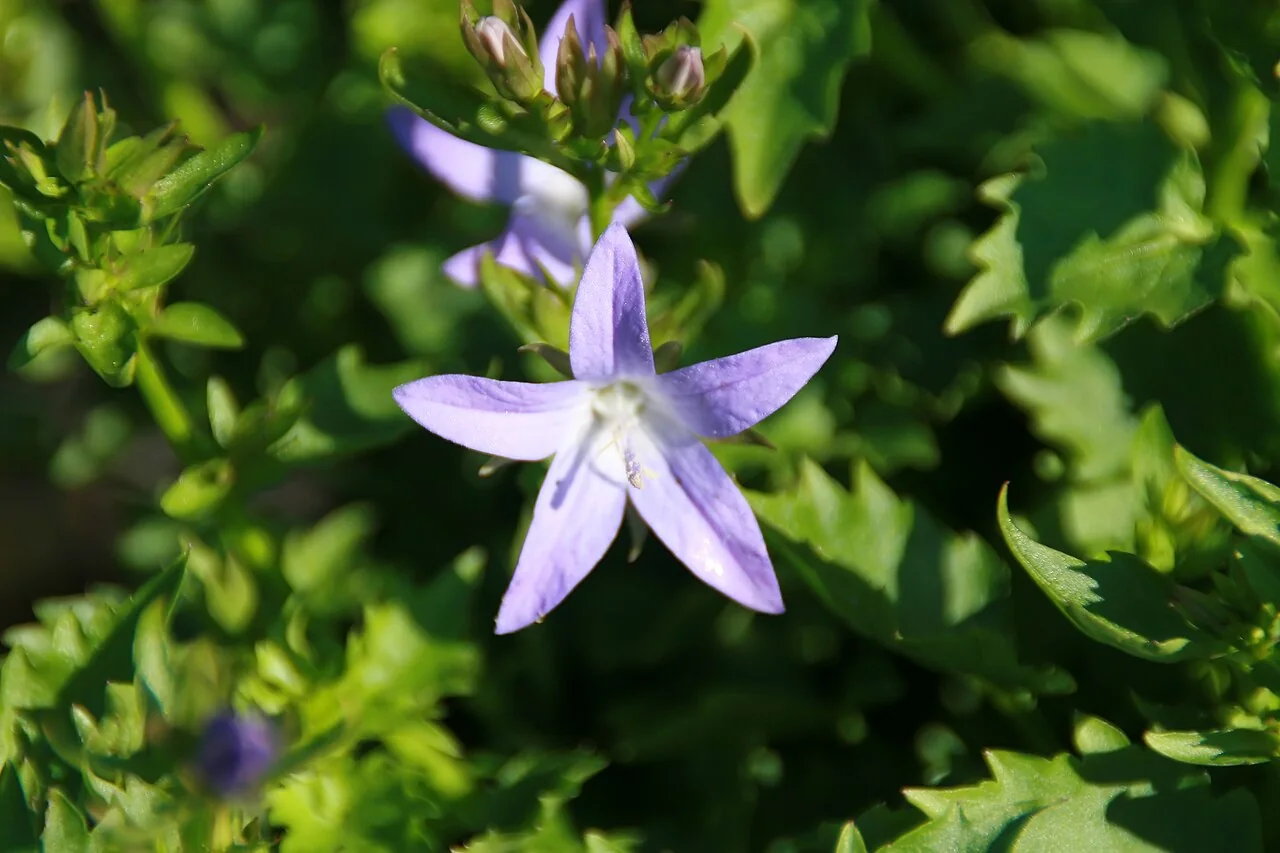
Pollinator plant

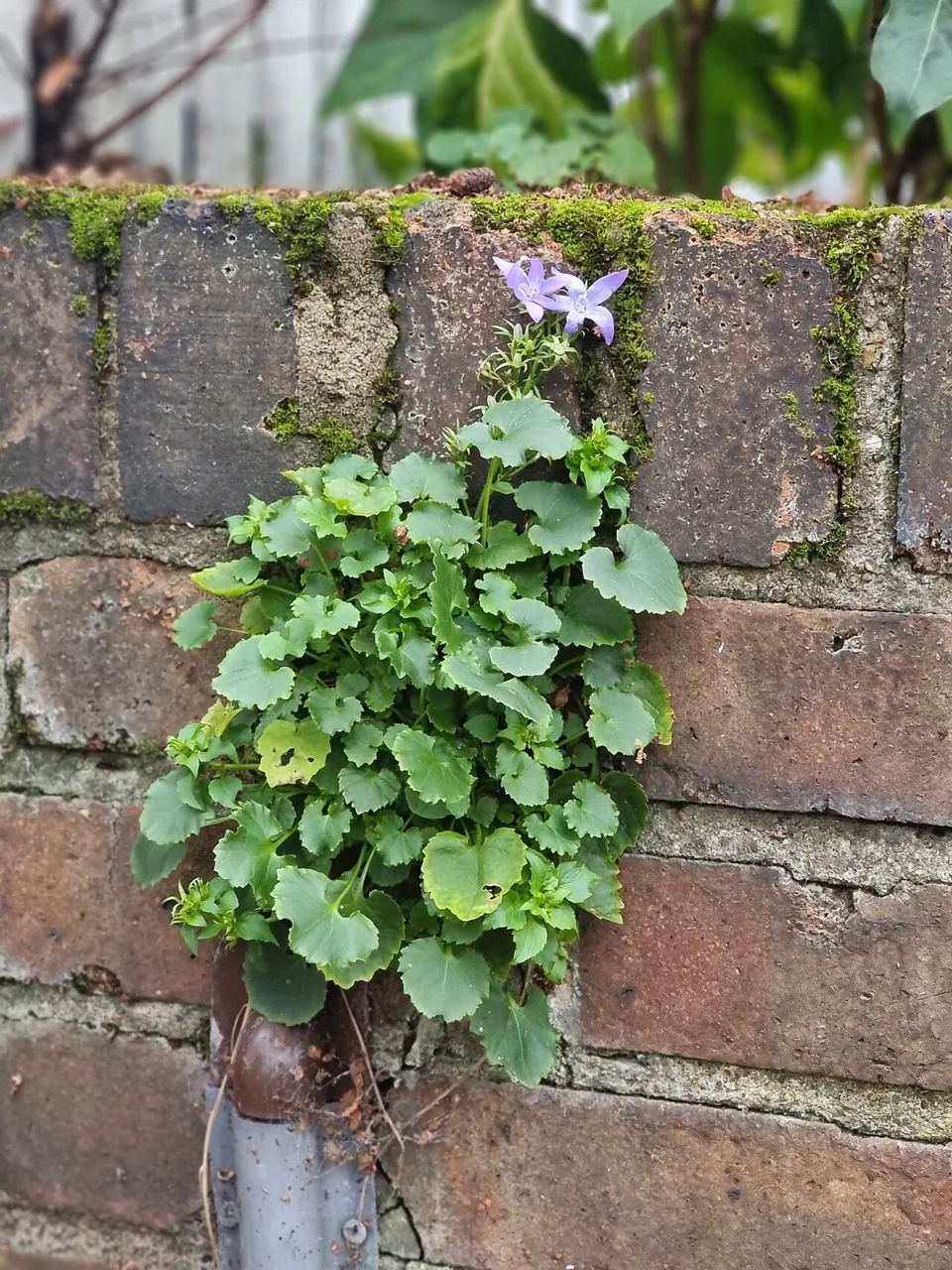
Trailing Bellflower

Campanula poscharskyana

Linked agroforestry plant data
Pollinator recipe

Common names

25 names · 17 languages
EnglishYour language
Other languages (16)
Dutch
  • Kruipklokje[2][4]
  • Poscharsky's klokje
  • Servisch klokje[2][4]
French
  • Campanule de Serbie[2][4]
  • Campanule des murs
  • Campanule poscharskyana[2][4]
Chinese (Simplified)
  • 巴夏风铃草[4]
Chinese (Traditional)
  • 垂吊風鈴草[4]
Czech
  • zvonek Poscharského[4]
Danish
  • stjerneklokke[4]
Estonian
  • Požarski kellukas[4]
Finnish
  • tähtikello[4]
German
  • Hängepolster-Glockenblume[2][4]
  • Kriechende Glockenblume[3]
  • Poscharsky-Glockenblume[2][4]
Italian
Polish
  • dzwonek Poszarskiego[4]
Russian
  • Колокольчик гарганский[4]
  • Колокольчик Пожарского[4]
Slovak
  • zvonček Poscharského[4]
Swedish
  • stjärnklocka[4]
Turkish
  • Sırp Çançiçeği[4]
Welsh
  • Clychlys ymlusgol[4]
Sources & name notes (4)

Names recorded in our plant catalogue and botanical sources, grouped by language. Usage can vary by region.

Numbered references identify names recorded by an external source. Other names are from our plant catalogue.

[1] Royal Horticultural Society — common names ↗

Names retained from the referenced botanical profile or table.

Source records
  • trailing bellflower — Page 2, column 1, row top 547 pt; common-name cell after Campanula poscharskyana.; Campanula poscharskyana.
[2] Campanula poscharskyana — iNaturalist taxon names ↗

Community-curated iNaturalist taxonomy. This is a common-name attestation, not an independent botanical determination.

Source records
  • Trailing bellflower — results[0].names[1]; taxon id 336005; Campanula poscharskyana.
  • Kruipklokje — results[0].names[9]; taxon id 336005; Campanula poscharskyana.
  • Hängepolster-Glockenblume — results[0].names[5]; taxon id 336005; Campanula poscharskyana.
  • Poscharsky-Glockenblume — results[0].names[4]; taxon id 336005; Campanula poscharskyana.
  • Serbian bellflower — results[0].names[2]; taxon id 336005; Campanula poscharskyana.
  • Campanule de Serbie — results[0].names[3]; taxon id 336005; Campanula poscharskyana.
  • Campanule poscharskyana — results[0].names[6]; taxon id 336005; Campanula poscharskyana.
  • Campanula serba — results[0].names[18]; taxon id 336005; Campanula poscharskyana.
  • Servisch klokje — results[0].names[16]; taxon id 336005; Campanula poscharskyana.
[3] Catalogue of Life 2026-08-20 — Campanula poscharskyana ↗

Common names from World Plants, version 26.05, reproduced in Catalogue of Life 2026-08-20. License: CC BY.

Source records
  • Trailing Bellflower (EN) — VernacularName.tsv, line 143320; taxon QBRK.
  • Kriechende Glockenblume (DE) — VernacularName.tsv, line 143319; taxon QBRK.
[4] Campanula poscharskyana — iNaturalist taxon names ↗

Community-curated iNaturalist taxonomy; common-name attestation, not an independent botanical determination.

Source records
  • Trailing bellflower — results[0].names[1]; taxon id 336005; Campanula poscharskyana.
  • Kruipklokje — results[0].names[9]; taxon id 336005; Campanula poscharskyana.
  • Hängepolster-Glockenblume — results[0].names[5]; taxon id 336005; Campanula poscharskyana.
  • Poscharsky-Glockenblume — results[0].names[4]; taxon id 336005; Campanula poscharskyana.
  • Serbian bellflower — results[0].names[2]; taxon id 336005; Campanula poscharskyana.
  • Campanule de Serbie — results[0].names[3]; taxon id 336005; Campanula poscharskyana.
  • Campanule poscharskyana — results[0].names[6]; taxon id 336005; Campanula poscharskyana.
  • Campanula serba — results[0].names[18]; taxon id 336005; Campanula poscharskyana.
  • Servisch klokje — results[0].names[16]; taxon id 336005; Campanula poscharskyana.
  • 垂吊風鈴草 — results[0].names[7]; taxon id 336005; Campanula poscharskyana.
  • Požarski kellukas — results[0].names[8]; taxon id 336005; Campanula poscharskyana.
  • stjärnklocka — results[0].names[10]; taxon id 336005; Campanula poscharskyana.
  • Колокольчик Пожарского — results[0].names[11]; taxon id 336005; Campanula poscharskyana.
  • Колокольчик гарганский — results[0].names[12]; taxon id 336005; Campanula poscharskyana.
  • Sırp Çançiçeği — results[0].names[13]; taxon id 336005; Campanula poscharskyana.
  • dzwonek Poszarskiego — results[0].names[14]; taxon id 336005; Campanula poscharskyana.
  • zvonek Poscharského — results[0].names[15]; taxon id 336005; Campanula poscharskyana.
  • stjerneklokke — results[0].names[17]; taxon id 336005; Campanula poscharskyana.
  • 巴夏风铃草 — results[0].names[19]; taxon id 336005; Campanula poscharskyana.
  • Clychlys ymlusgol — results[0].names[20]; taxon id 336005; Campanula poscharskyana.
  • tähtikello — results[0].names[21]; taxon id 336005; Campanula poscharskyana.
  • zvonček Poscharského — results[0].names[22]; taxon id 336005; Campanula poscharskyana.
Plant references

Source-backed information

Published observations for this plant. Each reference supports the information beside it.

Taxonomy
Campanula poscharskyana is an accepted species in Catalogue of Life.

Taxonomic treatment in the August 2026 release; the catalogue record name is preserved.

Sources [1]
Botanical family
Campanulaceae

Family in the cited taxonomic treatment.

Sources [1]
Pollinator guidance
RHS includes Campanula poscharskyana in its Plants for Pollinators guidance.

RHS planting guidance. Choose accessible flowers with pollen and nectar; reduced-resource and double-flowered forms may be unsuitable.

Sources [2]
Native range
Croatia to Montenegro.

Explicit native locality records in Kew WCVP v16; introduced and doubtful distributions excluded. Continent conversion follows the documented geographic mapping.

Sources [3]
Catalogue ratings

Who this plant supports

Honey bees

Medium suitability
Nectar value Medium
Pollen value Medium
Agroforestry database

Complete plant information

Open full plant profile

Structure

Vegetation layer
Herbaceous
Size
Small
Dimensions
0.30 m high × 1.00 m wide
Growth rate
Fast
Lifecycle
Perennial
Foliage
Evergreen

Site conditions

USDA hardiness
3-7
Moisture
Moist
Soil
Sandy, Loamy
pH
Neutral, Alkaline
Light
Partial shade, Sun

Uses

Edible parts
Leaves, Flowers
Functions
Ground cover
Edibility
4 out of 5
Medicinal value
0 out of 5

Leaves can be eaten both raw and cooked. They have a pleasant, sweet taste, but can be somewhat tough. The leaves are perfectly suitable for salads. Flowers are also edible and can be eaten raw. They are always plentiful, have a delightful, sweet flavor, and make a decorative addition to salads.

Sources and references

References for the information marked with source numbers on this page.

Sources checked
  1. Catalogue of Life Campanula poscharskyana — Catalogue of Life COL26.8

    COL26.8 (2026-08-20). Contributing checklist: Synonymic Checklists of the Vascular Plants of the World. This is taxonomic evidence, not an independent ecological study.

    Supports: TaxonomyBotanical family
    Relevant sections
    • Taxonomy: NameUsage.tsv line 5098728; ID QBRK; rank species; status accepted
    • Botanical family: NameUsage.tsv line 5098728; ID QBRK; rank species; status accepted

    Source checked on .

    Source data licence: CC BY 4.0.

  2. Royal Horticultural Society RHS Plants for Pollinators — Plants Of The World

    RHS planting guidance; applicable flower-form restrictions are retained. General recommendations do not measure local nectar or pollen production.

    Relevant sections
    • Pollinator guidance: Page 2, column 1, entry Campanula poscharskyana (top 547 pt)

    Source checked on .

  3. Royal Botanic Gardens, Kew Campanula poscharskyana — Kew WCVP native distribution

    Native distribution and taxonomic treatment from the official WCVP v16 export (4 June 2026). The link opens the corresponding POWO taxon. Source rows are retained in the native-range audit archive.

    Supports: Native range
    Relevant sections
    • Native range: WCVP v16; wcvp_names.csv lines 1210432; wcvp_distribution.csv native locality lines 488421

    Source checked on .

    Source data licence: CC BY 3.0.