Turkish rocket
Bunias orientalis
Linked agroforestry plant dataPlant photos
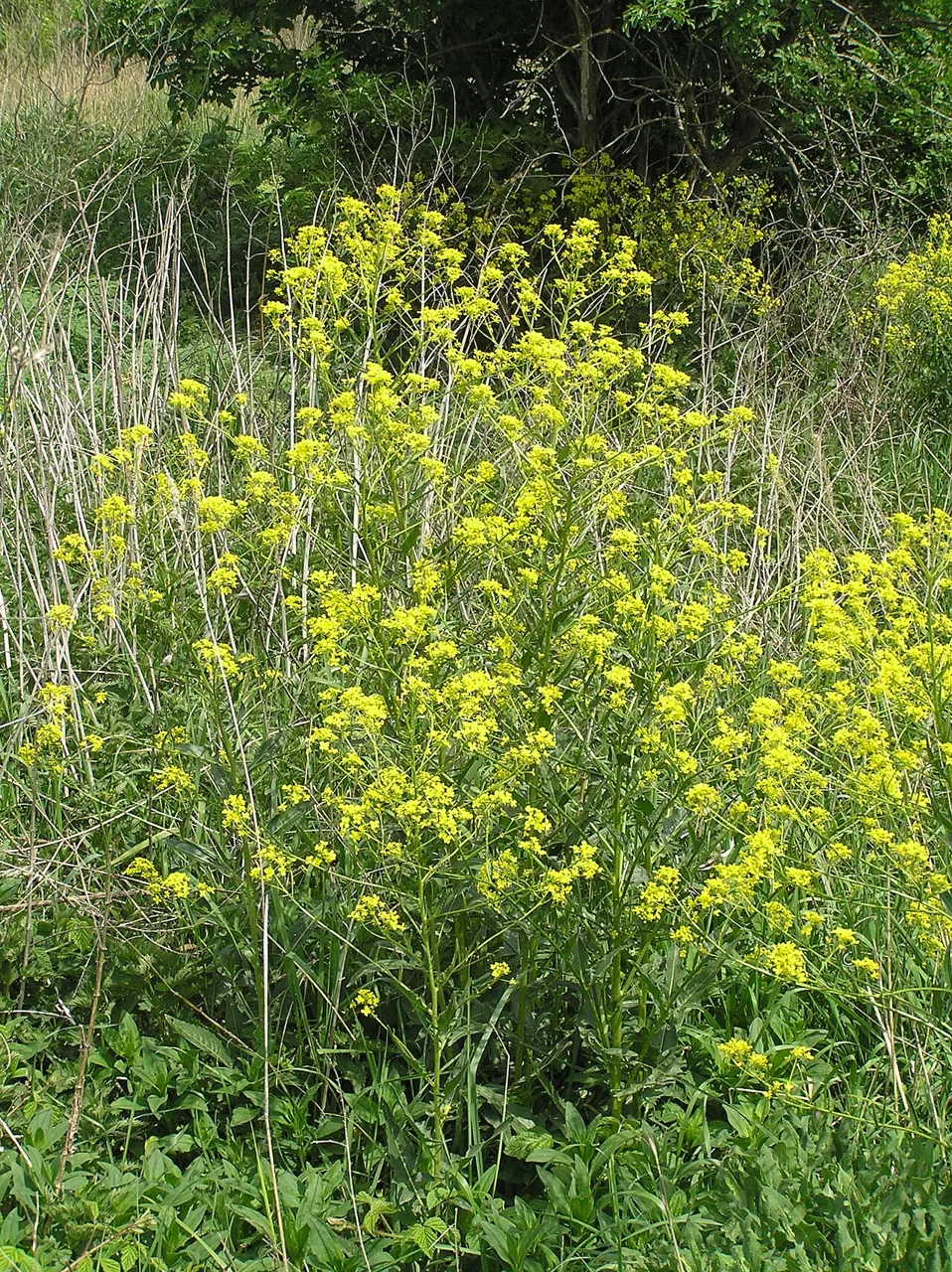
2 photos · Select to enlarge
Bunias orientalis in flower.
Petr Filippov / Wikimedia Commons / CC BY-SA 3.0
Photo details
Resized and converted to WebP. No content edits.
Source: File:Bunias orientalis1.JPG
Reviewed . Source identification, photograph and license reviewed. The image illustrates the named plant; it does not verify dimensions or other plant traits.
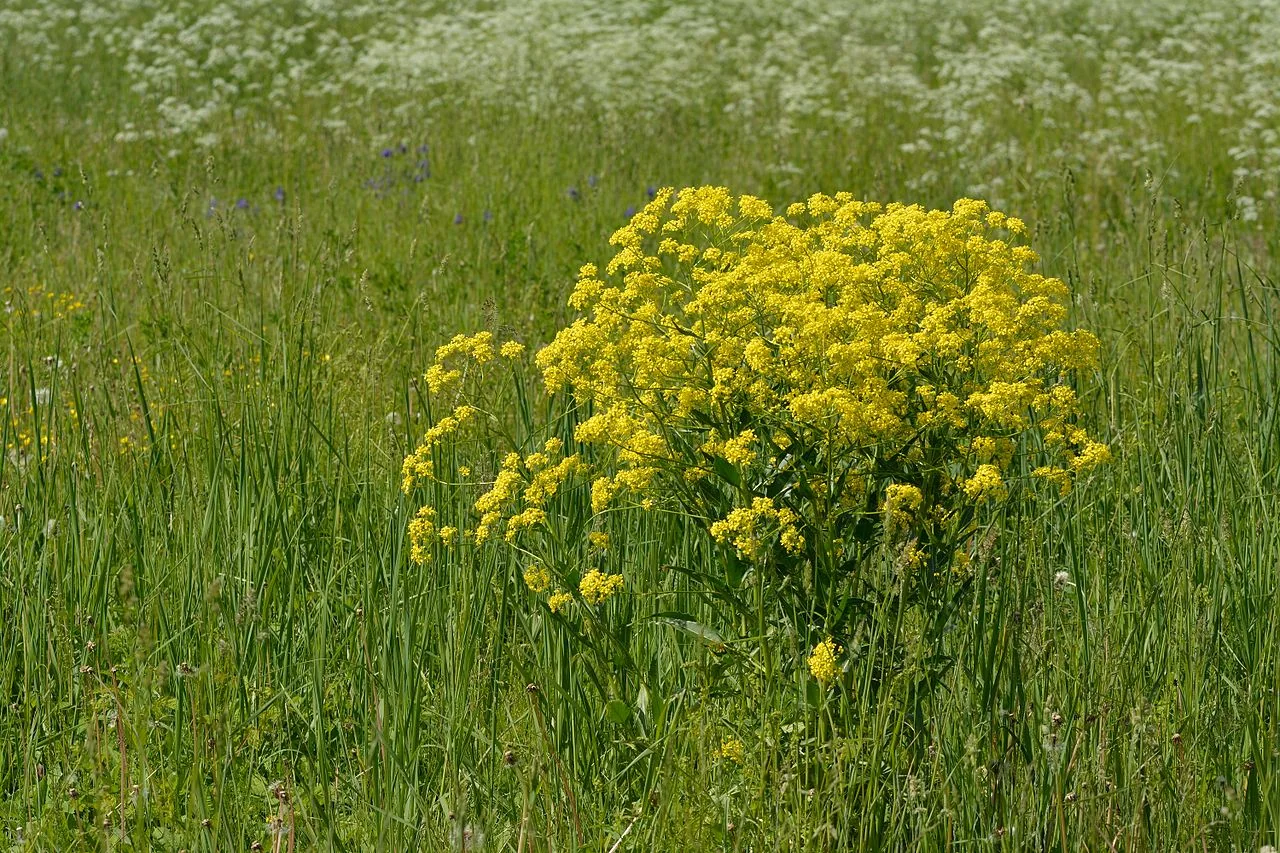
The growth habit of Bunias orientalis.
Ivar Leidus / Wikimedia Commons / CC BY-SA 3.0
Photo details
Resized and converted to WebP. No content edits.
Source: File:Bunias orientalis - Rakvere raibe.jpg
Reviewed . Source identification, photograph and license reviewed. The image illustrates the named plant; it does not verify dimensions or other plant traits.
Common names
31 names · 22 languagesOther languages (21)
- Belarusian
-
- Свербігуз усходні[2]
- Chinese (Simplified)
-
- 疣果匙荠[2]
- Chinese (Traditional)
-
- 疣果匙薺[2]
- Czech
-
- rukevník východní[2]
- Danish
-
- Orientalsk takkeklap[2]
- German
- Hungarian
-
- keleti szümcső[2]
- Lithuanian
-
- Rytinė engra[2]
- Norwegian
-
- russekål[2]
- Polish
-
- Rukiewnik wschodni[2]
- Russian
-
- Свербига восточная[2]
- Slovak
-
- roripovník východný[2]
- Slovenian
-
- vzhodni pikasti lušček[2]
- Swedish
-
- Ryssgubbe[2]
- Turkish
-
- Çırşalgamı[2]
- Ukrainian
-
- Свербига звичайна[2]
Sources & name notes (3)
Names recorded in our plant catalogue and botanical sources, grouped by language. Usage can vary by region.
Catalogue language labels are reviewed separately from botanical source records.
Numbered references identify names recorded by an external source. Other names are from our plant catalogue.
Community-curated iNaturalist taxonomy. This is a common-name attestation, not an independent botanical determination.
Source records
- Turkish rocket — results[0].names[21]; taxon id 159601; Bunias orientalis.
- grote hardvrucht — results[0].names[12]; taxon id 159601; Bunias orientalis.
- Warty-cabbage — results[0].names[1]; taxon id 159601; Bunias orientalis.
- Glattes Zackenschötchen — results[0].names[4]; taxon id 159601; Bunias orientalis.
- Orientalische Zackenschote — results[0].names[8]; taxon id 159601; Bunias orientalis.
- Orientalisches Zackenschötchen — results[0].names[9]; taxon id 159601; Bunias orientalis.
- Türkische Rauke — results[0].names[10]; taxon id 159601; Bunias orientalis.
- Bunias d'Orient — results[0].names[5]; taxon id 159601; Bunias orientalis.
- Cascellore orientale — results[0].names[6]; taxon id 159601; Bunias orientalis.
Community-curated iNaturalist taxonomy; common-name attestation, not an independent botanical determination.
Source records
- Turkish rocket — results[0].names[21]; taxon id 159601; Bunias orientalis.
- grote hardvrucht — results[0].names[12]; taxon id 159601; Bunias orientalis.
- Warty-cabbage — results[0].names[1]; taxon id 159601; Bunias orientalis.
- Glattes Zackenschötchen — results[0].names[4]; taxon id 159601; Bunias orientalis.
- Orientalische Zackenschote — results[0].names[8]; taxon id 159601; Bunias orientalis.
- Orientalisches Zackenschötchen — results[0].names[9]; taxon id 159601; Bunias orientalis.
- Türkische Rauke — results[0].names[10]; taxon id 159601; Bunias orientalis.
- Bunias d'Orient — results[0].names[5]; taxon id 159601; Bunias orientalis.
- Cascellore orientale — results[0].names[6]; taxon id 159601; Bunias orientalis.
- Ryssgubbe — results[0].names[2]; taxon id 159601; Bunias orientalis.
- rukevník východní — results[0].names[3]; taxon id 159601; Bunias orientalis.
- Orientalsk takkeklap — results[0].names[7]; taxon id 159601; Bunias orientalis.
- Свербига восточная — results[0].names[11]; taxon id 159601; Bunias orientalis.
- russekål — results[0].names[13]; taxon id 159601; Bunias orientalis.
- harilik tõlkjas — results[0].names[14]; taxon id 159601; Bunias orientalis.
- rakvere raibe — results[0].names[15]; taxon id 159601; Bunias orientalis.
- idänukonpalko — results[0].names[16]; taxon id 159601; Bunias orientalis.
- Rytinė engra — results[0].names[17]; taxon id 159601; Bunias orientalis.
- roripovník východný — results[0].names[18]; taxon id 159601; Bunias orientalis.
- Rukiewnik wschodni — results[0].names[19]; taxon id 159601; Bunias orientalis.
- Ukonpalko — results[0].names[20]; taxon id 159601; Bunias orientalis.
- 疣果匙薺 — results[0].names[22]; taxon id 159601; Bunias orientalis.
- 疣果匙荠 — results[0].names[23]; taxon id 159601; Bunias orientalis.
- Свербига звичайна — results[0].names[24]; taxon id 159601; Bunias orientalis.
- Свербігуз усходні — results[0].names[25]; taxon id 159601; Bunias orientalis.
- keleti szümcső — results[0].names[26]; taxon id 159601; Bunias orientalis.
- vzhodni pikasti lušček — results[0].names[27]; taxon id 159601; Bunias orientalis.
- Çırşalgamı — results[0].names[28]; taxon id 159601; Bunias orientalis.
Common names from World Plants, version 26.05, reproduced in Catalogue of Life 2026-08-20. License: CC BY.
Source records
- Orientalisches Zackenschötchen (DE) — VernacularName.tsv, line 146431; taxon 695NB.
- Turkish Warty-cabbage (EN) — VernacularName.tsv, line 146432; taxon 695NB.
Source-backed information
Published observations for this plant. Each reference supports the information beside it.
Who this plant supports
Complete plant information
Structure
- Vegetation layer
- Herbaceous, Vegetable
- Size
- Small
- Dimensions
- 0.90 m high × 0.50 m wide
- Lifecycle
- Perennial
Site conditions
- USDA hardiness
- 6-9
- Moisture
- Moist
- Soil
- Sandy, Loamy, Clay
- pH
- Acid, Neutral, Alkaline
- Light
- Sun
Uses
- Edible parts
- Leaves, Flowers
- Edibility
- 4 out of 5
- Medicinal value
- 0 out of 5
Leaves and young stems can be eaten raw or cooked. The young leaves have a mild cabbage flavor and are well suited for mixed salads, but some people find them hard to digest. The leaves are somewhat hairy, making them less pleasant to eat raw on their own. Cooked leaves make an excellent vegetable. They are available from the beginning of the year, usually towards the end of winter, and the plant continues to produce leaves until late autumn, with a break when the plant flowers. Flower buds and flowering stems can be eaten both raw and cooked. They have a pleasant mild flavor with a delicate sweetness and a cabbage-like taste. They are an excellent substitute for broccoli, although they are slightly smaller.
Sources and references
References for the information marked with source numbers on this page.
-
Catalogue of Life
Bunias orientalis — Catalogue of Life COL26.8
COL26.8 (2026-08-20). Contributing checklist: Synonymic Checklists of the Vascular Plants of the World. This is taxonomic evidence, not an independent ecological study.
Relevant sections
- Taxonomy: NameUsage.tsv line 2010779; ID 695NB; rank species; status accepted
- Botanical family: NameUsage.tsv line 2010779; ID 695NB; rank species; status accepted
Source checked on .
Source data licence: CC BY 4.0.