Urtica dioica
Stinging nettle, California nettle
Explore the size, hardiness, soil, light, edible uses and harvest period of Urtica dioica.
Plant photos
2 photos · Select to enlarge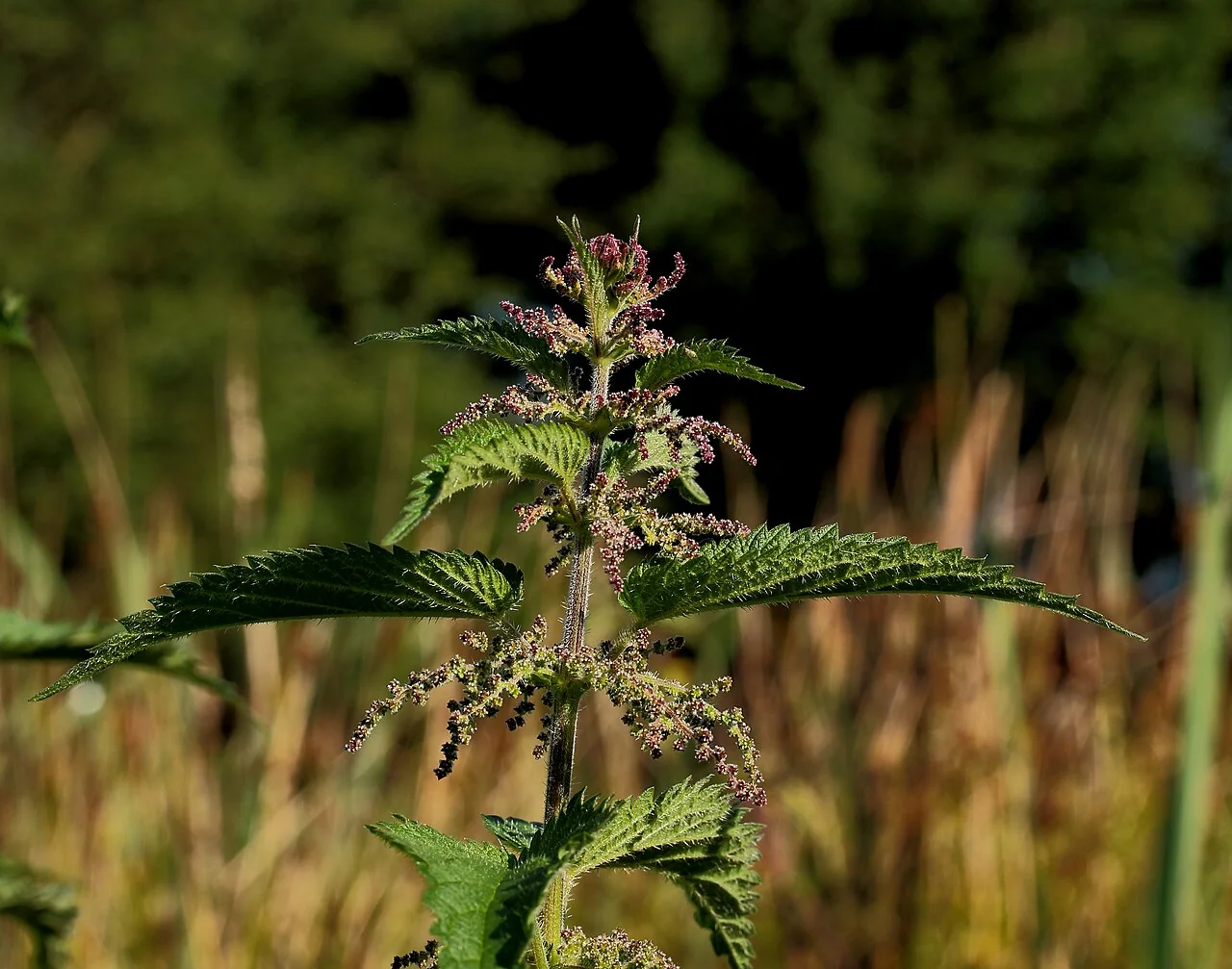
Urtica dioica in flower.
Dominicus Johannes Bergsma / Wikimedia Commons / CC BY-SA 4.0

Photo details
Resized and converted to WebP. No content edits.
Source: File:Brandnetel, Urtica dioica, Locatie, Famberhorst.jpg
Reviewed . Source identification, photograph and license reviewed. The image illustrates the named plant; it does not verify dimensions or other plant traits.
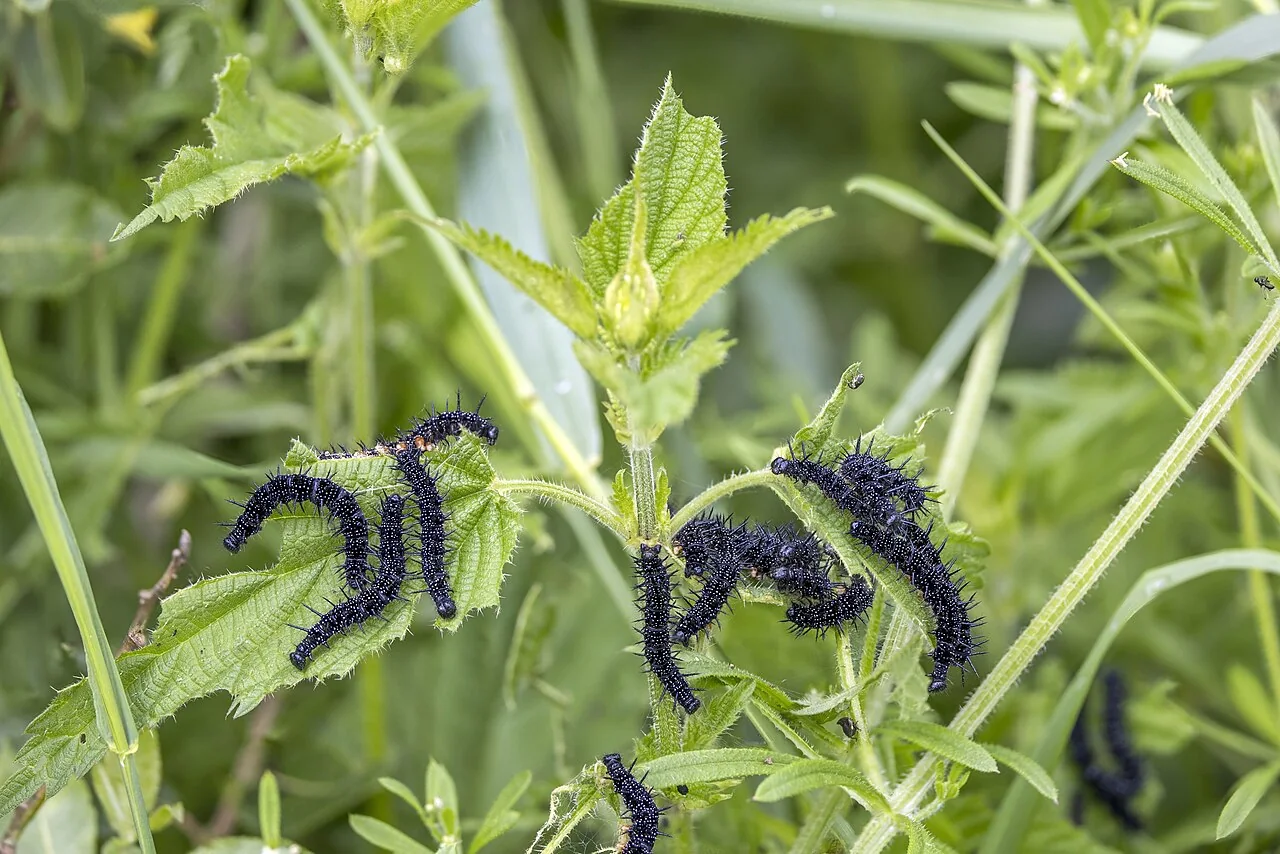
Peacock butterfly caterpillars on Urtica dioica.
Charles J. Sharp / Wikimedia Commons / CC BY-SA 4.0
_caterpillars_on_stinging_nettle_(Urtica_dioica)_Ruggeller_Riet.jpg)
Photo details
Resized and converted to WebP. No content edits.
Source: File:Peacock (Aglais io) caterpillars on stinging nettle (Urtica dioica) Ruggeller Riet.jpg
Reviewed . Source identification, photograph and license reviewed. The image illustrates the named plant; it does not verify dimensions or other plant traits.
Common names
87 names · 54 languagesOther languages (53)
- Dutch
-
- Grote brandnetel[1]
- Afrikaans
-
+1 more nameShow fewer names
- gewone brandnetel[1]
- Arabic
-
- قراص كبير[1]
- Asturian
-
- urtiga[1]
- Basque
-
- Asun[1]
- Belarusian
-
- Крапіва двухдомная[1]
- Bulgarian
-
- Обикновена коприва[1]
- Catalan
-
- ortiga[1]
- Chinese (Simplified)
-
- 异株荨麻[1]
- Chinese (Traditional)
-
- 異株蕁麻[1]
- Croatian
-
+1 more nameShow fewer names
- Velika kopriva[1]
- Emilian Romagnol
-
- Urtîga[1]
- Esperanto
-
- urtiko[1]
- Faroese
-
- tvíbýlisnota[1]
- Galician
-
- Estruga maior[1]
- Greek
-
- Τσουκνίδα[1]
- Hungarian
-
- Nagy csalán[1]
- Ido
-
- Urtiko[1]
- Ingush
-
- Нитт[1]
- Irish
-
- Neantóg[1]
- Japanese
-
- セイヨウイラクサ[1]
- Kazakh
-
- Қосүйлі қалақай[1]
- Klallam
-
- sčx̣áyč;[1]
- Latvian
-
- Lielā nātre[1]
- Lithuanian
-
- Didžioji dilgėlė[1]
- Manx
-
- Jinny nettle[1]
- Mono
-
- tunünuvüba[1]
- Norwegian
-
- Stornesle[1]
- Ojibwe
-
- zesab[1]
- Polish
-
- Pokrzywa zwyczajna[1]
- Romanian
-
- Urzică[1]
- Russian
-
- Крапива двудомная[1]
- Serbian
-
- Коприва[1]
- Slovak
-
- pŕhľava dvojdomá[1]
- Slovenian
-
- Velika kopriva[1]
- Swati
-
- umbabazane[1]
- Swedish
-
- brännässla[1]
- Tongva
-
- sachikili[1]
- Turkish
-
- Isırgan[1]
- Welsh
-
- danadl poethion[1]
- Zeelandic
-
- Broeinekel[1]
Sources & name notes (1)
Names recorded in our plant catalogue and botanical sources, grouped by language. Usage can vary by region.
Numbered references identify names recorded by an external source. Other names are from our plant catalogue.
Community-curated iNaturalist taxonomy; common-name attestation, not an independent botanical determination.
Source records
- great stinging nettle — results[1].names[1]; taxon id 51884; Urtica dioica.
- European stinging nettle — results[1].names[2]; taxon id 51884; Urtica dioica.
- Grote brandnetel — results[1].names[3]; taxon id 51884; Urtica dioica.
- ortica — results[1].names[4]; taxon id 51884; Urtica dioica.
- ortiga — results[1].names[5]; taxon id 51884; Urtica dioica.
- ortiga — results[1].names[6]; taxon id 51884; Urtica dioica.
- Große Brennessel — results[1].names[7]; taxon id 51884; Urtica dioica.
- chichicaxtle — results[1].names[8]; taxon id 51884; Urtica dioica.
- quemadora — results[1].names[9]; taxon id 51884; Urtica dioica.
- isonokkonen — results[1].names[10]; taxon id 51884; Urtica dioica.
- Grande ortie — results[1].names[11]; taxon id 51884; Urtica dioica.
- Ortie dioïque — results[1].names[12]; taxon id 51884; Urtica dioica.
- brännässla — results[1].names[13]; taxon id 51884; Urtica dioica.
- nokkonen — results[1].names[14]; taxon id 51884; Urtica dioica.
- urtiga-comum — results[1].names[15]; taxon id 51884; Urtica dioica.
- Pokrzywa zwyczajna — results[1].names[16]; taxon id 51884; Urtica dioica.
- kopřiva dvoudomá — results[1].names[17]; taxon id 51884; Urtica dioica.
- Kopriva — results[1].names[18]; taxon id 51884; Urtica dioica.
- Nokkoset — results[1].names[19]; taxon id 51884; Urtica dioica.
- Asun — results[1].names[20]; taxon id 51884; Urtica dioica.
- Kopřiva — results[1].names[21]; taxon id 51884; Urtica dioica.
- kõrvenõges — results[1].names[22]; taxon id 51884; Urtica dioica.
- nõges — results[1].names[23]; taxon id 51884; Urtica dioica.
- Nælde — results[1].names[24]; taxon id 51884; Urtica dioica.
- Urtiko — results[1].names[25]; taxon id 51884; Urtica dioica.
- Нитт — results[1].names[26]; taxon id 51884; Urtica dioica.
- Isırgan — results[1].names[27]; taxon id 51884; Urtica dioica.
- Broeinekel — results[1].names[28]; taxon id 51884; Urtica dioica.
- Didžioji dilgėlė — results[1].names[29]; taxon id 51884; Urtica dioica.
- Stor nælde — results[1].names[30]; taxon id 51884; Urtica dioica.
- Große Brennnessel — results[1].names[31]; taxon id 51884; Urtica dioica.
- Крапива двудомная — results[1].names[32]; taxon id 51884; Urtica dioica.
- Urtîga — results[1].names[33]; taxon id 51884; Urtica dioica.
- Stornesle — results[1].names[34]; taxon id 51884; Urtica dioica.
- Nagy csalán — results[1].names[35]; taxon id 51884; Urtica dioica.
- Обикновена коприва — results[1].names[36]; taxon id 51884; Urtica dioica.
- brændenælde — results[1].names[37]; taxon id 51884; Urtica dioica.
- urtiga — results[1].names[38]; taxon id 51884; Urtica dioica.
- قراص كبير — results[1].names[39]; taxon id 51884; Urtica dioica.
- Jinny nettle — results[1].names[40]; taxon id 51884; Urtica dioica.
- urtiko — results[1].names[41]; taxon id 51884; Urtica dioica.
- zesab — results[1].names[42]; taxon id 51884; Urtica dioica.
- pŕhľava dvojdomá — results[1].names[43]; taxon id 51884; Urtica dioica.
- セイヨウイラクサ — results[1].names[44]; taxon id 51884; Urtica dioica.
- Obična kopriva — results[1].names[45]; taxon id 51884; Urtica dioica.
- Velika kopriva — results[1].names[46]; taxon id 51884; Urtica dioica.
- Dvodomna kopriva — results[1].names[47]; taxon id 51884; Urtica dioica.
- âmōzōtl — results[1].names[48]; taxon id 51884; Urtica dioica.
- Τσουκνίδα — results[1].names[49]; taxon id 51884; Urtica dioica.
- sachikili — results[1].names[50]; taxon id 51884; Urtica dioica.
- 異株蕁麻 — results[1].names[51]; taxon id 51884; Urtica dioica.
- 异株荨麻 — results[1].names[52]; taxon id 51884; Urtica dioica.
- Кропива звичайна — results[1].names[53]; taxon id 51884; Urtica dioica.
- Neantóg — results[1].names[54]; taxon id 51884; Urtica dioica.
- Estruga maior — results[1].names[55]; taxon id 51884; Urtica dioica.
- Urtigão — results[1].names[56]; taxon id 51884; Urtica dioica.
- tvíbýlisnota — results[1].names[57]; taxon id 51884; Urtica dioica.
- Крапіва двухдомная — results[1].names[58]; taxon id 51884; Urtica dioica.
- brandnekel — results[1].names[59]; taxon id 51884; Urtica dioica.
- branneukel — results[1].names[60]; taxon id 51884; Urtica dioica.
- gewone brandnetel — results[1].names[61]; taxon id 51884; Urtica dioica.
- Swedish hemp — results[1].names[62]; taxon id 51884; Urtica dioica.
- common nettle — results[1].names[63]; taxon id 51884; Urtica dioica.
- bobatsi — results[1].names[64]; taxon id 51884; Urtica dioica.
- common stinging nettle — results[1].names[65]; taxon id 51884; Urtica dioica.
- umbabazane — results[1].names[66]; taxon id 51884; Urtica dioica.
- great nettle — results[1].names[67]; taxon id 51884; Urtica dioica.
- Brandnetel — results[1].names[68]; taxon id 51884; Urtica dioica.
- Babatsi, Bobatsi — results[1].names[69]; taxon id 51884; Urtica dioica.
- large stinging nettle — results[1].names[70]; taxon id 51884; Urtica dioica.
- sčx̣áyč; — results[1].names[71]; taxon id 51884; Urtica dioica.
- perennial nettle — results[1].names[72]; taxon id 51884; Urtica dioica.
- Velika kopriva — results[1].names[73]; taxon id 51884; Urtica dioica.
- perennial stinging nettle — results[1].names[74]; taxon id 51884; Urtica dioica.
- tall nettle — results[1].names[75]; taxon id 51884; Urtica dioica.
- Lielā nātre — results[1].names[76]; taxon id 51884; Urtica dioica.
- Кропива дводомна — results[1].names[77]; taxon id 51884; Urtica dioica.
- Urzică — results[1].names[78]; taxon id 51884; Urtica dioica.
- Кропива велика — results[1].names[79]; taxon id 51884; Urtica dioica.
- big-sting nettle — results[1].names[80]; taxon id 51884; Urtica dioica.
- Қосүйлі қалақай — results[1].names[81]; taxon id 51884; Urtica dioica.
- danadl poethion — results[1].names[82]; taxon id 51884; Urtica dioica.
- Коприва — results[1].names[83]; taxon id 51884; Urtica dioica.
- tunünuvüba — results[1].names[84]; taxon id 51884; Urtica dioica.
- Ortica comune — results[1].names[85]; taxon id 51884; Urtica dioica.
- Stinging Nettle — results[1].names[86]; taxon id 51884; Urtica dioica.
General information
Accepted in the cited Kew taxonomic treatment.
Sources [1]Plant characteristics
NC State landscape size range; converted from feet and inches. Size varies with site, age and management.
Sources [2]NC State landscape size range; converted from feet and inches. Size varies with site, age and management.
Sources [2]Growing conditions
USDA zones listed by NC State; winter survival does not establish reliable cropping.
Sources [2]Well-drained, Moist, Occasionally Wet
Moisture and drainage conditions listed by NC State.
Sources [2]Acidic Neutral Alkaline
Uses
Leaves, kleur, Oil, Stems, Sap
Biomass production, Dye, Fibre, Oil, Repellent, Bee forage, Carbon farming
Description
Young nettle leaves are edible and can be added to dishes such as soup or dried for later use. They are very nutritious, rich in minerals, especially iron, and vitamins, particularly vitamins A and C. Only young leaves should be used, as older leaves can be toxic and have a laxative effect. When harvesting, it is important to wear gloves to avoid stings. Cooking or drying the leaves neutralizes the stinging hairs. The dried leaves can be used to make tea with a neutral taste. Additionally, the leaves can serve as a substitute for rennet in plant-based milk. Young nettle shoots are harvested in the spring when they are 15 to 20 cm long. From these shoots, nettle beer can be brewed. Nettle plants are also commercially harvested for chlorophyll, which is used as a green coloring agent (E140) in foods and medicines.
Harvest
Sources and references
References for the information marked with source numbers on this page.
-
Royal Botanic Gardens, Kew
World Checklist of Vascular Plants, version 16, extracted 4 June 2026
Relevant sections
- Botanical family: WCVP v16, wcvp_names.csv row 174372; name ID 2446471; Urtica L.. Family column.
- Taxonomy: WCVP v16, wcvp_names.csv row 171561; name ID 2448560; Urtica dioica L..
Source checked on .
Source data licence: CC BY 3.0.
-
NC State Extension, North Carolina State University
Urtica dioica — Extension Gardener Plant Toolbox
Relevant sections
- Height: Dimensions > Height; Height: 3 ft. 0 in. - 9 ft. 0 in.
- Spread: Dimensions > Width; Width: 1 ft. 0 in. - 3 ft. 0 in.
- Growth rate: Growth Rate
- Growth habit: Habit/Form
- Life cycle: Life Cycle
- Light: Light
- Soil moisture: Soil Drainage
- Soil texture: Soil Texture
- USDA hardiness: USDA Plant Hardiness Zone
Source checked on .