Typha angustifolia
Small Reed Mace
Explore the size, hardiness, soil, light, edible uses and harvest period of Typha angustifolia.
Plant photos
2 photos · Select to enlarge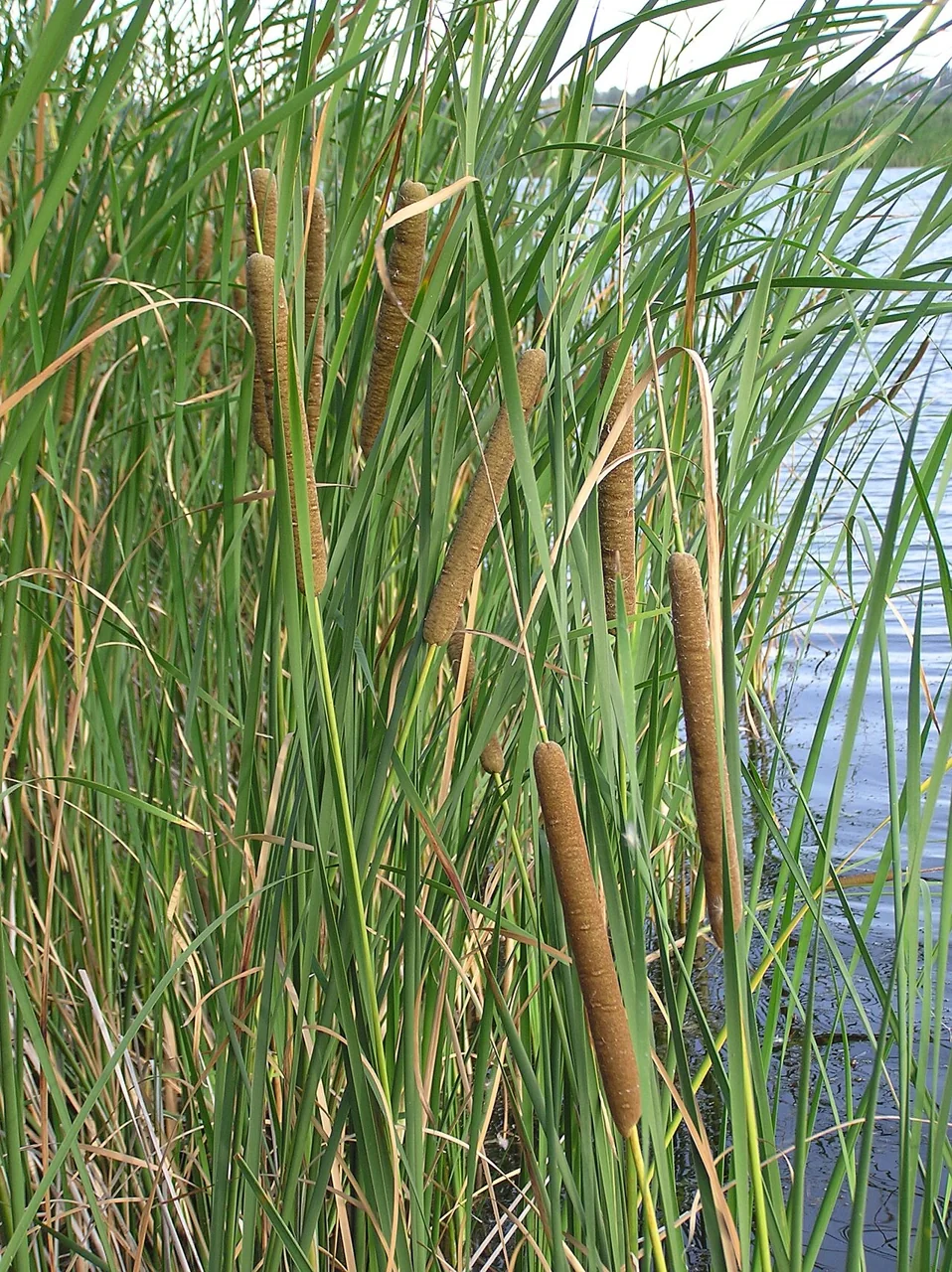
The growth habit of Typha angustifolia.
Le.Loup.Gris / Wikimedia Commons / CC BY-SA 3.0
_1.jpg)
Photo details
Resized and converted to WebP. No content edits.
Source: File:Typha angustifolia (habitus) 1.jpg
Reviewed . Source identification, photograph and license reviewed. The image illustrates the named plant; it does not verify dimensions or other plant traits.
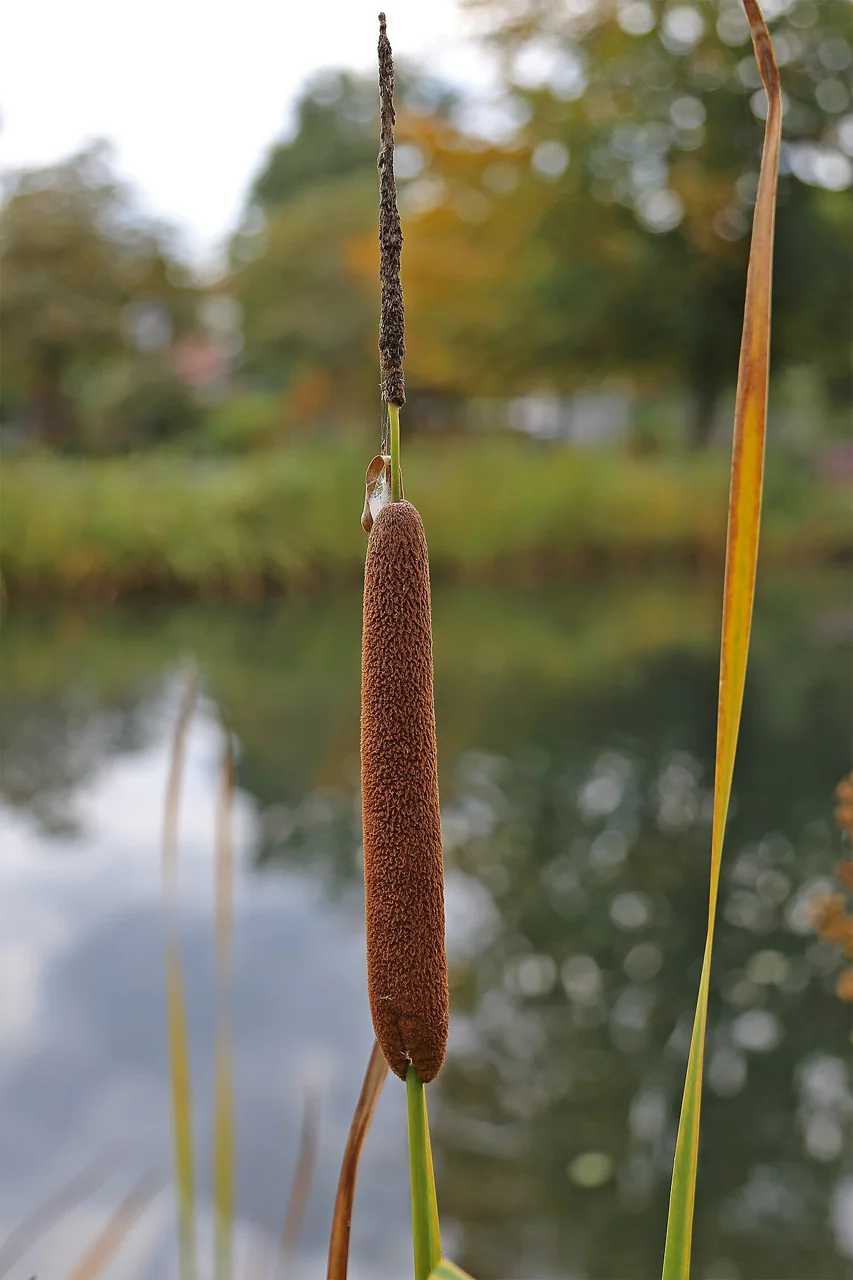
Seed heads of Typha angustifolia.
W. Bulach / Wikimedia Commons / CC BY-SA 4.0
.jpg)
Photo details
Resized and converted to WebP. No content edits.
Source: File:00 1628 Schmalblättrige Rohrkolben (Typha angustifolia).jpg
Reviewed . Source identification, photograph and license reviewed. The image illustrates the named plant; it does not verify dimensions or other plant traits.
Common names
45 names · 32 languagesOther languages (31)
- Dutch
-
- Fijne lisdodde
- Kleine lisdodde[1]
- Kleine rietsigaar
+1 more nameShow fewer names
- leine lisdodde
- French
-
+1 more nameShow fewer names
- roseau à massette[1]
- Belarusian
-
- Рагоз вузкалісты[1]
- Catalan
-
- boga de fulla estreta[1]
- Chinese (Simplified)
-
- 水烛[1]
- Chinese (Traditional)
-
- 水燭[1]
- Czech
-
- orobinec úzkolistý[1]
- Danish
-
- Smalbladet dunhammer[1]
- Estonian
-
- ahtalehine hundinui[1]
- Finnish
-
- kapeaosmankäämi[1]
- German
-
- Schmalblättriger Rohrkolben[1]
- Hebrew
-
- סוף צר-עלים[1]
- Hungarian
-
- Keskenylevelű Gyékény[1]
- Japanese
-
- ホソバガマ[1]
- Korean
-
- 애기부들[1]
- Latvian
-
- šaurlapu vilkvālīte[1]
- Lithuanian
-
- Siauralapis švendras[1]
- Maori
-
- Raupo[1]
- Mono
-
- toiba[1]
- Norwegian
-
- smal dunkjevle[1]
- Polish
-
- Pałka wąskolistna[1]
- Portuguese
-
- taboa-fina[1]
- Russian
-
- Рогоз узколистный[1]
- Slovak
-
- Pálka úzkolistá[1]
- Swedish
-
- Smalkaveldun[1]
- Thai
-
- ธูปฤๅษีใบแคบ[1]
- Tongva
-
- miish[1]
- Turkish
-
- Saz[1]
- Ukrainian
-
- Рогіз вузьколистий[1]
Sources & name notes (1)
Names recorded in our plant catalogue and botanical sources, grouped by language. Usage can vary by region.
Numbered references identify names recorded by an external source. Other names are from our plant catalogue.
Community-curated iNaturalist taxonomy; common-name attestation, not an independent botanical determination.
Source records
- Tule — results[0].names[1]; taxon id 60316; Typha angustifolia.
- narrow-leaved cattail — results[0].names[2]; taxon id 60316; Typha angustifolia.
- lesser bulrush — results[0].names[3]; taxon id 60316; Typha angustifolia.
- lesser reedmace — results[0].names[4]; taxon id 60316; Typha angustifolia.
- narrowleaf cattail — results[0].names[5]; taxon id 60316; Typha angustifolia.
- boga de fulla estreta — results[0].names[7]; taxon id 60316; Typha angustifolia.
- Schmalblättriger Rohrkolben — results[0].names[8]; taxon id 60316; Typha angustifolia.
- junco — results[0].names[9]; taxon id 60316; Typha angustifolia.
- Massette à feuilles étroites — results[0].names[10]; taxon id 60316; Typha angustifolia.
- roseau à massette — results[0].names[11]; taxon id 60316; Typha angustifolia.
- taboa-fina — results[0].names[12]; taxon id 60316; Typha angustifolia.
- orobinec úzkolistý — results[0].names[13]; taxon id 60316; Typha angustifolia.
- 水燭 — results[0].names[14]; taxon id 60316; Typha angustifolia.
- Smalbladet dunhammer — results[0].names[15]; taxon id 60316; Typha angustifolia.
- Smalkaveldun — results[0].names[16]; taxon id 60316; Typha angustifolia.
- ahtalehine hundinui — results[0].names[17]; taxon id 60316; Typha angustifolia.
- 애기부들 — results[0].names[18]; taxon id 60316; Typha angustifolia.
- Рогоз узколистный — results[0].names[19]; taxon id 60316; Typha angustifolia.
- smal dunkjevle — results[0].names[20]; taxon id 60316; Typha angustifolia.
- Pałka wąskolistna — results[0].names[21]; taxon id 60316; Typha angustifolia.
- Kleine lisdodde — results[0].names[22]; taxon id 60316; Typha angustifolia.
- kapeaosmankäämi — results[0].names[23]; taxon id 60316; Typha angustifolia.
- Siauralapis švendras — results[0].names[24]; taxon id 60316; Typha angustifolia.
- Raupo — results[0].names[25]; taxon id 60316; Typha angustifolia.
- ホソバガマ — results[0].names[26]; taxon id 60316; Typha angustifolia.
- miish — results[0].names[27]; taxon id 60316; Typha angustifolia.
- 水烛 — results[0].names[28]; taxon id 60316; Typha angustifolia.
- Рогіз вузьколистий — results[0].names[29]; taxon id 60316; Typha angustifolia.
- Tifa — results[0].names[30]; taxon id 60316; Typha angustifolia.
- Stiancia — results[0].names[31]; taxon id 60316; Typha angustifolia.
- Schiancia — results[0].names[32]; taxon id 60316; Typha angustifolia.
- Рагоз вузкалісты — results[0].names[33]; taxon id 60316; Typha angustifolia.
- ธูปฤๅษีใบแคบ — results[0].names[34]; taxon id 60316; Typha angustifolia.
- Keskenylevelű Gyékény — results[0].names[35]; taxon id 60316; Typha angustifolia.
- סוף צר-עלים — results[0].names[36]; taxon id 60316; Typha angustifolia.
- Pálka úzkolistá — results[0].names[37]; taxon id 60316; Typha angustifolia.
- Quenouille à feuilles étroites — results[0].names[38]; taxon id 60316; Typha angustifolia.
- toiba — results[0].names[39]; taxon id 60316; Typha angustifolia.
- šaurlapu vilkvālīte — results[0].names[40]; taxon id 60316; Typha angustifolia.
- Saz — results[0].names[41]; taxon id 60316; Typha angustifolia.
General information
Plant characteristics
NC State landscape size range; converted from feet and inches. Size varies with site, age and management.
Sources [3]NC State landscape size range; converted from feet and inches. Size varies with site, age and management.
Sources [3]Growing conditions
USDA zones listed by NC State; winter survival does not establish reliable cropping.
Sources [3]Frequent Standing Water, Occasional Flooding, Occasionally Wet
Moisture and drainage conditions listed by NC State.
Sources [3]Sand (light) Loam (medium) Clay (heavy)
Acidic Neutral Alkaline
Uses
Leaves, Flowers, Condiment, Oil, Pollen, Root, Stem, Seed
Biomass production, Insulation, Oil, Paper, Stuffing, Bee forage, Carbon farming
Description
Carrots can be eaten both raw and cooked. Cooked carrots can serve as a substitute for potatoes. They can also be crushed into a sweet syrup. Dried carrots can be ground into a powder that can be used as a thickening agent in soups or added to flour. This powder is high in protein and is often used for making cookies. Young shoots in the spring can be eaten raw or cooked and serve as a substitute for asparagus. The base of the mature stem can be eaten both raw and cooked, with the advice to remove the outer part of the stem. Young flower stalks can be used raw or cooked and taste like sweet corn, making them ideal for soup. The seeds of this plant are small and difficult to harvest, but they have a pleasant nutty flavor when roasted. The seeds can also be used to make edible oil. The pollen of the plant can be eaten raw or cooked to add extra protein to flour when making bread and oatmeal. They can also be eaten together with young flowers.
Harvest
Sources and references
References for the information marked with source numbers on this page.
-
Royal Botanic Gardens, Kew
World Checklist of Vascular Plants, version 16, extracted 4 June 2026
Relevant sections
- Botanical family: WCVP v16, wcvp_names.csv row 252338; name ID 270918; Typha L.. Family column.
- Taxonomy: WCVP v16, wcvp_names.csv row 252355; name ID 270931; Typha angustifolia L..
Source checked on .
Source data licence: CC BY 3.0.
-
Catalogue of Life
Catalogue of Life 2026-08-20 — Typha angustifolia
Taxonomic data from WCVP, version 16.0, reproduced in Catalogue of Life 2026-08-20. This shares the Kew WCVP evidence base cited on this page.
Supports: TaxonomyRelevant sections
- Taxonomy: COL 2026-08-20, NameUsage.tsv line 1452190, ID 59V56: Typha angustifolia L. (accepted).
Source checked on .
-
NC State Extension, North Carolina State University
Typha angustifolia — Extension Gardener Plant Toolbox
Relevant sections
- Height: Dimensions > Height; Height: 3 ft. 0 in. - 7 ft. 0 in.
- Spread: Dimensions > Width; Width: 3 ft. 0 in. - 5 ft. 0 in.
- Growth rate: Growth Rate
- Growth habit: Habit/Form
- Life cycle: Life Cycle
- Light: Light
- Soil moisture: Soil Drainage
- USDA hardiness: USDA Plant Hardiness Zone
Source checked on .