Tulbaghia violacea
Society Garlic
Explore the size, hardiness, soil, light, edible uses and harvest period of Tulbaghia violacea.
Plant photos
2 photos · Select to enlarge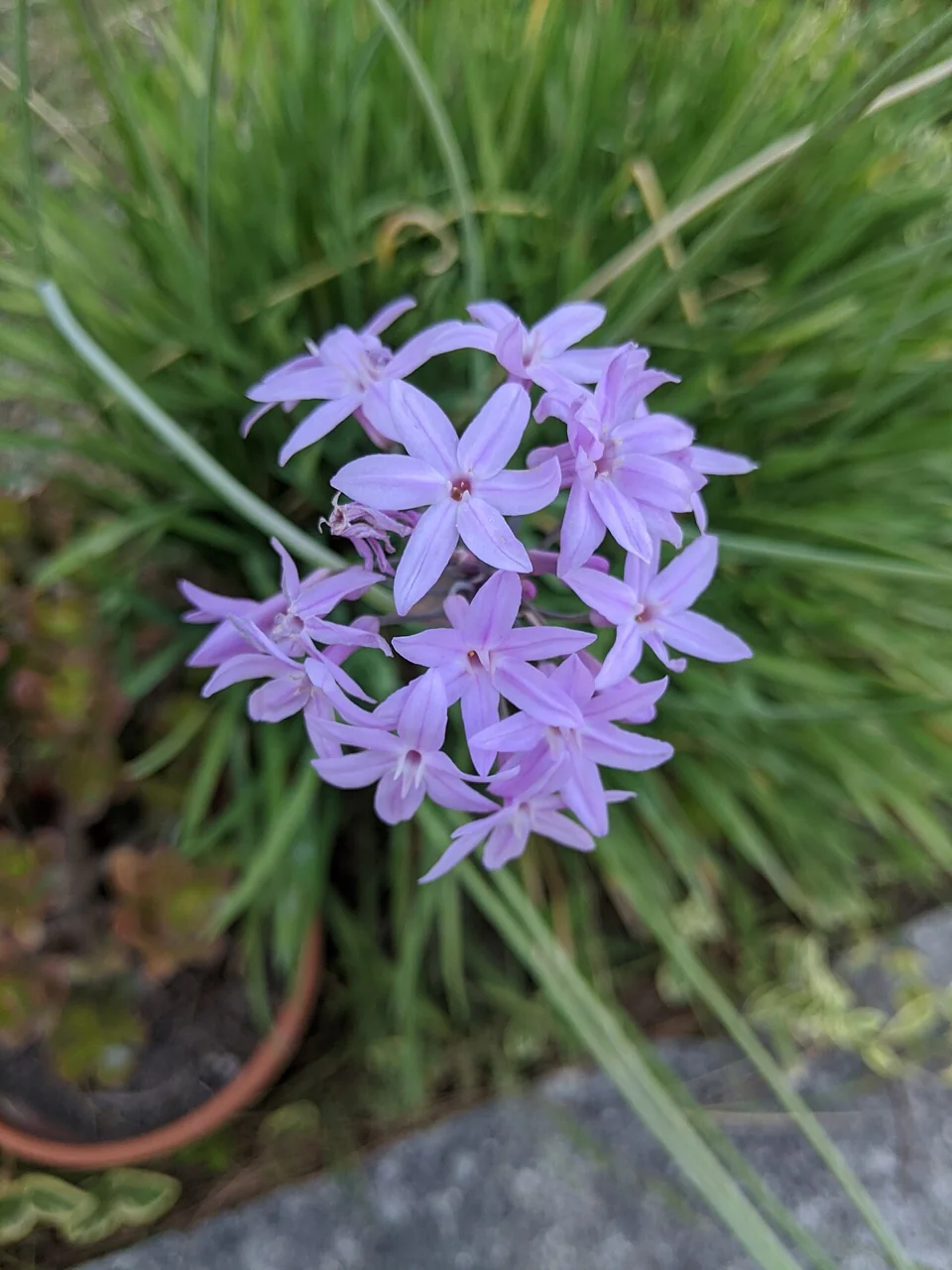
Tulbaghia violacea in flower.
EmmanuelVln / Wikimedia Commons / CC BY-SA 4.0

Photo details
Resized and converted to WebP. No content edits.
Source: File:Photographie de tulbaghia violacea.jpg
Reviewed . Source identification, photograph and license reviewed. The image illustrates the named plant; it does not verify dimensions or other plant traits.
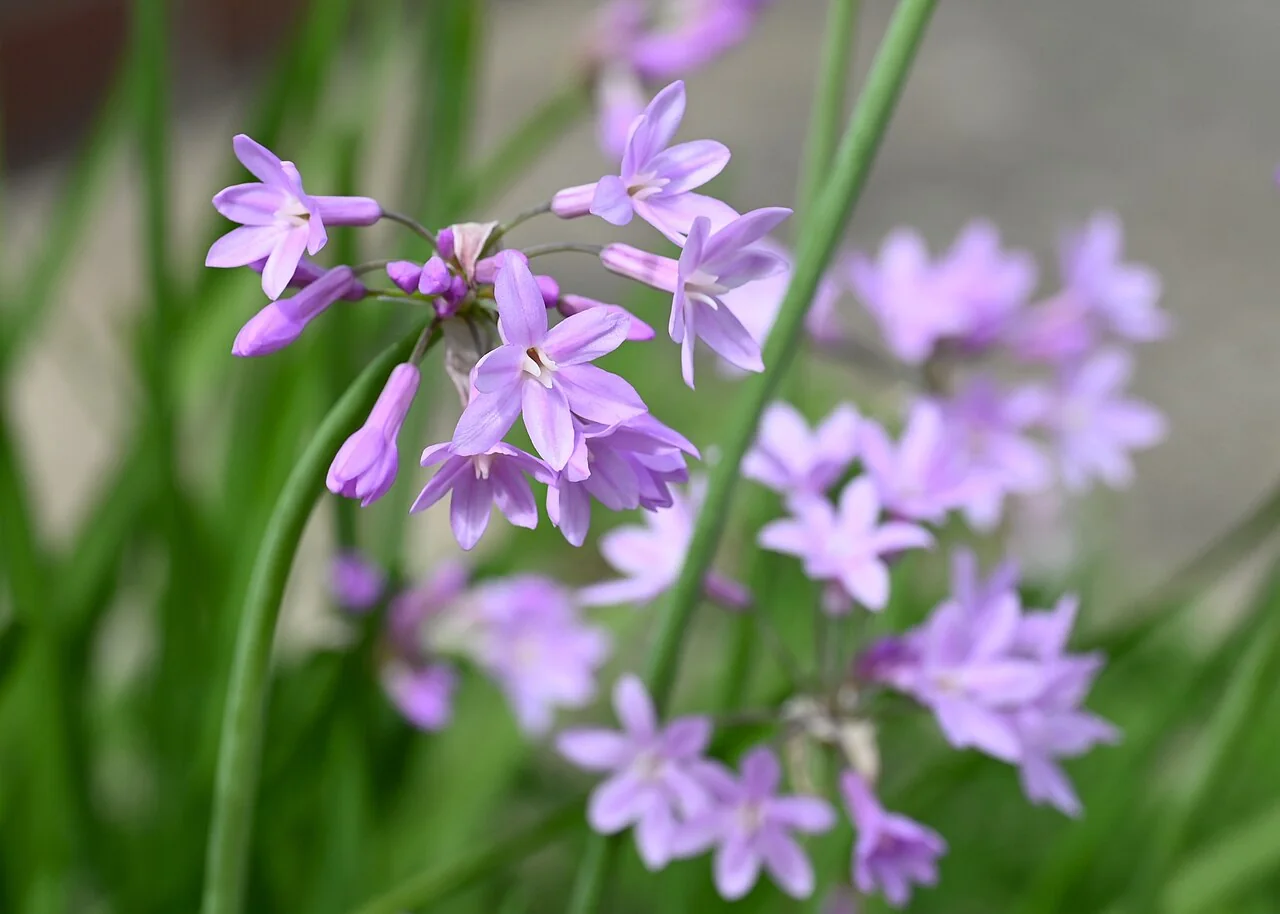
Flowers of Tulbaghia violacea.
Krzysztof Ziarnek, Kenraiz / Wikimedia Commons / CC BY-SA 4.0

Photo details
Resized and converted to WebP. No content edits.
Source: File:Tulbaghia violacea kz01.jpg
Reviewed . Source identification, photograph and license reviewed. The image illustrates the named plant; it does not verify dimensions or other plant traits.
Common names
25 names · 17 languagesOther languages (16)
- Dutch
-
- Kaapse knoflook
- Moeraslook
- Wilde knoflook
- French
-
- Ail d'ornement
- Ail violet d'Afrique du Sud[1]
- Chinese (Simplified)
-
- 紫娇花[1]
- Chinese (Traditional)
-
- 紫嬌花[1]
- Estonian
-
- lilla kroonlauk[1]
- Finnish
-
- kuvernöörinkukka[1]
- Hebrew
-
- טולבגיה ורודה (חריפה)[1]
- Japanese
-
- ルリフタモジ[1]
- Pedi
-
- konofolo[1]
- Portuguese
-
- alho-social[1]
- Russian
-
- Тульбагия фиолетовая[1]
- Slovak
-
- tulbágia fialová[1]
- Turkish
-
- Sosyete Sarımsağı[1]
Sources & name notes (1)
Names recorded in our plant catalogue and botanical sources, grouped by language. Usage can vary by region.
Numbered references identify names recorded by an external source. Other names are from our plant catalogue.
Community-curated iNaturalist taxonomy; common-name attestation, not an independent botanical determination.
Source records
- Society Garlic — results[0].names[0]; taxon id 179304; Tulbaghia violacea.
- Cebolla africana de monte — results[0].names[2]; taxon id 179304; Tulbaghia violacea.
- Ajillo — results[0].names[3]; taxon id 179304; Tulbaghia violacea.
- lilla kroonlauk — results[0].names[4]; taxon id 179304; Tulbaghia violacea.
- 紫嬌花 — results[0].names[5]; taxon id 179304; Tulbaghia violacea.
- konofolo — results[0].names[6]; taxon id 179304; Tulbaghia violacea.
- Ajo de monte — results[0].names[7]; taxon id 179304; Tulbaghia violacea.
- Violet Garlic — results[0].names[8]; taxon id 179304; Tulbaghia violacea.
- 紫娇花 — results[0].names[9]; taxon id 179304; Tulbaghia violacea.
- Knoblauchgras — results[0].names[10]; taxon id 179304; Tulbaghia violacea.
- Zimmerknoblauch — results[0].names[11]; taxon id 179304; Tulbaghia violacea.
- moeyeyanaga — results[0].names[12]; taxon id 179304; Tulbaghia violacea.
- moeye-ya-naga — results[0].names[13]; taxon id 179304; Tulbaghia violacea.
- Тульбагия фиолетовая — results[0].names[14]; taxon id 179304; Tulbaghia violacea.
- טולבגיה ורודה (חריפה) — results[0].names[15]; taxon id 179304; Tulbaghia violacea.
- Ail violet d'Afrique du Sud — results[0].names[16]; taxon id 179304; Tulbaghia violacea.
- alho-social — results[0].names[17]; taxon id 179304; Tulbaghia violacea.
- ルリフタモジ — results[0].names[18]; taxon id 179304; Tulbaghia violacea.
- Sosyete Sarımsağı — results[0].names[19]; taxon id 179304; Tulbaghia violacea.
- kuvernöörinkukka — results[0].names[20]; taxon id 179304; Tulbaghia violacea.
- tulbágia fialová — results[0].names[21]; taxon id 179304; Tulbaghia violacea.
General information
Kew's family placement for the genus Tulbaghia (WCVP v16).
Sources [1]Plant characteristics
NC State landscape size range; converted from feet and inches. Size varies with site, age and management.
Sources [3]NC State landscape size range; converted from feet and inches. Size varies with site, age and management.
Sources [3]Whole-plant habit and form as described by NC State.
Sources [3]Growing conditions
USDA zones listed by NC State; winter survival does not establish reliable cropping.
Sources [3]Acidic Neutral Alkaline
Uses
Flowers, Leaves, Root
Ground cover, Fragrant
Description
The leaves and stems of this plant can be eaten both raw and cooked and have a subtle garlic flavor. They can be used to season soups and salads, as an alternative to chives and garlic. The flowers are edible, both raw and cooked. They are excellent for salads, as a garnish, or as a flavor enhancer in hot dishes. These flowers have a beautiful appearance and provide a sweet, onion-like warmth when eaten.
Harvest
Sources and references
References for the information marked with source numbers on this page.
-
Royal Botanic Gardens, Kew
World Checklist of Vascular Plants, version 16, extracted 4 June 2026
Relevant sections
- Botanical family: WCVP v16, wcvp_names.csv row 770441; name ID 289396; Tulbaghia L.. Family column.
- Taxonomy: WCVP v16, wcvp_names.csv row 233897; name ID 289698; Tulbaghia violacea Harv..
Source checked on .
Source data licence: CC BY 3.0.
-
Catalogue of Life
Catalogue of Life 2026-08-20 — Tulbaghia violacea
Taxonomic data from WCVP, version 16.0, reproduced in Catalogue of Life 2026-08-20. This shares the Kew WCVP evidence base cited on this page.
Supports: TaxonomyRelevant sections
- Taxonomy: COL 2026-08-20, NameUsage.tsv line 1445733, ID 59KTR: Tulbaghia violacea Harv. (accepted).
Source checked on .
-
NC State Extension, North Carolina State University
Tulbaghia violacea — Extension Gardener Plant Toolbox
Relevant sections
- Height: Dimensions > Height; Height: 1 ft. 0 in. - 2 ft. 0 in.
- Spread: Dimensions > Width; Width: 1 ft. 0 in. - 2 ft. 0 in.
- Growth rate: Growth Rate
- Growth habit: Habit/Form
- Life cycle: Life Cycle
- Light: Light
- Soil moisture: Soil Drainage
- Soil texture: Soil Texture
- USDA hardiness: USDA Plant Hardiness Zone
Source checked on .