Trifolium pratense
Red clover
Explore the size, hardiness, soil, light, edible uses and harvest period of Trifolium pratense.
Plant photos
2 photos · Select to enlarge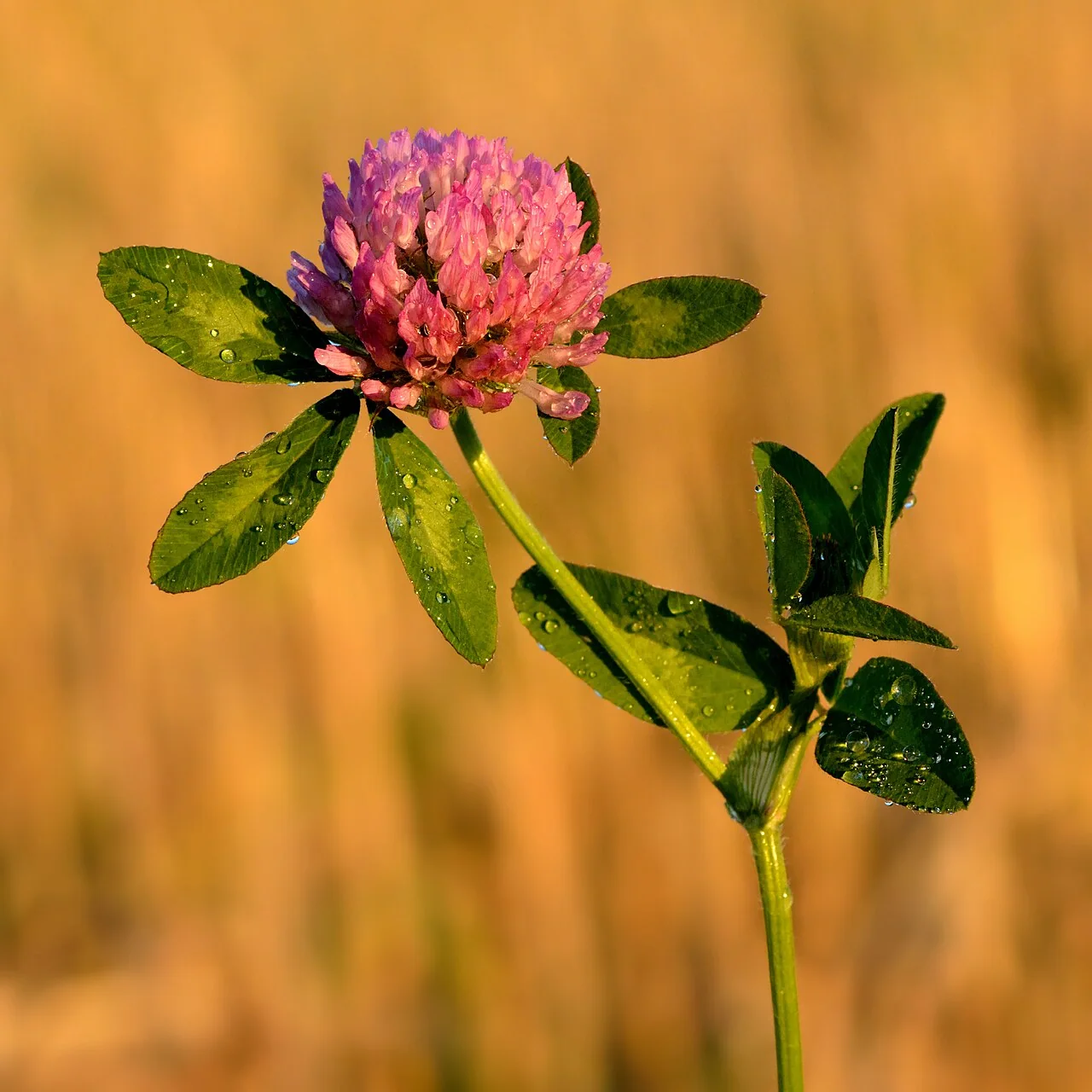
Trifolium pratense in flower.
Ivar Leidus / Wikimedia Commons / CC BY-SA 4.0

Photo details
Resized and converted to WebP. No content edits.
Source: File:Trifolium pratense - Keila.jpg
Reviewed . Source identification, photograph and license reviewed. The image illustrates the named plant; it does not verify dimensions or other plant traits.
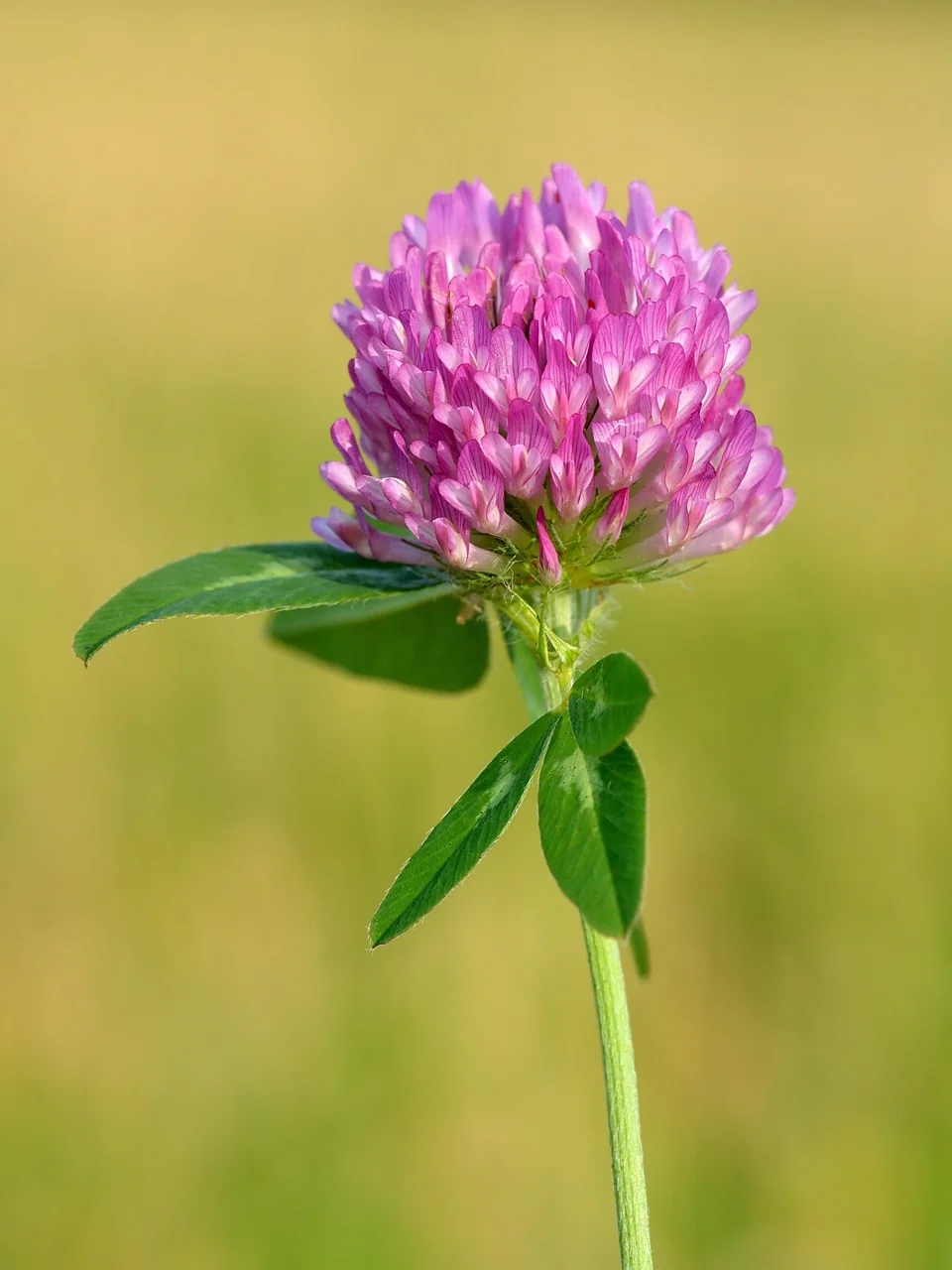
Flowers of Trifolium pratense.
Ivar Leidus / Wikimedia Commons / CC BY-SA 4.0

Photo details
Resized and converted to WebP. No content edits.
Source: File:Trifolium pratense - Keila2.jpg
Reviewed . Source identification, photograph and license reviewed. The image illustrates the named plant; it does not verify dimensions or other plant traits.
Common names
60 names · 44 languages- EnglishYour language
-
- Red clover[1]
Other languages (43)
- Dutch
-
- Rode klaver[1]
- Armenian
-
- Երեքնուկ մարգագետնային[1]
- Belarusian
-
- Канюшына лугавая[1]
- Bulgarian
-
- Червена детелина[1]
- Chinese (Traditional)
-
- 紅菽草[1]
- Croatian
-
- Crvena djetelina[1]
- Czech
-
- jetel luční[1]
- Danish
-
- Rød-kløver[1]
- Downriver Halkomelem
-
- ɬəɬxʷeʔləw̓s[1]
- Emilian Romagnol
-
- Tarfój råss[1]
- Estonian
-
- aasristik[1]
- Faroese
-
- reyðsmæra[1]
- Finnish
-
- puna-apila[1]
- Galician
-
- Trevo rubio[1]
- Greek
-
- Λειμώνιο τριφύλλι[1]
- Hungarian
-
- Réti here[1]
- Icelandic
-
- Rauðsmári[1]
- Irish
-
- Seamair dhearg[1]
- Korean
-
- 붉은토끼풀[1]
- Latvian
-
- Pļavas āboliņš[1]
- Lithuanian
-
- Raudonasis dobilas[1]
- Luxembourgish
-
- Roude Wisekléi[1]
- Norwegian
-
- rødkløver[1]
- Polish
-
- Koniczyna łąkowa[1]
- Romanian
-
- Trifoi roșu[1]
- Russian
-
- Клевер луговой[1]
- Serbian
-
- Црвена детелина[1]
- Slovak
-
- ďatelina lúčna[1]
- Slovenian
-
- črna detelja[1]
- Swedish
-
- Rödklöver[1]
- Ukrainian
-
- Конюшина лучна[1]
- Welsh
-
- Meillionen goch[1]
- Zapoteco
-
- gue-tuu-xtilla[1]
Sources & name notes (1)
Names recorded in our plant catalogue and botanical sources, grouped by language. Usage can vary by region.
Numbered references identify names recorded by an external source. Other names are from our plant catalogue.
Community-curated iNaturalist taxonomy; common-name attestation, not an independent botanical determination.
Source records
- アカツメクサ — results[0].names[1]; taxon id 51875; Trifolium pratense.
- trèvol comú — results[0].names[2]; taxon id 51875; Trifolium pratense.
- trevo-dos-prados — results[0].names[3]; taxon id 51875; Trifolium pratense.
- trevo-violeta — results[0].names[4]; taxon id 51875; Trifolium pratense.
- trèfle des prés — results[0].names[5]; taxon id 51875; Trifolium pratense.
- trèfle rouge — results[0].names[6]; taxon id 51875; Trifolium pratense.
- trifoglio dei prati — results[0].names[7]; taxon id 51875; Trifolium pratense.
- trifoglio rosso — results[0].names[8]; taxon id 51875; Trifolium pratense.
- trèfle violet — results[0].names[9]; taxon id 51875; Trifolium pratense.
- Red Clover — results[0].names[10]; taxon id 51875; Trifolium pratense.
- Rot-Klee — results[0].names[11]; taxon id 51875; Trifolium pratense.
- Rode klaver — results[0].names[12]; taxon id 51875; Trifolium pratense.
- gue-tuu-xtilla — results[0].names[13]; taxon id 51875; Trifolium pratense.
- Trébol rojo eurasiático — results[0].names[15]; taxon id 51875; Trifolium pratense.
- puna-apila — results[0].names[16]; taxon id 51875; Trifolium pratense.
- Клевер луговой — results[0].names[17]; taxon id 51875; Trifolium pratense.
- ムラサキツメクサ — results[0].names[18]; taxon id 51875; Trifolium pratense.
- Rödklöver — results[0].names[19]; taxon id 51875; Trifolium pratense.
- jetel luční — results[0].names[20]; taxon id 51875; Trifolium pratense.
- rødkløver — results[0].names[21]; taxon id 51875; Trifolium pratense.
- Rød-kløver — results[0].names[22]; taxon id 51875; Trifolium pratense.
- 紅菽草 — results[0].names[23]; taxon id 51875; Trifolium pratense.
- aasristik — results[0].names[24]; taxon id 51875; Trifolium pratense.
- 붉은토끼풀 — results[0].names[25]; taxon id 51875; Trifolium pratense.
- Tarfój råss — results[0].names[26]; taxon id 51875; Trifolium pratense.
- Червена детелина — results[0].names[27]; taxon id 51875; Trifolium pratense.
- Raudonasis dobilas — results[0].names[28]; taxon id 51875; Trifolium pratense.
- Koniczyna łąkowa — results[0].names[29]; taxon id 51875; Trifolium pratense.
- Réti here — results[0].names[30]; taxon id 51875; Trifolium pratense.
- ďatelina lúčna — results[0].names[31]; taxon id 51875; Trifolium pratense.
- Carretón rosado — results[0].names[32]; taxon id 51875; Trifolium pratense.
- Λειμώνιο τριφύλλι — results[0].names[33]; taxon id 51875; Trifolium pratense.
- نفل المروج — results[0].names[34]; taxon id 51875; Trifolium pratense.
- نفل أحمر — results[0].names[35]; taxon id 51875; Trifolium pratense.
- برسيم المروج — results[0].names[36]; taxon id 51875; Trifolium pratense.
- 红车轴草 — results[0].names[37]; taxon id 51875; Trifolium pratense.
- Црвена детелина — results[0].names[38]; taxon id 51875; Trifolium pratense.
- Seamair dhearg — results[0].names[39]; taxon id 51875; Trifolium pratense.
- Trevo rubio — results[0].names[40]; taxon id 51875; Trifolium pratense.
- 红菽草 — results[0].names[41]; taxon id 51875; Trifolium pratense.
- 红花三叶草 — results[0].names[42]; taxon id 51875; Trifolium pratense.
- 红三叶草 — results[0].names[43]; taxon id 51875; Trifolium pratense.
- kırmızı yonca — results[0].names[44]; taxon id 51875; Trifolium pratense.
- Trébol Rosado — results[0].names[45]; taxon id 51875; Trifolium pratense.
- reyðsmæra — results[0].names[46]; taxon id 51875; Trifolium pratense.
- Конюшина лучна — results[0].names[47]; taxon id 51875; Trifolium pratense.
- Երեքնուկ մարգագետնային — results[0].names[48]; taxon id 51875; Trifolium pratense.
- Канюшына лугавая — results[0].names[49]; taxon id 51875; Trifolium pratense.
- Wiesen-Klee — results[0].names[50]; taxon id 51875; Trifolium pratense.
- črna detelja — results[0].names[51]; taxon id 51875; Trifolium pratense.
- Pļavas āboliņš — results[0].names[52]; taxon id 51875; Trifolium pratense.
- Trevo-vermelho — results[0].names[53]; taxon id 51875; Trifolium pratense.
- Trifoi roșu — results[0].names[54]; taxon id 51875; Trifolium pratense.
- Rauðsmári — results[0].names[56]; taxon id 51875; Trifolium pratense.
- Crvena djetelina — results[0].names[57]; taxon id 51875; Trifolium pratense.
- Trèvol de prat — results[0].names[58]; taxon id 51875; Trifolium pratense.
- Meillionen goch — results[0].names[59]; taxon id 51875; Trifolium pratense.
- Roude Wisekléi — results[0].names[60]; taxon id 51875; Trifolium pratense.
- ɬəɬxʷeʔləw̓s — results[0].names[61]; taxon id 51875; Trifolium pratense.
- Çayır Üçgülü — results[0].names[62]; taxon id 51875; Trifolium pratense.
General information
Plant characteristics
NC State landscape size range; converted from feet and inches. Size varies with site, age and management.
Sources [3]NC State landscape size range; converted from feet and inches. Size varies with site, age and management.
Sources [3]Uses
Leaves, Flowers, Condiment, Root, Tea
Nitrogen fixer, Dye, Bee forage
Description
Leaves and young flower buds can be eaten both raw and cooked. The young leaves are harvested before the plant blooms and can be used in salads, soups, and other dishes. They can also be cooked as a vegetable on their own, similar to spinach. The leaves taste best when cooked, but they can also be dried, ground, and used as a powder, for example, sprinkled over cooked rice. The seeds can be sprouted and added to salads. They have a crunchy texture and a strong flavor, which is different from that of alfalfa (Medicago sativa). The seeds contain trypsin inhibitors that can affect digestive enzymes. These inhibitors are usually destroyed when the seeds first sprout. The flowers and pods can be dried and then ground into a flour for baking. The young flowers can also be eaten raw in salads. The root of the plant can be cooked, and a delicate sweet herbal tea can be made from the fresh or dried flowers. Additionally, dried leaves can be used to give cakes a vanilla flavor.
Harvest
Sources and references
References for the information marked with source numbers on this page.
-
Royal Botanic Gardens, Kew
World Checklist of Vascular Plants, version 16, extracted 4 June 2026
Relevant sections
- Botanical family: WCVP v16, wcvp_names.csv row 169427; name ID 2440723; Trifolium Tourn. ex L.. Family column.
- Taxonomy: WCVP v16, wcvp_names.csv row 167223; name ID 2440043; Trifolium pratense L..
Source checked on .
Source data licence: CC BY 3.0.
-
Catalogue of Life
Catalogue of Life 2026-08-20 — Trifolium pratense
Taxonomic data from WCVP-Fabaceae, version 2026, v.7, reproduced in Catalogue of Life 2026-08-20. This shares the Kew WCVP evidence base cited on this page.
Supports: TaxonomyRelevant sections
- Taxonomy: COL 2026-08-20, NameUsage.tsv line 1427297, ID 58Q42: Trifolium pratense L. (accepted).
Source checked on .
-
NC State Extension, North Carolina State University
Trifolium pratense — Extension Gardener Plant Toolbox
Supports: HeightSpreadGrowth rateGrowth habitLife cycleLightSoil moistureSoil textureSoil pHUSDA hardiness
Relevant sections
- Height: Dimensions > Height; Height: 0 ft. 6 in. - 2 ft. 0 in.
- Spread: Dimensions > Width; Width: 0 ft. 8 in. - 1 ft. 8 in.
- Growth rate: Growth Rate
- Growth habit: Habit/Form
- Life cycle: Life Cycle
- Light: Light
- Soil moisture: Soil Drainage
- Soil texture: Soil Texture
- Soil pH: Soil pH
- USDA hardiness: USDA Plant Hardiness Zone
Source checked on .