Symphytum x upladicum
Blue Comfrey, Russian comfrey
Explore the size, hardiness, soil, light, edible uses and harvest period of Symphytum x upladicum.
Plant photos
2 photos · Select to enlarge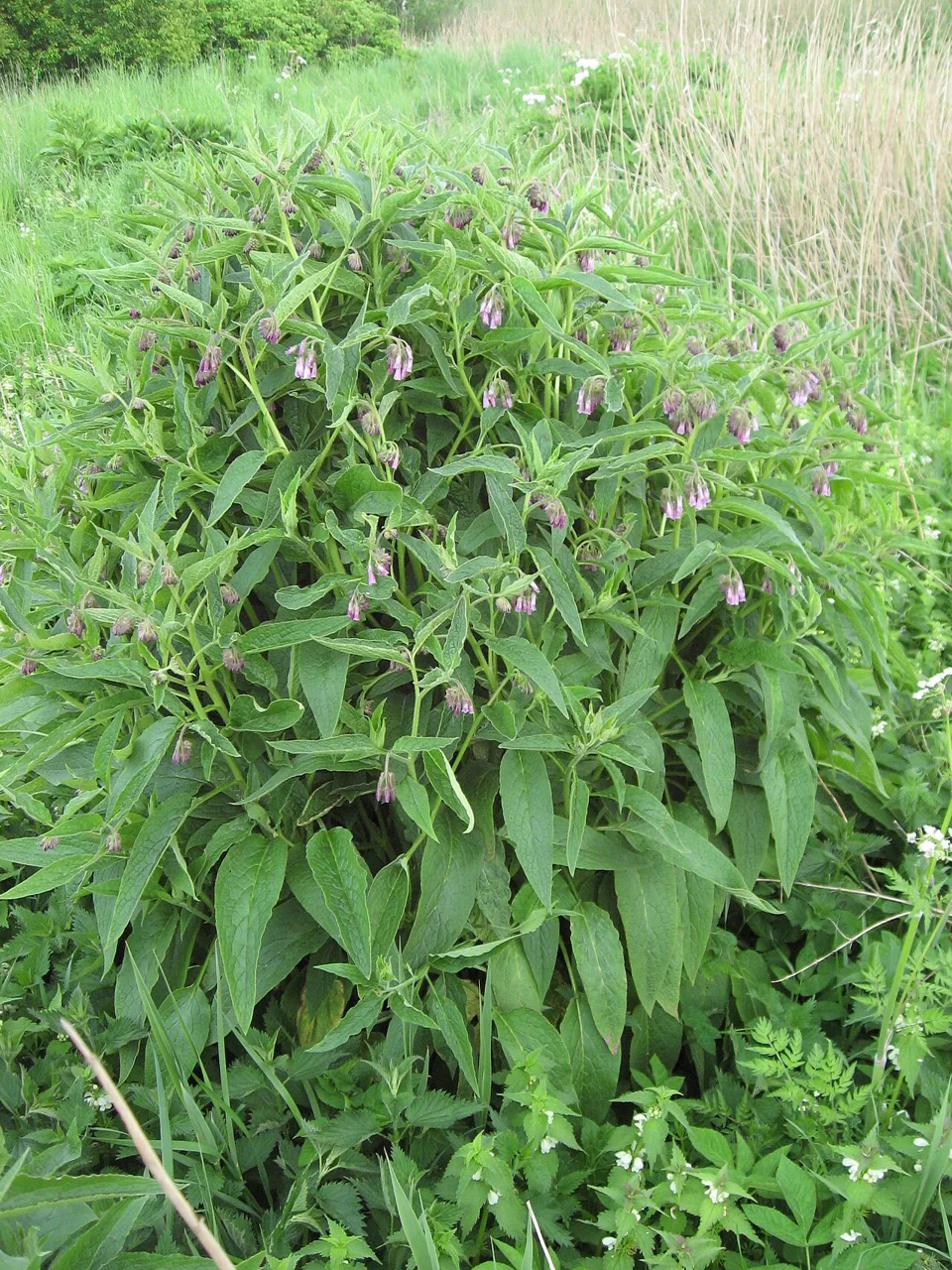
The growth habit of Symphytum × uplandicum.
Kim Hansen / Wikimedia Commons / CC BY-SA 3.0

Photo details
Resized and converted to WebP. No content edits.
Source: File:Symphytum ×uplandicum plant 2009-05-20, cropped.jpg
Reviewed . Source identification, photograph and license reviewed. The image illustrates the named plant; it does not verify dimensions or other plant traits.
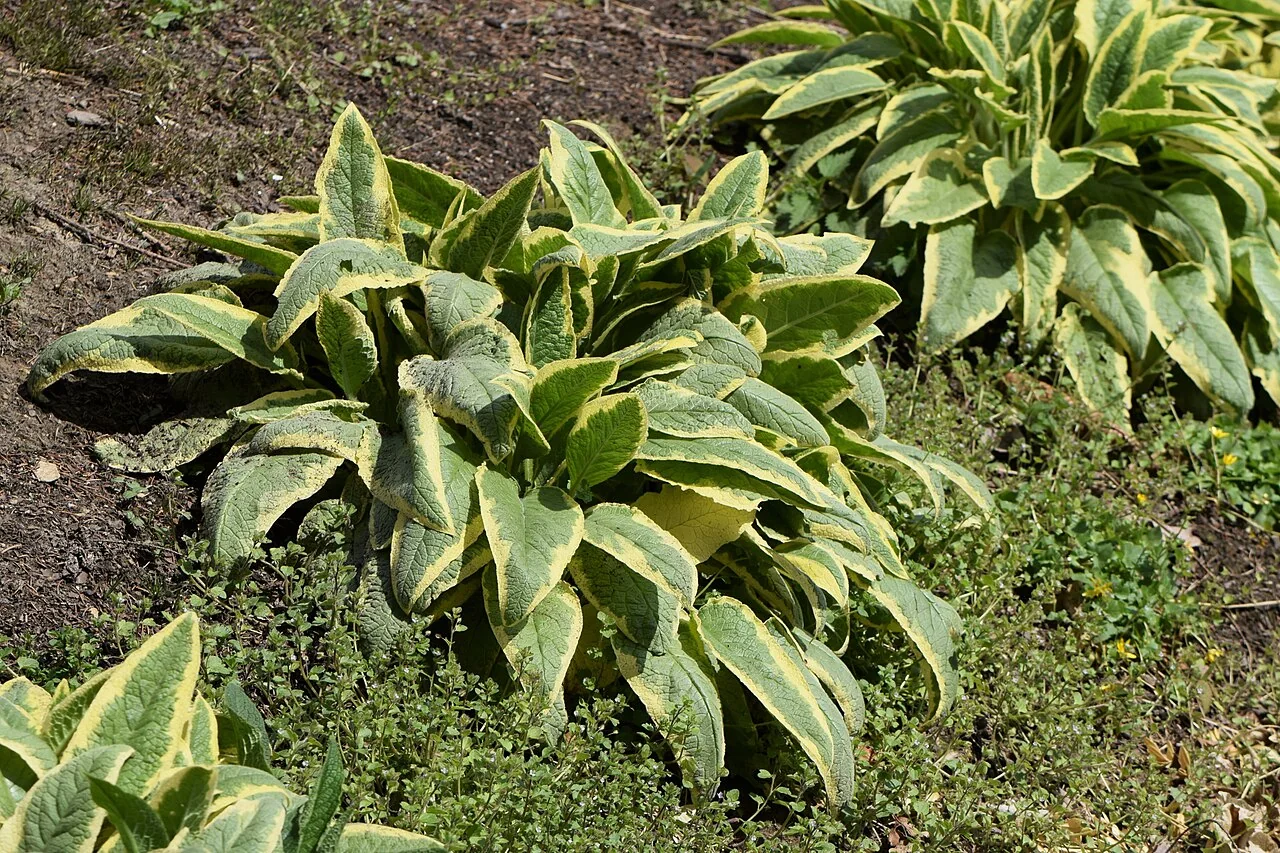
Variegated leaves of Symphytum × uplandicum 'Axminster Gold'.
Krzysztof Ziarnek, Kenraiz / Wikimedia Commons / CC BY-SA 4.0

Photo details
Resized and converted to WebP. No content edits.
Source: File:Symphytum × uplandicum 'Axminster Gold' kz01.jpg
Reviewed . Source identification, photograph and license reviewed. The image illustrates the named plant; it does not verify dimensions or other plant traits.
Common names
5 names · 3 languages- EnglishYour language
-
- Blue Comfrey
- Russian comfrey
Other languages (2)
- Dutch
-
- Bastaardsmeerwortel
- Russische smeerwortel
- French
-
- Consoude de Russie
Sources & name notes
Names recorded in our plant catalogue, grouped by language. Usage can vary by region.
General information
Accepted in the cited taxonomic treatment. Botanical references may use alternative names.
Sources [1]Kew's family placement for the genus Symphytum (WCVP v16).
Sources [1]Plant characteristics
Growing conditions
Moist
Sand (light) Loam (medium) Clay (heavy)
Acidic Neutral Alkaline
Partial shade, Full sun
Uses
Leaves, Gum, Tea
Biomass production, Ground cover, Gum
Description
Young leaves can be eaten both cooked and raw, although they have a hairy texture and can be slimy. They are rich in minerals, but due to their specific taste, they are not suitable for everyone's personal preference. The leaves can be finely chopped and added to salads to make the hairs less noticeable. Young shoots can serve as a substitute for asparagus. The bleached stems of the plant are also used. Older leaves can be dried and later used as tea. The peeled roots can be cut and added to soups. Tea can be made from both the dried leaves and the roots. Furthermore, the roasted roots are used together with dandelion and chicory roots to make coffee.
Harvest
Sources and references
References for the information marked with source numbers on this page.
-
Royal Botanic Gardens, Kew
World Checklist of Vascular Plants, version 16, extracted 4 June 2026
Relevant sections
- Taxonomy: WCVP version 16, wcvp_names.csv: Symphytum × uplandicum Nyman, name ID 2475726, row 206557
- Botanical family: WCVP v16, wcvp_names.csv row 205938; name ID 2473193; Symphytum Tourn. ex L.. Family column.
Source checked on .
Source data licence: CC BY 3.0.