Smyrnium olusatrum
Alexanders, black lovage
Explore the size, hardiness, soil, light, edible uses and harvest period of Smyrnium olusatrum.
Plant photos
2 photos · Select to enlarge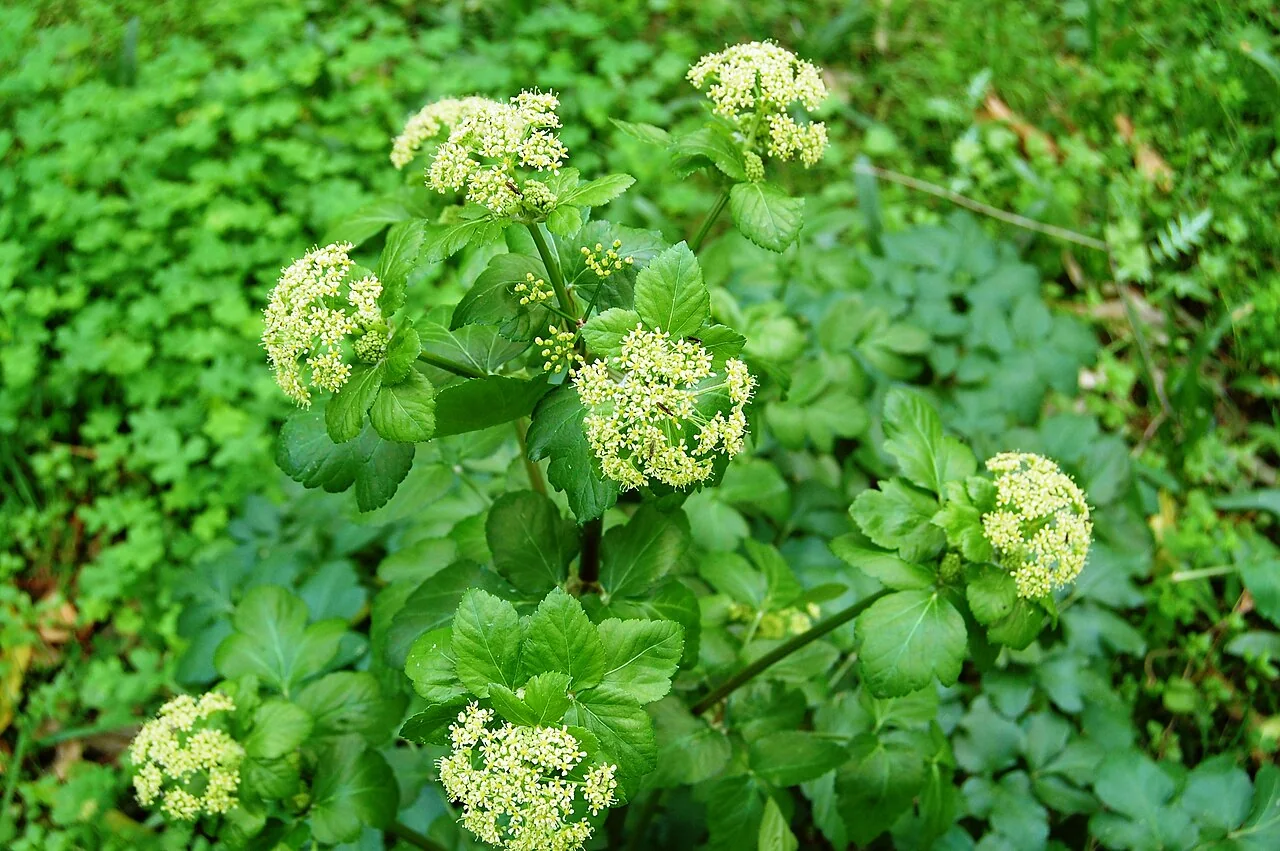
Smyrnium olusatrum in flower.
tato grasso / Wikimedia Commons / CC BY-SA 3.0

Photo details
Resized and converted to WebP. No content edits.
Source: File:Smyrnium olusatrum 0002.JPG
Reviewed . Source identification, photograph and license reviewed. The image illustrates the named plant; it does not verify dimensions or other plant traits.
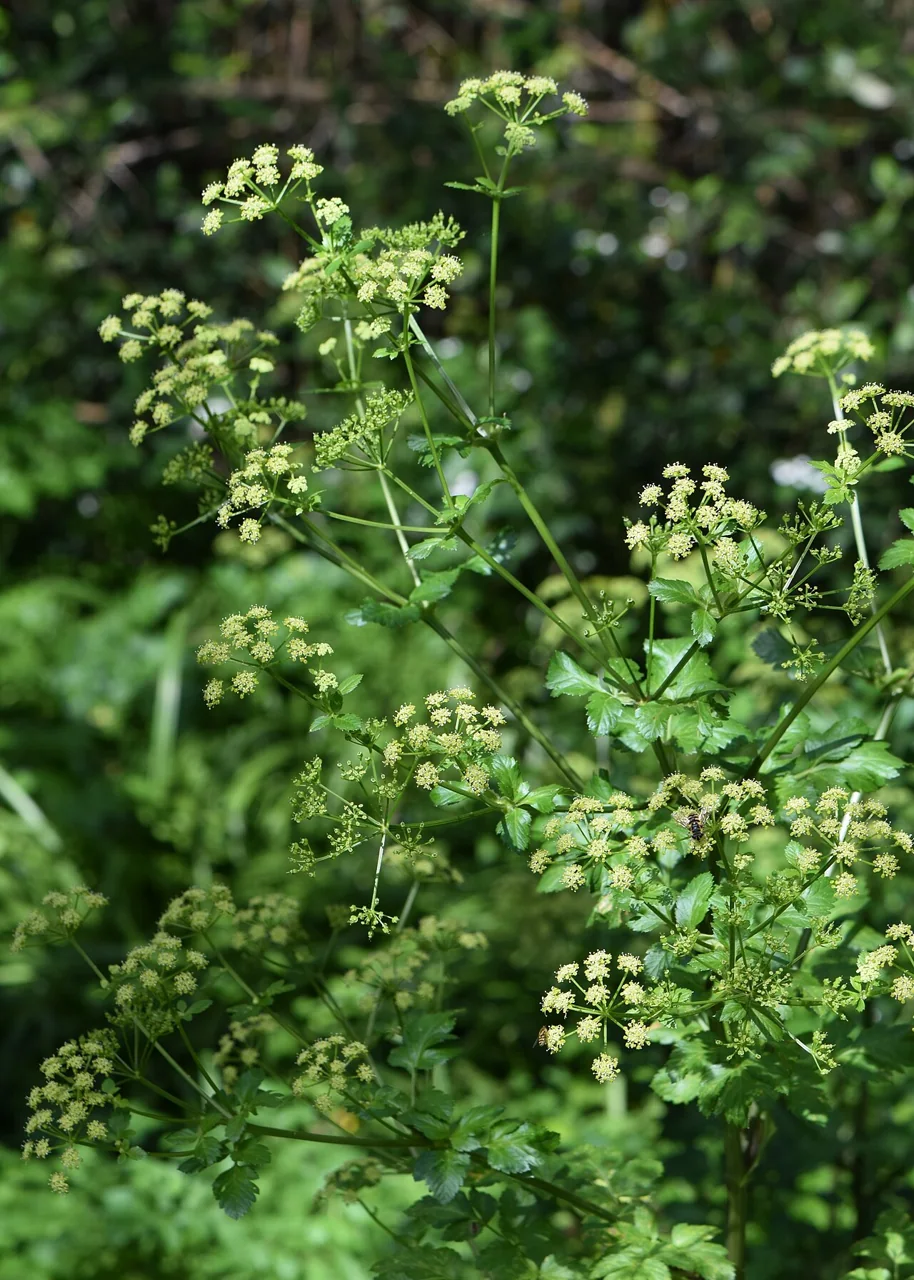
Developing fruit of Smyrnium olusatrum.
Krzysztof Ziarnek, Kenraiz / Wikimedia Commons / CC BY-SA 4.0

Photo details
Resized and converted to WebP. No content edits.
Source: File:Smyrnium olusatrum kz09.jpg
Reviewed . Source identification, photograph and license reviewed. The image illustrates the named plant; it does not verify dimensions or other plant traits.
Common names
25 names · 20 languagesOther languages (19)
- Dutch
-
- Zwartmoeskervel[2]
- French
-
- Maceron[2]
- Catalan
-
- aleixandri[2]
- Chinese (Simplified)
-
- 马芹[2]
- Chinese (Traditional)
-
- 美味芹[2]
- Finnish
-
- aleksanterinsiipiputki[2]
- Hebrew
-
- מורית גדולה[2]
- Irish
-
- Lusrán grándubh[2]
- Polish
-
- przewłoka warzywna[2]
- Portuguese
-
- Aipo-dos-cavalos[2]
- Russian
-
- Смирния европейская[2]
- Slovak
-
- smyrnium čiernoplodé[2]
- Swedish
-
- alexanderloka[2]
- Turkish
-
- delikereviz[2]
- Welsh
-
- Dulys[2]
Sources & name notes (2)
Names recorded in our plant catalogue and botanical sources, grouped by language. Usage can vary by region.
Numbered references identify names recorded by an external source. Other names are from our plant catalogue.
Common names from World Plants, version 26.05, reproduced in Catalogue of Life 2026-08-20. License: CC BY.
Source records
- Alexanders (EN) — VernacularName.tsv, line 138788; taxon 4XY7Y.
- Gespenst-Gelbdolde (DE); Apio caballar (ES) — VernacularName.tsv, line 138789; taxon 4XY7Y.
Community-curated iNaturalist taxonomy; common-name attestation, not an independent botanical determination.
Source records
- Alexanders — results[0].names[1]; taxon id 68007; Smyrnium olusatrum.
- Alisanders — results[0].names[2]; taxon id 68007; Smyrnium olusatrum.
- Horse Parsley — results[0].names[3]; taxon id 68007; Smyrnium olusatrum.
- Aipo-dos-cavalos — results[0].names[4]; taxon id 68007; Smyrnium olusatrum.
- מורית גדולה — results[0].names[5]; taxon id 68007; Smyrnium olusatrum.
- Maceron — results[0].names[6]; taxon id 68007; Smyrnium olusatrum.
- Corinoli comune — results[0].names[7]; taxon id 68007; Smyrnium olusatrum.
- Gespenst-Gelbdolde — results[0].names[8]; taxon id 68007; Smyrnium olusatrum.
- Smirnio comune — results[0].names[9]; taxon id 68007; Smyrnium olusatrum.
- Zwartmoeskervel — results[0].names[10]; taxon id 68007; Smyrnium olusatrum.
- Αγριοσέλινο — results[0].names[11]; taxon id 68007; Smyrnium olusatrum.
- Σμύρνιο το Μελανοσέλινο — results[0].names[12]; taxon id 68007; Smyrnium olusatrum.
- Смирния европейская — results[0].names[13]; taxon id 68007; Smyrnium olusatrum.
- alexanderloka — results[0].names[14]; taxon id 68007; Smyrnium olusatrum.
- aleixandri — results[0].names[15]; taxon id 68007; Smyrnium olusatrum.
- delikereviz — results[0].names[16]; taxon id 68007; Smyrnium olusatrum.
- Lusrán grándubh — results[0].names[17]; taxon id 68007; Smyrnium olusatrum.
- Apio caballar — results[0].names[18]; taxon id 68007; Smyrnium olusatrum.
- przewłoka warzywna — results[0].names[19]; taxon id 68007; Smyrnium olusatrum.
- Dulys — results[0].names[20]; taxon id 68007; Smyrnium olusatrum.
- aleksanterinsiipiputki — results[0].names[21]; taxon id 68007; Smyrnium olusatrum.
- 美味芹 — results[0].names[22]; taxon id 68007; Smyrnium olusatrum.
- 马芹 — results[0].names[23]; taxon id 68007; Smyrnium olusatrum.
- smyrnium čiernoplodé — results[0].names[24]; taxon id 68007; Smyrnium olusatrum.
General information
Plant characteristics
Growing conditions
Moist
Sand (light) Loam (medium) Clay (heavy)
Acidic Neutral Alkaline
Partial shade, Full sun
Uses
Leaves, Flowers, Condiment, Root, Stem
Bee forage, Fragrant
Description
Leaves and young shoots of this plant can be eaten raw in salads or cooked in soups and stews. The plant grows in the autumn, and the leaves are often available in the winter. They have a strong flavor similar to celery and are often blanched (by excluding light from the growing plant) before being used. The leaf seedlings can serve as a substitute for parsley. The stems can be eaten both raw and cooked and have a taste somewhat like celery but are sharper. The stems are often blanched (by excluding light from the growing plant) before being used. The flower buds can be eaten raw and added to salads for a celery-like flavor. The spicy seeds of the plant are used as a substitute for pepper. The root must be cooked and is often used in soups, having a flavor somewhat similar to celery.
Harvest
Sources and references
References for the information marked with source numbers on this page.
-
Royal Botanic Gardens, Kew
World Checklist of Vascular Plants, version 16, extracted 4 June 2026
Relevant sections
- Botanical family: WCVP v16, wcvp_names.csv row 206326; name ID 2473906; Smyrnium L.. Family column.
- Taxonomy: WCVP v16, wcvp_names.csv row 206172; name ID 2473605; Smyrnium olusatrum L..
Source checked on .
Source data licence: CC BY 3.0.
-
Catalogue of Life
Catalogue of Life 2026-08-20 — Smyrnium olusatrum
Taxonomic data from World Plants, version 26.05, reproduced in Catalogue of Life 2026-08-20.
Supports: TaxonomyRelevant sections
- Taxonomy: COL 2026-08-20, NameUsage.tsv line 1233864, ID 4XY7Y: Smyrnium olusatrum L. (accepted).
Source checked on .