Smilacina racemosa
False spikenard, False solomon’s seal
Explore the size, hardiness, soil, light, edible uses and harvest period of Smilacina racemosa.
Plant photos
2 photos · Select to enlarge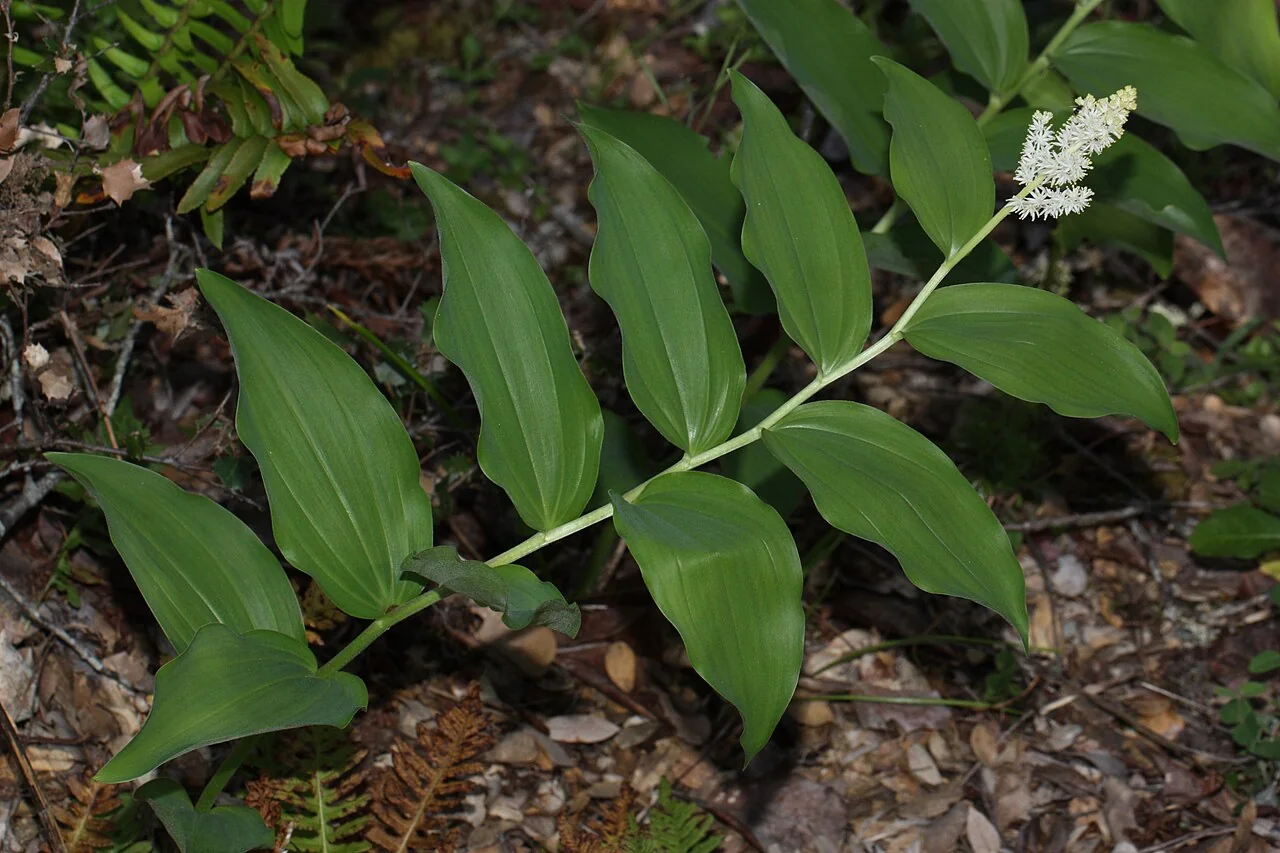
Maianthemum racemosum in flower.
Walter Siegmund (talk) / Wikimedia Commons / CC BY-SA 3.0

Photo details
Resized and converted to WebP. No content edits.
Source: File:Maianthemum racemosum 4930.JPG
Reviewed . Source identification, photograph and license reviewed. The image illustrates the named plant; it does not verify dimensions or other plant traits.
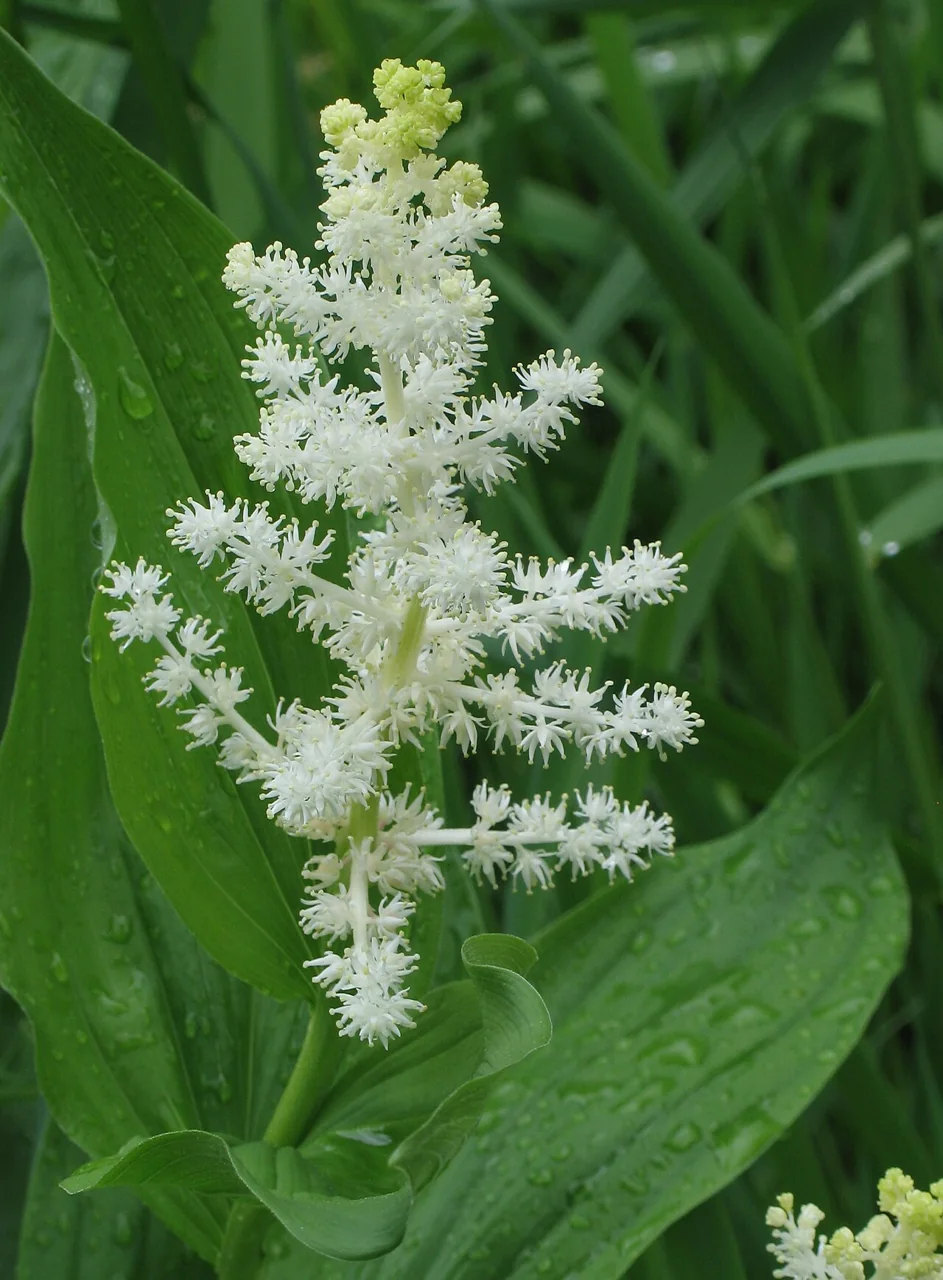
Flowers of Maianthemum racemosum subsp. amplexicaule.
Robert Flogaus-Faust / Wikimedia Commons / CC BY 4.0

Photo details
Resized and converted to WebP. No content edits.
Source: File:Maianthemum racemosum RF.jpg
Reviewed . Source identification, photograph and license reviewed. The image illustrates the named plant; it does not verify dimensions or other plant traits.
Common names
30 names · 19 languagesOther languages (18)
- Dutch
-
- Troslelietje
- Valse salomonszegel
- French
-
- Sceau de Salomon faux
- smilacine à grappes[1]
- Cherokee
-
- ᎤᏗᎵᏍᏗ[1]
- Chinese (Simplified)
-
- 假黄精[1]
- Chinese (Traditional)
-
- 假黃精[1]
- Czech
-
- Smilacina hroznovitá[1]
- Danish
-
- Almindelig skyggeblomst[1]
- Finnish
-
- tertturotkokielo[1]
- German
-
- Duftsiegel[1]
- Norwegian
-
- toppkonvall[1]
- Nuuchahnulth
-
- xəxq’əléełp[1]
- Ojibwe
-
- Agongosiwijiibik (Ginebigwashk, Agongosimizh, Agongosiminan)[1]
- Polish
-
- Majówka groniasta[1]
- Portuguese
-
+1 more nameShow fewer names
- Selo-de-salomão-do-pacífico[1]
- Secwepemc
-
- q̓icnéllp[1]
- Slovak
-
- tôňovka strapcovitá[1]
- Swedish
-
- vipprams[1]
Sources & name notes (1)
Names recorded in our plant catalogue and botanical sources, grouped by language. Usage can vary by region.
Numbered references identify names recorded by an external source. Other names are from our plant catalogue.
Community-curated iNaturalist taxonomy; common-name attestation, not an independent botanical determination.
Source records
- Solomon's plume — results[0].names[1]; taxon id 51062; Maianthemum racemosum.
- false Solomon's seal — results[0].names[2]; taxon id 51062; Maianthemum racemosum.
- Pacific Solomon's seal — results[0].names[3]; taxon id 51062; Maianthemum racemosum.
- tertturotkokielo — results[0].names[5]; taxon id 51062; Maianthemum racemosum.
- Duftsiegel — results[0].names[6]; taxon id 51062; Maianthemum racemosum.
- toppkonvall — results[0].names[7]; taxon id 51062; Maianthemum racemosum.
- Майник кистистый — results[0].names[8]; taxon id 51062; Maianthemum racemosum.
- Agongosiwijiibik (Ginebigwashk, Agongosimizh, Agongosiminan) — results[0].names[9]; taxon id 51062; Maianthemum racemosum.
- smilacine à grappes — results[0].names[10]; taxon id 51062; Maianthemum racemosum.
- vipprams — results[0].names[11]; taxon id 51062; Maianthemum racemosum.
- 假黃精 — results[0].names[12]; taxon id 51062; Maianthemum racemosum.
- 假黄精 — results[0].names[13]; taxon id 51062; Maianthemum racemosum.
- Almindelig skyggeblomst — results[0].names[14]; taxon id 51062; Maianthemum racemosum.
- Майник кистевидный — results[0].names[15]; taxon id 51062; Maianthemum racemosum.
- ᎤᏗᎵᏍᏗ — results[0].names[16]; taxon id 51062; Maianthemum racemosum.
- Pluma-de-salomão — results[0].names[17]; taxon id 51062; Maianthemum racemosum.
- Falso-selo-de-salomão — results[0].names[18]; taxon id 51062; Maianthemum racemosum.
- Selo-de-salomão-do-pacífico — results[0].names[19]; taxon id 51062; Maianthemum racemosum.
- Falso-lírio-emplumado-do-vale — results[0].names[20]; taxon id 51062; Maianthemum racemosum.
- Smilacina hroznovitá — results[0].names[21]; taxon id 51062; Maianthemum racemosum.
- Trackle-berries — results[0].names[22]; taxon id 51062; Maianthemum racemosum.
- Majówka groniasta — results[0].names[23]; taxon id 51062; Maianthemum racemosum.
- tôňovka strapcovitá — results[0].names[24]; taxon id 51062; Maianthemum racemosum.
- xəxq’əléełp — results[0].names[25]; taxon id 51062; Maianthemum racemosum.
- q̓icnéllp — results[0].names[26]; taxon id 51062; Maianthemum racemosum.
General information
Kew's family placement for the genus Smilacina (WCVP v16).
Sources [1]Plant characteristics
NC State landscape size range; converted from feet and inches. Size varies with site, age and management.
Sources [3]NC State landscape size range; converted from feet and inches. Size varies with site, age and management.
Sources [3]Growing conditions
USDA zones listed by NC State; winter survival does not establish reliable cropping.
Sources [3]Well-drained, Moist, Occasionally Dry
Moisture and drainage conditions listed by NC State.
Sources [3]Acidic Neutral
Uses
Fruit
None
Description
Fruit: can be eaten raw, cooked, or processed into jellies and molasses. Although the fruits are smaller than peas, the plant produces many of them, making them easy to harvest. They have a delicious bittersweet flavor and are packed with vitamins. The fruit is sometimes used to prevent scurvy. An excess of raw fruit can have a laxative effect, especially if your body is not accustomed to it, so be cautious. This effect largely disappears if you cook the fruit. Young leaves can be eaten both raw and cooked. The young shoots that appear in the spring can be cooked and serve as a substitute for asparagus. The root of the plant can be eaten boiled, but it must first be soaked in alkaline water to remove the unpleasant taste. Afterward, it can be eaten like potatoes or pickled.
Harvest
Sources and references
References for the information marked with source numbers on this page.
-
Royal Botanic Gardens, Kew
World Checklist of Vascular Plants, version 16, extracted 4 June 2026
Relevant sections
- Taxonomy: WCVP version 16, wcvp_names.csv: Smilacina racemosa (L.) Desf., name ID 288321, row 1163305; Maianthemum racemosum (L.) Link, name ID 281247, row 1163254
- Botanical family: WCVP v16, wcvp_names.csv row 1145762; name ID 287301; Smilacina Desf.. Family column.
Source checked on .
Source data licence: CC BY 3.0.
-
Catalogue of Life
Catalogue of Life 2026-08-20 — Smilacina racemosa
Taxonomic data from WCVP, version 16.0, reproduced in Catalogue of Life 2026-08-20. This shares the Kew WCVP evidence base cited on this page.
Supports: TaxonomyRelevant sections
- Taxonomy: COL 2026-08-20, NameUsage.tsv line 2465375, ID 6YS97: Smilacina racemosa (L.) Desf. (synonym). Accepted target: Maianthemum racemosum (L.) Link, ID 72TB7, line 2510515.
Source checked on .
-
NC State Extension, North Carolina State University
Maianthemum racemosum — Extension Gardener Plant Toolbox
Relevant sections
- Height: Dimensions > Height; Height: 2 ft. 0 in. - 3 ft. 0 in.
- Spread: Dimensions > Width; Width: 1 ft. 6 in. - 3 ft. 0 in.
- Foliage: Woody Plant Leaf Characteristics
- Growth habit: Habit/Form
- Life cycle: Life Cycle
- Light: Light
- Soil moisture: Soil Drainage
- Soil texture: Soil Texture
- USDA hardiness: USDA Plant Hardiness Zone
Source checked on .