Satureja montana
Winter Savory
Explore the size, hardiness, soil, light, edible uses and harvest period of Satureja montana.
Plant photos
2 photos · Select to enlarge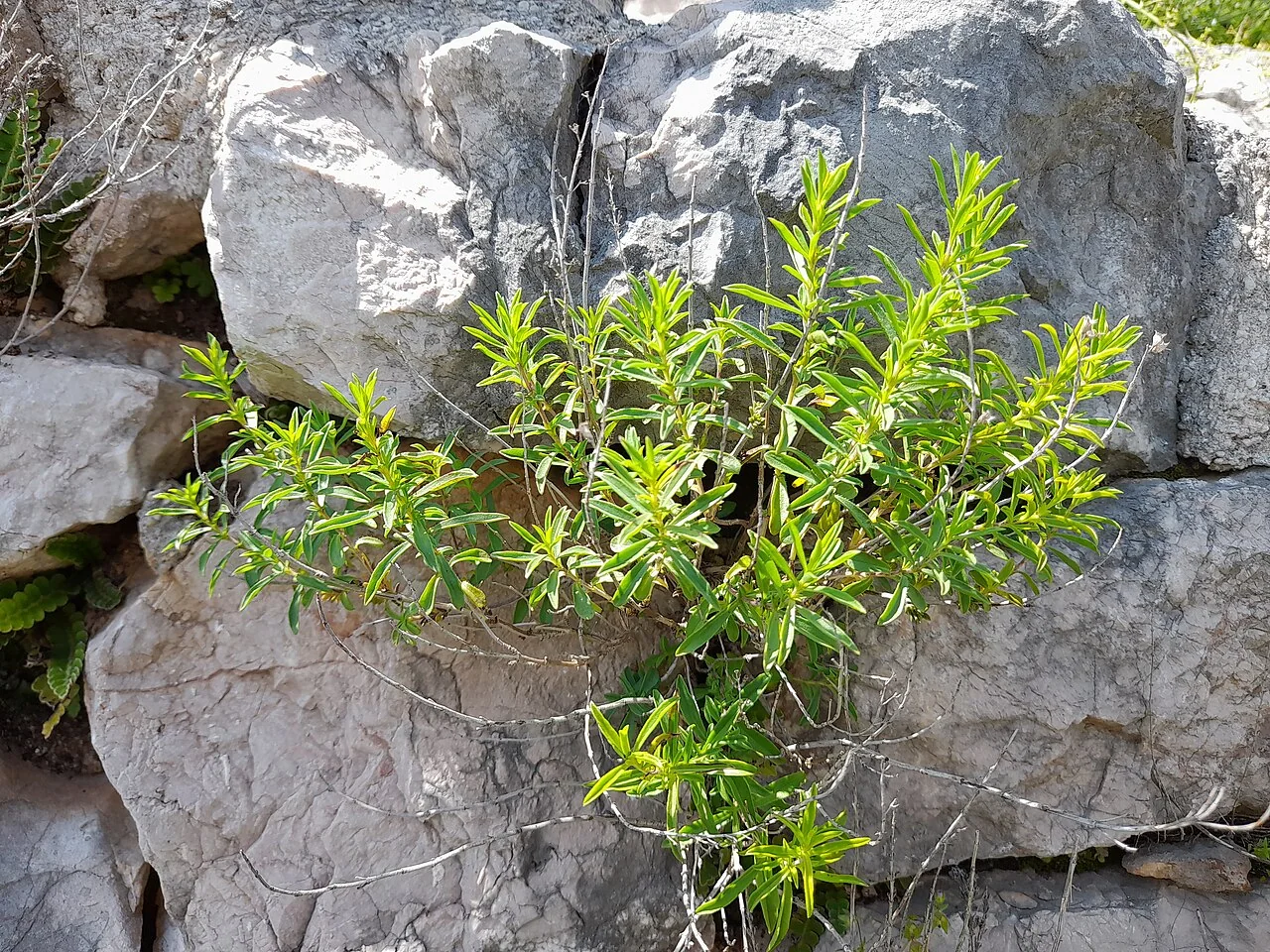
The growth habit of Satureja montana.
Argo Navis / Wikimedia Commons / CC BY-SA 4.0

Photo details
Resized and converted to WebP. No content edits.
Source: File:Satureja montana, Nutjak fortress, Croatia 20230604 01.jpg
Reviewed . Source identification, photograph and license reviewed. The image illustrates the named plant; it does not verify dimensions or other plant traits.
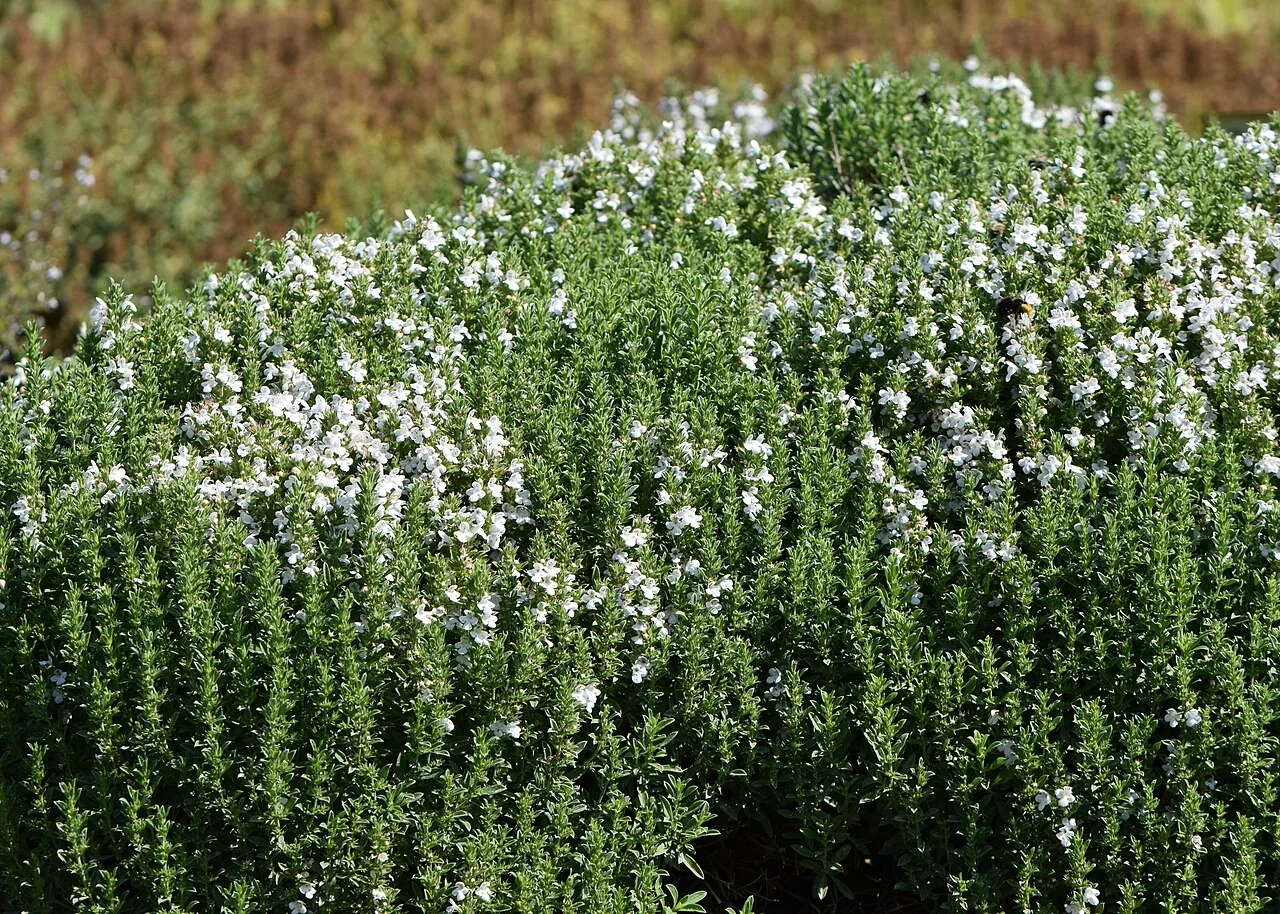
Satureja montana in flower.
Krzysztof Ziarnek, Kenraiz / Wikimedia Commons / CC BY-SA 4.0

Photo details
Resized and converted to WebP. No content edits.
Source: File:Satureja montana kz04.jpg
Reviewed . Source identification, photograph and license reviewed. The image illustrates the named plant; it does not verify dimensions or other plant traits.
Common names
23 names · 20 languages- EnglishYour language
-
- Winter Savory[1]
Other languages (19)
- Dutch
-
- Doorlevend bonenkruid
- Steentijm
- Winterbonenkruid[1]
- French
-
- Sarriette des montagnes[1]
- Catalan
-
- sajolida[1]
- Chinese (Simplified)
-
- 冬香草[1]
- Chinese (Traditional)
-
- 冬香草[1]
- Croatian
-
- Primorski vrisak[1]
- Czech
-
- saturejka horská[1]
- Danish
-
- vintersar[1]
- Finnish
-
- talvikynteli[1]
- German
-
- Winter-Bohnenkraut[1]
- Italian
-
- santoreggia montana[1]
- Occitan
-
- Pébré d'asé[1]
- Polish
-
- cząber górski[1]
- Russian
-
- Чабер горный[1]
- Slovak
-
- saturejka horská[1]
- Slovenian
-
- kraški šetraj[1]
- Swedish
-
- vinterkyndel[1]
- Turkish
-
- geyikotu[1]
Sources & name notes (1)
Names recorded in our plant catalogue and botanical sources, grouped by language. Usage can vary by region.
Numbered references identify names recorded by an external source. Other names are from our plant catalogue.
Community-curated iNaturalist taxonomy; common-name attestation, not an independent botanical determination.
Source records
- Winter Savory — results[0].names[1]; taxon id 168442; Satureja montana.
- sajolida — results[0].names[2]; taxon id 168442; Satureja montana.
- Sarriette des montagnes — results[0].names[3]; taxon id 168442; Satureja montana.
- Winter-Bohnenkraut — results[0].names[4]; taxon id 168442; Satureja montana.
- Primorski vrisak — results[0].names[5]; taxon id 168442; Satureja montana.
- saturejka horská — results[0].names[6]; taxon id 168442; Satureja montana.
- Ajedrea — results[0].names[7]; taxon id 168442; Satureja montana.
- Satureja — results[0].names[8]; taxon id 168442; Satureja montana.
- Чабер горный — results[0].names[9]; taxon id 168442; Satureja montana.
- vinterkyndel — results[0].names[10]; taxon id 168442; Satureja montana.
- Winterbonenkruid — results[0].names[11]; taxon id 168442; Satureja montana.
- geyikotu — results[0].names[12]; taxon id 168442; Satureja montana.
- kraški šetraj — results[0].names[13]; taxon id 168442; Satureja montana.
- 冬香草 — results[0].names[14]; taxon id 168442; Satureja montana.
- 冬香草 — results[0].names[15]; taxon id 168442; Satureja montana.
- santoreggia montana — results[0].names[16]; taxon id 168442; Satureja montana.
- vintersar — results[0].names[17]; taxon id 168442; Satureja montana.
- cząber górski — results[0].names[18]; taxon id 168442; Satureja montana.
- talvikynteli — results[0].names[19]; taxon id 168442; Satureja montana.
- Pébré d'asé — results[0].names[20]; taxon id 168442; Satureja montana.
- saturejka horská — results[0].names[21]; taxon id 168442; Satureja montana.
General information
Plant characteristics
NC State landscape size range; converted from feet and inches. Size varies with site, age and management.
Sources [3]NC State landscape size range; converted from feet and inches. Size varies with site, age and management.
Sources [3]Whole-plant habit and form as described by NC State.
Sources [3]Uses
Leaves, Condiment, Tea
Companion plant, Essential oil, Repellent, Fragrant, Bee forage, Ground cover
Description
The leaves of bean herb have a flavor reminiscent of paprika. They are often added to cooked dishes, primarily beans, for extra flavor. The leaves can also be used as a garnish for salads. They have a more intense and sharper taste than bean herb. The leaves can be used both fresh and dried, and are suitable for making herbal tea. It is recommended to harvest the leaves just before the plant starts to flower, for a spicy flavor similar to that of marjoram.
Harvest
Sources and references
References for the information marked with source numbers on this page.
-
Royal Botanic Gardens, Kew
World Checklist of Vascular Plants, version 16, extracted 4 June 2026
Relevant sections
- Botanical family: WCVP v16, wcvp_names.csv row 167430; name ID 185420; Satureja L.. Family column.
- Taxonomy: WCVP v16, wcvp_names.csv row 1095911; name ID 185794; Satureja montana L..
Source checked on .
Source data licence: CC BY 3.0.
-
Catalogue of Life
Catalogue of Life 2026-08-20 — Satureja montana
Taxonomic data from World Plants, version 26.05, reproduced in Catalogue of Life 2026-08-20.
Supports: TaxonomyRelevant sections
- Taxonomy: COL 2026-08-20, NameUsage.tsv line 2663047, ID 79QGY: Satureja montana L. (accepted).
Source checked on .
-
NC State Extension, North Carolina State University
Satureja montana — Extension Gardener Plant Toolbox
Supports: HeightSpreadGrowth rateFoliageGrowth habitLife cycleLightSoil moistureSoil textureSoil pHUSDA hardiness
Relevant sections
- Height: Dimensions > Height; Height: 0 ft. 6 in. - 1 ft. 6 in.
- Spread: Dimensions > Width; Width: 1 ft. 0 in. - 1 ft. 6 in.
- Growth rate: Growth Rate
- Foliage: Woody Plant Leaf Characteristics
- Growth habit: Habit/Form
- Life cycle: Life Cycle
- Light: Light
- Soil moisture: Soil Drainage
- Soil texture: Soil Texture
- Soil pH: Soil pH
- USDA hardiness: USDA Plant Hardiness Zone
Source checked on .