Salvia officinalis
Sage
Explore the size, hardiness, soil, light, edible uses and harvest period of Salvia officinalis.
Plant photos
3 photos · Select to enlarge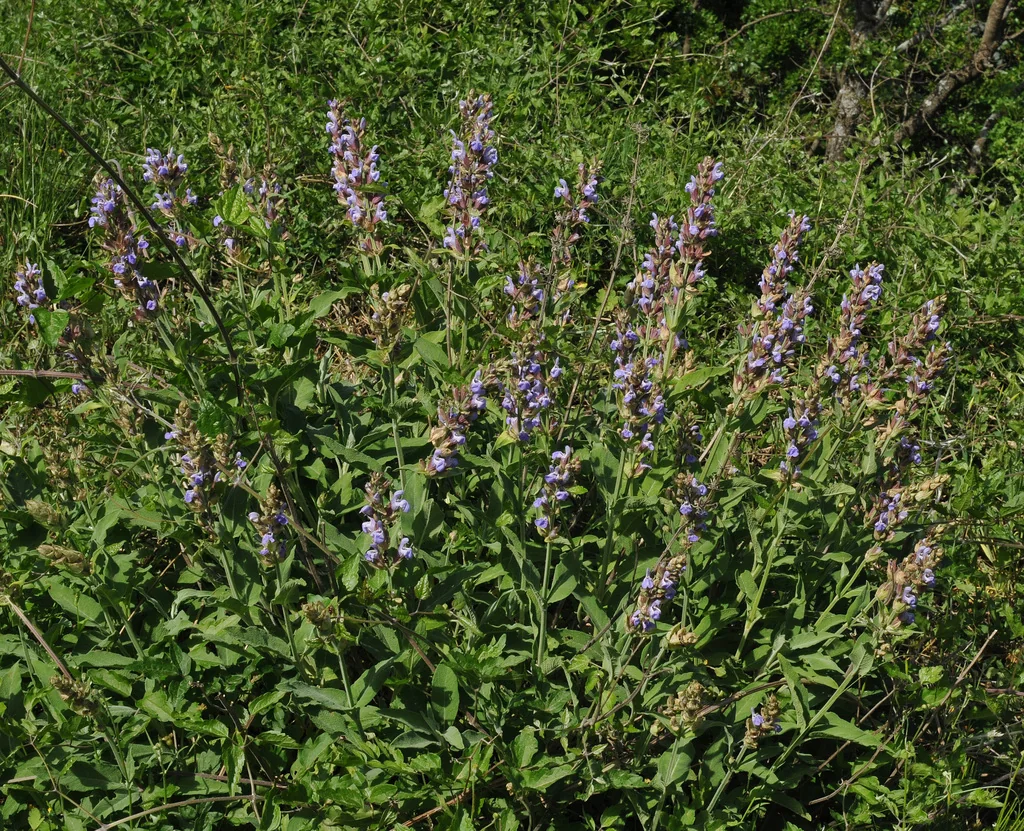
A Salvia officinalis plant with leafy growth and flowering stems.
(c) Todd Boland / iNaturalist / CC BY 4.0
Photo details
Resized and converted to WebP. No content edits.
Source: iNaturalist photo 119184784
View the observation and community identifications on iNaturalist.
Reviewed . The photographed view, exact taxon scope, current community identifications, per-photo license and source attribution were reviewed. The observation has at least two current agreeing community identifiers and no conflicting current species identification. The image illustrates plant appearance; it does not establish botanical measurements.
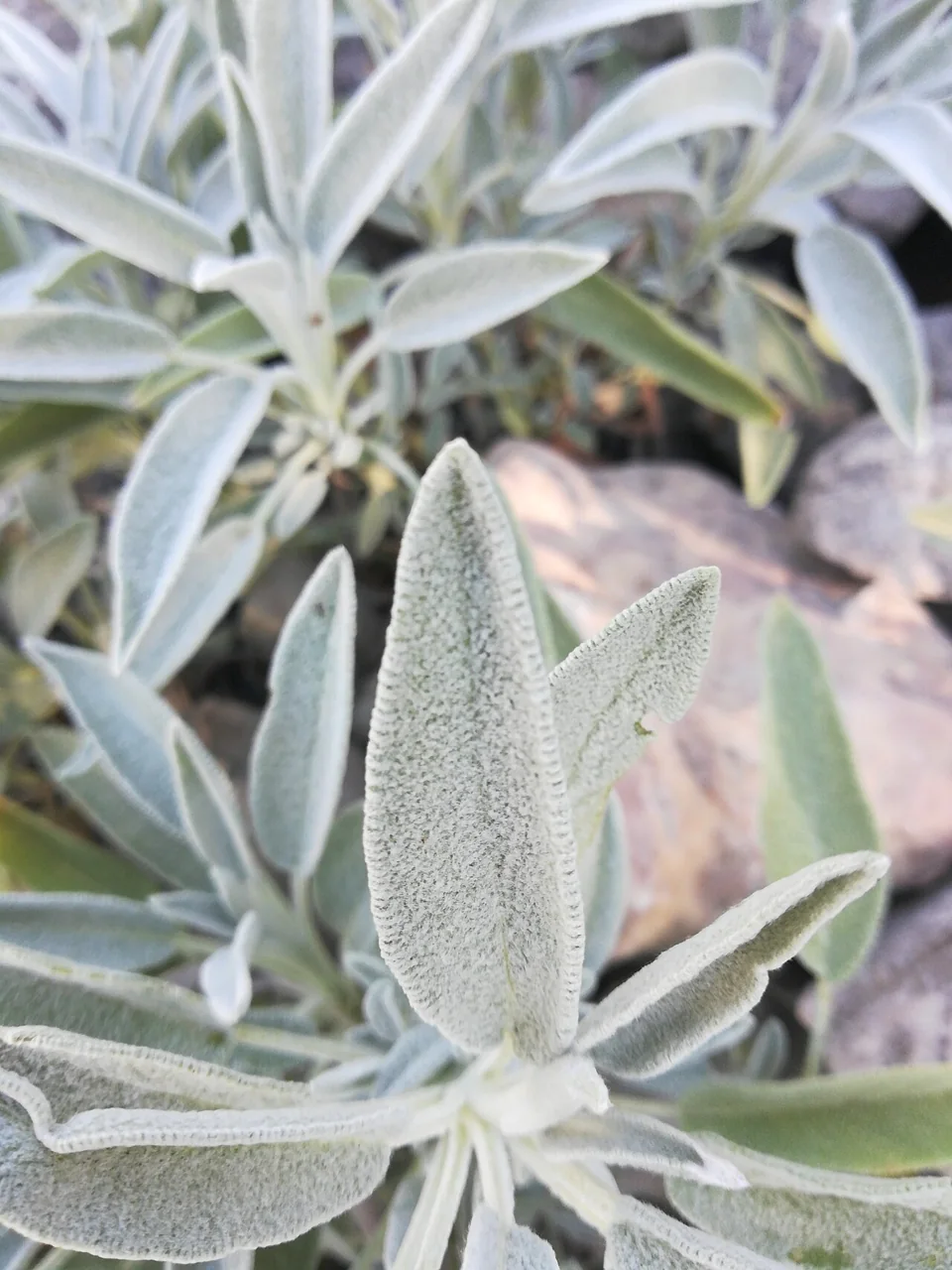
Leaves of Salvia officinalis.
Alina Majcen / Wikimedia Commons / CC0

Photo details
Resized and converted to WebP. No content edits.
Source: File:Salvia officinalis L. 3355742911.jpg
Reviewed . Source identification, photograph and license reviewed. The image illustrates the named plant; it does not verify dimensions or other plant traits.
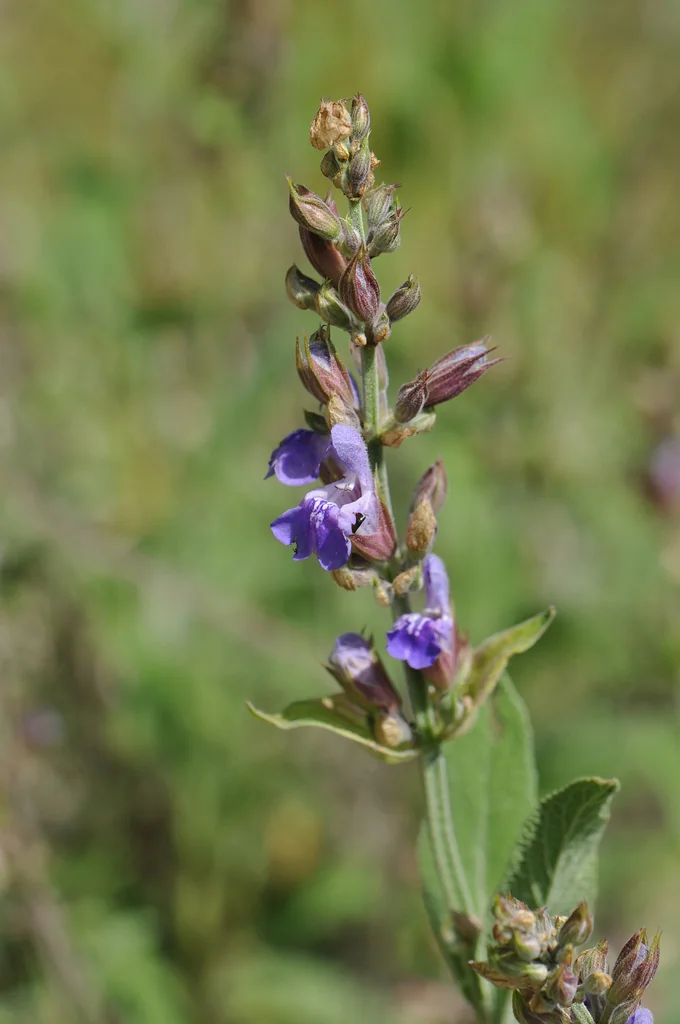
Blue-violet flowers of Salvia officinalis.
(c) Todd Boland / iNaturalist / CC BY 4.0
Photo details
Resized and converted to WebP. No content edits.
Source: iNaturalist photo 118166855
View the observation and community identifications on iNaturalist.
Reviewed . The photographed view, exact taxon scope, current community identifications, per-photo license and source attribution were reviewed. The observation has at least two current agreeing community identifiers and no conflicting current species identification. The image illustrates plant appearance; it does not establish botanical measurements.
Common names
46 names · 32 languagesOther languages (31)
- Dutch
-
- Echte salie[1]
- Franse salie
- Tuinsalie
- French
-
- Sauge officinale[1]
- Catalan
-
- sàlvia[1]
- Chinese (Simplified)
-
- 药鼠尾草[1]
- Chinese (Traditional)
-
- 藥鼠尾草[1]
- Czech
-
- šalvěj lékařská[1]
- Danish
-
- Læge-salvie[1]
- Estonian
-
- aedsalvei[1]
- Finnish
-
- ryytisalvia[1]
- Hebrew
-
- מרווה רפואית[1]
- Italian
-
- Salvia[1]
- Japanese
-
- セージ[1]
- Korean
-
- 살비아[1]
- Laadan
-
- wothesh[1]
- Lithuanian
-
- Vaistinis šalavijas[1]
- Norwegian
-
- kryddersalvie[1]
- Ojibwe
-
- Mashkodewashk (bashkodejiibik, wiingwashk, nebwaakaad)[1]
- Polish
-
- Szałwia lekarska[1]
- Portuguese
-
- Sálvia[1]
- Russian
-
- Шалфей лекарственный[1]
- Slovak
-
- šalvia lekárska[1]
- Slovenian
-
- žajbelj[1]
- Swedish
-
- kryddsalvia[1]
- Turkish
-
- Ada Çayı[1]
- Ukrainian
-
- Шавлія лікарська[1]
Sources & name notes (1)
Names recorded in our plant catalogue and botanical sources, grouped by language. Usage can vary by region.
Numbered references identify names recorded by an external source. Other names are from our plant catalogue.
Community-curated iNaturalist taxonomy; common-name attestation, not an independent botanical determination.
Source records
- garden sage — results[0].names[1]; taxon id 51738; Salvia officinalis.
- Sage — results[0].names[2]; taxon id 51738; Salvia officinalis.
- Salvia — results[0].names[3]; taxon id 51738; Salvia officinalis.
- Sálvia — results[0].names[5]; taxon id 51738; Salvia officinalis.
- Golden Sage — results[0].names[6]; taxon id 51738; Salvia officinalis.
- Echter Salbei — results[0].names[7]; taxon id 51738; Salvia officinalis.
- Garten-Salbei — results[0].names[8]; taxon id 51738; Salvia officinalis.
- Küchensalbei — results[0].names[9]; taxon id 51738; Salvia officinalis.
- Heilsalbei — results[0].names[10]; taxon id 51738; Salvia officinalis.
- šalvěj lékařská — results[0].names[11]; taxon id 51738; Salvia officinalis.
- Sauge officinale — results[0].names[12]; taxon id 51738; Salvia officinalis.
- kryddersalvie — results[0].names[13]; taxon id 51738; Salvia officinalis.
- Salvia — results[0].names[14]; taxon id 51738; Salvia officinalis.
- ryytisalvia — results[0].names[15]; taxon id 51738; Salvia officinalis.
- Шалфей лекарственный — results[0].names[16]; taxon id 51738; Salvia officinalis.
- Vaistinis šalavijas — results[0].names[17]; taxon id 51738; Salvia officinalis.
- Mashkodewashk (bashkodejiibik, wiingwashk, nebwaakaad) — results[0].names[18]; taxon id 51738; Salvia officinalis.
- مريمية — results[0].names[19]; taxon id 51738; Salvia officinalis.
- قصعين مخزني — results[0].names[20]; taxon id 51738; Salvia officinalis.
- Salvia dulce — results[0].names[21]; taxon id 51738; Salvia officinalis.
- セージ — results[0].names[22]; taxon id 51738; Salvia officinalis.
- aedsalvei — results[0].names[23]; taxon id 51738; Salvia officinalis.
- Culinary Sage — results[0].names[24]; taxon id 51738; Salvia officinalis.
- kryddsalvia — results[0].names[25]; taxon id 51738; Salvia officinalis.
- Ljekovita kadulja — results[0].names[26]; taxon id 51738; Salvia officinalis.
- Žalfija — results[0].names[27]; taxon id 51738; Salvia officinalis.
- Echte salie — results[0].names[28]; taxon id 51738; Salvia officinalis.
- wothesh — results[0].names[29]; taxon id 51738; Salvia officinalis.
- 药鼠尾草 — results[0].names[30]; taxon id 51738; Salvia officinalis.
- 藥鼠尾草 — results[0].names[31]; taxon id 51738; Salvia officinalis.
- Læge-salvie — results[0].names[32]; taxon id 51738; Salvia officinalis.
- žajbelj — results[0].names[33]; taxon id 51738; Salvia officinalis.
- מרווה רפואית — results[0].names[34]; taxon id 51738; Salvia officinalis.
- 살비아 — results[0].names[35]; taxon id 51738; Salvia officinalis.
- makkesalie — results[0].names[36]; taxon id 51738; Salvia officinalis.
- maksalie — results[0].names[37]; taxon id 51738; Salvia officinalis.
- sàlvia — results[0].names[38]; taxon id 51738; Salvia officinalis.
- Шавлія лікарська — results[0].names[39]; taxon id 51738; Salvia officinalis.
- orvosi zsálya — results[0].names[40]; taxon id 51738; Salvia officinalis.
- Szałwia lekarska — results[0].names[41]; taxon id 51738; Salvia officinalis.
- kerti zsálya — results[0].names[42]; taxon id 51738; Salvia officinalis.
- Common Sage — results[0].names[43]; taxon id 51738; Salvia officinalis.
- šalvia lekárska — results[0].names[44]; taxon id 51738; Salvia officinalis.
- Ada Çayı — results[0].names[45]; taxon id 51738; Salvia officinalis.
General information
Plant characteristics
NC State landscape size range; converted from feet and inches. Size varies with site, age and management.
Sources [3]NC State landscape size range; converted from feet and inches. Size varies with site, age and management.
Sources [3]Uses
Leaves, Flowers, Condiment, Tea
Essential oil, Repellent, Ground cover, Fragrant
Description
Leaves and flowers can be eaten both raw and cooked. This herb, with strongly aromatic leaves, is often used as a flavoring in cooked dishes. It helps with digestion and is therefore often combined with heavy, fatty foods. It gives a sausage-like flavor to savory dishes. The young leaves and flowers are suitable for raw consumption, cooking, pickling, or as an addition to sandwiches. The flowers can also be sprinkled over salads to add color and fragrance. An herbal tea made from fresh or dried leaves is said to promote digestion. An essential oil from this plant is commercially used to flavor ice cream, candy, pastries, and other products.
Harvest
Sources and references
References for the information marked with source numbers on this page.
-
Royal Botanic Gardens, Kew
World Checklist of Vascular Plants, version 16, extracted 4 June 2026
Relevant sections
- Botanical family: WCVP v16, wcvp_names.csv row 158665; name ID 181875; Salvia L.. Family column.
- Taxonomy: WCVP v16, wcvp_names.csv row 1095328; name ID 183353; Salvia officinalis L..
Source checked on .
Source data licence: CC BY 3.0.
-
Catalogue of Life
Catalogue of Life 2026-08-20 — Salvia officinalis
Taxonomic data from World Plants, version 26.05, reproduced in Catalogue of Life 2026-08-20.
Supports: TaxonomyRelevant sections
- Taxonomy: COL 2026-08-20, NameUsage.tsv line 2436536, ID 6XH46: Salvia officinalis L. (accepted).
Source checked on .
-
NC State Extension, North Carolina State University
Salvia officinalis — Extension Gardener Plant Toolbox
Supports: HeightSpreadGrowth rateGrowth habitLife cycleLightSoil moistureSoil textureSoil pHUSDA hardiness
Relevant sections
- Height: Dimensions > Height; Height: 1 ft. 0 in. - 2 ft. 0 in.
- Spread: Dimensions > Width; Width: 2 ft. 0 in. - 3 ft. 0 in.
- Growth rate: Growth Rate
- Growth habit: Habit/Form
- Life cycle: Life Cycle
- Light: Light
- Soil moisture: Soil Drainage
- Soil texture: Soil Texture
- Soil pH: Soil pH
- USDA hardiness: USDA Plant Hardiness Zone
Source checked on .