Salix triandra
Almond-Leaved Willow, Almond willow
Explore the size, hardiness, soil, light, edible uses and harvest period of Salix triandra.
Plant photos
2 photos · Select to enlarge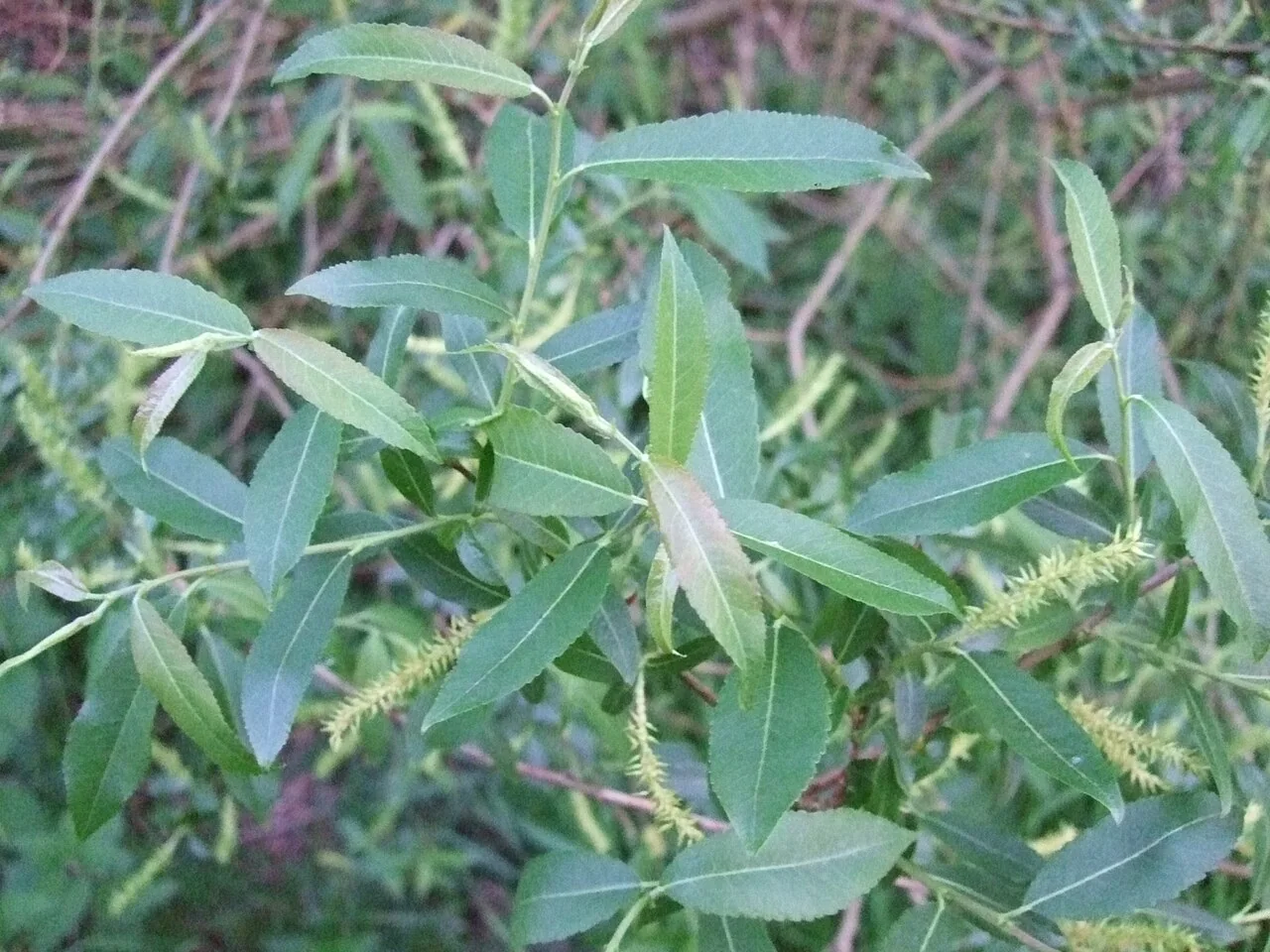
Leaves and developing fruiting catkins of Salix triandra.
BCB / Wikimedia Commons / CC BY-SA 3.0

Photo details
Resized and converted to WebP. No content edits.
Source: File:Salix triandra leaves-1.JPG
Reviewed . Source identification, photograph and license reviewed. The image illustrates the named plant; it does not verify dimensions or other plant traits.
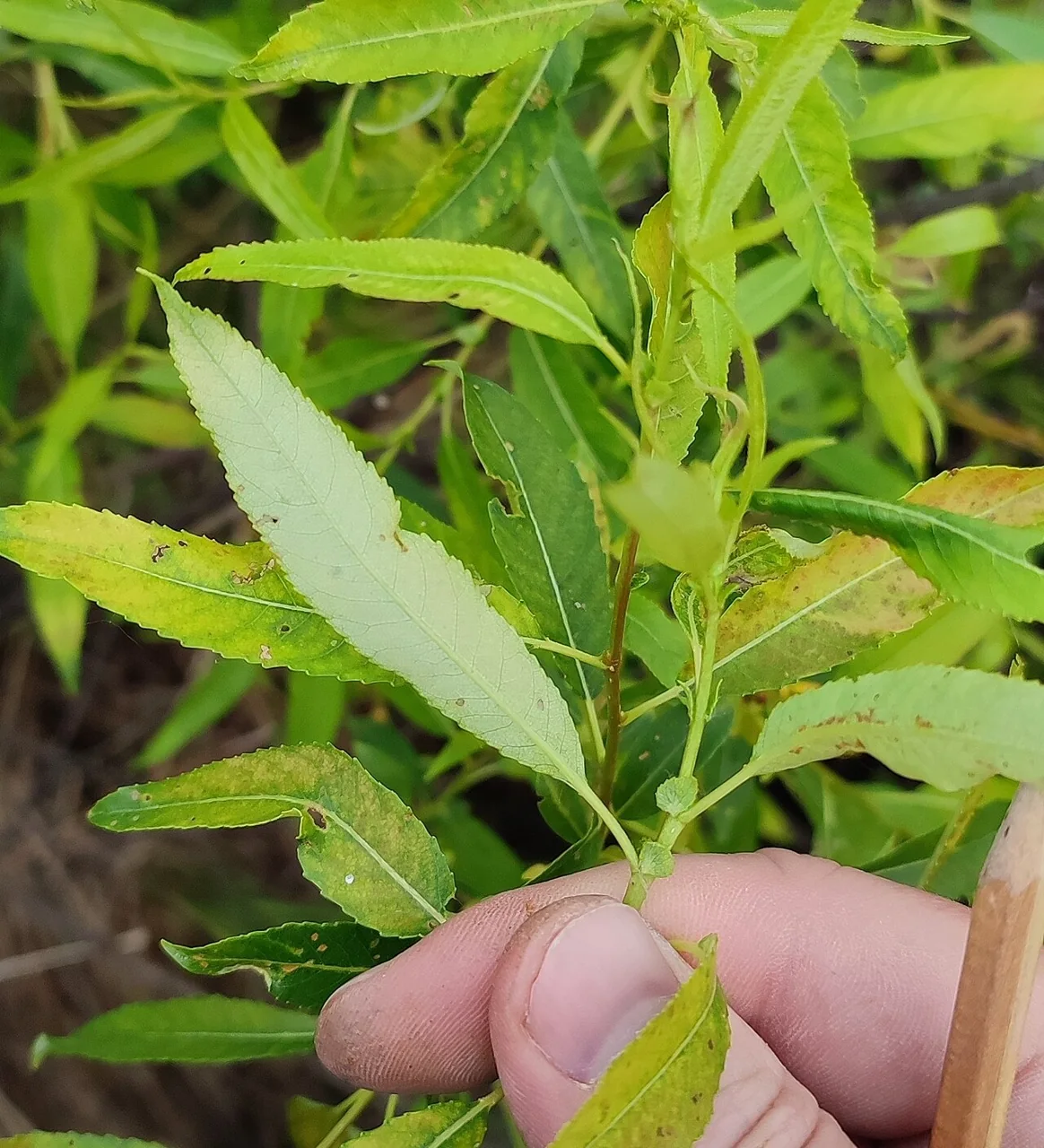
Leaves of Salix triandra.
Yurii Basov / Wikimedia Commons / CC BY 4.0

Photo details
Resized and converted to WebP. No content edits.
Source: File:Salix triandra 204866312.jpg
Reviewed . Source identification, photograph and license reviewed. The image illustrates the named plant; it does not verify dimensions or other plant traits.
Common names
25 names · 21 languages- EnglishYour language
-
- Almond willow[1]
- Almond-Leaved Willow
Other languages (20)
- Dutch
-
- Amandelwilg[1]
- French
-
- Saule à trois étamines[1]
- Chinese (Simplified)
-
- 三蕊柳[1]
- Czech
-
- vrba trojmužná[1]
- Danish
-
- Mandel-pil[1]
- Estonian
-
- vesipaju[1]
- Finnish
-
- Jokipaju[1]
- German
-
- Mandel-Weide[1]
- Italian
-
- Salice da ceste[1]
- Lithuanian
-
- Krantinis gluosnis[1]
- Norwegian
-
- mandelpil[1]
- Polish
-
- Wierzba trójpręcikowa[1]
- Portuguese
-
- Salgueiro-com-folhas-de-amendoeira[1]
- Russian
-
- Ива трёхтычинковая[1]
- Slovak
-
- vŕba trojtyčinková[1]
- Swedish
-
- mandelpil[1]
- Turkish
-
- Bağ Söğüdü[1]
- Ukrainian
-
- Верба тритичинкова[1]
Sources & name notes (1)
Names recorded in our plant catalogue and botanical sources, grouped by language. Usage can vary by region.
Numbered references identify names recorded by an external source. Other names are from our plant catalogue.
Community-curated iNaturalist taxonomy; common-name attestation, not an independent botanical determination.
Source records
- Almond Willow — results[0].names[1]; taxon id 168365; Salix triandra.
- saule à trois étamines — results[0].names[2]; taxon id 168365; Salix triandra.
- Salgueiro-com-folhas-de-amendoeira — results[0].names[3]; taxon id 168365; Salix triandra.
- vrba trojmužná — results[0].names[4]; taxon id 168365; Salix triandra.
- Mandel-pil — results[0].names[5]; taxon id 168365; Salix triandra.
- Amandelwilg — results[0].names[6]; taxon id 168365; Salix triandra.
- Ива трёхтычинковая — results[0].names[7]; taxon id 168365; Salix triandra.
- Jokipaju — results[0].names[8]; taxon id 168365; Salix triandra.
- mandelpil — results[0].names[9]; taxon id 168365; Salix triandra.
- mandelpil — results[0].names[10]; taxon id 168365; Salix triandra.
- Mandel-Weide — results[0].names[11]; taxon id 168365; Salix triandra.
- Krantinis gluosnis — results[0].names[12]; taxon id 168365; Salix triandra.
- Wierzba trójpręcikowa — results[0].names[13]; taxon id 168365; Salix triandra.
- صفصاف اللوز — results[0].names[14]; taxon id 168365; Salix triandra.
- صفصاف ثلاثي الٲسدية — results[0].names[15]; taxon id 168365; Salix triandra.
- صفصاف ذو أوراق اللوز — results[0].names[16]; taxon id 168365; Salix triandra.
- 三蕊柳 — results[0].names[17]; taxon id 168365; Salix triandra.
- vesipaju — results[0].names[18]; taxon id 168365; Salix triandra.
- Верба тритичинкова — results[0].names[19]; taxon id 168365; Salix triandra.
- Mandulalevelű fűz — results[0].names[20]; taxon id 168365; Salix triandra.
- mandulafűz — results[0].names[21]; taxon id 168365; Salix triandra.
- Salice da ceste — results[0].names[22]; taxon id 168365; Salix triandra.
- vŕba trojtyčinková — results[0].names[23]; taxon id 168365; Salix triandra.
- Bağ Söğüdü — results[0].names[24]; taxon id 168365; Salix triandra.
General information
Plant characteristics
Growing conditions
Moist, Wet
Sand (light) Loam (medium) Clay (heavy)
Acidic Neutral Alkaline
Full sun
Uses
Leaves, Inner bark, Tea
Basketry, Pioneer species, Windbreak, Wood
Description
Inner bark can be eaten both raw and cooked. The bark can be dried and then ground into powder to be added to flour, which can be used to bake bread, for example. The taste is very bitter, especially when the bark is fresh. It can also serve as food during times of food scarcity. Leaves and young shoots can be eaten both raw and cooked, although they are not very tasty. They are mainly consumed in times of scarcity or famine, and the leaves can even be used as a tea substitute.
Harvest
Crown
Sources and references
References for the information marked with source numbers on this page.
-
Royal Botanic Gardens, Kew
World Checklist of Vascular Plants, version 16, extracted 4 June 2026
Relevant sections
- Botanical family: WCVP v16, wcvp_names.csv row 1427267; name ID 2918656; Salix L.. Family column.
- Taxonomy: WCVP v16, wcvp_names.csv row 1428165; name ID 2919500; Salix triandra L..
Source checked on .
Source data licence: CC BY 3.0.
-
Catalogue of Life
Catalogue of Life 2026-08-20 — Salix triandra
Taxonomic data from World Plants, version 26.05, reproduced in Catalogue of Life 2026-08-20.
Supports: TaxonomyRelevant sections
- Taxonomy: COL 2026-08-20, NameUsage.tsv line 2655918, ID 79DKG: Salix triandra L. (accepted).
Source checked on .