Sagittaria cuneata
Wapato
Explore the size, hardiness, soil, light, edible uses and harvest period of Sagittaria cuneata.
Plant photos
2 photos · Select to enlarge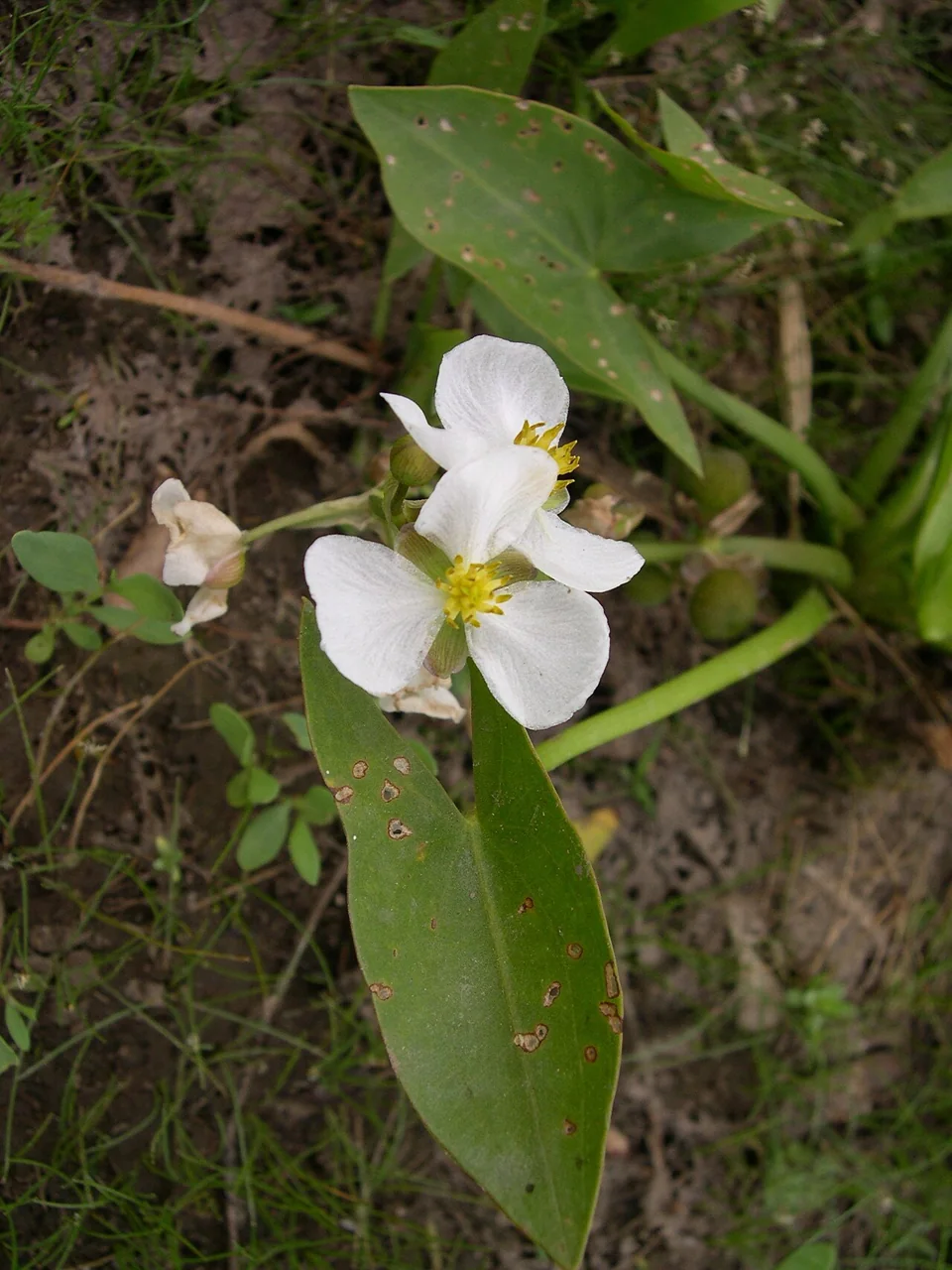
Sagittaria cuneata in flower.
Thayne Tuason / Wikimedia Commons / CC BY-SA 4.0

Photo details
Resized and converted to WebP. No content edits.
Source: File:Sagittaria cuneata-8-02-05.jpg
Reviewed . Source identification, photograph and license reviewed. The image illustrates the named plant; it does not verify dimensions or other plant traits.
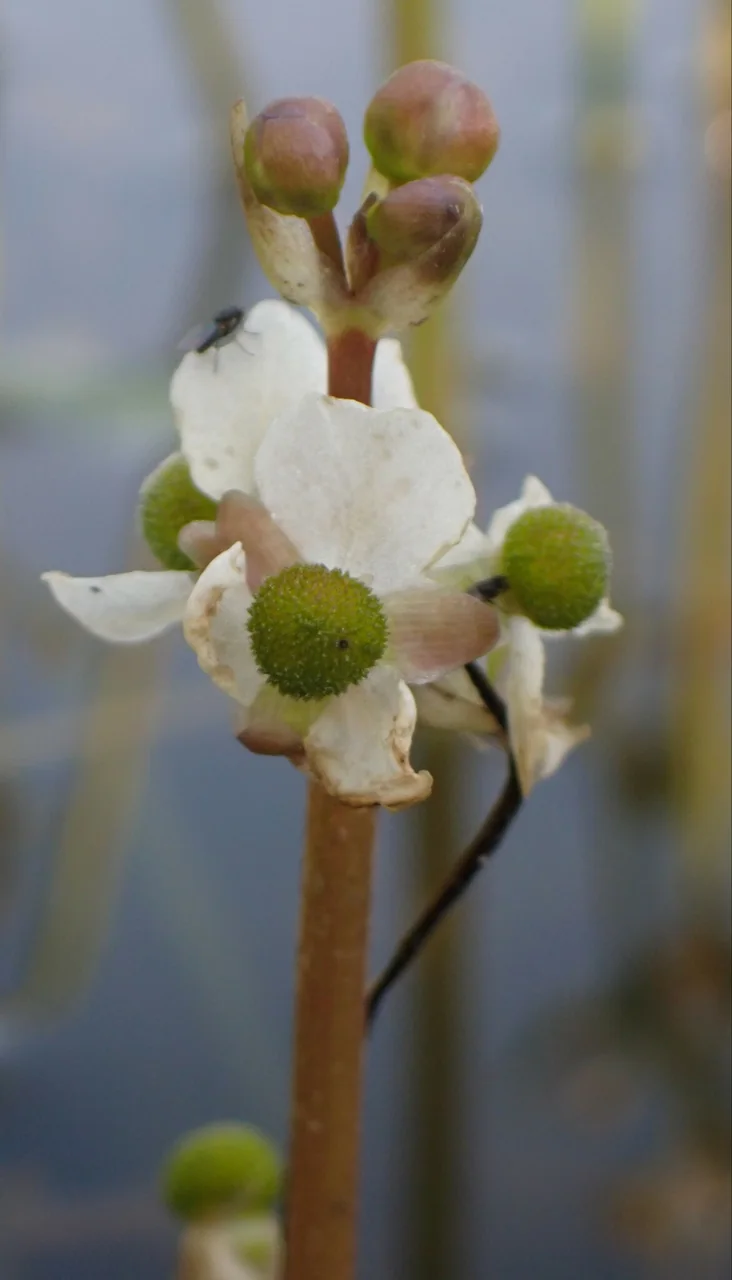
Flowers and developing fruit of Sagittaria cuneata.
mfeaver / Wikimedia Commons / CC BY 4.0

Photo details
Resized and converted to WebP. No content edits.
Source: File:Sagittaria cuneata 308577296.jpg
Reviewed . Source identification, photograph and license reviewed. The image illustrates the named plant; it does not verify dimensions or other plant traits.
Common names
8 names · 4 languagesOther languages (3)
Sources & name notes (1)
Names recorded in our plant catalogue and botanical sources, grouped by language. Usage can vary by region.
Numbered references identify names recorded by an external source. Other names are from our plant catalogue.
Community-curated iNaturalist taxonomy; common-name attestation, not an independent botanical determination.
Source records
- Arumleaf Arrowhead — results[0].names[3]; taxon id 78925; Sagittaria cuneata.
- sagittaire cunéaire — results[0].names[4]; taxon id 78925; Sagittaria cuneata.
- Wigbladig Pijlkruid — results[0].names[5]; taxon id 78925; Sagittaria cuneata.
- Waabaziipin (Wabasi'pîn) — results[0].names[6]; taxon id 78925; Sagittaria cuneata.
- arum-leaved arrowhead — results[0].names[7]; taxon id 78925; Sagittaria cuneata.
General information
Kew's family placement for the genus Sagittaria (WCVP v16).
Sources [1]Plant characteristics
Growing conditions
Wet
Sand (light) Loam (medium) Clay (heavy)
Acidic Neutral Alkaline
Full sun
Uses
Root
None
Description
Carrots can be eaten both raw and cooked. Raw carrots have a slightly bitter taste, while the cooked tubers taste sweet. The tubers at the end of the rootstock are the best. When the tubers break away from the roots, they float to the water's surface and can then be easily collected.
Harvest
Sources and references
References for the information marked with source numbers on this page.
-
Royal Botanic Gardens, Kew
World Checklist of Vascular Plants, version 16, extracted 4 June 2026
Relevant sections
- Botanical family: WCVP v16, wcvp_names.csv row 1165563; name ID 287722; Sagittaria Ruppius ex L.. Family column.
- Taxonomy: WCVP v16, wcvp_names.csv row 1164720; name ID 287210; Sagittaria cuneata E.Sheld..
Source checked on .
Source data licence: CC BY 3.0.
-
Catalogue of Life
Catalogue of Life 2026-08-20 — Sagittaria cuneata
Taxonomic data from WCVP, version 16.0, reproduced in Catalogue of Life 2026-08-20. This shares the Kew WCVP evidence base cited on this page.
Supports: TaxonomyRelevant sections
- Taxonomy: COL 2026-08-20, NameUsage.tsv line 2647809, ID 78ZZB: Sagittaria cuneata E.Sheld. (accepted).
Source checked on .