Ribes divaricatum
Worcesterberry
Explore the size, hardiness, soil, light, edible uses and harvest period of Ribes divaricatum.
Plant photos
2 photos · Select to enlarge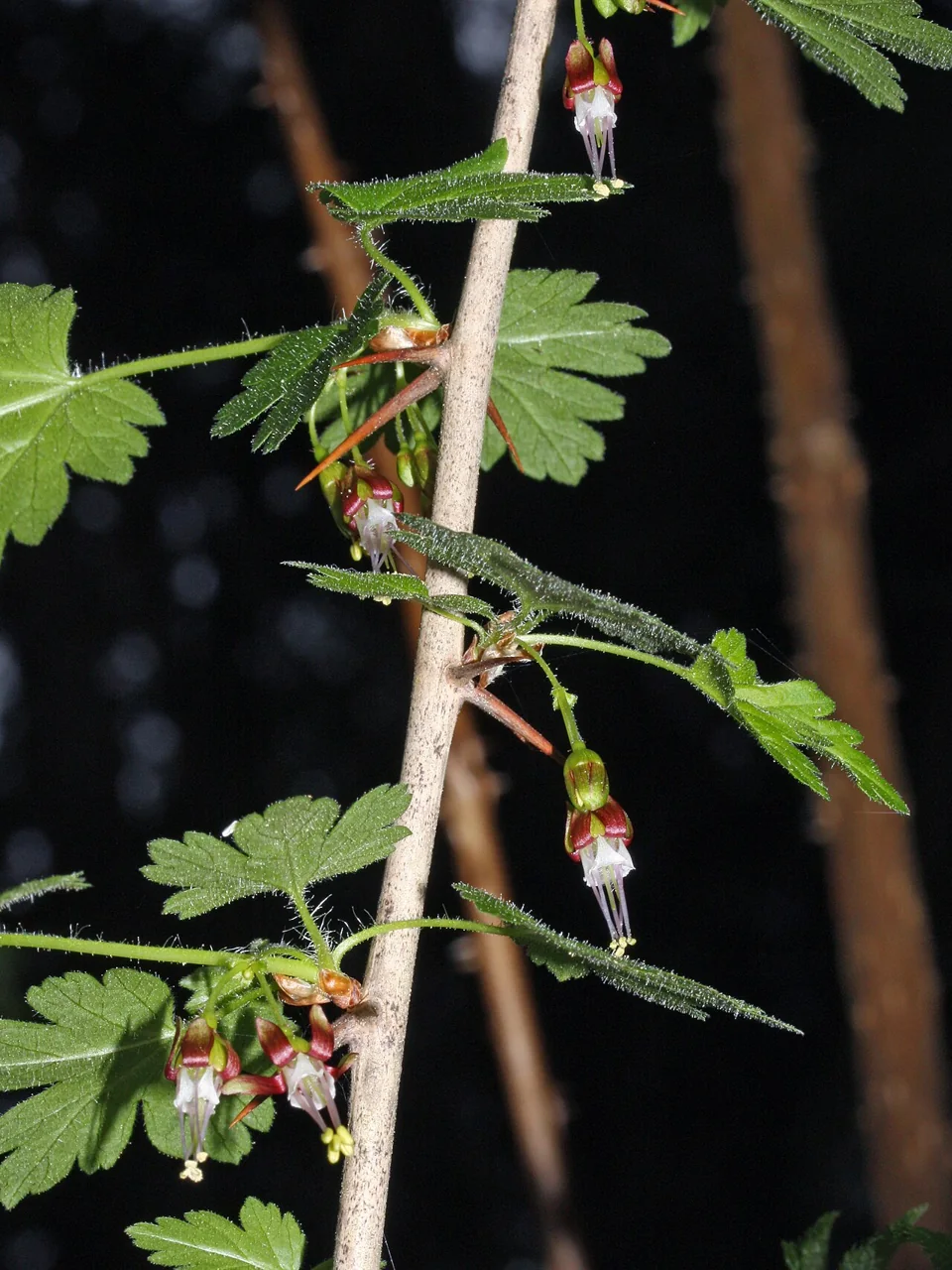
Ribes divaricatum in flower.
Walter Siegmund (talk) / Wikimedia Commons / CC BY-SA 3.0

Photo details
Resized and converted to WebP. No content edits.
Source: File:Ribes divaricatum 5391.JPG
Reviewed . Source identification, photograph and license reviewed. The image illustrates the named plant; it does not verify dimensions or other plant traits.
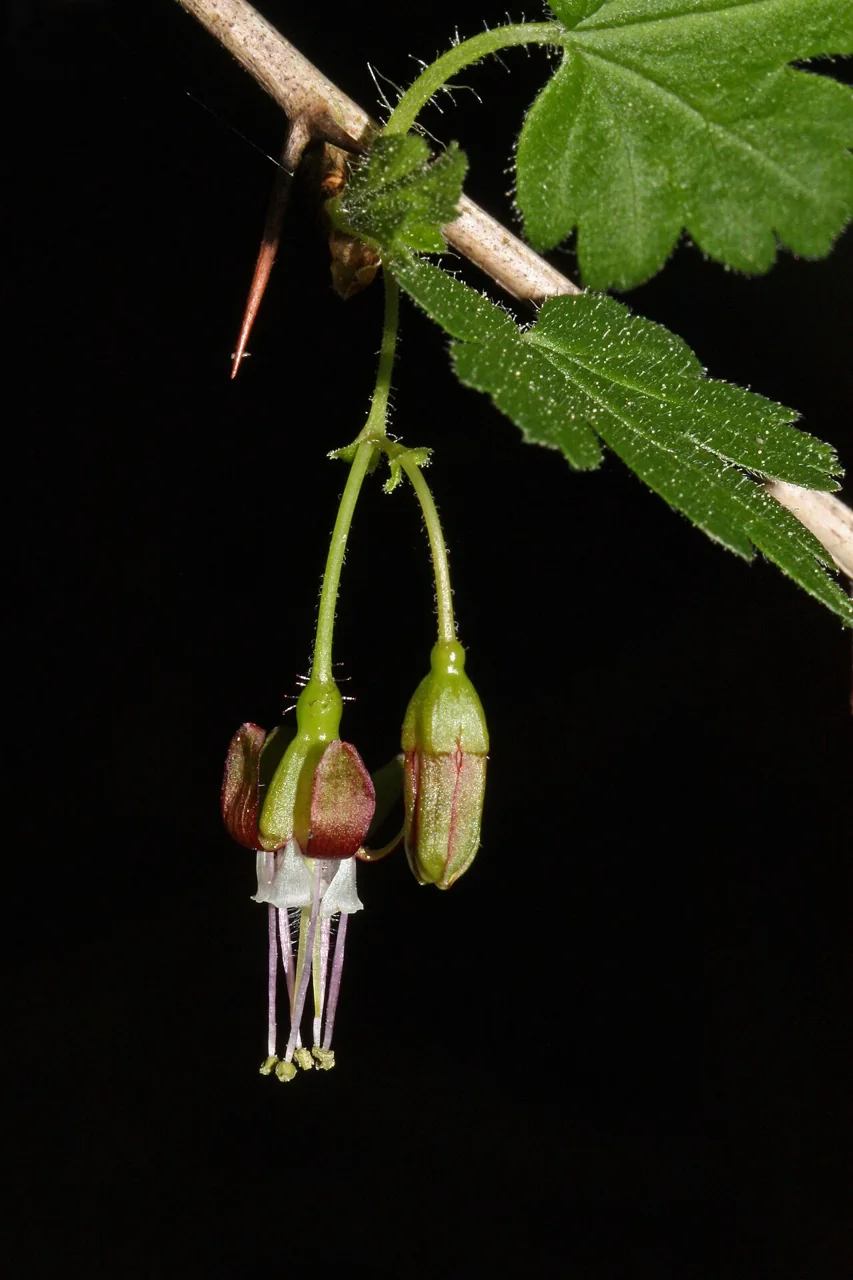
Flowers of Ribes divaricatum.
Walter Siegmund (talk) / Wikimedia Commons / CC BY-SA 3.0

Photo details
Resized and converted to WebP. No content edits.
Source: File:Ribes divaricatum 5378.JPG
Reviewed . Source identification, photograph and license reviewed. The image illustrates the named plant; it does not verify dimensions or other plant traits.
Common names
20 names · 14 languagesOther languages (13)
- Dutch
-
- Worcesterbes[2]
- French
-
- Groseillier de Worcester
- Chinese (Simplified)
-
- 野黑鹅莓[2]
- Chinese (Traditional)
-
- 野黑鵝莓[2]
- Czech
-
- meruzalka rozevřená[2]
- Downriver Halkomelem
-
- t̓émʔxʷ[2]
- Finnish
-
- harokarviainen[2]
- Norwegian
-
- svartstikkelsbær[2]
- Russian
-
- Крыжовник растопыренный[2]
- Saanich
-
- ḴÁMQ IȽĆ[2]
- Slovak
-
- egreš roztiahnutý[2]
- Swedish
-
- spärrkrusbär[2]
Sources & name notes (2)
Names recorded in our plant catalogue and botanical sources, grouped by language. Usage can vary by region.
Numbered references identify names recorded by an external source. Other names are from our plant catalogue.
Common names from World Plants, version 26.05, reproduced in Catalogue of Life 2026-08-20. License: CC BY.
Source records
- Oregon-Johannisbeere (DE) — VernacularName.tsv, line 174017; taxon 6WVCN.
- Spreading gooseberry (EN) — VernacularName.tsv, line 174018; taxon 6WVCN.
Community-curated iNaturalist taxonomy; common-name attestation, not an independent botanical determination.
Source records
- spreading gooseberry — results[0].names[1]; taxon id 53448; Ribes divaricatum.
- wild gooseberry — results[0].names[2]; taxon id 53448; Ribes divaricatum.
- Worcesterbes — results[0].names[3]; taxon id 53448; Ribes divaricatum.
- Straggly Gooseberry — results[0].names[4]; taxon id 53448; Ribes divaricatum.
- svartstikkelsbær — results[0].names[5]; taxon id 53448; Ribes divaricatum.
- meruzalka rozevřená — results[0].names[6]; taxon id 53448; Ribes divaricatum.
- spärrkrusbär — results[0].names[7]; taxon id 53448; Ribes divaricatum.
- 野黑鵝莓 — results[0].names[8]; taxon id 53448; Ribes divaricatum.
- 野黑鹅莓 — results[0].names[9]; taxon id 53448; Ribes divaricatum.
- coast gooseberry — results[0].names[10]; taxon id 53448; Ribes divaricatum.
- Крыжовник растопыренный — results[0].names[11]; taxon id 53448; Ribes divaricatum.
- harokarviainen — results[0].names[12]; taxon id 53448; Ribes divaricatum.
- egreš roztiahnutý — results[0].names[13]; taxon id 53448; Ribes divaricatum.
- ḴÁMQ IȽĆ — results[0].names[14]; taxon id 53448; Ribes divaricatum.
- t̓émʔxʷ — results[0].names[15]; taxon id 53448; Ribes divaricatum.
- Oregon-Stachelbeere — results[0].names[16]; taxon id 53448; Ribes divaricatum.
- Schwarze Honigbeere — results[0].names[17]; taxon id 53448; Ribes divaricatum.
General information
Kew's family placement for the genus Ribes (WCVP v16).
Sources [1]Plant characteristics
Growing conditions
Moist
Sand (light) Loam (medium) Clay (heavy)
Acidic Neutral Alkaline
Partial shade, Full sun
Uses
Leaves, Fruit
None
Description
The fruit of the gooseberry can be eaten both raw and cooked. They are sweet and juicy, with an acceptable flavor that is slightly on the sour side. Gooseberries are considered one of the best wild North American berries. Sometimes they are harvested before they are fully ripe and then cooked. The fruits are about 10 mm in diameter. On wild plants, the fruits can remain hanging on the bush until autumn (if the birds leave them alone). The young leaves and unripe fruits are used to make sauces.
Harvest
Sources and references
References for the information marked with source numbers on this page.
-
Royal Botanic Gardens, Kew
World Checklist of Vascular Plants, version 16, extracted 4 June 2026
Relevant sections
- Botanical family: WCVP v16, wcvp_names.csv row 556306; name ID 2426003; Ribes L.. Family column.
- Taxonomy: WCVP v16, wcvp_names.csv row 156756; name ID 2426789; Ribes divaricatum Douglas.
Source checked on .
Source data licence: CC BY 3.0.
-
Catalogue of Life
Catalogue of Life 2026-08-20 — Ribes divaricatum
Taxonomic data from World Plants, version 26.05, reproduced in Catalogue of Life 2026-08-20.
Supports: TaxonomyRelevant sections
- Taxonomy: COL 2026-08-20, NameUsage.tsv line 2423091, ID 6WVCN: Ribes divaricatum Douglas (accepted).
Source checked on .