Quercus petraea
Sessile oak
Explore the size, hardiness, soil, light, edible uses and harvest period of Quercus petraea.
Plant photos
2 photos · Select to enlarge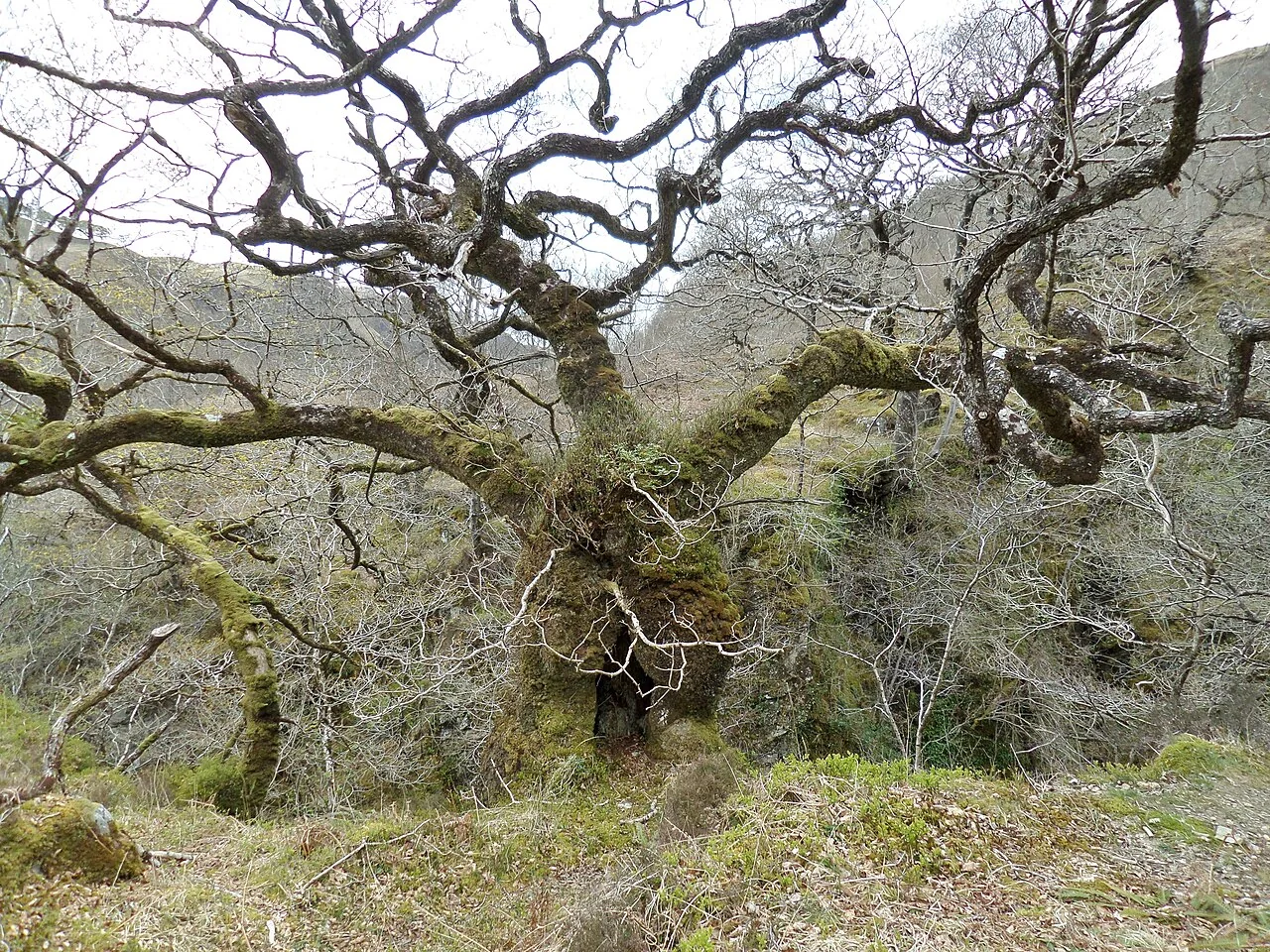
The leafless branches of Quercus petraea.
Rosser1954 / Wikimedia Commons / CC BY-SA 4.0
,_Falls_of_Cruachan.JPG)
Photo details
Resized and converted to WebP. No content edits.
Source: File:Ancient Sessile Oak (Quercus petraea), Falls of Cruachan.JPG
Reviewed . Source identification, photograph and license reviewed. The image illustrates the named plant; it does not verify dimensions or other plant traits.
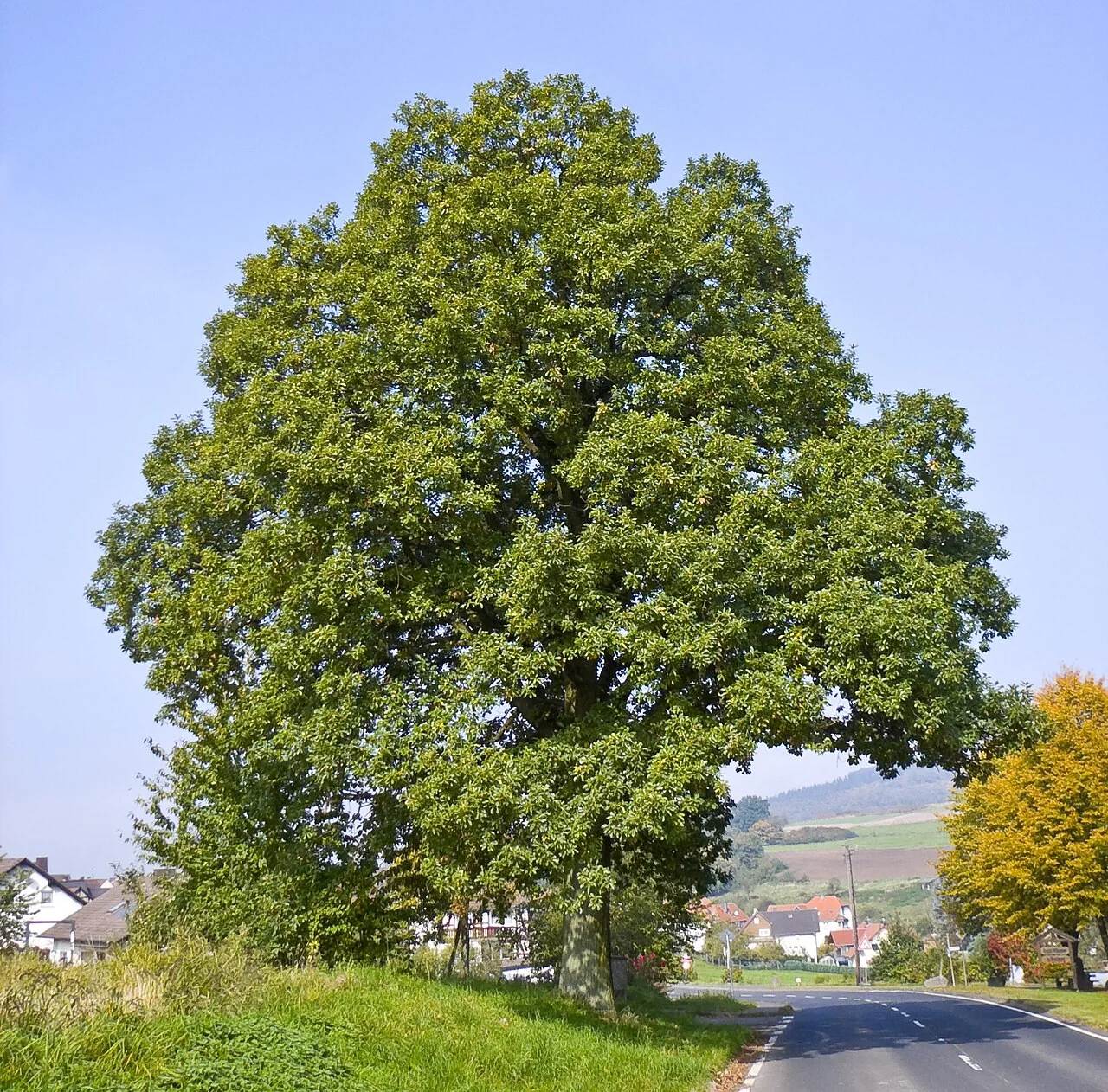
A Quercus petraea tree.
Willow / Wikimedia Commons / CC BY 2.5

Photo details
Resized and converted to WebP. No content edits.
Source: File:Quercus petraea 06.jpg
Reviewed . Source identification, photograph and license reviewed. The image illustrates the named plant; it does not verify dimensions or other plant traits.
Common names
41 names · 31 languagesOther languages (30)
- Dutch
-
- Wintereik[1]
- Afrikaans
-
- wintereik[1]
- Albanian
-
- bung[1]
- Armenian
-
- Կաղնի ոսկեգույն[1]
- Basque
-
- Haritz kandugabea[1]
- Catalan
-
- Roure de fulla gran[1]
- Croatian
-
- Hrast kitnjak[1]
- Czech
-
- dub zimní[1]
- Danish
-
- Vinter-eg[1]
- Finnish
-
- talvitammi[1]
- Irish
-
- Dair ghaelach[1]
- Italian
-
- Rovere[1]
- Lithuanian
-
- Bekotis ąžuolas[1]
- Norwegian
-
- vintereik[1]
- Polish
-
- Dąb bezszypułkowy[1]
- Romanian
-
- Gorun[1]
- Russian
-
- Дуб скальный[1]
- Serbian
-
- Храст китњак[1]
- Slovak
-
- dub zimný[1]
- Slovenian
-
- graden[1]
- Spanish
-
- Roble albar[1]
- Swedish
-
- Bergek[1]
- Turkish
-
- Sapsız Meşe[1]
- Ukrainian
-
- Дуб скельний[1]
Sources & name notes (1)
Names recorded in our plant catalogue and botanical sources, grouped by language. Usage can vary by region.
Numbered references identify names recorded by an external source. Other names are from our plant catalogue.
Community-curated iNaturalist taxonomy; common-name attestation, not an independent botanical determination.
Source records
- sessile oak — results[1].names[1]; taxon id 200942; Quercus petraea.
- Chêne sessile — results[1].names[2]; taxon id 200942; Quercus petraea.
- dub zimní — results[1].names[3]; taxon id 200942; Quercus petraea.
- Bergek — results[1].names[4]; taxon id 200942; Quercus petraea.
- Vinter-eg — results[1].names[5]; taxon id 200942; Quercus petraea.
- Wintereik — results[1].names[6]; taxon id 200942; Quercus petraea.
- vintereik — results[1].names[7]; taxon id 200942; Quercus petraea.
- Дуб скальный — results[1].names[8]; taxon id 200942; Quercus petraea.
- talvitammi — results[1].names[9]; taxon id 200942; Quercus petraea.
- Dąb bezszypułkowy — results[1].names[10]; taxon id 200942; Quercus petraea.
- Bekotis ąžuolas — results[1].names[11]; taxon id 200942; Quercus petraea.
- Roure de fulla gran — results[1].names[12]; taxon id 200942; Quercus petraea.
- Rovere — results[1].names[13]; taxon id 200942; Quercus petraea.
- Chêne rouvre — results[1].names[14]; taxon id 200942; Quercus petraea.
- 無梗花櫟 — results[1].names[15]; taxon id 200942; Quercus petraea.
- 岩生櫟 — results[1].names[16]; taxon id 200942; Quercus petraea.
- 无梗花栎 — results[1].names[17]; taxon id 200942; Quercus petraea.
- 岩生栎 — results[1].names[18]; taxon id 200942; Quercus petraea.
- Haritz kandugabea — results[1].names[19]; taxon id 200942; Quercus petraea.
- Կաղնի ոսկեգույն — results[1].names[20]; taxon id 200942; Quercus petraea.
- dub zimný — results[1].names[21]; taxon id 200942; Quercus petraea.
- Дуб скельний — results[1].names[22]; taxon id 200942; Quercus petraea.
- graden — results[1].names[23]; taxon id 200942; Quercus petraea.
- горун — results[1].names[24]; taxon id 200942; Quercus petraea.
- даб горун — results[1].names[25]; taxon id 200942; Quercus petraea.
- Gorun — results[1].names[26]; taxon id 200942; Quercus petraea.
- kocsánytalan tölgy — results[1].names[27]; taxon id 200942; Quercus petraea.
- Hrast kitnjak — results[1].names[28]; taxon id 200942; Quercus petraea.
- bung — results[1].names[29]; taxon id 200942; Quercus petraea.
- kocsánytalan tölgyek — results[1].names[30]; taxon id 200942; Quercus petraea.
- valódi kocsánytalan tölgy — results[1].names[31]; taxon id 200942; Quercus petraea.
- Dair ghaelach — results[1].names[32]; taxon id 200942; Quercus petraea.
- Sapsız Meşe — results[1].names[33]; taxon id 200942; Quercus petraea.
- Irish oak — results[1].names[34]; taxon id 200942; Quercus petraea.
- Cornish oak — results[1].names[35]; taxon id 200942; Quercus petraea.
- Roble albar — results[1].names[36]; taxon id 200942; Quercus petraea.
- Храст китњак — results[1].names[37]; taxon id 200942; Quercus petraea.
- Traubeneiche — results[1].names[38]; taxon id 200942; Quercus petraea.
- wintereik — results[1].names[39]; taxon id 200942; Quercus petraea.
- Wintereiche — results[1].names[40]; taxon id 200942; Quercus petraea.
- Trauben-Eiche — results[1].names[41]; taxon id 200942; Quercus petraea.
General information
Plant characteristics
NC State landscape size range; converted from feet and inches. Size varies with site, age and management.
Sources [3]NC State landscape size range; converted from feet and inches. Size varies with site, age and management.
Sources [3]Growing conditions
USDA zones listed by NC State; winter survival does not establish reliable cropping.
Sources [3]Uses
Leaves, Condiment, Tea
Basketry, Charcoal, Gum, Repellent, Wood, Bee forage
Description
Cooked seeds can be dried and ground into a powder, which can be used as a thickening agent in stews or mixed with grain to make bread. The seeds contain bitter tannins, which can be removed by thoroughly washing the seeds in running water, although this can also wash away many minerals. The whole seeds can be used or dried and ground into powder. To properly leach the seeds, they can be soaked for several days to weeks, with one method being to pack them in a cloth bag and place it in a stream to speed up the process. A simple taste test can indicate when the tannins have been washed out. Traditionally, the seeds were buried in moist soil to overwinter, and in the spring, the germinating seeds were dug up. By that time, most of the astringent properties would have been lost. Roasted seeds can serve as a coffee substitute.
Harvest
Sources and references
References for the information marked with source numbers on this page.
-
Royal Botanic Gardens, Kew
World Checklist of Vascular Plants, version 16, extracted 4 June 2026
Relevant sections
- Botanical family: WCVP v16, wcvp_names.csv row 152857; name ID 171386; Quercus L.. Family column.
- Taxonomy: WCVP v16, wcvp_names.csv row 1088682; name ID 174374; Quercus petraea (Matt.) Liebl..
Source checked on .
Source data licence: CC BY 3.0.
-
Catalogue of Life
Catalogue of Life 2026-08-20 — Quercus petraea
Taxonomic data from World Plants, version 26.05, reproduced in Catalogue of Life 2026-08-20.
Supports: TaxonomyRelevant sections
- Taxonomy: COL 2026-08-20, NameUsage.tsv line 1106712, ID 4R5SK: Quercus petraea (Matt.) Liebl. (accepted).
Source checked on .
-
NC State Extension, North Carolina State University
Quercus petraea — Extension Gardener Plant Toolbox
Supports: Crown shapeHeightSpreadGrowth rateFoliageGrowth habitLife cycleLightSoil moistureSoil textureSoil pHUSDA hardiness
Relevant sections
- Crown shape: Description: crown architecture
- Height: Dimensions > Height; Height: 60 ft. 0 in. - 80 ft. 0 in.
- Spread: Dimensions > Width; Width: 60 ft. 0 in. - 80 ft. 0 in.
- Growth rate: Growth Rate
- Foliage: Woody Plant Leaf Characteristics
- Growth habit: Habit/Form
- Life cycle: Life Cycle
- Light: Light
- Soil moisture: Soil Drainage
- Soil texture: Soil Texture
- Soil pH: Soil pH
- USDA hardiness: USDA Plant Hardiness Zone
Source checked on .