Pyrus pyraster
European wild pear
Explore the size, hardiness, soil, light, edible uses and harvest period of Pyrus pyraster.
Plant photos
2 photos · Select to enlarge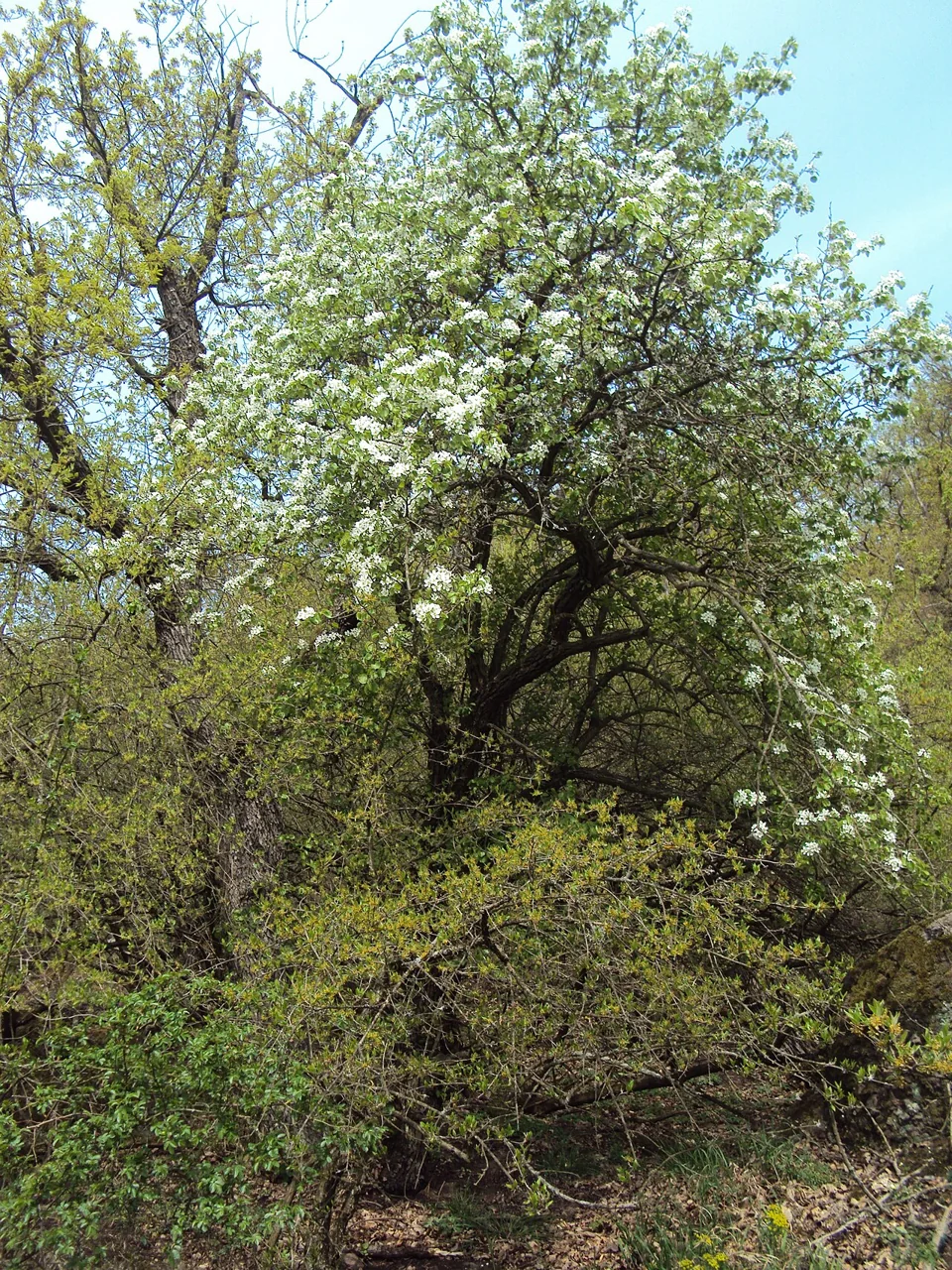
Pyrus pyraster in flower.
Dendrofil / Wikimedia Commons / CC0

Photo details
Resized and converted to WebP. No content edits.
Source: File:Břenčák 25042015 06.JPG
Reviewed . Source identification, photograph and license reviewed. The image illustrates the named plant; it does not verify dimensions or other plant traits.
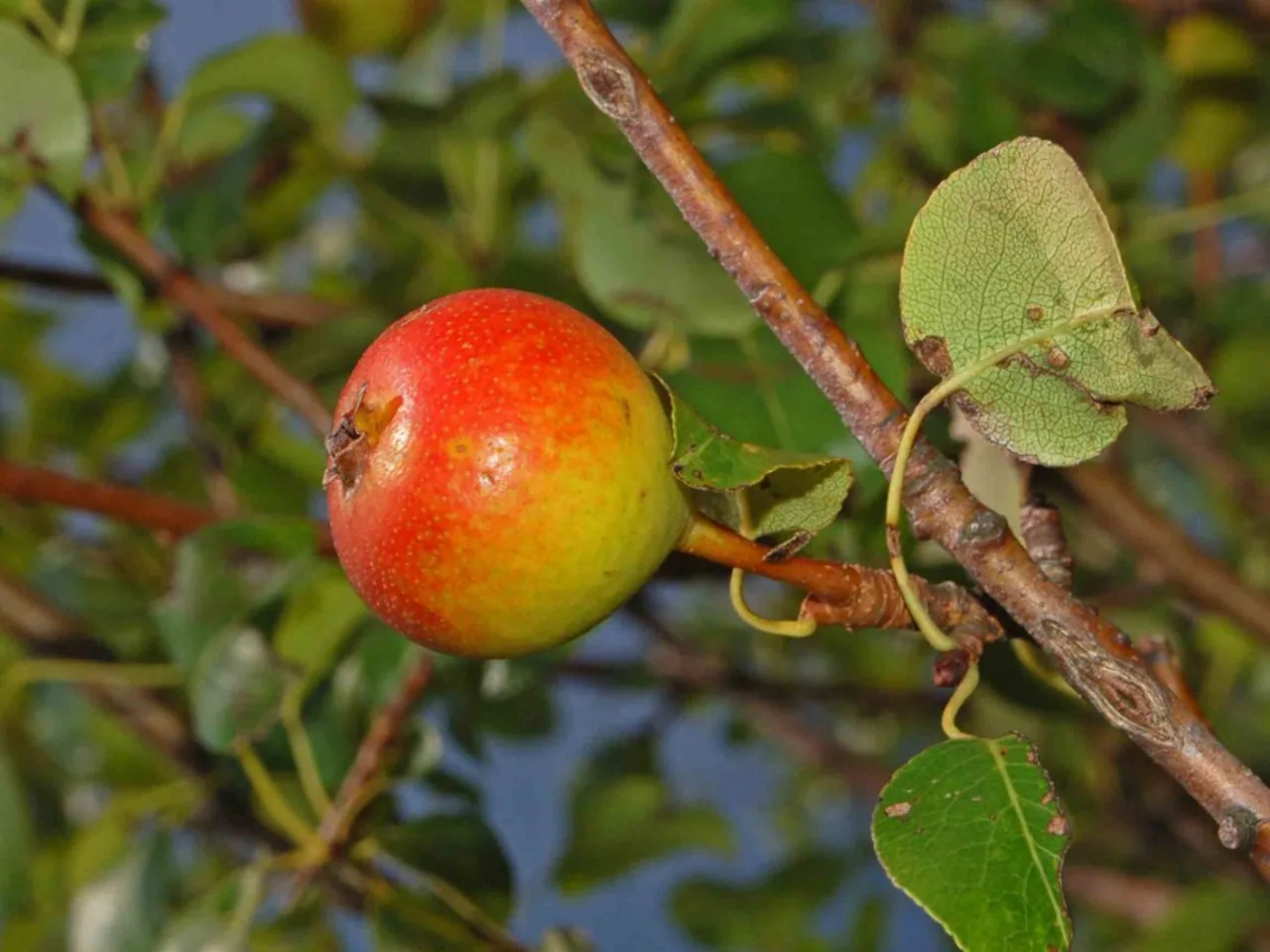
Fruit of Pyrus pyraster.
Hectonichus / Wikimedia Commons / CC BY-SA 3.0

Photo details
Resized and converted to WebP. No content edits.
Source: File:Rosaceae - Pyrus pyraster - Perastro-1.JPG
Reviewed . Source identification, photograph and license reviewed. The image illustrates the named plant; it does not verify dimensions or other plant traits.
Common names
3 names · 3 languages- EnglishYour language
-
- European wild pear
Other languages (2)
- Dutch
-
- Wilde peer
- French
-
- Poirier sauvage
Sources & name notes
Names recorded in our plant catalogue, grouped by language. Usage can vary by region.
General information
This record describes European wild pear. Kew places it within this broader subspecies; cultivated pears have different characteristics.
Sources [1]Plant characteristics
RHS ultimate size range in UK growing conditions; cultivar, rootstock and pruning affect size.
Sources [2]RHS ultimate size range in UK growing conditions; cultivar, rootstock and pruning affect size.
Sources [2]Growing conditions
Moist, Well-drained
Preferred growing conditions. Moisture and drainage are different properties; well-drained soil is not necessarily dry.
Sources [2]Sand (light) Loam (medium) Clay (heavy)
Acidic Neutral Alkaline
Partial shade, Full sun
Uses
Fruit
None
Description
European wild pear is a deciduous tree. Its hard fruit softens as it ripens after falling; fruit is also used in cooked preserves. UK horticultural guidance describes fruit falling in late summer to early autumn. Wild trees can become substantially larger than small garden specimens.
Harvest
Crown
Sources and references
References for the information marked with source numbers on this page.
-
Royal Botanic Gardens, Kew
World Checklist of Vascular Plants, version 16, extracted 4 June 2026
Relevant sections
- Taxonomy: WCVP version 16, wcvp_names.csv: Pyrus pyraster (L.) Burgsd., name ID 2964035, row 845922; Pyrus communis subsp. communis , name ID 3266015, row 934277
- Botanical family: WCVP v16, wcvp_names.csv row 325731; name ID 2962753; Pyrus L.. Family column.
Source checked on .
Source data licence: CC BY 3.0.
-
Royal Horticultural Society
Pyrus pyraster | wild pear
Relevant sections
- Description: Description; Foliage; Cultivation; Potentially harmful, where applicable
- Soil moisture: Growing conditions: Moisture; Cultivation
- Height: Size > Max Height
- Spread: Size > Max Spread
- Foliage: Botanical details > Foliage
Source checked on .
-
EUFORGEN European Forest Genetic Resources Programme
Pyrus pyraster — Wild pear
Supports: Description
Relevant sections
- Description: Species description; wild-pear conservation and hybridization
Source checked on .