Prunus tomentosa
Nanking cherry
Explore the size, hardiness, soil, light, edible uses and harvest period of Prunus tomentosa.
Plant photos
2 photos · Select to enlarge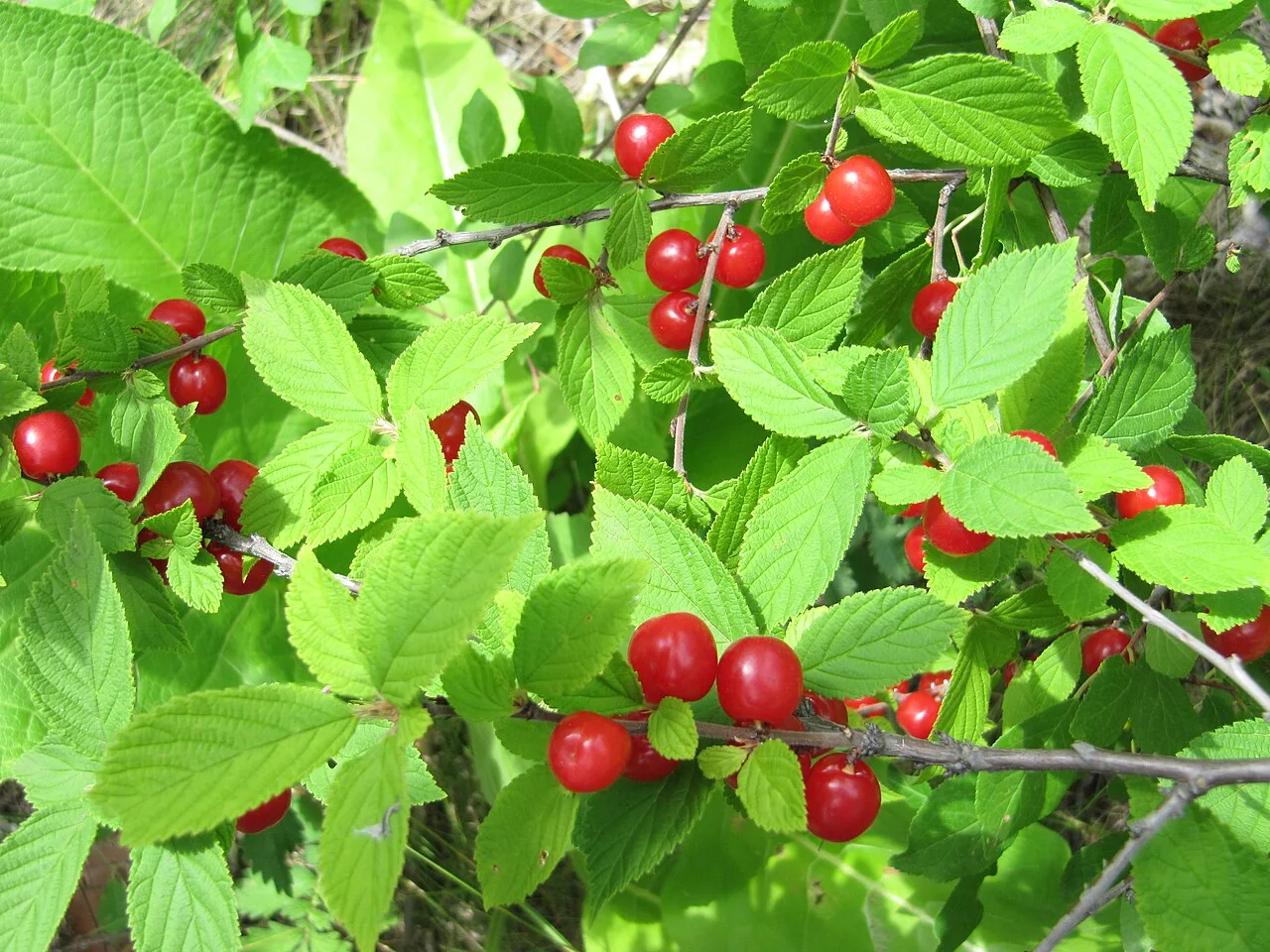
A fruiting Prunus tomentosa plant.
ИринаЯ / Wikimedia Commons / CC BY-SA 4.0
_04.jpg)
Photo details
Resized and converted to WebP. No content edits.
Source: File:Вишня войлочная (Саратов) 04.jpg
Reviewed . Source identification, photograph and license reviewed. The image illustrates the named plant; it does not verify dimensions or other plant traits.
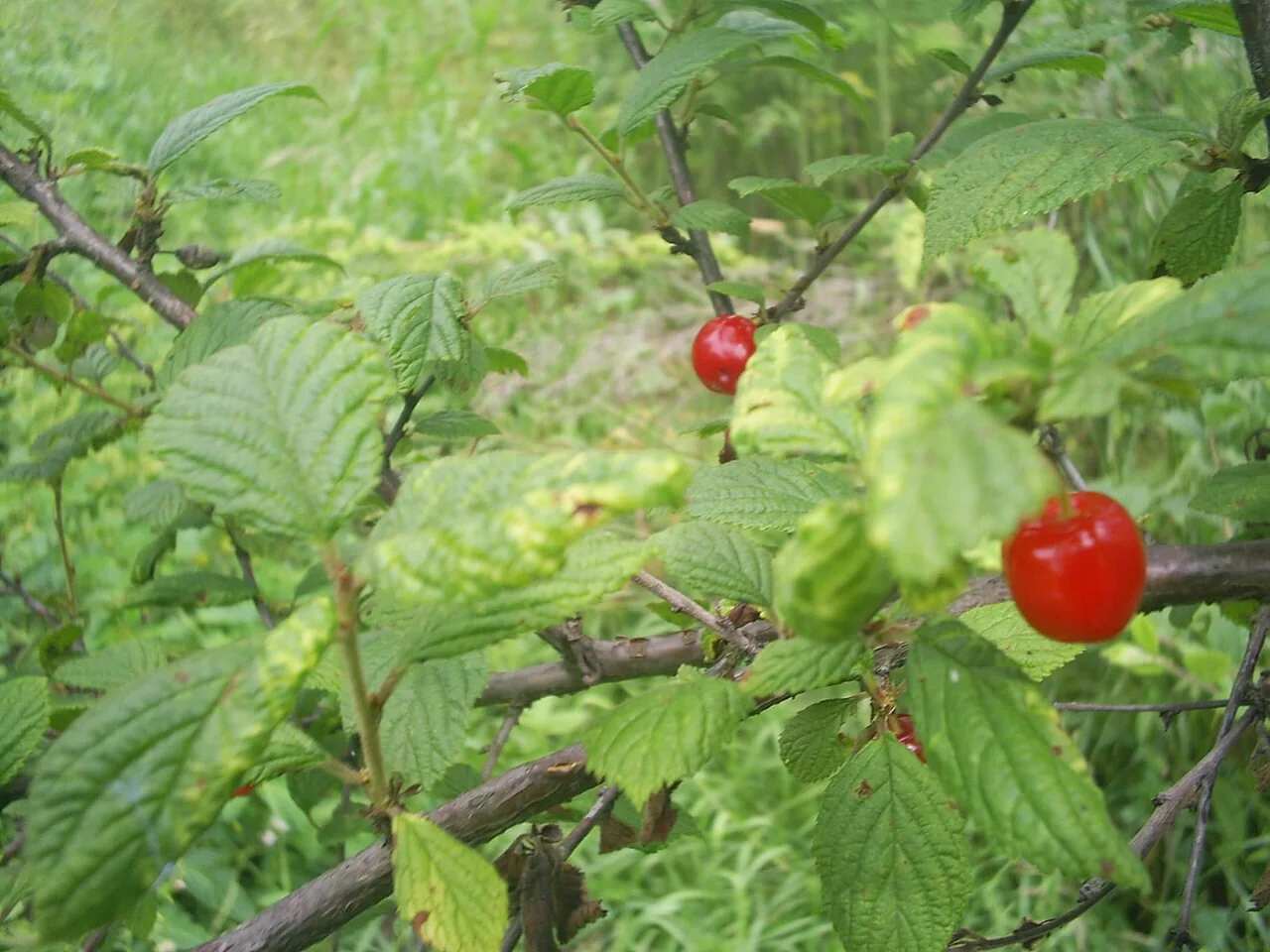
Fruit of Prunus tomentosa.
Ruslan V.Albitsky aka pauk / Wikimedia Commons / CC BY-SA 2.5

Photo details
Resized and converted to WebP. No content edits.
Source: File:Berries and leaves of Prunus Cerasus tomentosa.jpg
Reviewed . Source identification, photograph and license reviewed. The image illustrates the named plant; it does not verify dimensions or other plant traits.
Common names
21 names · 16 languagesOther languages (15)
- Dutch
-
- dwergkers
- Nanking kers
- sierkers
- French
-
- Cerisier de Nankin
- cerisier tomenteux[2]
- Chinese (Simplified)
-
- 毛樱桃[2]
- Chinese (Traditional)
-
- 毛櫻桃[2]
- Czech
-
- višeň plstnatá[2]
- Danish
-
- kinesisk kirsebær[2]
- Estonian
-
- vilt-kirsipuu[2]
- Finnish
-
- nukkakirsikka[2]
- Japanese
-
- ユスラウメ[2]
- Lithuanian
-
- Veltininė kryklė[2]
- Russian
-
- Вишня войлочная[2]
- Slovak
-
- čerešňa plstnatá[2]
- Swedish
-
- luddkörsbär[2]
- Ukrainian
-
- Вишня повстиста[2]
Sources & name notes (2)
Names recorded in our plant catalogue and botanical sources, grouped by language. Usage can vary by region.
Numbered references identify names recorded by an external source. Other names are from our plant catalogue.
Common names from World Plants, version 26.05, reproduced in Catalogue of Life 2026-08-20. License: CC BY.
Source records
- Nanking cherry — VernacularName.tsv, line 168472; taxon 4N99T.
Community-curated iNaturalist taxonomy; common-name attestation, not an independent botanical determination.
Source records
- Nanking Cherry — results[0].names[1]; taxon id 167472; Prunus tomentosa.
- cerisier tomenteux — results[0].names[2]; taxon id 167472; Prunus tomentosa.
- vilt-kirsipuu — results[0].names[3]; taxon id 167472; Prunus tomentosa.
- Вишня войлочная — results[0].names[4]; taxon id 167472; Prunus tomentosa.
- višeň plstnatá — results[0].names[5]; taxon id 167472; Prunus tomentosa.
- ユスラウメ — results[0].names[6]; taxon id 167472; Prunus tomentosa.
- Chinese bush cherry — results[0].names[7]; taxon id 167472; Prunus tomentosa.
- Veltininė kryklė — results[0].names[8]; taxon id 167472; Prunus tomentosa.
- luddkörsbär — results[0].names[9]; taxon id 167472; Prunus tomentosa.
- 毛樱桃 — results[0].names[10]; taxon id 167472; Prunus tomentosa.
- 毛櫻桃 — results[0].names[11]; taxon id 167472; Prunus tomentosa.
- 앵도나무 — results[0].names[12]; taxon id 167472; Prunus tomentosa.
- kinesisk kirsebær — results[0].names[13]; taxon id 167472; Prunus tomentosa.
- Вишня повстиста — results[0].names[14]; taxon id 167472; Prunus tomentosa.
- 앵두나무 — results[0].names[15]; taxon id 167472; Prunus tomentosa.
- nukkakirsikka — results[0].names[16]; taxon id 167472; Prunus tomentosa.
- čerešňa plstnatá — results[0].names[17]; taxon id 167472; Prunus tomentosa.
General information
Plant characteristics
NC State landscape size range; converted from feet and inches. Size varies with site, age and management.
Sources [3]NC State landscape size range; converted from feet and inches. Size varies with site, age and management.
Sources [3]Whole-plant habit and form as described by NC State.
Sources [3]Growing conditions
USDA zones listed by NC State; winter survival does not establish reliable cropping.
Sources [3]Uses
Fruit, Leaves, Seed
Dye
Description
Fruit - eaten raw or cooked. It is juicy and has a lightly sweet taste. Unripe fruits can be canned. The fruit is about 12 mm in diameter and contains a large seed. The seed can be eaten raw or cooked, but if it tastes too bitter, do not eat it due to its toxicity. The buds are prepared and eaten. (This refers to the flower or leaf buds).
Harvest
Sources and references
References for the information marked with source numbers on this page.
-
Royal Botanic Gardens, Kew
World Checklist of Vascular Plants, version 16, extracted 4 June 2026
Relevant sections
- Botanical family: WCVP v16, wcvp_names.csv row 343710; name ID 2958711; Prunus L.. Family column.
- Taxonomy: WCVP v16, wcvp_names.csv row 319514; name ID 2962226; Prunus tomentosa Thunb..
Source checked on .
Source data licence: CC BY 3.0.
-
Catalogue of Life
Catalogue of Life 2026-08-20 — Prunus tomentosa
Taxonomic data from World Plants, version 26.05, reproduced in Catalogue of Life 2026-08-20.
Supports: TaxonomyRelevant sections
- Taxonomy: COL 2026-08-20, NameUsage.tsv line 1041971, ID 4N99T: Prunus tomentosa Thunb. (accepted).
Source checked on .
-
NC State Extension, North Carolina State University
Prunus tomentosa — Extension Gardener Plant Toolbox
Supports: HeightSpreadGrowth rateFoliageGrowth habitLightSoil moistureSoil textureSoil pHUSDA hardiness
Relevant sections
- Height: Dimensions > Height; Height: 6 ft. 0 in. - 10 ft. 0 in.
- Spread: Dimensions > Width; Width: 6 ft. 0 in. - 15 ft. 0 in.
- Growth rate: Growth Rate
- Foliage: Woody Plant Leaf Characteristics
- Growth habit: Habit/Form
- Light: Light
- Soil moisture: Soil Drainage
- Soil texture: Soil Texture
- Soil pH: Soil pH
- USDA hardiness: USDA Plant Hardiness Zone
Source checked on .