Primula veris
Cowslip, Cowslip primrose
Explore the size, hardiness, soil, light, edible uses and harvest period of Primula veris.
Plant photos
2 photos · Select to enlarge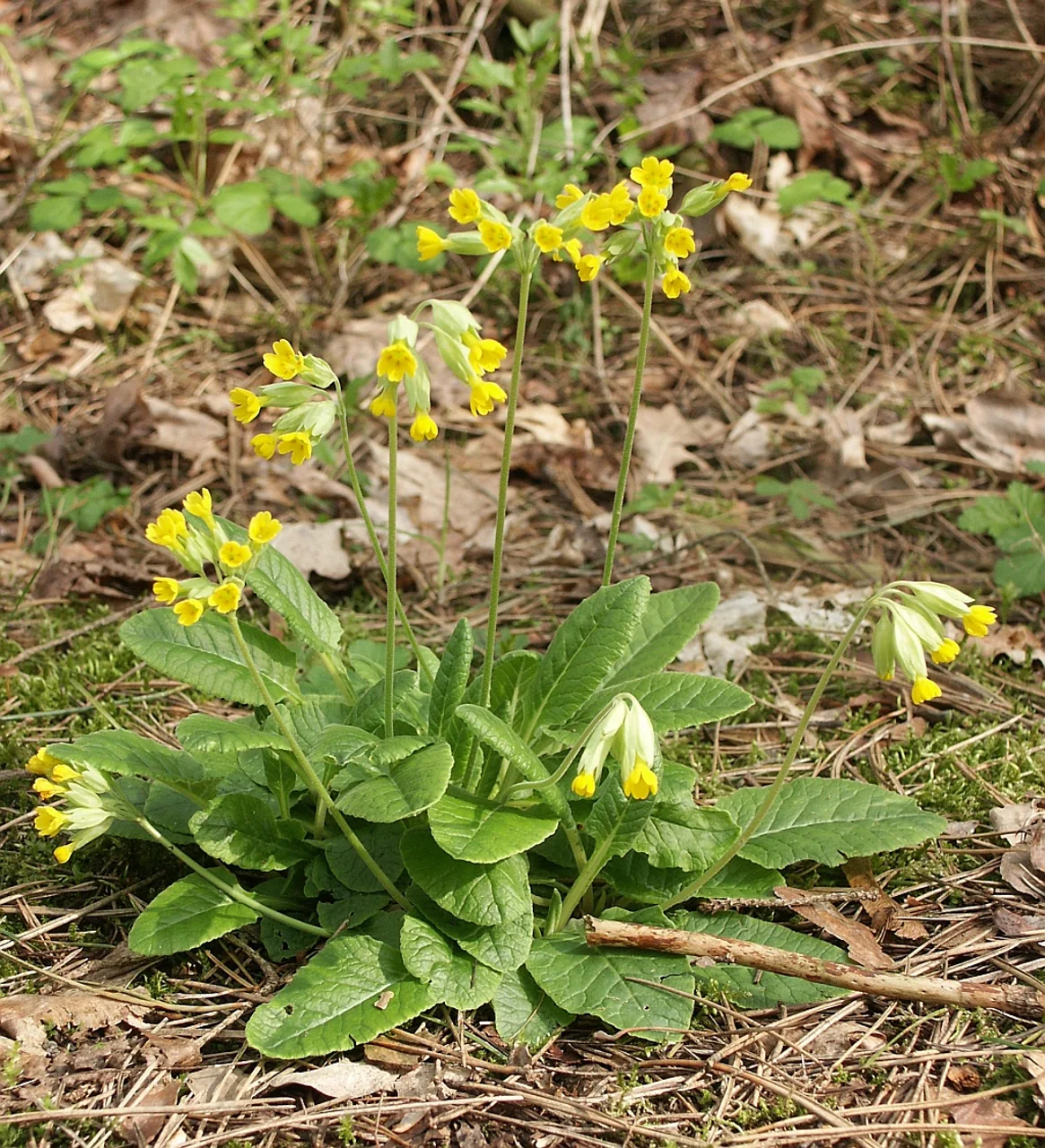
Primula veris in flower.
Picture taken by BerndH / Wikimedia Commons / CC BY-SA 3.0

Photo details
Resized and converted to WebP. No content edits.
Source: File:Primula veris 230405.jpg
Reviewed . Source identification, photograph and license reviewed. The image illustrates the named plant; it does not verify dimensions or other plant traits.
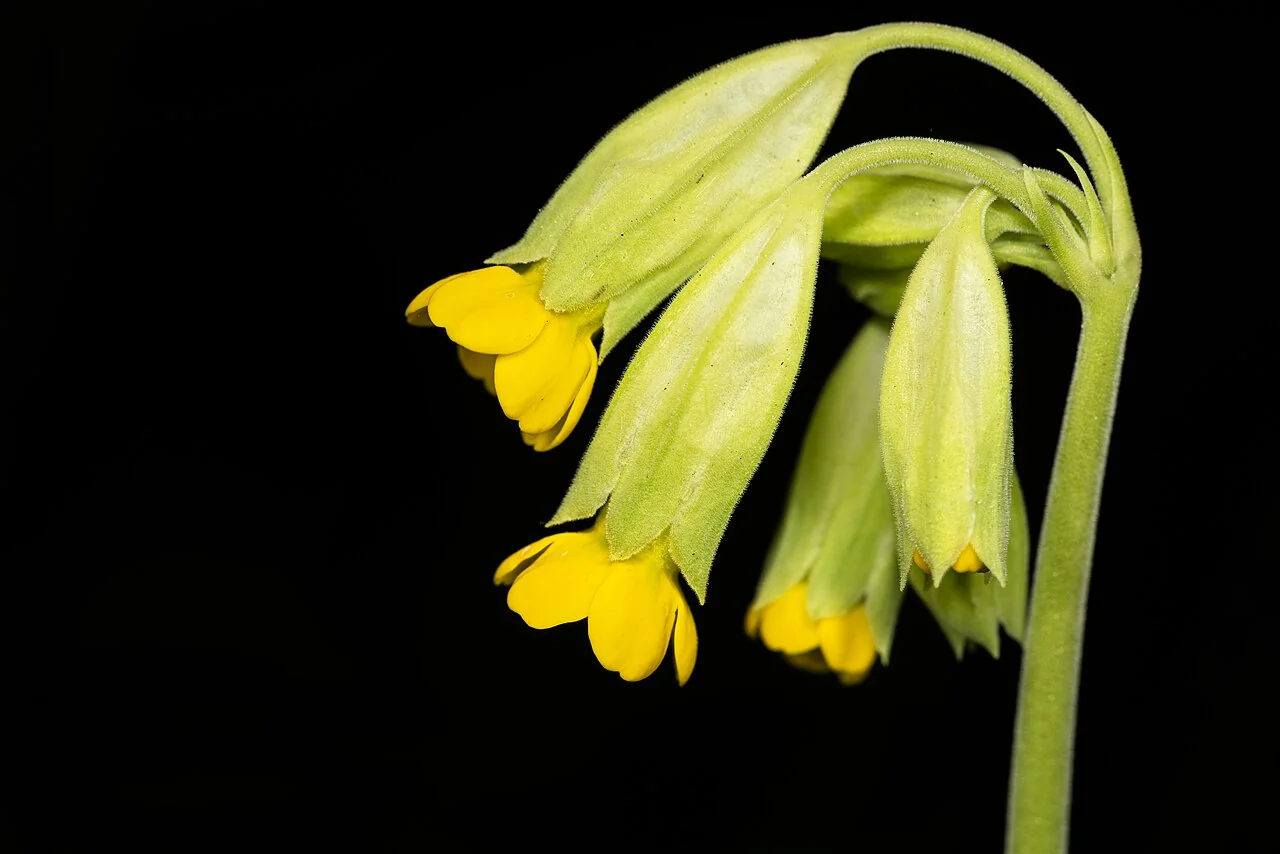
Flowers of Primula veris.
Горбунова М.С. / Wikimedia Commons / CC BY-SA 4.0

Photo details
Resized and converted to WebP. No content edits.
Source: File:Primula veris flowers.jpg
Reviewed . Source identification, photograph and license reviewed. The image illustrates the named plant; it does not verify dimensions or other plant traits.
Common names
48 names · 35 languages- EnglishYour language
-
- Cowslip[1]
- Cowslip primrose
Other languages (34)
- Dutch
-
- Echte sleutelbloem
- Gewone sleutelbloem
- Gulden sleutelbloem[1]
- Armenian
-
- Գնարբուկ գարնանային[1]
- Basque
-
- Udaberri lore usainduna[1]
- Belarusian
-
- Першацвет веснавы[1]
- Chinese (Simplified)
-
- 黄花九轮草[1]
- Chinese (Traditional)
-
- 黃花九輪草[1]
- Croatian
-
- Proljetni jaglac[1]
- Czech
-
- prvosenka jarní[1]
- Danish
-
- Hulkravet kodriver[1]
- Estonian
-
- nurmenukk[1]
- Finnish
-
- Kevätesikko[1]
- German
-
+1 more nameShow fewer names
- Wiesenschlüsselblume[1]
- Greek
-
- Πρίμουλα η εαρινή[1]
- Hungarian
-
- Tavaszi kankalin[1]
- Irish
-
- Bainne bó bleachtáin[1]
- Italian
-
- Primula odorosa[1]
- Latvian
-
- Gaiļbiksīte[1]
- Lithuanian
-
- Pavasarinė raktažolė[1]
- Macedonian
-
- Јаглика[1]
- Norwegian
-
- marianøkleblom[1]
- Polish
-
- Pierwiosnek lekarski[1]
- Romanian
-
- Ciuboțica cucului[1]
- Russian
-
+1 more nameShow fewer names
- Примула весенняя[1]
- Slovak
-
- prvosienka jarná[1]
- Slovenian
-
- pomladanski jeglič[1]
- Spanish
-
- prímula olorosa[1]
- Swedish
-
- Gullviva[1]
- Turkish
-
- Tutya[1]
- Ukrainian
-
- первоцвіт весняний[1]
- Welsh
-
- Briallen Fair Sawrus[1]
Sources & name notes (1)
Names recorded in our plant catalogue and botanical sources, grouped by language. Usage can vary by region.
Numbered references identify names recorded by an external source. Other names are from our plant catalogue.
Community-curated iNaturalist taxonomy; common-name attestation, not an independent botanical determination.
Source records
- Gulden sleutelbloem — results[0].names[1]; taxon id 55819; Primula veris.
- Cowslip — results[0].names[2]; taxon id 55819; Primula veris.
- Gullviva — results[0].names[3]; taxon id 55819; Primula veris.
- Echte Schlüsselblume — results[0].names[4]; taxon id 55819; Primula veris.
- Frühlings-Schlüsselblume — results[0].names[6]; taxon id 55819; Primula veris.
- Wiesen-Schlüsselblume — results[0].names[7]; taxon id 55819; Primula veris.
- Первоцвет весенний — results[0].names[8]; taxon id 55819; Primula veris.
- Первоцвет лекарственный — results[0].names[9]; taxon id 55819; Primula veris.
- Первоцвет настоящий — results[0].names[10]; taxon id 55819; Primula veris.
- Примула весенняя — results[0].names[11]; taxon id 55819; Primula veris.
- Першацвет веснавы — results[0].names[12]; taxon id 55819; Primula veris.
- Primevère officinale — results[0].names[13]; taxon id 55819; Primula veris.
- Coucou — results[0].names[14]; taxon id 55819; Primula veris.
- Kevätesikko — results[0].names[15]; taxon id 55819; Primula veris.
- Cucut — results[0].names[16]; taxon id 55819; Primula veris.
- Schlësselblumm — results[0].names[17]; taxon id 55819; Primula veris.
- Pierwiosnek lekarski — results[0].names[18]; taxon id 55819; Primula veris.
- prvosenka jarní — results[0].names[19]; taxon id 55819; Primula veris.
- Πρίμουλα η εαρινή — results[0].names[20]; taxon id 55819; Primula veris.
- marianøkleblom — results[0].names[21]; taxon id 55819; Primula veris.
- Hulkravet kodriver — results[0].names[22]; taxon id 55819; Primula veris.
- prímula olorosa — results[0].names[23]; taxon id 55819; Primula veris.
- Proljetni jaglac — results[0].names[24]; taxon id 55819; Primula veris.
- Gaiļbiksīte — results[0].names[25]; taxon id 55819; Primula veris.
- Pavasarinė raktažolė — results[0].names[26]; taxon id 55819; Primula veris.
- Tavaszi kankalin — results[0].names[27]; taxon id 55819; Primula veris.
- Wiesenschlüsselblume — results[0].names[28]; taxon id 55819; Primula veris.
- nurmenukk — results[0].names[29]; taxon id 55819; Primula veris.
- prvosienka jarná — results[0].names[30]; taxon id 55819; Primula veris.
- 黄花九轮草 — results[0].names[31]; taxon id 55819; Primula veris.
- Guckucksblumm — results[0].names[32]; taxon id 55819; Primula veris.
- Ciuboțica cucului — results[0].names[33]; taxon id 55819; Primula veris.
- первоцвіт весняний — results[0].names[34]; taxon id 55819; Primula veris.
- 黃花九輪草 — results[0].names[35]; taxon id 55819; Primula veris.
- pomladanski jeglič — results[0].names[36]; taxon id 55819; Primula veris.
- Գնարբուկ գարնանային — results[0].names[37]; taxon id 55819; Primula veris.
- Јаглика — results[0].names[38]; taxon id 55819; Primula veris.
- комбочапа — results[0].names[39]; taxon id 55819; Primula veris.
- комбойолшудо — results[0].names[40]; taxon id 55819; Primula veris.
- Primula odorosa — results[0].names[41]; taxon id 55819; Primula veris.
- Bainne bó bleachtáin — results[0].names[42]; taxon id 55819; Primula veris.
- Prímula vera — results[0].names[43]; taxon id 55819; Primula veris.
- Briallen Fair Sawrus — results[0].names[44]; taxon id 55819; Primula veris.
- Udaberri lore usainduna — results[0].names[45]; taxon id 55819; Primula veris.
- Tutya — results[0].names[46]; taxon id 55819; Primula veris.
General information
Growing conditions
USDA zones listed by NC State; winter survival does not establish reliable cropping.
Sources [3]Sand (light) Loam (medium) Clay (heavy)
Uses
Leaves, Flowers, Tea
Fragrant
Description
Young leaves of this plant can be eaten raw or cooked in soups and other dishes. Although they are not very tasty, they are available in late winter, which somewhat increases their value. The fresh or dried leaves are often used as a substitute for tea. The flowers can be eaten raw, cooked, or added to preserves and can serve as a garnish. They make a beautiful addition to salads. This plant species has become significantly less common over the past century due to habitat destruction, excessive foraging, and agricultural practices. In the past, the flowers were harvested in large quantities in the spring when they were more abundant. They were used to make a tasty wine with calming properties. A related species, Primula elatior, is listed by the Council of Europe as a natural food flavoring.
Harvest
Sources and references
References for the information marked with source numbers on this page.
-
Royal Botanic Gardens, Kew
World Checklist of Vascular Plants, version 16, extracted 4 June 2026
Relevant sections
- Botanical family: WCVP v16, wcvp_names.csv row 312270; name ID 2564986; Primula L.. Family column.
- Taxonomy: WCVP v16, wcvp_names.csv row 311928; name ID 2563733; Primula veris L..
Source checked on .
Source data licence: CC BY 3.0.
-
Catalogue of Life
Catalogue of Life 2026-08-20 — Primula veris
Taxonomic data from World Plants, version 26.05, reproduced in Catalogue of Life 2026-08-20.
Supports: TaxonomyRelevant sections
- Taxonomy: COL 2026-08-20, NameUsage.tsv line 1022849, ID 4MDK3: Primula veris L. (accepted).
Source checked on .
-
NC State Extension, North Carolina State University
Primula veris — Extension Gardener Plant Toolbox
Relevant sections
- Foliage: Woody Plant Leaf Characteristics
- Life cycle: Life Cycle
- Light: Light
- Soil moisture: Soil Drainage
- Soil pH: Soil pH
- USDA hardiness: USDA Plant Hardiness Zone
Source checked on .