Populus x canadensis
Canadian poplar, Carolina poplar
Explore the size, hardiness, soil, light, harvest period and uses of Populus x canadensis.
Plant photos
2 photos · Select to enlarge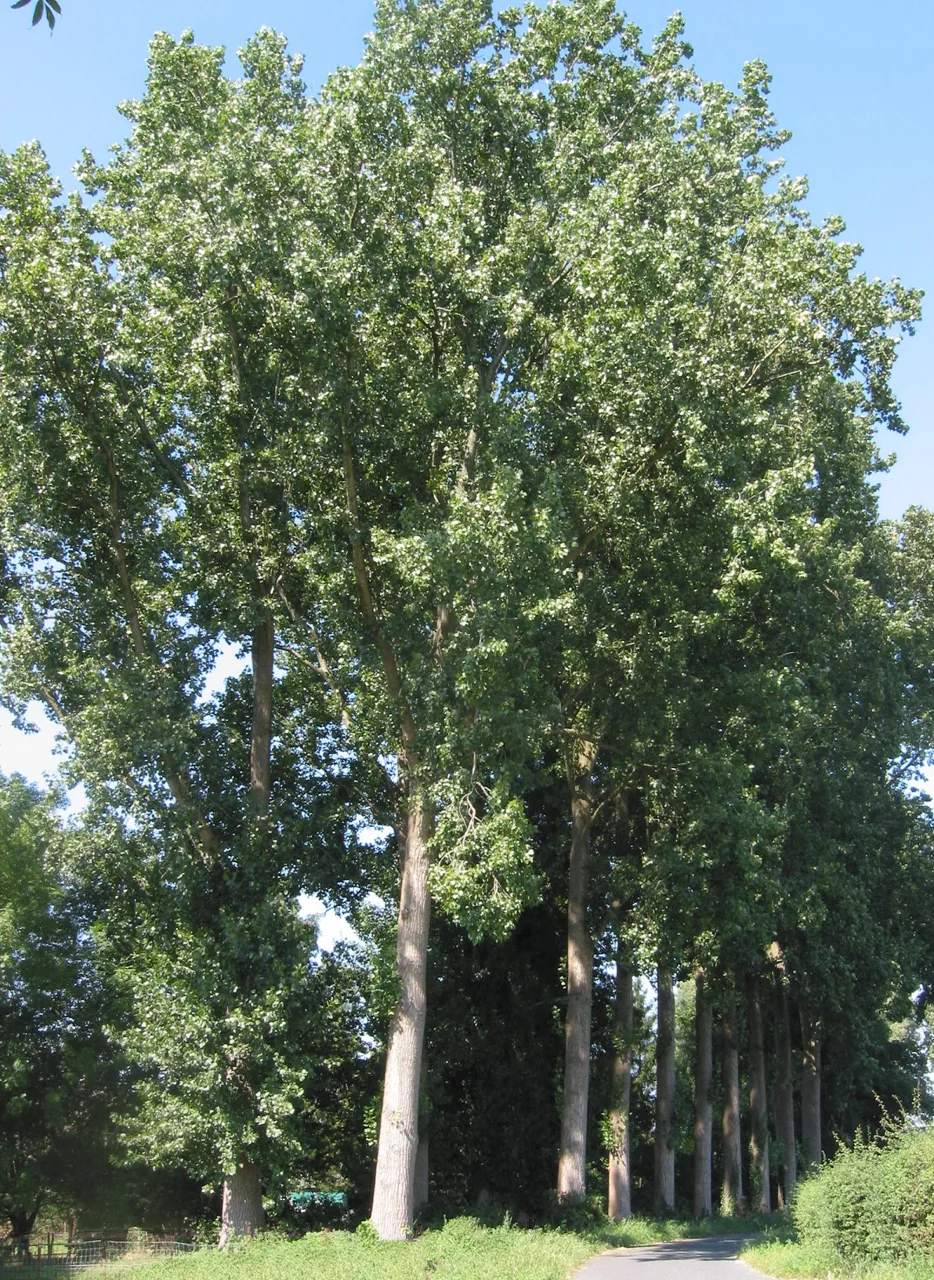
A Populus × canadensis tree.
Rasbak / Wikimedia Commons / CC BY-SA 3.0

Photo details
Resized and converted to WebP. No content edits.
Source: File:Populier Populus canadensis.jpg
Reviewed . Source identification, photograph and license reviewed. The image illustrates the named plant; it does not verify dimensions or other plant traits.
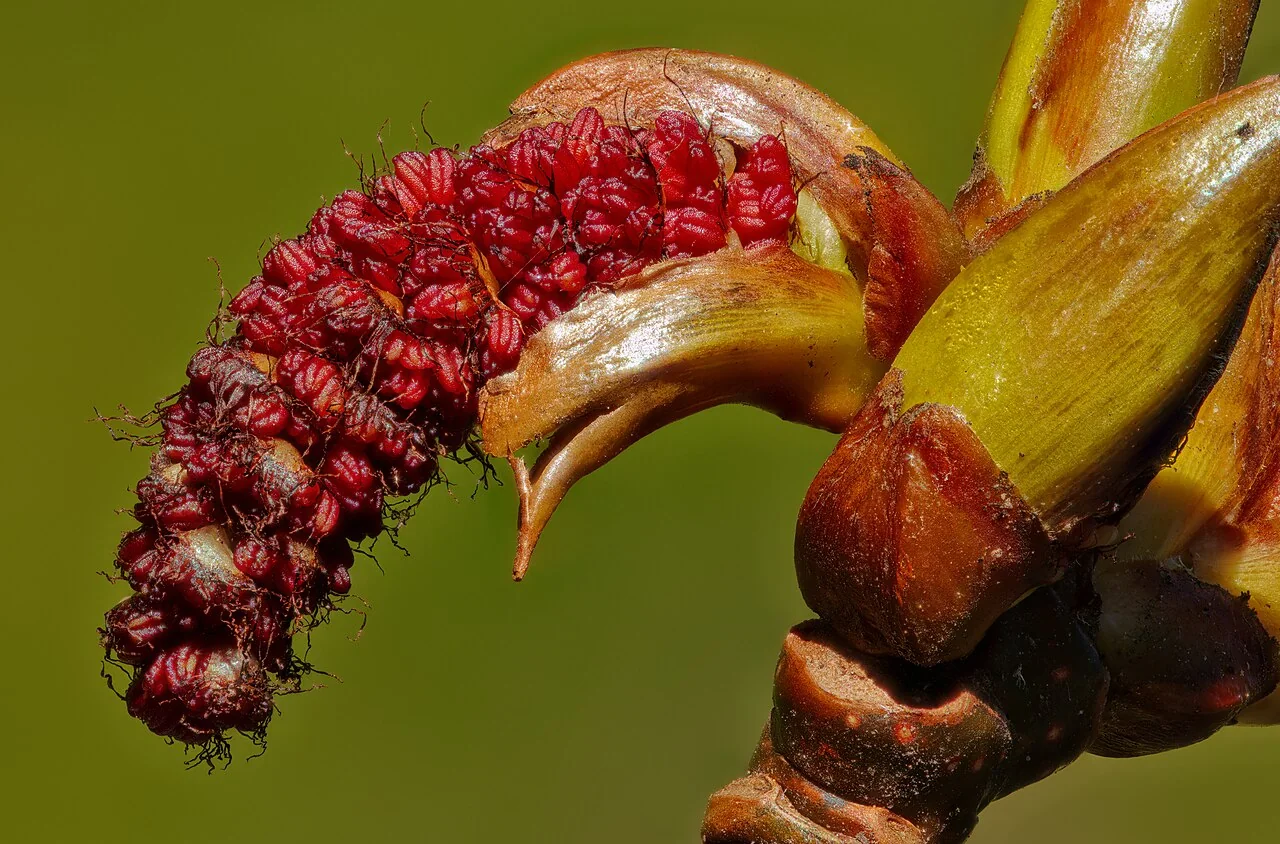
Catkins of Populus × canadensis.
Ursula Jaeger / Wikimedia Commons / CC BY-SA 4.0

Photo details
Resized and converted to WebP. No content edits.
Source: File:Bastard-Schwarz-Pappel knospender Blütenstand 3.jpg
Reviewed . Source identification, photograph and license reviewed. The image illustrates the named plant; it does not verify dimensions or other plant traits.
Common names
8 names · 4 languagesOther languages (3)
- Dutch
-
- Canadapopulier
- Canadese populier
- Euramerikaanse populier
- French
-
- Peuplier du Canada
- German
-
- Kanadische Hybridpappel[1]
Sources & name notes (1)
Names recorded in our plant catalogue and botanical sources, grouped by language. Usage can vary by region.
Numbered references identify names recorded by an external source. Other names are from our plant catalogue.
Common names from World Plants, version 26.05, reproduced in Catalogue of Life 2026-08-20. License: CC BY.
Source records
- Carolina poplar — VernacularName.tsv, line 161557; taxon 4LVK9.
- Hybrid Black-poplar (EN) — VernacularName.tsv, line 161558; taxon 4LVK9.
- Kanadische Hybridpappel (DE) — VernacularName.tsv, line 161559; taxon 4LVK9.
General information
Plant characteristics
Growing conditions
Moist
Sand (light) Loam (medium) Clay (heavy)
Acidic Neutral Alkaline
Full sun
Uses
-
Pioneer species, Windbreak, Wood
Description
An extract from the shoots can be used as a rooting hormone for various types of cuttings. It is obtained by soaking the chopped shoots in cold water for one day. This fast-growing and wind-resistant tree can be used in windbreaks. In more exposed locations, some form of wind shaping occurs. The tree foliage appears late, often helping it to evade spring storms. The wood is soft, fairly fuzzy in texture, odorless and tasteless, has low flammability, is not durable but very resistant to wear. It is used for making staves for barrels and wood products, it turns well. It makes an excellent fuel.
Harvest
Crown
Sources and references
References for the information marked with source numbers on this page.
-
Royal Botanic Gardens, Kew
World Checklist of Vascular Plants, version 16, extracted 4 June 2026
Relevant sections
- Taxonomy: WCVP version 16, wcvp_names.csv: Populus × canadensis Moench, name ID 2921452, row 222073; Populus canadensis F.Michx., name ID 2917354, row 847528
- Botanical family: WCVP v16, wcvp_names.csv row 1426848; name ID 2917745; Populus L.. Family column.
Source checked on .
Source data licence: CC BY 3.0.
-
Catalogue of Life
Catalogue of Life 2026-08-20 — Populus × canadensis
Taxonomic data from World Plants, version 26.05, reproduced in Catalogue of Life 2026-08-20.
Supports: TaxonomyRelevant sections
- Taxonomy: COL 2026-08-20, NameUsage.tsv line 1011171, ID 4LVK9: Populus × canadensis Moench (accepted).
Source checked on .