Pinus koraiensis
Korean Nut Pine
Explore the size, hardiness, soil, light, edible uses and harvest period of Pinus koraiensis.
Plant photos
2 photos · Select to enlarge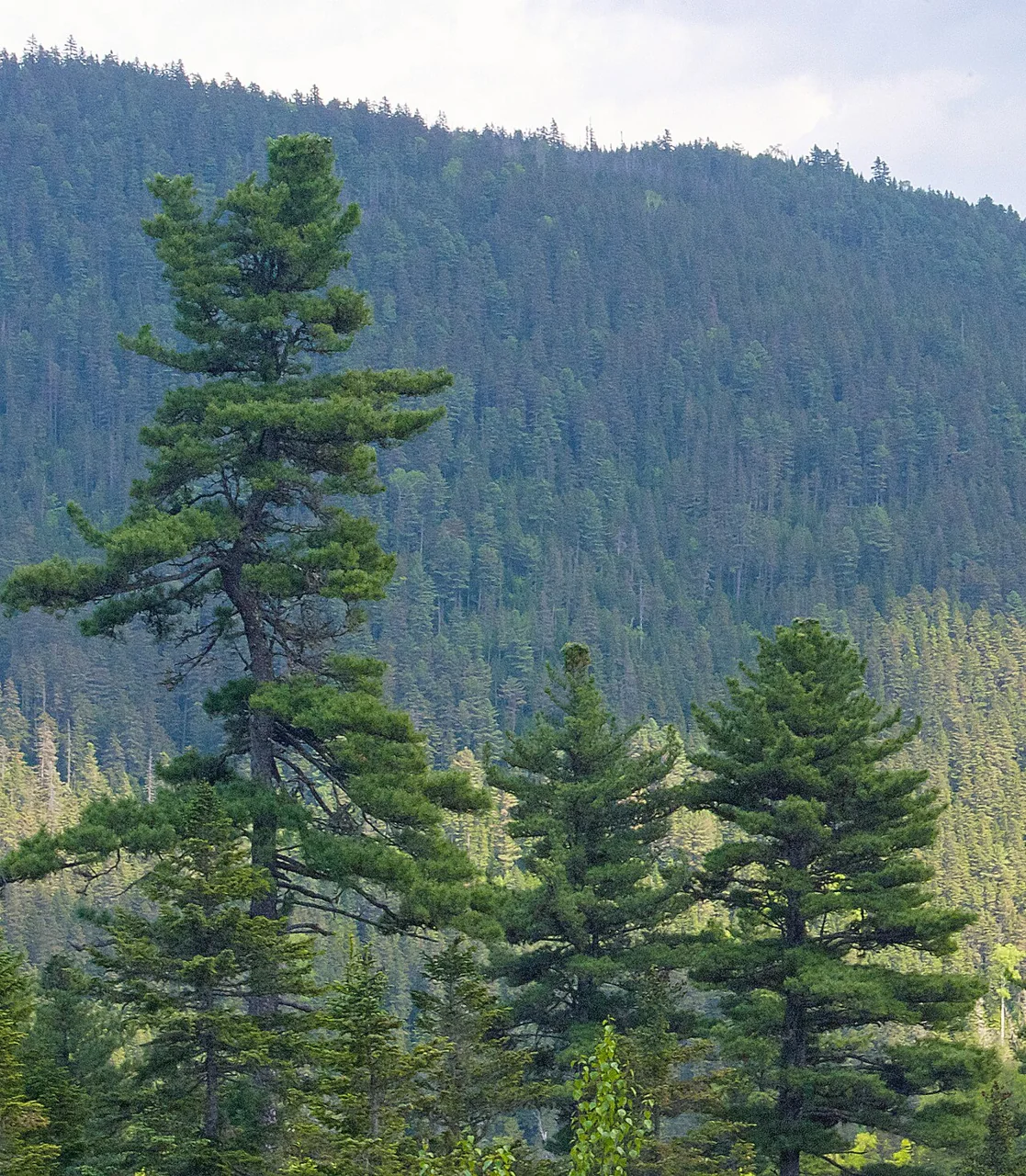
A Pinus koraiensis tree.
Original: Olga Ukhvatkina ; edit: MPF / Wikimedia Commons / CC BY-SA 4.0

Photo details
Resized and converted to WebP. No content edits.
Source: File:Pinus koraiensis, Cheremshany, Sikhote Alin, Russia.jpg
Reviewed . Source identification, photograph and license reviewed. The image illustrates the named plant; it does not verify dimensions or other plant traits.
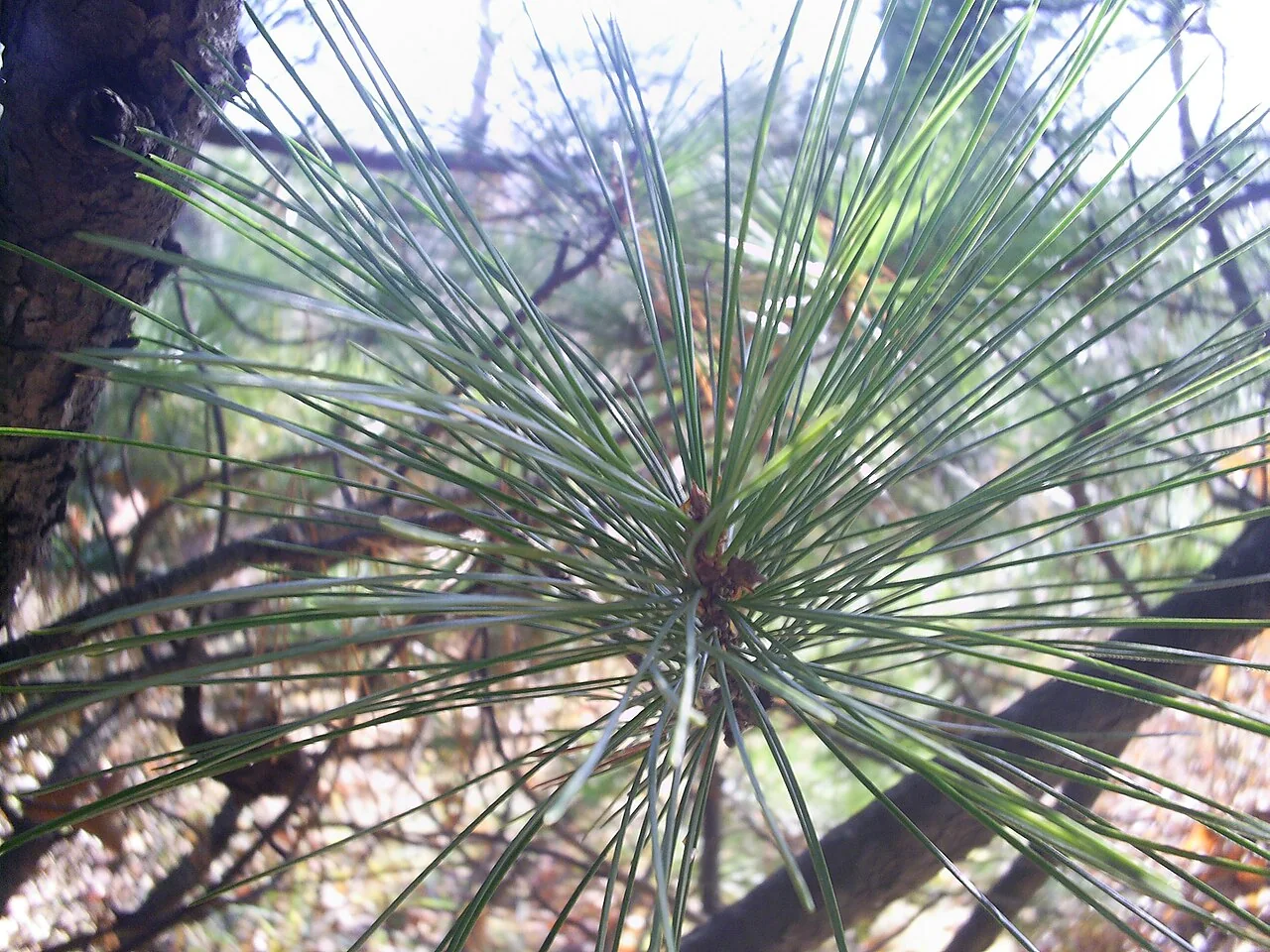
Leaves of Pinus koraiensis.
Pauk / Wikimedia Commons / CC BY-SA 4.0

Photo details
Resized and converted to WebP. No content edits.
Source: File:Pinus koraiensis in Sikhote-Alin.jpg
Reviewed . Source identification, photograph and license reviewed. The image illustrates the named plant; it does not verify dimensions or other plant traits.
Common names
23 names · 18 languagesOther languages (17)
- Dutch
-
- Koreaanse den
- Chinese (Simplified)
-
- 红松[1]
- Czech
-
- borovice korejská[1]
- Danish
-
- koreafyr[1]
- Finnish
-
- koreansembra[1]
- German
-
- Korea-Kiefer[1]
- Hungarian
-
- koreai selyemfenyő[1]
- Japanese
-
- チョウセンゴヨウ[1]
- Korean
-
- 잣나무[1]
- Lithuanian
-
- Korėjinė pušis[1]
- Polish
-
- Sosna koreańska[1]
- Russian
-
- Сосна корейская[1]
- Slovak
-
- borovica kórejská[1]
- Spanish
-
- pino de Corea[1]
- Turkish
-
- Kore Çamı[1]
Sources & name notes (1)
Names recorded in our plant catalogue and botanical sources, grouped by language. Usage can vary by region.
Numbered references identify names recorded by an external source. Other names are from our plant catalogue.
Community-curated iNaturalist taxonomy; common-name attestation, not an independent botanical determination.
Source records
- Korean pine — results[0].names[1]; taxon id 52392; Pinus koraiensis.
- pino de Corea — results[0].names[2]; taxon id 52392; Pinus koraiensis.
- borovice korejská — results[0].names[3]; taxon id 52392; Pinus koraiensis.
- 잣나무 — results[0].names[4]; taxon id 52392; Pinus koraiensis.
- チョウセンゴヨウ — results[0].names[5]; taxon id 52392; Pinus koraiensis.
- Сосна корейская — results[0].names[6]; taxon id 52392; Pinus koraiensis.
- 紅松 — results[0].names[7]; taxon id 52392; Pinus koraiensis.
- Korėjinė pušis — results[0].names[8]; taxon id 52392; Pinus koraiensis.
- Sosna koreańska — results[0].names[9]; taxon id 52392; Pinus koraiensis.
- 红松 — results[0].names[10]; taxon id 52392; Pinus koraiensis.
- 果松 — results[0].names[11]; taxon id 52392; Pinus koraiensis.
- Korean white pine — results[0].names[12]; taxon id 52392; Pinus koraiensis.
- Korean nut pine — results[0].names[13]; taxon id 52392; Pinus koraiensis.
- Manchurian white pine — results[0].names[14]; taxon id 52392; Pinus koraiensis.
- koreafyr — results[0].names[15]; taxon id 52392; Pinus koraiensis.
- Pin blanc de Corée — results[0].names[16]; taxon id 52392; Pinus koraiensis.
- Pin de Corée — results[0].names[17]; taxon id 52392; Pinus koraiensis.
- koreansembra — results[0].names[18]; taxon id 52392; Pinus koraiensis.
- koreai selyemfenyő — results[0].names[19]; taxon id 52392; Pinus koraiensis.
- borovica kórejská — results[0].names[20]; taxon id 52392; Pinus koraiensis.
- Korea-Kiefer — results[0].names[21]; taxon id 52392; Pinus koraiensis.
- Kore Çamı — results[0].names[22]; taxon id 52392; Pinus koraiensis.
General information
Plant characteristics
NC State landscape size range; converted from feet and inches. Size varies with site, age and management.
Sources [3]NC State landscape size range; converted from feet and inches. Size varies with site, age and management.
Sources [3]Growing conditions
USDA zones listed by NC State; winter survival does not establish reliable cropping.
Sources [3]Acidic Neutral
Uses
Oil, Seed
Dye, Herbicide, Oil, Wood, Carbon farming
Description
Seeds: can be consumed raw or cooked. They are rich in oil and have a soft texture, similar to resin in flavor. These seeds can be enjoyed as a tasty snack, or dried and ground into powder for use as a flavor enhancer or thickener in soups and more. The fairly large seeds measure approximately 16 by 12 mm. An aroma of vanillin can be obtained from the resin.
Harvest
Crown
The mature tree retains a loose pyramidal overall form.
Sources [3]Sources and references
References for the information marked with source numbers on this page.
-
Royal Botanic Gardens, Kew
World Checklist of Vascular Plants, version 16, extracted 4 June 2026
Relevant sections
- Botanical family: WCVP v16, wcvp_names.csv row 836404; name ID 380659; Pinus L.. Family column.
- Taxonomy: WCVP v16, wcvp_names.csv row 1217495; name ID 379695; Pinus koraiensis Siebold & Zucc..
Source checked on .
Source data licence: CC BY 3.0.
-
Catalogue of Life
Catalogue of Life 2026-08-20 — Pinus koraiensis
Taxonomic data from WFO Pinopsida, version 2026-06 01, reproduced in Catalogue of Life 2026-08-20.
Supports: TaxonomyRelevant sections
- Taxonomy: COL 2026-08-20, NameUsage.tsv line 948434, ID 4J29P: Pinus koraiensis Siebold & Zucc. (accepted).
Source checked on .
-
NC State Extension, North Carolina State University
Pinus koraiensis — Extension Gardener Plant Toolbox
Supports: Crown shapeHeightSpreadGrowth rateFoliageGrowth habitLightSoil moistureSoil textureUSDA hardiness
Relevant sections
- Crown shape: Description: crown architecture
- Height: Dimensions > Height; Height: 30 ft. 0 in. - 40 ft. 0 in.
- Spread: Dimensions > Width; Width: 15 ft. 0 in. - 20 ft. 0 in.
- Growth rate: Growth Rate
- Foliage: Woody Plant Leaf Characteristics
- Growth habit: Habit/Form
- Light: Light
- Soil moisture: Soil Drainage
- Soil texture: Soil Texture
- USDA hardiness: USDA Plant Hardiness Zone
Source checked on .