Pinus cembroides
Pinon pine
Explore the size, hardiness, soil, light, edible uses and harvest period of Pinus cembroides.
Plant photos
2 photos · Select to enlarge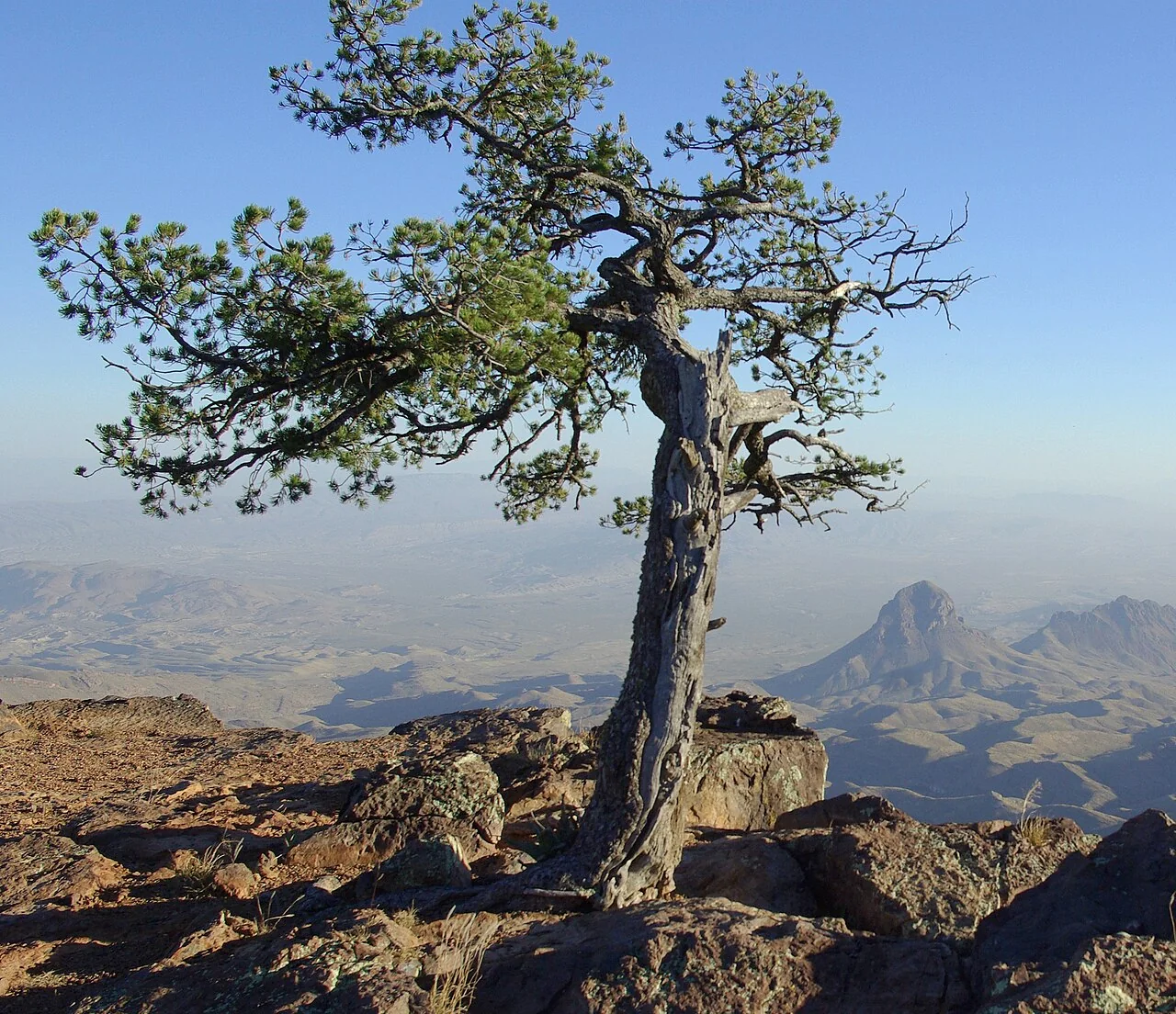
A Pinus cembroides tree.
Adam Baker from Houston / Moscow / Toulouse (travel a lot) / Wikimedia Commons / CC BY 2.0

Photo details
Resized and converted to WebP. No content edits.
Source: File:Pinus cembroides Chisos 1.jpg
Reviewed . Source identification, photograph and license reviewed. The image illustrates the named plant; it does not verify dimensions or other plant traits.
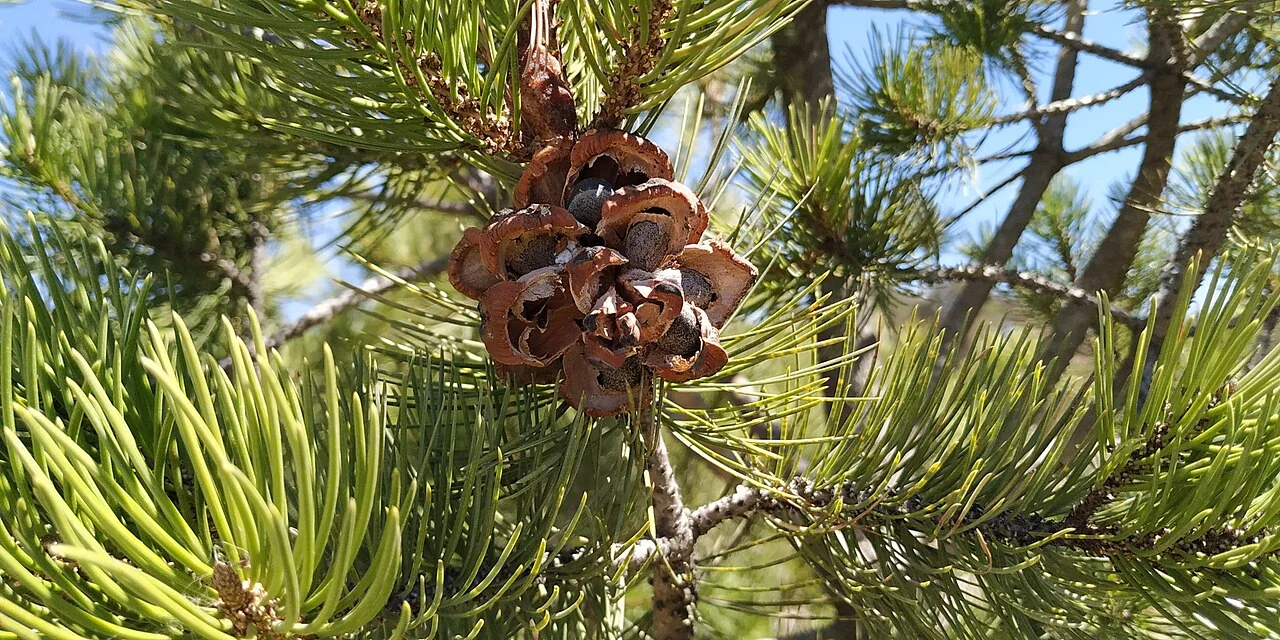
Cones of Pinus cembroides.
tereso30 / Wikimedia Commons / CC BY 4.0

Photo details
Resized and converted to WebP. No content edits.
Source: File:Pinus cembroides, San Felipe, Guanajuato, Mexico 1.jpg
Reviewed . Source identification, photograph and license reviewed. The image illustrates the named plant; it does not verify dimensions or other plant traits.
Common names
16 names · 12 languagesOther languages (11)
Sources & name notes (1)
Names recorded in our plant catalogue and botanical sources, grouped by language. Usage can vary by region.
Numbered references identify names recorded by an external source. Other names are from our plant catalogue.
Community-curated iNaturalist taxonomy; common-name attestation, not an independent botanical determination.
Source records
- pino piñonero — results[2].names[1]; taxon id 57903; Pinus cembroides.
- bishicuri — results[2].names[2]; taxon id 57903; Pinus cembroides.
- Mexican pinyon — results[2].names[3]; taxon id 57903; Pinus cembroides.
- pinyon pine — results[2].names[4]; taxon id 57903; Pinus cembroides.
- Сосна кедровидная — results[2].names[5]; taxon id 57903; Pinus cembroides.
- borovice limbovitá — results[2].names[6]; taxon id 57903; Pinus cembroides.
- 墨西哥矮松 — results[2].names[7]; taxon id 57903; Pinus cembroides.
- 墨西哥矮松 — results[2].names[8]; taxon id 57903; Pinus cembroides.
- 墨西哥果松 — results[2].names[9]; taxon id 57903; Pinus cembroides.
- Pin faux cembro — results[2].names[10]; taxon id 57903; Pinus cembroides.
- borovica limbovitá — results[2].names[11]; taxon id 57903; Pinus cembroides.
- Mexikanische Nusskiefer — results[2].names[12]; taxon id 57903; Pinus cembroides.
- Amerika Fıstık Çamı — results[2].names[13]; taxon id 57903; Pinus cembroides.
General information
Accepted in the cited Kew taxonomic treatment.
Sources [1]Plant characteristics
Growing conditions
Well-drained, Moist
Sand (light) Loam (medium) Clay (heavy)
Acidic Neutral
Full sun
Uses
Oil, Seed, Inner bark
Adhesive, Dye, Herbicide, Wood, Carbon farming
Description
The seeds of Pinus Pinea, also known as pine nuts, have an oily core that can be eaten raw or roasted, or ground into flour for baking bread and pastries. You can even make a nut cheese from them due to their excellent flavor. These seeds are a good size, up to 15 mm long. They are known for their high protein content of 14.6%, fat content of 62%, and 17.3% carbohydrates. Pine nuts are an important source of seeds in Mexico. The bark of this tree is used only in emergencies. Although there is little information available, the bark is typically dried, ground into powder, and used as a thickening agent in soups or added to grains during bread baking. During this process, a vanillin aroma is released as a byproduct of other resins that are released from the wood.
Harvest
Crown
Sources and references
References for the information marked with source numbers on this page.
-
Royal Botanic Gardens, Kew
World Checklist of Vascular Plants, version 16, extracted 4 June 2026
Relevant sections
- Botanical family: WCVP v16, wcvp_names.csv row 836404; name ID 380659; Pinus L.. Family column.
- Taxonomy: WCVP v16, wcvp_names.csv row 1218299; name ID 380484; Pinus cembroides Zucc..
Source checked on .
Source data licence: CC BY 3.0.