Peltaria alliacea
Garlic cress
Explore the size, hardiness, soil, light, edible uses and harvest period of Peltaria alliacea.
Plant photos
2 photos · Select to enlarge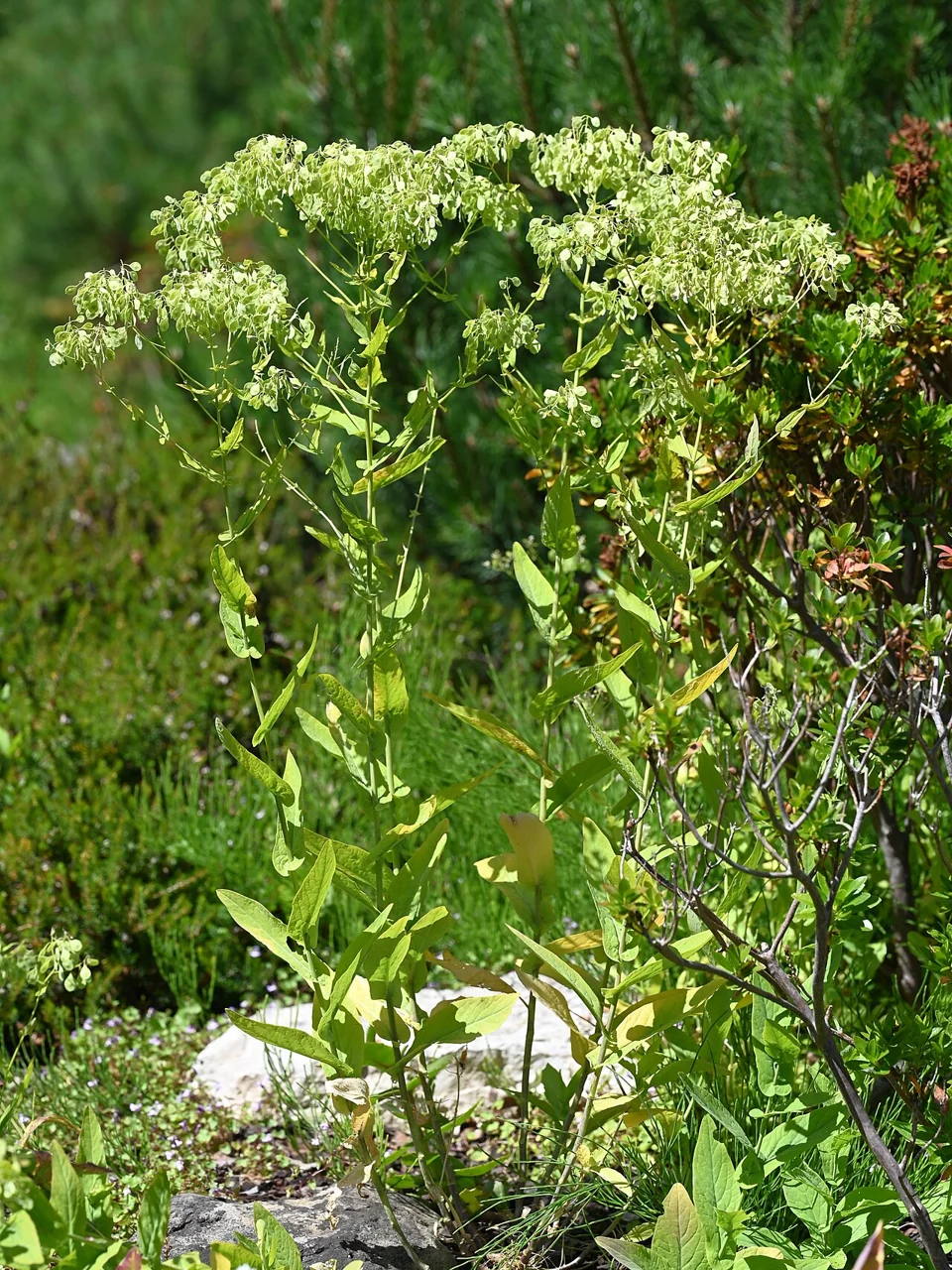
Peltaria alliacea in flower.
Krzysztof Ziarnek, Kenraiz / Wikimedia Commons / CC BY-SA 4.0

Photo details
Resized and converted to WebP. No content edits.
Source: File:Peltaria alliacea kz05.jpg
Reviewed . Source identification, photograph and license reviewed. The image illustrates the named plant; it does not verify dimensions or other plant traits.
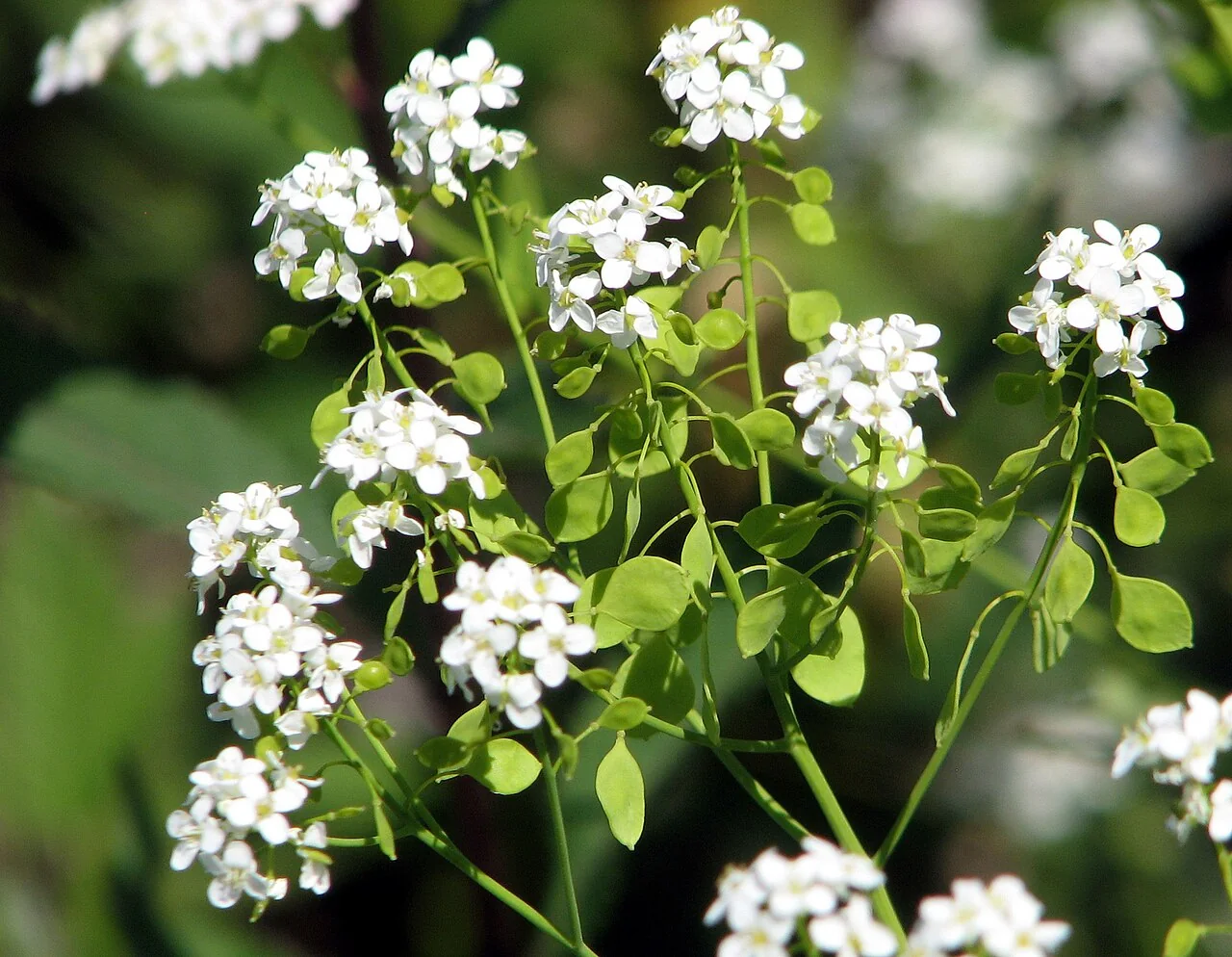
Flowers and developing fruit of Peltaria alliacea.
$Mathe94$ / Wikimedia Commons / CC BY-SA 3.0

Photo details
Resized and converted to WebP. No content edits.
Source: File:Peltaria alliacea3.JPG
Reviewed . Source identification, photograph and license reviewed. The image illustrates the named plant; it does not verify dimensions or other plant traits.
Common names
10 names · 10 languages- EnglishYour language
-
- Garlic cress[2]
Other languages (9)
Sources & name notes (2)
Names recorded in our plant catalogue and botanical sources, grouped by language. Usage can vary by region.
Numbered references identify names recorded by an external source. Other names are from our plant catalogue.
Common names from World Plants, version 26.05, reproduced in Catalogue of Life 2026-08-20. License: CC BY.
Source records
- Lauch-Scheibenschötchen (DE) — VernacularName.tsv, line 146993; taxon 76DD4.
Community-curated iNaturalist taxonomy; common-name attestation, not an independent botanical determination.
Source records
- Garlic Cress — results[0].names[1]; taxon id 371903; Peltaria alliacea.
- štítenka česneková — results[0].names[2]; taxon id 371903; Peltaria alliacea.
- laukkakilvekäs — results[0].names[3]; taxon id 371903; Peltaria alliacea.
- Lauch-Scheibenschötchen — results[0].names[4]; taxon id 371903; Peltaria alliacea.
- penningtrav — results[0].names[5]; taxon id 371903; Peltaria alliacea.
- ploščevica — results[0].names[6]; taxon id 371903; Peltaria alliacea.
- teszlik czosnkowaty — results[0].names[7]; taxon id 371903; Peltaria alliacea.
- szárölelő pajzstok — results[0].names[8]; taxon id 371903; Peltaria alliacea.
General information
Kew's family placement for the genus Peltaria (WCVP v16).
Sources [1]Plant characteristics
Growing conditions
Moist
Sand (light) Loam (medium)
Acidic Neutral Alkaline
Partial shade, Full sun
Uses
Flowers, Leaves
Ground cover, Fragrant
Description
Leaves of this plant can be eaten raw or cooked. They have a strong flavor that somewhat resembles a mix between garlic and mustard, making them suitable as a seasoning for salads. These leaves are available for most of the year and remain green and lush even in harsh winters. Especially at this time, they are a delightful addition to salads. In the summer, they can become a bit bitter, particularly if the plants grow in a dry and sunny spot. After flowering at the beginning of summer, the plants lose their leaves for a month or two. If you cut off the flower stalks at that time, you encourage new growth of fresh green leaves. The flowers of this plant can also be eaten raw and have a similar flavor to the leaves, but with little bitterness. They make a tasty addition to summer salads.
Harvest
Sources and references
References for the information marked with source numbers on this page.
-
Royal Botanic Gardens, Kew
World Checklist of Vascular Plants, version 16, extracted 4 June 2026
Relevant sections
- Botanical family: WCVP v16, wcvp_names.csv row 136709; name ID 2411975; Peltaria Jacq.. Family column.
- Taxonomy: WCVP v16, wcvp_names.csv row 136706; name ID 2411972; Peltaria alliacea Jacq..
Source checked on .
Source data licence: CC BY 3.0.
-
Catalogue of Life
Catalogue of Life 2026-08-20 — Peltaria alliacea
Taxonomic data from World Plants, version 26.05, reproduced in Catalogue of Life 2026-08-20.
Supports: TaxonomyRelevant sections
- Taxonomy: COL 2026-08-20, NameUsage.tsv line 2588652, ID 76DD4: Peltaria alliacea Jacq. (accepted).
Source checked on .