Passiflora incarnata
Maypop
Explore the size, hardiness, soil, light, edible uses and harvest period of Passiflora incarnata.
Plant photos
2 photos · Select to enlarge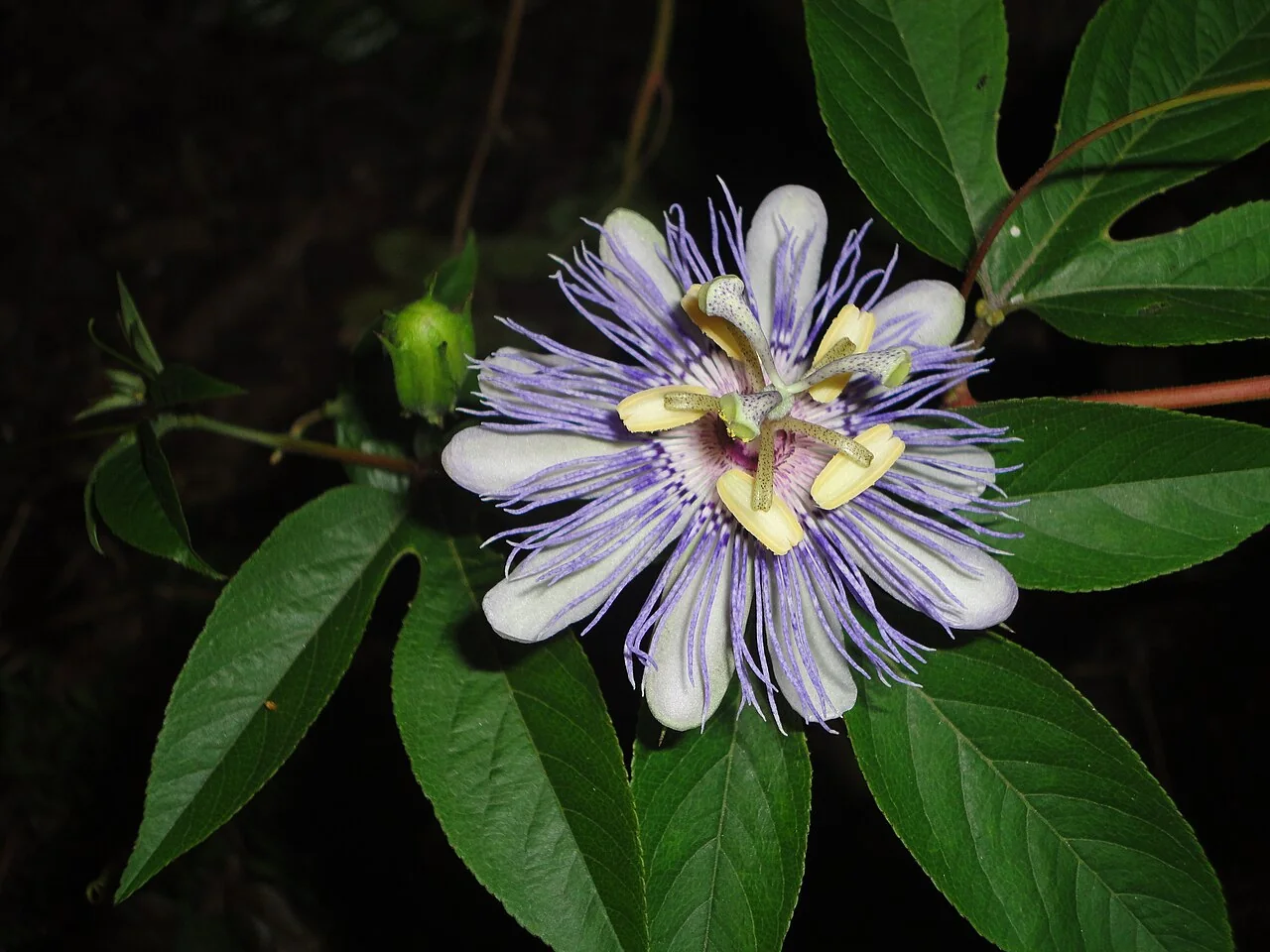
A close view of a Passiflora incarnata flower.
E.nielsen / Wikimedia Commons / CC BY-SA 3.0

Photo details
Resized and converted to WebP. No content edits.
Source: File:Passiflora incarnata flower and bud.jpg
Reviewed . Source identification, photograph and license reviewed. The image illustrates the named plant; it does not verify dimensions or other plant traits.
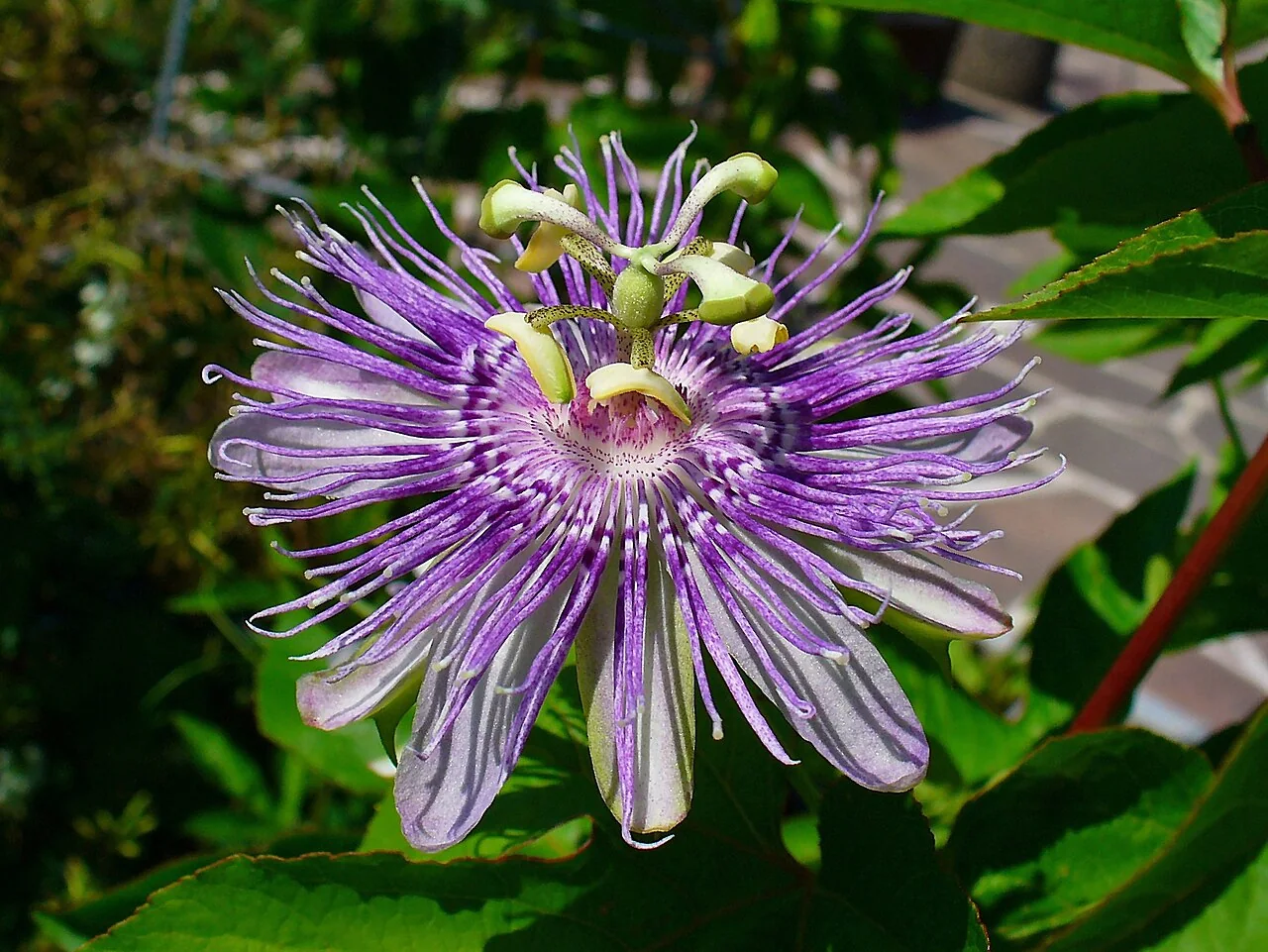
A close view of a Passiflora incarnata flower.
H. Zell / Wikimedia Commons / CC BY-SA 3.0

Photo details
Resized and converted to WebP. No content edits.
Source: File:Passiflora incarnata 003.JPG
Reviewed . Source identification, photograph and license reviewed. The image illustrates the named plant; it does not verify dimensions or other plant traits.
Common names
27 names · 20 languagesOther languages (19)
- Dutch
-
- Wilde passiebloem
- Alabama
-
- Opako[1]
- Cherokee
-
- ᎤᏩᎦ[1]
- Chinese (Simplified)
-
- 粉色西番莲[1]
- Chinese (Traditional)
-
- 粉色西番蓮[1]
- Czech
-
- mučenka pletní[1]
- Finnish
-
- rohtopassio[1]
- German
-
- Fleischfarbene Passionsblume[1]
- Greek
-
- Λουλούδι του Πάθους[1]
- Japanese
-
- チャボトケイソウ[1]
- Mvskoke
-
- opvkv[1]
- Polish
-
- męczennica cielista[1]
- Russian
-
- Страстоцвет мясо-красный[1]
- Slovak
-
- mučenka bledokarmínová[1]
- Spanish
-
- Parcha redonda[1]
- Turkish
-
- çarkıfelek[1]
- Ukrainian
-
- Пасифлора м'ясо-червона[1]
Sources & name notes (1)
Names recorded in our plant catalogue and botanical sources, grouped by language. Usage can vary by region.
Numbered references identify names recorded by an external source. Other names are from our plant catalogue.
Community-curated iNaturalist taxonomy; common-name attestation, not an independent botanical determination.
Source records
- purple passionflower — results[0].names[1]; taxon id 51453; Passiflora incarnata.
- maypop — results[0].names[2]; taxon id 51453; Passiflora incarnata.
- Страстоцвет мясо-красный — results[0].names[3]; taxon id 51453; Passiflora incarnata.
- Fleischfarbene Passionsblume — results[0].names[4]; taxon id 51453; Passiflora incarnata.
- mučenka pletní — results[0].names[5]; taxon id 51453; Passiflora incarnata.
- チャボトケイソウ — results[0].names[6]; taxon id 51453; Passiflora incarnata.
- passiflore officinale — results[0].names[7]; taxon id 51453; Passiflora incarnata.
- liane de grenade — results[0].names[8]; taxon id 51453; Passiflora incarnata.
- Λουλούδι του Πάθους — results[0].names[9]; taxon id 51453; Passiflora incarnata.
- Làanasi — results[0].names[10]; taxon id 51453; Passiflora incarnata.
- Opako — results[0].names[11]; taxon id 51453; Passiflora incarnata.
- 粉色西番莲 — results[0].names[12]; taxon id 51453; Passiflora incarnata.
- 粉色西番蓮 — results[0].names[13]; taxon id 51453; Passiflora incarnata.
- çarkıfelek — results[0].names[14]; taxon id 51453; Passiflora incarnata.
- męczennica cielista — results[0].names[15]; taxon id 51453; Passiflora incarnata.
- purple passion-flower — results[0].names[16]; taxon id 51453; Passiflora incarnata.
- زهرة الآلام الحمراء — results[0].names[17]; taxon id 51453; Passiflora incarnata.
- زهرة العاطفة الحمراء — results[0].names[18]; taxon id 51453; Passiflora incarnata.
- ᎤᏩᎦ — results[0].names[19]; taxon id 51453; Passiflora incarnata.
- opvkv — results[0].names[20]; taxon id 51453; Passiflora incarnata.
- rohtopassio — results[0].names[21]; taxon id 51453; Passiflora incarnata.
- mučenka bledokarmínová — results[0].names[22]; taxon id 51453; Passiflora incarnata.
- Maypop Passionflower — results[0].names[23]; taxon id 51453; Passiflora incarnata.
- Parcha redonda — results[0].names[24]; taxon id 51453; Passiflora incarnata.
- Пасифлора м'ясо-червона — results[0].names[25]; taxon id 51453; Passiflora incarnata.
General information
Accepted in the cited Kew taxonomic treatment.
Sources [1]Kew's family placement for the genus Passiflora (WCVP v16).
Sources [1]Growing conditions
USDA zones listed by NC State; winter survival does not establish reliable cropping.
Sources [2]Well-drained, Moist, Occasionally Dry
Moisture and drainage conditions listed by NC State.
Sources [2]Acidic Neutral Alkaline
Uses
Flowers, Leaves, Fruit
None
Description
Fruit - Can be eaten raw or cooked into jelly, jam, etc. It has a sweet taste and tastes best as jelly. Rich in niacin. The fruit is quite large, with a diameter of up to 5 cm, but contains relatively little edible pulp and many seeds. Leaves - can be eaten both raw and cooked and taste delicious as cooked vegetables or in salads. Flowers - can be cooked as vegetables or processed into syrup.
Harvest
Sources and references
References for the information marked with source numbers on this page.
-
Royal Botanic Gardens, Kew
World Checklist of Vascular Plants, version 16, extracted 4 June 2026
Relevant sections
- Botanical family: WCVP v16, wcvp_names.csv row 308556; name ID 2560028; Passiflora L.. Family column.
- Taxonomy: WCVP v16, wcvp_names.csv row 307948; name ID 2560416; Passiflora incarnata L..
Source checked on .
Source data licence: CC BY 3.0.
-
NC State Extension, North Carolina State University
Passiflora incarnata — Extension Gardener Plant Toolbox
Relevant sections
- Growth rate: Growth Rate
- Foliage: Woody Plant Leaf Characteristics
- Growth habit: Habit/Form
- Life cycle: Life Cycle
- Light: Light
- Soil moisture: Soil Drainage
- Soil texture: Soil Texture
- USDA hardiness: USDA Plant Hardiness Zone
Source checked on .