Osmanthus fragrans
Fragrant Olive
Explore the size, hardiness, soil, light, edible uses and harvest period of Osmanthus fragrans.
Plant photos
2 photos · Select to enlarge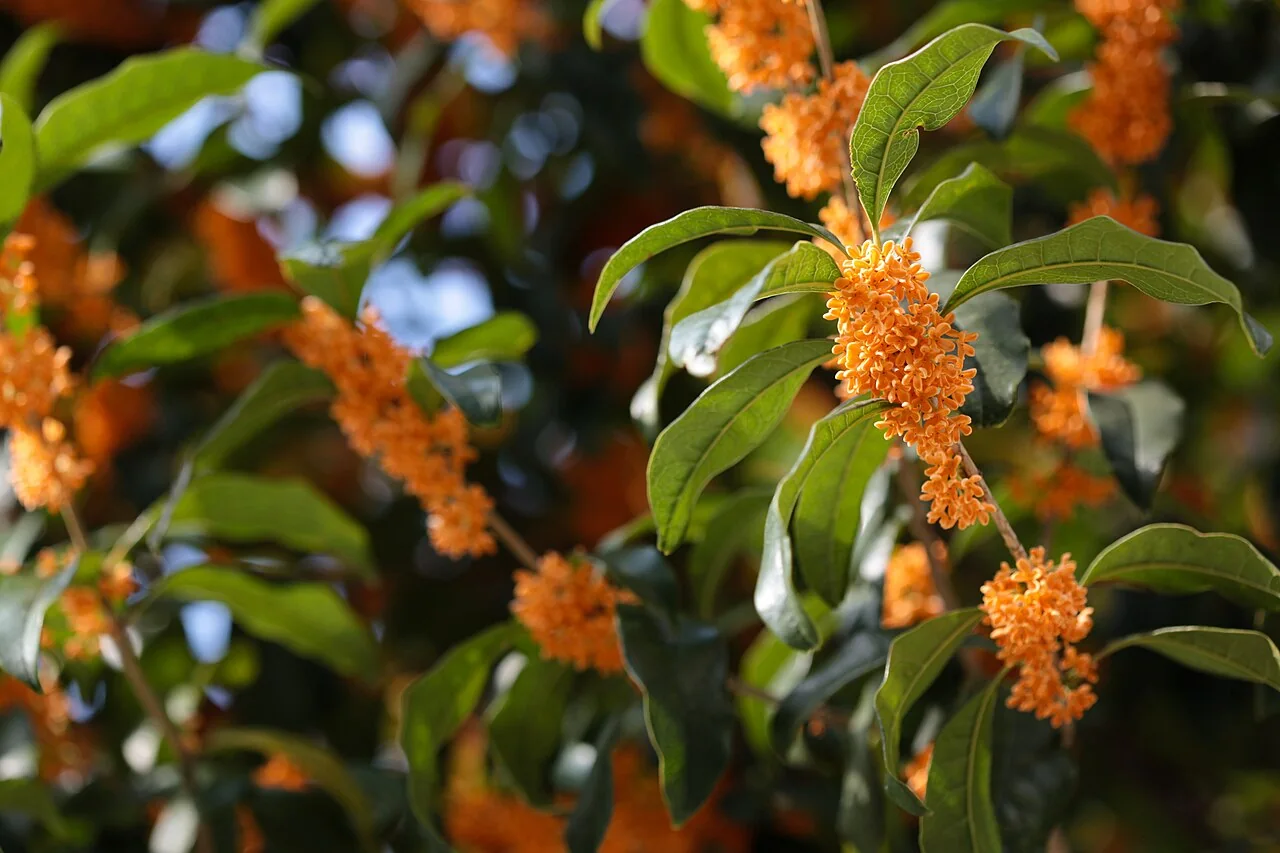
Orange flowers of Osmanthus fragrans.
Laitr Keiows / Wikimedia Commons / CC BY-SA 3.0
.jpg)
Photo details
Resized and converted to WebP. No content edits.
Source: File:Osmanthus fragrans (orange flowers).jpg
Reviewed . Source identification, photograph and license reviewed. The image illustrates the named plant; it does not verify dimensions or other plant traits.
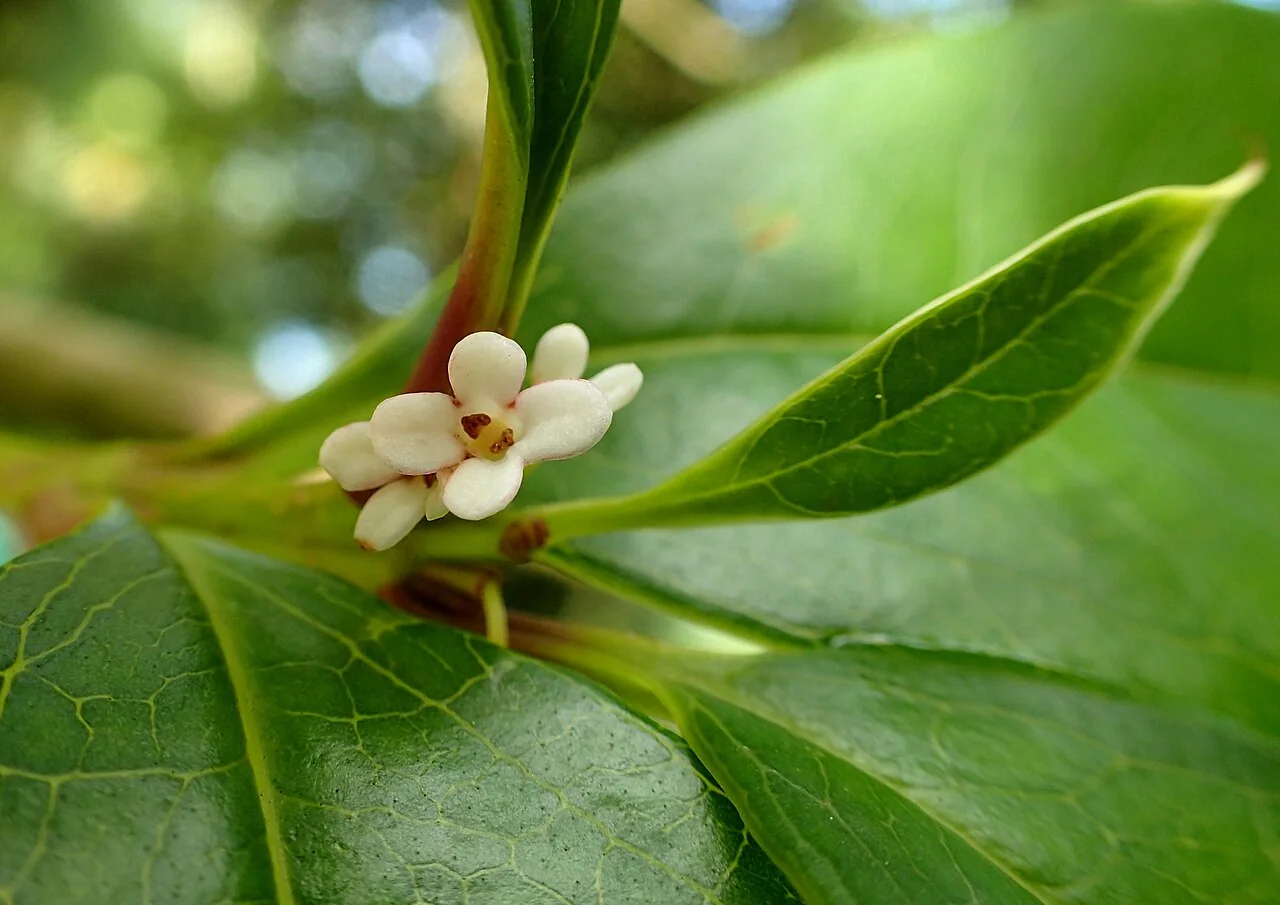
Flowers of Osmanthus fragrans.
Krzysztof Ziarnek, Kenraiz / Wikimedia Commons / CC BY-SA 4.0

Photo details
Resized and converted to WebP. No content edits.
Source: File:Osmanthus fragrans kz2.jpg
Reviewed . Source identification, photograph and license reviewed. The image illustrates the named plant; it does not verify dimensions or other plant traits.
Common names
23 names · 16 languagesOther languages (15)
- Dutch
-
- Zoete osmanthus
- French
-
+1 more nameShow fewer names
- Osmanthe parfumé[1]
- Chinese (Simplified)
-
- 木樨[1]
- Czech
-
- vonokvětka libovonná[1]
- German
-
- Süße Duftblüte[1]
- Italian
-
- Osmanto odoroso[1]
- Japanese
-
- モクセイ[1]
- Korean
-
- 목서[1]
- Russian
-
- Османтус душистый[1]
- Slovak
-
- osmant voňavý[1]
- Swedish
-
- tedoftbuske[1]
- Thai
-
- หอมหมื่นลี้[1]
- Turkish
-
- osmantus[1]
Sources & name notes (1)
Names recorded in our plant catalogue and botanical sources, grouped by language. Usage can vary by region.
Numbered references identify names recorded by an external source. Other names are from our plant catalogue.
Community-curated iNaturalist taxonomy; common-name attestation, not an independent botanical determination.
Source records
- Sweet olive — results[0].names[1]; taxon id 371103; Osmanthus fragrans.
- Fragrant olive — results[0].names[2]; taxon id 371103; Osmanthus fragrans.
- 桂花 — results[0].names[3]; taxon id 371103; Osmanthus fragrans.
- 木犀 — results[0].names[4]; taxon id 371103; Osmanthus fragrans.
- Tea Olive — results[0].names[6]; taxon id 371103; Osmanthus fragrans.
- Süße Duftblüte — results[0].names[7]; taxon id 371103; Osmanthus fragrans.
- モクセイ — results[0].names[8]; taxon id 371103; Osmanthus fragrans.
- vonokvětka libovonná — results[0].names[9]; taxon id 371103; Osmanthus fragrans.
- 木樨 — results[0].names[10]; taxon id 371103; Osmanthus fragrans.
- osmantus — results[0].names[11]; taxon id 371103; Osmanthus fragrans.
- 목서 — results[0].names[12]; taxon id 371103; Osmanthus fragrans.
- หอมหมื่นลี้ — results[0].names[13]; taxon id 371103; Osmanthus fragrans.
- Османтус душистый — results[0].names[14]; taxon id 371103; Osmanthus fragrans.
- Olivier odorant — results[0].names[15]; taxon id 371103; Osmanthus fragrans.
- Osmanthe parfumé — results[0].names[16]; taxon id 371103; Osmanthus fragrans.
- Olivier de Chine — results[0].names[17]; taxon id 371103; Osmanthus fragrans.
- Olivier à thé — results[0].names[18]; taxon id 371103; Osmanthus fragrans.
- Jasmim-do-imperador — results[0].names[19]; taxon id 371103; Osmanthus fragrans.
- Flor-do-imperador — results[0].names[20]; taxon id 371103; Osmanthus fragrans.
- tedoftbuske — results[0].names[21]; taxon id 371103; Osmanthus fragrans.
- Osmanto odoroso — results[0].names[22]; taxon id 371103; Osmanthus fragrans.
- osmant voňavý — results[0].names[23]; taxon id 371103; Osmanthus fragrans.
General information
Accepted in the cited Kew taxonomic treatment.
Sources [1]Plant characteristics
NC State landscape size range; converted from feet and inches. Size varies with site, age and management.
Sources [2]NC State landscape size range; converted from feet and inches. Size varies with site, age and management.
Sources [2]Whole-plant habit and form as described by NC State.
Sources [2]Growing conditions
USDA zones listed by NC State; winter survival does not establish reliable cropping.
Sources [2]Well-drained, Moist, Occasionally Dry
Moisture and drainage conditions listed by NC State.
Sources [2]Acidic Neutral Alkaline
Uses
Fruit, Condiment, Tea
Repellent
Description
The unripe fruits are preserved as olives in brine. The strongly scented flowers are used by the Chinese to give a pleasant aroma to tea, wine, and sweet dishes like lotus seed soup, pastries, and steamed pears. They are also used in herbal medicine to mask unpleasant flavors. The flowers emit a scent that resembles apricots.
Harvest
Sources and references
References for the information marked with source numbers on this page.
-
Royal Botanic Gardens, Kew
World Checklist of Vascular Plants, version 16, extracted 4 June 2026
Relevant sections
- Botanical family: WCVP v16, wcvp_names.csv row 330682; name ID 355236; Osmanthus Lour.. Family column.
- Taxonomy: WCVP v16, wcvp_names.csv row 1201872; name ID 354988; Osmanthus fragrans Lour..
Source checked on .
Source data licence: CC BY 3.0.
-
NC State Extension, North Carolina State University
Osmanthus fragrans — Extension Gardener Plant Toolbox
Relevant sections
- Height: Dimensions > Height; Height: 10 ft. 0 in. - 20 ft. 0 in.
- Spread: Dimensions > Width; Width: 10 ft. 0 in. - 14 ft. 0 in.
- Growth rate: Growth Rate
- Foliage: Woody Plant Leaf Characteristics
- Growth habit: Habit/Form
- Light: Light
- Soil moisture: Soil Drainage
- Soil texture: Soil Texture
- USDA hardiness: USDA Plant Hardiness Zone
Source checked on .