Origanum majorana
Sweet Marjoram
Explore the size, hardiness, soil, light, edible uses and harvest period of Origanum majorana.
Plant photos
2 photos · Select to enlarge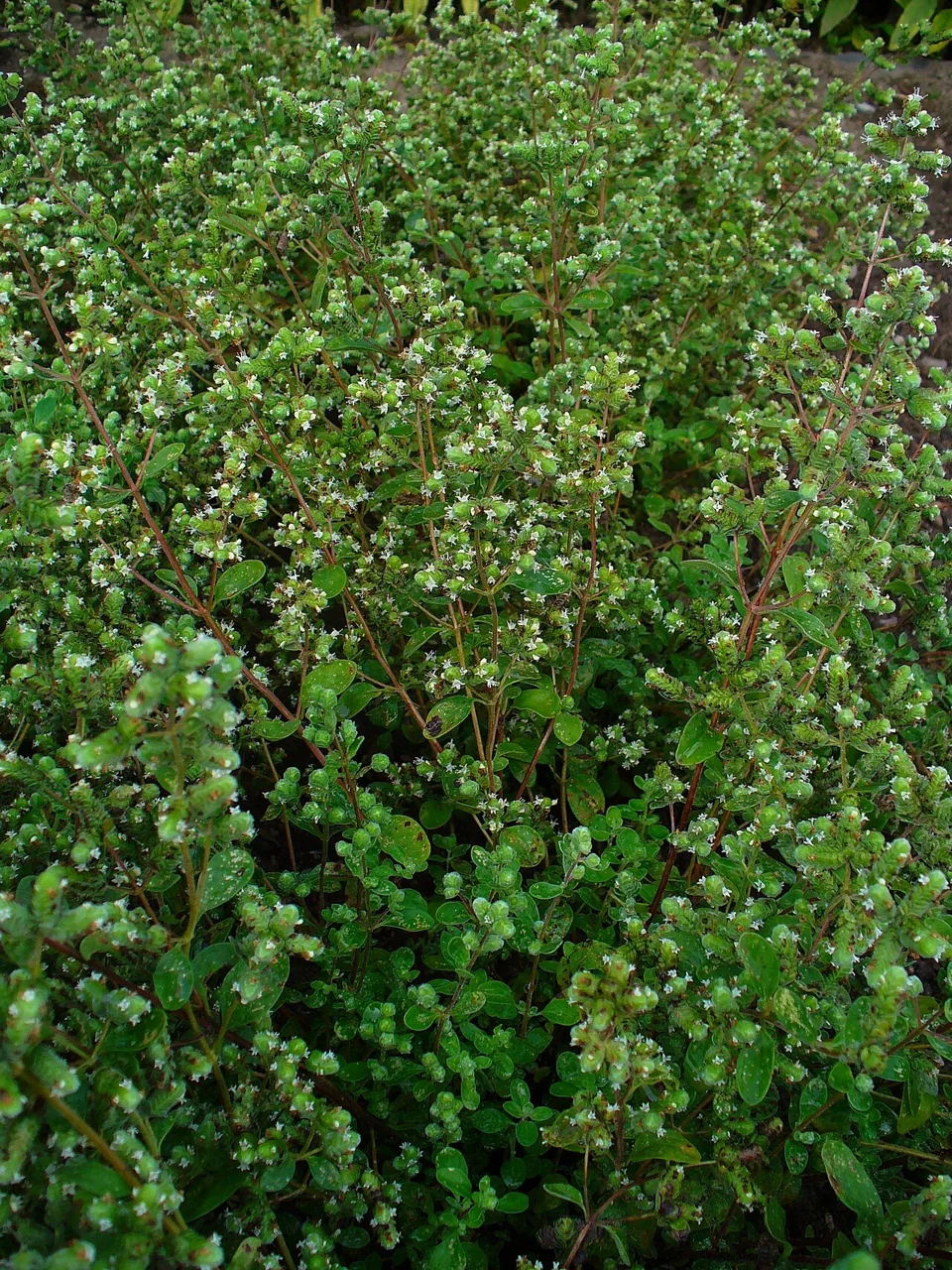
Sweet marjoram forming a dense leafy patch.
H. Zell / Wikimedia Commons / CC BY-SA 3.0

Photo details
Resized and converted to WebP. No content edits.
Source: File:Origanum majorana 001.JPG
Reviewed . Source identification and visible plant parts reviewed against this plant record.
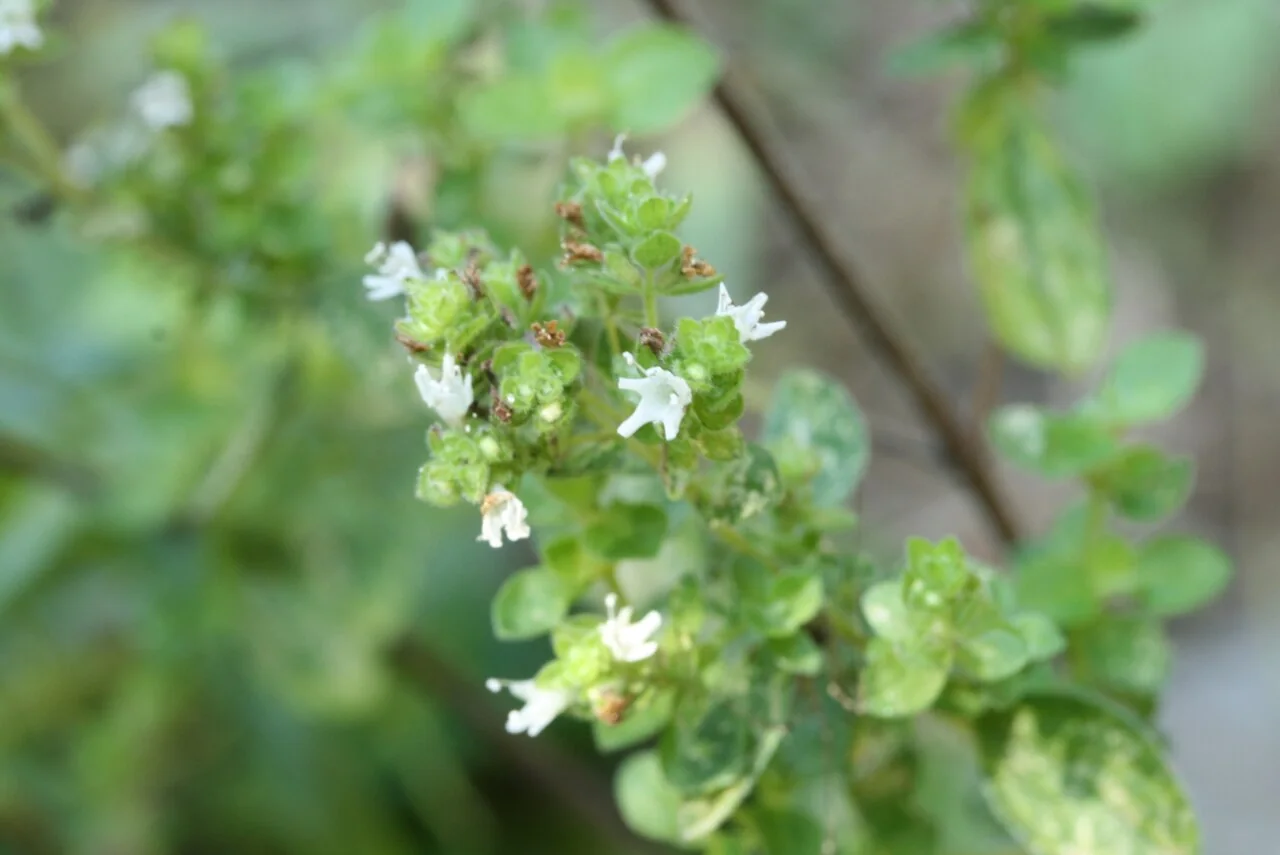
Sweet marjoram flowers among rounded leaves.
Sten / Wikimedia Commons / CC BY-SA 3.0

Photo details
Resized and converted to WebP. No content edits.
Source: File:Origanum-majorana-flowers.jpg
Reviewed . Source identification and visible plant parts reviewed against this plant record.
Common names
29 names · 23 languagesOther languages (22)
- Dutch
-
- Echte marjolein[2]
- Worstkruid
- French
-
- Marjolaine[2]
- Asturian
-
- almoradus[2]
- Catalan
-
- Marduix[2]
- Chinese (Traditional)
-
- 馬鬱蘭[2]
- Czech
-
- majoránka zahradní[2]
- Finnish
-
- maustemeirami[2]
- Greek
-
- Ματζουράνα[2]
- Hebrew
-
- מיורן (אזובית תרבותית)[2]
- Hungarian
-
- majoranna[2]
- Japanese
-
- マジョラム[2]
- Portuguese
-
- Manjerona[2]
- Russian
-
- Майоран садовый[2]
- Slovak
-
- majorán záhradný[2]
- Spanish
-
- Mejorana[2]
- Swedish
-
- mejram[2]
- Turkish
-
- Mercanköşk[2]
Sources & name notes (2)
Names recorded in our plant catalogue and botanical sources, grouped by language. Usage can vary by region.
Numbered references identify names recorded by an external source. Other names are from our plant catalogue.
Common names from World Plants, version 26.05, reproduced in Catalogue of Life 2026-08-20. License: CC BY.
Source records
- Garten-Majoran (DE) — VernacularName.tsv, line 159701; taxon 74TMF.
- Sweet marjoram (EN) — VernacularName.tsv, line 159702; taxon 74TMF.
Community-curated iNaturalist taxonomy; common-name attestation, not an independent botanical determination.
Source records
- Mejorana — results[0].names[1]; taxon id 165925; Origanum majorana.
- Sweet Marjoram — results[0].names[2]; taxon id 165925; Origanum majorana.
- Manjerona — results[0].names[3]; taxon id 165925; Origanum majorana.
- majoránka zahradní — results[0].names[4]; taxon id 165925; Origanum majorana.
- Majoran — results[0].names[5]; taxon id 165925; Origanum majorana.
- aedmajoraan — results[0].names[6]; taxon id 165925; Origanum majorana.
- vorstirohi — results[0].names[7]; taxon id 165925; Origanum majorana.
- maustemeirami — results[0].names[8]; taxon id 165925; Origanum majorana.
- Echte marjolein — results[0].names[9]; taxon id 165925; Origanum majorana.
- almoradus — results[0].names[10]; taxon id 165925; Origanum majorana.
- マジョラム — results[0].names[11]; taxon id 165925; Origanum majorana.
- Ματζουράνα — results[0].names[12]; taxon id 165925; Origanum majorana.
- Maggiorana — results[0].names[13]; taxon id 165925; Origanum majorana.
- Origano maggiorana — results[0].names[14]; taxon id 165925; Origanum majorana.
- Mercanköşk — results[0].names[15]; taxon id 165925; Origanum majorana.
- mejram — results[0].names[16]; taxon id 165925; Origanum majorana.
- 馬鬱蘭 — results[0].names[17]; taxon id 165925; Origanum majorana.
- Marjolaine — results[0].names[18]; taxon id 165925; Origanum majorana.
- Майоран садовый — results[0].names[19]; taxon id 165925; Origanum majorana.
- מיורן (אזובית תרבותית) — results[0].names[20]; taxon id 165925; Origanum majorana.
- majoranna — results[0].names[21]; taxon id 165925; Origanum majorana.
- 墨角兰 — results[0].names[22]; taxon id 165925; Origanum majorana.
- 甘牛至 — results[0].names[23]; taxon id 165925; Origanum majorana.
- मरवा — results[0].names[24]; taxon id 165925; Origanum majorana.
- मरुआ — results[0].names[25]; taxon id 165925; Origanum majorana.
- majorán záhradný — results[0].names[26]; taxon id 165925; Origanum majorana.
- Marduix — results[0].names[27]; taxon id 165925; Origanum majorana.
General information
Plant characteristics
NC State landscape size range; converted from feet and inches. Size varies with site, age and management.
Sources [3]NC State landscape size range; converted from feet and inches. Size varies with site, age and management.
Sources [3]Whole-plant habit and form as described by NC State.
Sources [3]Uses
Leaves, Tea, Condiment
Dye, Essential oil, Bee forage, Fragrant
Description
Leaves can be eaten raw or cooked. Marjoram is popular as a flavoring in salad dressings, vegetable dishes, legumes, and oils. It has a subtler flavor than its close relative oregano (Origanum vulgare) and is best used fresh, preferably added at the end of the cooking time. The fragrant seeds are often used as a flavoring in candies, drinks, and more. Fresh or dried leaves can be used to make an herbal tea. The flavor is compared to a mix of thyme, rosemary, and sage.
Harvest
Sources and references
References for the information marked with source numbers on this page.
-
Royal Botanic Gardens, Kew
World Checklist of Vascular Plants, version 16, extracted 4 June 2026
Relevant sections
- Botanical family: WCVP v16, wcvp_names.csv row 1066134; name ID 143731; Origanum L.. Family column.
- Taxonomy: WCVP v16, wcvp_names.csv row 129374; name ID 143853; Origanum majorana L..
Source checked on .
Source data licence: CC BY 3.0.
-
Catalogue of Life
Catalogue of Life 2026-08-20 — Origanum majorana
Taxonomic data from World Plants, version 26.05, reproduced in Catalogue of Life 2026-08-20.
Supports: TaxonomyRelevant sections
- Taxonomy: COL 2026-08-20, NameUsage.tsv line 2554577, ID 74TMF: Origanum majorana L. (accepted).
Source checked on .
-
NC State Extension, North Carolina State University
Origanum majorana — Extension Gardener Plant Toolbox
Supports: HeightSpreadGrowth rateGrowth habitLife cycleLightSoil moistureSoil textureSoil pHUSDA hardiness
Relevant sections
- Height: Dimensions > Height; Height: 1 ft. 0 in. - 2 ft. 0 in.
- Spread: Dimensions > Width; Width: 1 ft. 0 in. - 2 ft. 0 in.
- Growth rate: Growth Rate
- Growth habit: Habit/Form
- Life cycle: Life Cycle
- Light: Light
- Soil moisture: Soil Drainage
- Soil texture: Soil Texture
- Soil pH: Soil pH
- USDA hardiness: USDA Plant Hardiness Zone
Source checked on .