Oenothera biennis
Evening Primrose
Explore the size, hardiness, soil, light, edible uses and harvest period of Oenothera biennis.
Plant photos
2 photos · Select to enlarge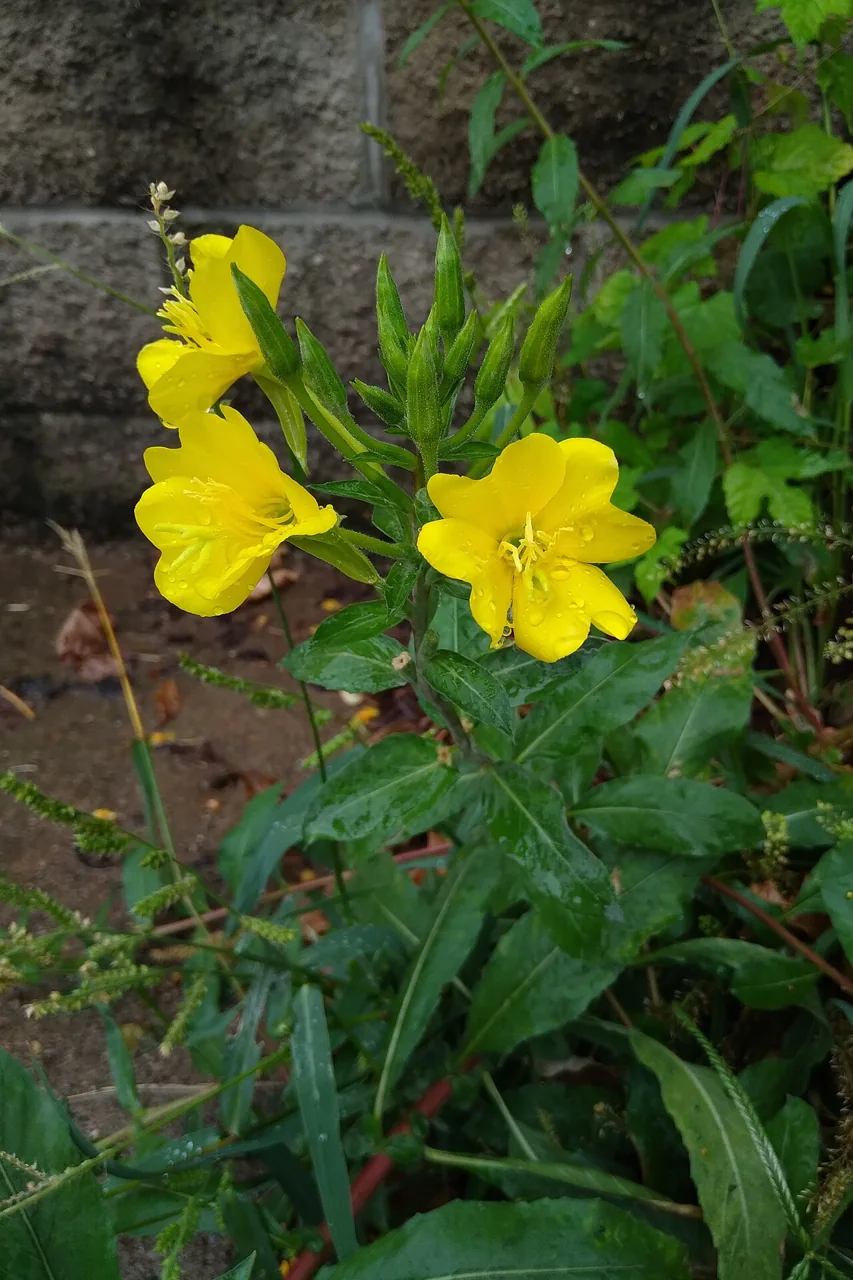
Flowers of Oenothera biennis.
Cbaile19 / Wikimedia Commons / CC0

Photo details
Resized and converted to WebP. No content edits.
Source: File:Oenothera biennis, 2022-08-30, South Side Slopes, 01.jpg
Reviewed . Source identification, photograph and license reviewed. The image illustrates the named plant; it does not verify dimensions or other plant traits.
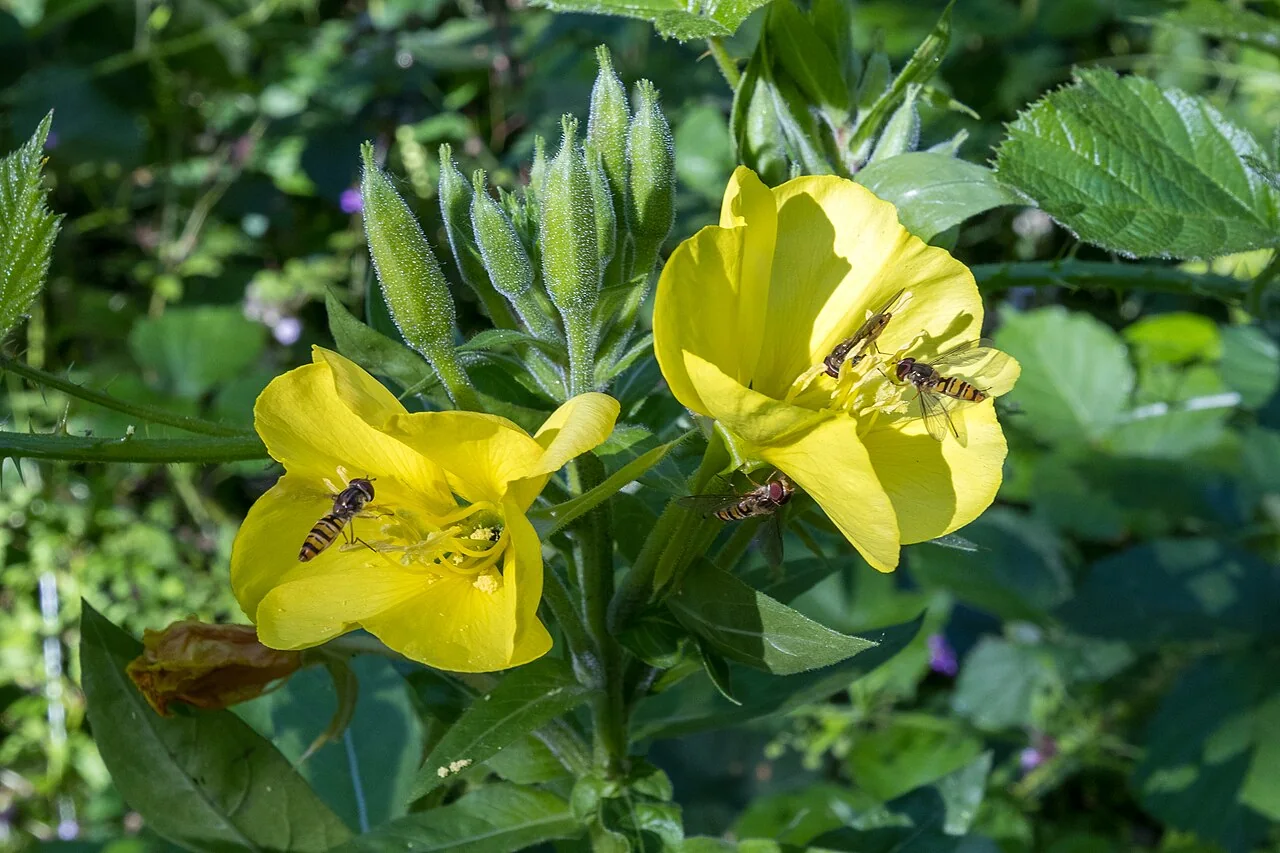
Hoverflies visiting Oenothera biennis flowers.
JackyM59 / Wikimedia Commons / CC BY-SA 4.0
_et_syrphes_%C3%A0_ceintures.jpg)
Photo details
Resized and converted to WebP. No content edits.
Source: File:Fleurs d'Onagre (Oenothera biennis) et syrphes à ceintures.jpg
Reviewed . Source identification, photograph and license reviewed. The image illustrates the named plant; it does not verify dimensions or other plant traits.
Common names
45 names · 32 languagesOther languages (31)
- French
-
- Onagre bisannuelle[1]
- Afrikaans
-
- gewone nagblom[1]
- Belarusian
-
- Асліннік двухгадовы[1]
- Catalan
-
- bella de nit[1]
- Cherokee
-
- ᎠᎾᏓᏥ[1]
- Chinese (Simplified)
-
- 月见草[1]
- Chinese (Traditional)
-
- 月見草[1]
- Czech
-
- pupalka dvouletá[1]
- Danish
-
- Toårig natlys[1]
- Estonian
-
- kaheaastane kuningakepp[1]
- Finnish
-
- iltahelokki[1]
- Hebrew
-
- נר-לילה דו-שנתי[1]
- Hungarian
-
- parlagi ligetszépe[1]
- Italian
-
- Enagra comune[1]
- Korean
-
- 달맞이꽃[1]
- Latvian
-
- Divgadīgā naktssvece[1]
- Lithuanian
-
- Dvimetė nakviša[1]
- Norwegian
-
- nattlys[1]
- Ojibwe
-
- Wezaawaanagak+wag[1]
- Polish
-
- Wiesiołek dwuletni[1]
- Slovak
-
- pupalka dvojročná[1]
- Slovenian
-
- dvoletni svetlin[1]
- Spanish
-
- onagra común[1]
- Turkish
-
- Ezançiçeği[1]
- Ukrainian
-
- Енотера дворічна[1]
- Welsh
-
- Melyn yr hwyr[1]
Sources & name notes (1)
Names recorded in our plant catalogue and botanical sources, grouped by language. Usage can vary by region.
Numbered references identify names recorded by an external source. Other names are from our plant catalogue.
Community-curated iNaturalist taxonomy; common-name attestation, not an independent botanical determination.
Source records
- common evening-primrose — results[0].names[1]; taxon id 62207; Oenothera biennis.
- common evening primrose — results[0].names[2]; taxon id 62207; Oenothera biennis.
- Gemeine Nachtkerze — results[0].names[4]; taxon id 62207; Oenothera biennis.
- Gewöhnliche Nachtkerze — results[0].names[5]; taxon id 62207; Oenothera biennis.
- evening star — results[0].names[6]; taxon id 62207; Oenothera biennis.
- onagre bisannuelle — results[0].names[7]; taxon id 62207; Oenothera biennis.
- iltahelokki — results[0].names[8]; taxon id 62207; Oenothera biennis.
- 달맞이꽃 — results[0].names[9]; taxon id 62207; Oenothera biennis.
- bella de nit — results[0].names[10]; taxon id 62207; Oenothera biennis.
- Wiesiołek dwuletni — results[0].names[11]; taxon id 62207; Oenothera biennis.
- pupalka dvouletá — results[0].names[12]; taxon id 62207; Oenothera biennis.
- teunisbloem — results[0].names[13]; taxon id 62207; Oenothera biennis.
- メマツヨイグサ — results[0].names[14]; taxon id 62207; Oenothera biennis.
- Dvimetė nakviša — results[0].names[15]; taxon id 62207; Oenothera biennis.
- onagra común — results[0].names[16]; taxon id 62207; Oenothera biennis.
- 月見草 — results[0].names[17]; taxon id 62207; Oenothera biennis.
- Toårig natlys — results[0].names[18]; taxon id 62207; Oenothera biennis.
- Ослинник двулетний — results[0].names[19]; taxon id 62207; Oenothera biennis.
- Энотера двулетняя — results[0].names[20]; taxon id 62207; Oenothera biennis.
- nattlys — results[0].names[21]; taxon id 62207; Oenothera biennis.
- Wezaawaanagak+wag — results[0].names[22]; taxon id 62207; Oenothera biennis.
- kaheaastane kuningakepp — results[0].names[23]; taxon id 62207; Oenothera biennis.
- 月见草 — results[0].names[24]; taxon id 62207; Oenothera biennis.
- nattljus — results[0].names[25]; taxon id 62207; Oenothera biennis.
- Middelste teunisbloem — results[0].names[26]; taxon id 62207; Oenothera biennis.
- äkta nattljus — results[0].names[27]; taxon id 62207; Oenothera biennis.
- dvoletni svetlin — results[0].names[28]; taxon id 62207; Oenothera biennis.
- נר-לילה דו-שנתי — results[0].names[29]; taxon id 62207; Oenothera biennis.
- Енотера дворічна — results[0].names[30]; taxon id 62207; Oenothera biennis.
- Асліннік двухгадовы — results[0].names[31]; taxon id 62207; Oenothera biennis.
- Gewöhnliche Zweijährige Nachtkerze — results[0].names[32]; taxon id 62207; Oenothera biennis.
- gewone nagblom — results[0].names[33]; taxon id 62207; Oenothera biennis.
- evening-primrose — results[0].names[34]; taxon id 62207; Oenothera biennis.
- German Rampion — results[0].names[35]; taxon id 62207; Oenothera biennis.
- Divgadīgā naktssvece — results[0].names[36]; taxon id 62207; Oenothera biennis.
- parlagi ligetszépe — results[0].names[37]; taxon id 62207; Oenothera biennis.
- ᎠᎾᏓᏥ — results[0].names[38]; taxon id 62207; Oenothera biennis.
- Enagra comune — results[0].names[39]; taxon id 62207; Oenothera biennis.
- Ezançiçeği — results[0].names[40]; taxon id 62207; Oenothera biennis.
- 雌待宵草 — results[0].names[41]; taxon id 62207; Oenothera biennis.
- Noćurak — results[0].names[42]; taxon id 62207; Oenothera biennis.
- pupalka dvojročná — results[0].names[43]; taxon id 62207; Oenothera biennis.
- Melyn yr hwyr — results[0].names[44]; taxon id 62207; Oenothera biennis.
General information
Accepted in the cited Kew taxonomic treatment.
Sources [1]Plant characteristics
NC State landscape size range; converted from feet and inches. Size varies with site, age and management.
Sources [2]NC State landscape size range; converted from feet and inches. Size varies with site, age and management.
Sources [2]Uses
Flowers, Leaves, Oil, Root, Seed capsule
Cosmetic use, Dye, Oil, Bee forage, Fragrant
Description
Cooked carrots are often eaten as salsify or parsnips due to their fleshy, sweet, peppery, and juicy flavor, and because they are healthy and nutritious. Young shoots, both raw and cooked, also have a peppery taste, but due to their sliminess, it is recommended to consume them in moderation or even avoid them altogether. The sweet flowers of the plant can be used in salads or as a garnish. The young seed pods can be boiled or steamed, and the seeds are a good source of gamma-linolenic acid. However, harvesting the small seeds is difficult and labor-intensive, resulting in generally low yields, and therefore the product is considered expensive.
Harvest
Sources and references
References for the information marked with source numbers on this page.
-
Royal Botanic Gardens, Kew
World Checklist of Vascular Plants, version 16, extracted 4 June 2026
Relevant sections
- Botanical family: WCVP v16, wcvp_names.csv row 119960; name ID 2398316; Oenothera L.. Family column.
- Taxonomy: WCVP v16, wcvp_names.csv row 125117; name ID 2399189; Oenothera biennis L..
Source checked on .
Source data licence: CC BY 3.0.
-
NC State Extension, North Carolina State University
Oenothera biennis — Extension Gardener Plant Toolbox
Supports: HeightSpreadGrowth rateGrowth habitLife cycleLightSoil moistureSoil textureSoil pHUSDA hardiness
Relevant sections
- Height: Dimensions > Height; Height: 3 ft. 0 in. - 5 ft. 0 in.
- Spread: Dimensions > Width; Width: 2 ft. 0 in. - 3 ft. 0 in.
- Growth rate: Growth Rate
- Growth habit: Habit/Form
- Life cycle: Life Cycle
- Light: Light
- Soil moisture: Soil Drainage
- Soil texture: Soil Texture
- Soil pH: Soil pH
- USDA hardiness: USDA Plant Hardiness Zone
Source checked on .