Levisticum officinale
Lovage
Explore the size, hardiness, soil, light, edible uses and harvest period of Levisticum officinale.
Plant photos
2 photos · Select to enlarge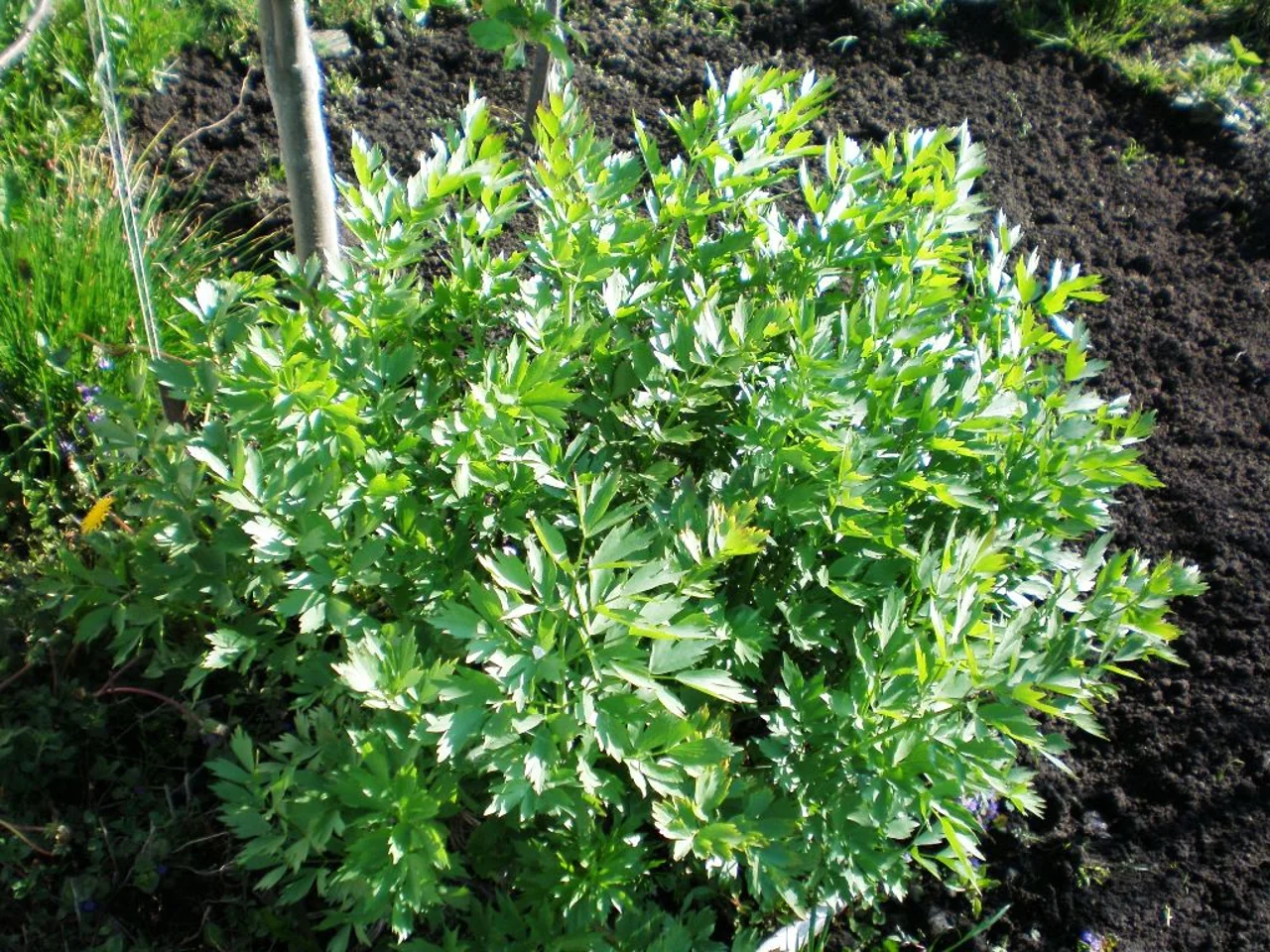
The growth habit of Levisticum officinale.
I, Hugo.arg / Wikimedia Commons / CC BY-SA 3.0

Photo details
Resized and converted to WebP. No content edits.
Source: File:Gelsve001.JPG
Reviewed . Source identification, photograph and license reviewed. The image illustrates the named plant; it does not verify dimensions or other plant traits.
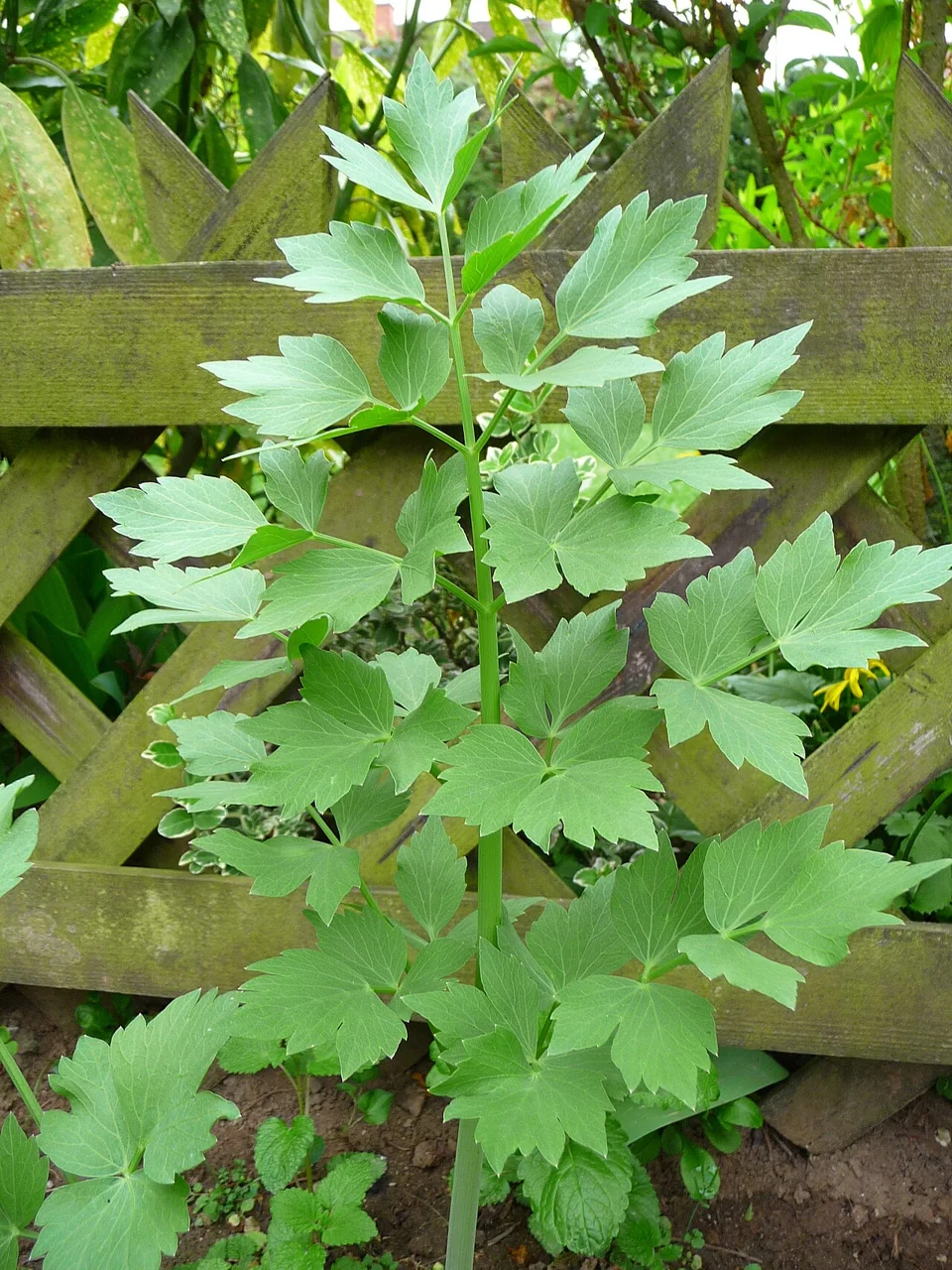
Leaves of Levisticum officinale.
4028mdk09 / Wikimedia Commons / CC BY-SA 3.0

Photo details
Resized and converted to WebP. No content edits.
Source: File:Liebstöckel.JPG
Reviewed . Source identification, photograph and license reviewed. The image illustrates the named plant; it does not verify dimensions or other plant traits.
Common names
28 names · 20 languagesOther languages (19)
- Dutch
-
- Lavas[2]
- Maggikruid
- Maggiplant
- Chinese (Simplified)
-
- 欧当归[2]
- Chinese (Traditional)
-
- 歐當歸[2]
- Czech
-
- libeček lékařský[2]
- Danish
-
- Løvstikke[2]
- Finnish
-
- liperi[2]
- Greek
-
- Λεβιστικόν το φαρμακευτικόν[2]
- Japanese
-
- ロベージ[2]
- Lithuanian
-
- Vaistinė gelsvė[2]
- Norwegian
-
- løpstikke[2]
- Polish
-
- Lubczyk ogrodowy[2]
- Slovak
-
- ligurček lekársky[2]
- Slovenian
-
- luštrek[2]
- Swedish
-
- libbsticka[2]
- Ukrainian
-
- Любисток лікарський[2]
Sources & name notes (2)
Names recorded in our plant catalogue and botanical sources, grouped by language. Usage can vary by region.
Numbered references identify names recorded by an external source. Other names are from our plant catalogue.
Common names from World Plants, version 26.05, reproduced in Catalogue of Life 2026-08-20. License: CC BY.
Source records
- Liebstöckel — VernacularName.tsv, line 139196; taxon VJTPC.
- Lovage (EN) — VernacularName.tsv, line 139197; taxon VJTPC.
- Maggikraut (DE) — VernacularName.tsv, line 139198; taxon VJTPC.
Community-curated iNaturalist taxonomy; common-name attestation, not an independent botanical determination.
Source records
- Lovage — results[0].names[2]; taxon id 59432; Levisticum officinale.
- libeček lékařský — results[0].names[3]; taxon id 59432; Levisticum officinale.
- Liebstöckel — results[0].names[4]; taxon id 59432; Levisticum officinale.
- Orvosi lestyán — results[0].names[5]; taxon id 59432; Levisticum officinale.
- Λεβιστικόν το φαρμακευτικόν — results[0].names[6]; taxon id 59432; Levisticum officinale.
- Любисток — results[0].names[7]; taxon id 59432; Levisticum officinale.
- løpstikke — results[0].names[8]; taxon id 59432; Levisticum officinale.
- liperi — results[0].names[9]; taxon id 59432; Levisticum officinale.
- Livèche officinale — results[0].names[10]; taxon id 59432; Levisticum officinale.
- Céleri perpétuel — results[0].names[11]; taxon id 59432; Levisticum officinale.
- Vaistinė gelsvė — results[0].names[12]; taxon id 59432; Levisticum officinale.
- Løvstikke — results[0].names[13]; taxon id 59432; Levisticum officinale.
- ロベージ — results[0].names[14]; taxon id 59432; Levisticum officinale.
- Lavas — results[0].names[15]; taxon id 59432; Levisticum officinale.
- 歐當歸 — results[0].names[16]; taxon id 59432; Levisticum officinale.
- 欧当归 — results[0].names[17]; taxon id 59432; Levisticum officinale.
- libbsticka — results[0].names[18]; taxon id 59432; Levisticum officinale.
- Любисток лекарственный — results[0].names[19]; taxon id 59432; Levisticum officinale.
- Любисток аптечный — results[0].names[20]; taxon id 59432; Levisticum officinale.
- ligurček lekársky — results[0].names[21]; taxon id 59432; Levisticum officinale.
- Lubczyk ogrodowy — results[0].names[22]; taxon id 59432; Levisticum officinale.
- lestyán — results[0].names[23]; taxon id 59432; Levisticum officinale.
- luštrek — results[0].names[24]; taxon id 59432; Levisticum officinale.
- Любисток лікарський — results[0].names[25]; taxon id 59432; Levisticum officinale.
General information
Plant characteristics
NC State landscape size range; converted from feet and inches. Size varies with site, age and management.
Sources [3]NC State landscape size range; converted from feet and inches. Size varies with site, age and management.
Sources [3]Whole-plant habit and form as described by NC State.
Sources [3]Growing conditions
USDA zones listed by NC State; winter survival does not establish reliable cropping.
Sources [3]Uses
Flowers, Leaves, Root, Stems, Condiment, Tea
Essential oil, Bee forage, Fragrant
Description
The leaves and stems of this plant can be eaten both raw and cooked, adding a savory flavor to dishes such as salads, soups, and stews with a yeasty or celery-like taste. The leaves are available from late winter to late autumn and can be used fresh or dried. To ensure a good harvest of leaves in the summer, it is advisable to trim the plants back to the ground when they are flowering in the summer. The young stem can be blanched and used in salads, or as a flavoring in cooked dishes. The seeds of the plant can be consumed both raw and cooked and have a strong yeasty flavor, which makes them suitable as a flavoring in baked goods, soups, and salads, or ground into a powder. The root of the plant is suitable for cooking, has a strong savory flavor, and can be grated to be used as a seasoning or as a vegetable. It is best to use the root when it is 2-3 years old. No specific details are given about the flowers. Tea can be made from the dried leaves, with a strong savory flavor reminiscent of broth. Tea can also be made from the grated roots. The essential oil of the root is commercially used as a food flavoring with a yield of 0.5%.
Harvest
Sources and references
References for the information marked with source numbers on this page.
-
Royal Botanic Gardens, Kew
World Checklist of Vascular Plants, version 16, extracted 4 June 2026
Relevant sections
- Botanical family: WCVP v16, wcvp_names.csv row 50470; name ID 2341650; Levisticum Hill. Family column.
- Taxonomy: WCVP v16, wcvp_names.csv row 50475; name ID 2341672; Levisticum officinale W.D.J.Koch.
Source checked on .
Source data licence: CC BY 3.0.
-
Catalogue of Life
Catalogue of Life 2026-08-20 — Levisticum officinale
Taxonomic data from World Plants, version 26.05, reproduced in Catalogue of Life 2026-08-20.
Supports: TaxonomyRelevant sections
- Taxonomy: COL 2026-08-20, NameUsage.tsv line 5293826, ID VJTPC: Levisticum officinale W.D.J.Koch (accepted).
Source checked on .
-
NC State Extension, North Carolina State University
Levisticum officinale — Extension Gardener Plant Toolbox
Supports: HeightSpreadGrowth rateFoliageGrowth habitLife cycleLightSoil moistureSoil textureSoil pHUSDA hardiness
Relevant sections
- Height: Dimensions > Height; Height: 3 ft. 0 in. - 6 ft. 0 in.
- Spread: Dimensions > Width; Width: 2 ft. 0 in. - 3 ft. 0 in.
- Growth rate: Growth Rate
- Foliage: Woody Plant Leaf Characteristics
- Growth habit: Habit/Form
- Life cycle: Life Cycle
- Light: Light
- Soil moisture: Soil Drainage
- Soil texture: Soil Texture
- Soil pH: Soil pH
- USDA hardiness: USDA Plant Hardiness Zone
Source checked on .