Gaultheria procumbens
Checkerberry, Eastern teaberry, Teaberry, Creeping Wintergreen
Explore the size, hardiness, soil, light, edible uses and harvest period of Gaultheria procumbens.
Plant photos
2 photos · Select to enlarge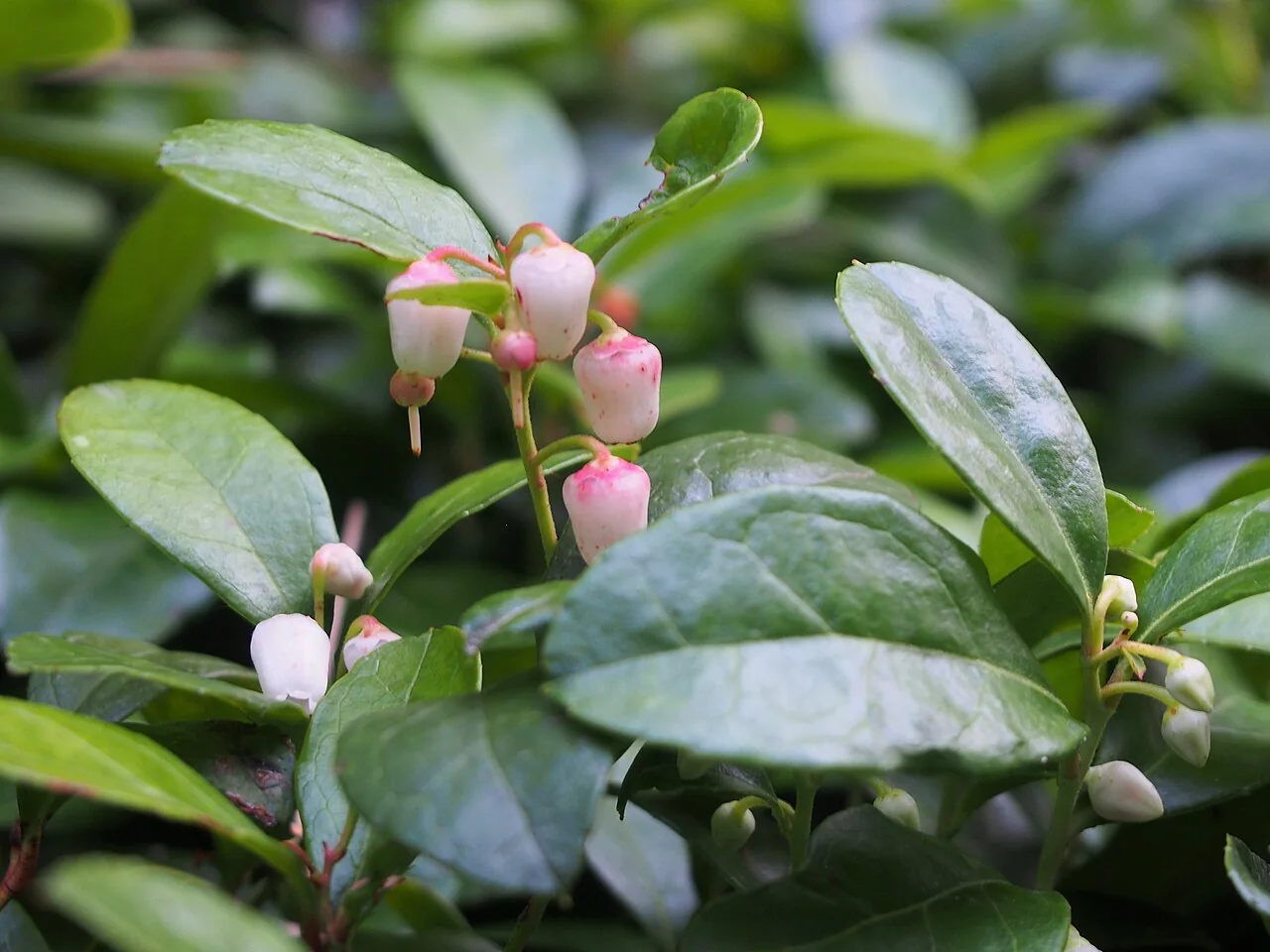
Gaultheria procumbens in flower.
Agnieszka Kwiecień, Nova / Wikimedia Commons / CC BY-SA 4.0

Photo details
Resized and converted to WebP. No content edits.
Source: File:Gaultheria procumbens Golteria rozesłana 2020-08-07 02.jpg
Reviewed . Source identification, photograph and license reviewed. The image illustrates the named plant; it does not verify dimensions or other plant traits.
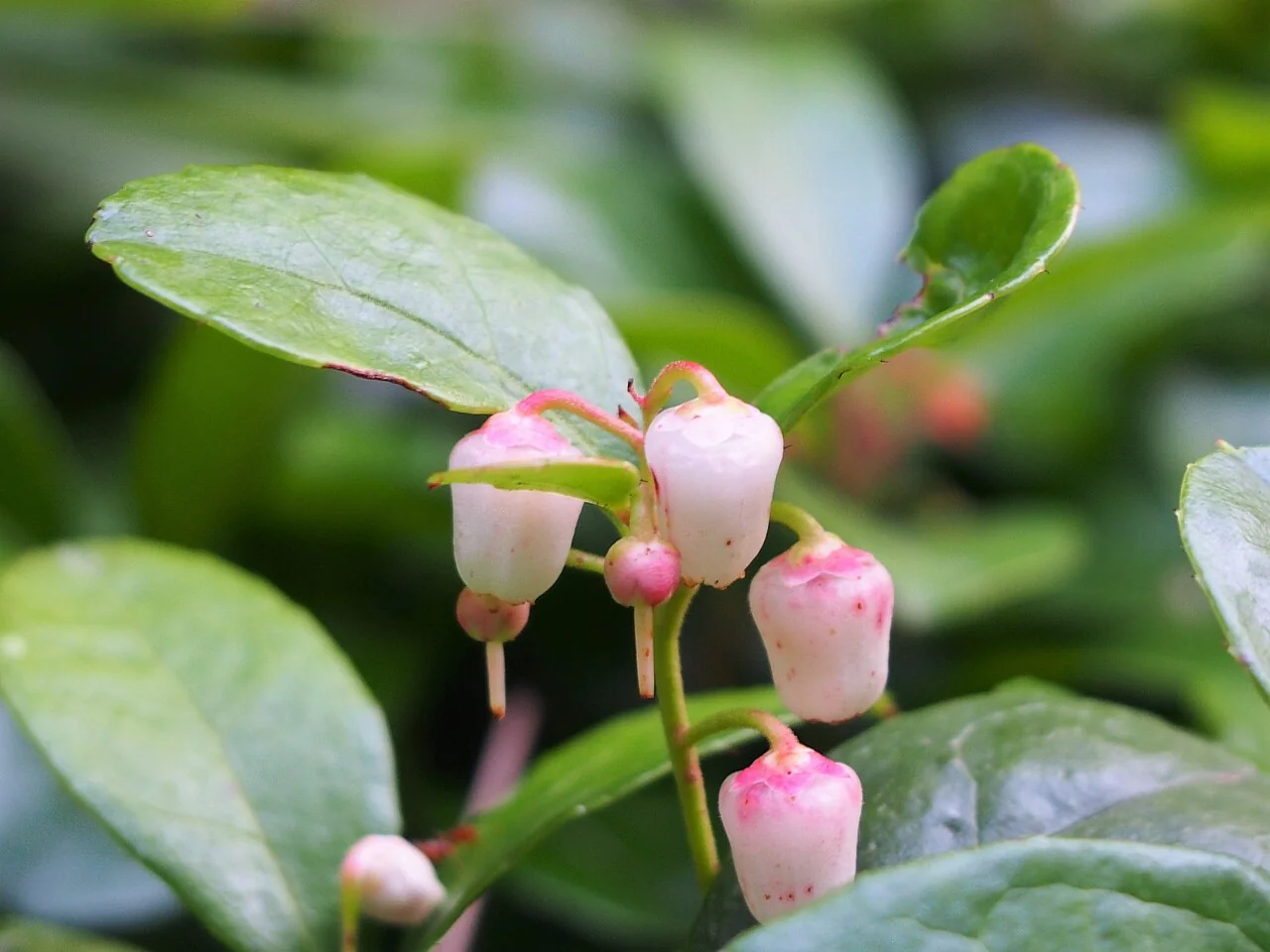
Flowers of Gaultheria procumbens.
Agnieszka Kwiecień, Nova / Wikimedia Commons / CC BY-SA 4.0

Photo details
Resized and converted to WebP. No content edits.
Source: File:Gaultheria procumbens Golteria rozesłana 2020-08-07 04.jpg
Reviewed . Source identification, photograph and license reviewed. The image illustrates the named plant; it does not verify dimensions or other plant traits.
Common names
37 names · 17 languagesOther languages (16)
- Dutch
-
- Bergthee[2]
- Liggende bergthee
- French
-
- Gaulthérie couchée
- thé des bois[2]
- Chinese (Simplified)
-
- 美东茶莓[2]
- Chinese (Traditional)
-
- 美東茶莓[2]
- Czech
-
- libavka poléhavá[2]
- Danish
-
- Nedliggende bjergte[2]
- Estonian
-
- lamav talihali[2]
- Finnish
-
- lamosalali[2]
- German
-
- Niedere Scheinbeere[2]
- Ojibwe
-
- Wiinsibak (Wiinisiibag, Owinîsi'mîn)[2]
- Polish
-
- golteria rozesłana[2]
- Russian
-
- Гольтерия лежачая[2]
- Slovak
-
- gaultéria ležatá[2]
- Swedish
-
- tuvvaktelbär[2]
- Ukrainian
-
- Гольтерія лежача[2]
Sources & name notes (2)
Names recorded in our plant catalogue and botanical sources, grouped by language. Usage can vary by region.
Numbered references identify names recorded by an external source. Other names are from our plant catalogue.
Common names from World Plants, version 26.05, reproduced in Catalogue of Life 2026-08-20. License: CC BY.
Source records
- Eastern teaberry (EN) — VernacularName.tsv, line 153407; taxon 6JZCD.
Community-curated iNaturalist taxonomy; common-name attestation, not an independent botanical determination.
Source records
- Eastern Teaberry — results[0].names[1]; taxon id 62376; Gaultheria procumbens.
- Wintergreen — results[0].names[2]; taxon id 62376; Gaultheria procumbens.
- Nedliggende bjergte — results[0].names[4]; taxon id 62376; Gaultheria procumbens.
- libavka poléhavá — results[0].names[5]; taxon id 62376; Gaultheria procumbens.
- Checkerberry — results[0].names[6]; taxon id 62376; Gaultheria procumbens.
- Niedere Scheinbeere — results[0].names[7]; taxon id 62376; Gaultheria procumbens.
- Wiinsibak (Wiinisiibag, Owinîsi'mîn) — results[0].names[8]; taxon id 62376; Gaultheria procumbens.
- lamav talihali — results[0].names[9]; taxon id 62376; Gaultheria procumbens.
- tuvvaktelbär — results[0].names[10]; taxon id 62376; Gaultheria procumbens.
- thé des bois — results[0].names[11]; taxon id 62376; Gaultheria procumbens.
- 美东茶莓 — results[0].names[12]; taxon id 62376; Gaultheria procumbens.
- 美東茶莓 — results[0].names[13]; taxon id 62376; Gaultheria procumbens.
- Гольтерия лежачая — results[0].names[14]; taxon id 62376; Gaultheria procumbens.
- ginger-plum — results[0].names[15]; taxon id 62376; Gaultheria procumbens.
- ginger-leaf — results[0].names[16]; taxon id 62376; Gaultheria procumbens.
- chickerberry — results[0].names[17]; taxon id 62376; Gaultheria procumbens.
- winterberry — results[0].names[18]; taxon id 62376; Gaultheria procumbens.
- red pollom — results[0].names[19]; taxon id 62376; Gaultheria procumbens.
- roxberry — results[0].names[20]; taxon id 62376; Gaultheria procumbens.
- trailing gaultheria — results[0].names[21]; taxon id 62376; Gaultheria procumbens.
- clink — results[0].names[22]; taxon id 62376; Gaultheria procumbens.
- wax cluster — results[0].names[23]; taxon id 62376; Gaultheria procumbens.
- ivory plum — results[0].names[24]; taxon id 62376; Gaultheria procumbens.
- berried tea — results[0].names[25]; taxon id 62376; Gaultheria procumbens.
- woodsman's tea — results[0].names[26]; taxon id 62376; Gaultheria procumbens.
- aromatic wintergreen — results[0].names[27]; taxon id 62376; Gaultheria procumbens.
- creeping wintergreen — results[0].names[28]; taxon id 62376; Gaultheria procumbens.
- Bergthee — results[0].names[29]; taxon id 62376; Gaultheria procumbens.
- golteria rozesłana — results[0].names[30]; taxon id 62376; Gaultheria procumbens.
- lamosalali — results[0].names[31]; taxon id 62376; Gaultheria procumbens.
- チェッカーベリー — results[0].names[32]; taxon id 62376; Gaultheria procumbens.
- 姫柑子 — results[0].names[33]; taxon id 62376; Gaultheria procumbens.
- gaultéria ležatá — results[0].names[34]; taxon id 62376; Gaultheria procumbens.
- Гольтерія лежача — results[0].names[35]; taxon id 62376; Gaultheria procumbens.
General information
Plant characteristics
NC State landscape size range; converted from feet and inches. Size varies with site, age and management.
Sources [3]NC State landscape size range; converted from feet and inches. Size varies with site, age and management.
Sources [3]Whole-plant habit and form as described by NC State.
Sources [3]Uses
Fruit, Leaves, Condiment, Tea
Essential oil, Ground cover
Description
Fruit: eaten raw or cooked. The fruit has a strong and spicy flavor, and tastes best after the frost period. The fruits remain on the trees until spring, unless they are eaten earlier by birds and other animals. The fruits are also suitable for use in pies, jams, and other dishes. They have a diameter of 15 mm. Young leaves are edible when raw. They taste best when they are still very young and have a dry and powdery flavor. Fresh leaves can be used to make a tasty tea. Fermenting the leaves can make the tea stronger. Additionally, the leaves can be used to make evergreen oil. Moreover, the leaves are used to enhance the flavor of beer, candy, chewing gum, and other products.
Harvest
Sources and references
References for the information marked with source numbers on this page.
-
Royal Botanic Gardens, Kew
World Checklist of Vascular Plants, version 16, extracted 4 June 2026
Relevant sections
- Botanical family: WCVP v16, wcvp_names.csv row 807078; name ID 2817706; Gaultheria Kalm ex L.. Family column.
- Taxonomy: WCVP v16, wcvp_names.csv row 1395975; name ID 2817983; Gaultheria procumbens L..
Source checked on .
Source data licence: CC BY 3.0.
-
Catalogue of Life
Catalogue of Life 2026-08-20 — Gaultheria procumbens
Taxonomic data from World Plants, version 26.05, reproduced in Catalogue of Life 2026-08-20.
Supports: TaxonomyRelevant sections
- Taxonomy: COL 2026-08-20, NameUsage.tsv line 2183322, ID 6JZCD: Gaultheria procumbens L. (accepted).
Source checked on .
-
NC State Extension, North Carolina State University
Gaultheria procumbens — Extension Gardener Plant Toolbox
Supports: HeightSpreadGrowth rateFoliageGrowth habitLightSoil moistureSoil textureSoil pHUSDA hardiness
Relevant sections
- Height: Dimensions > Height; Height: 0 ft. 4 in. - 0 ft. 8 in.
- Spread: Dimensions > Width; Width: 0 ft. 6 in. - 1 ft. 0 in.
- Growth rate: Growth Rate
- Foliage: Woody Plant Leaf Characteristics
- Growth habit: Habit/Form
- Light: Light
- Soil moisture: Soil Drainage
- Soil texture: Soil Texture
- Soil pH: Soil pH
- USDA hardiness: USDA Plant Hardiness Zone
Source checked on .