Foeniculum vulgare
Fennel
Explore the size, hardiness, soil, light, edible uses and harvest period of Foeniculum vulgare.
Plant photos
2 photos · Select to enlarge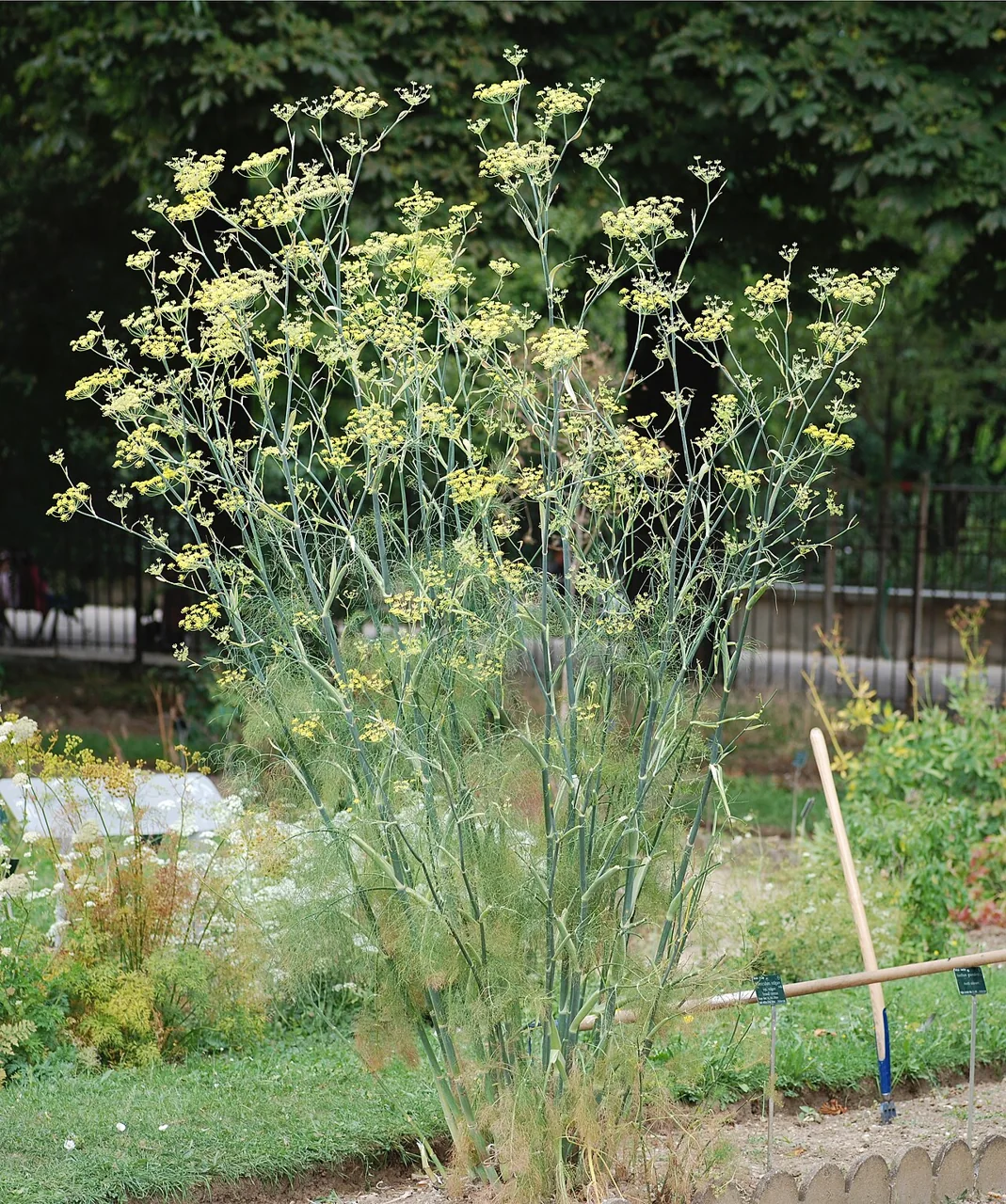
A tall fennel plant in a botanical garden.
Alvesgaspar / Wikimedia Commons / CC BY-SA 3.0

Photo details
Resized and converted to WebP. No content edits.
Source: File:Foeniculum July 2011-1a.jpg
Reviewed . Source identification and visible plant parts reviewed against this plant record.
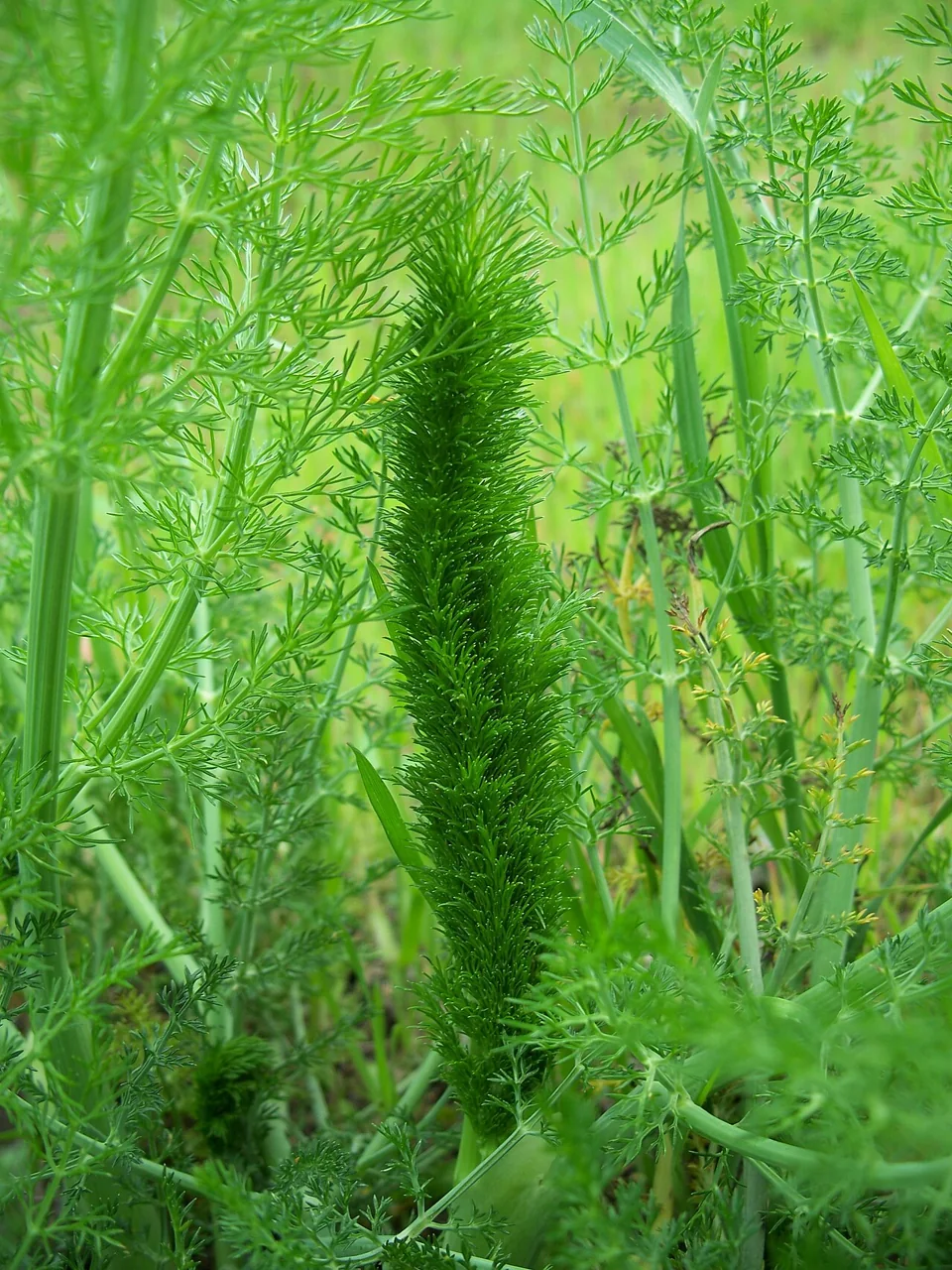
The finely divided foliage of fennel.
Eugene Zelenko / Wikimedia Commons / CC BY-SA 4.0

Photo details
Resized and converted to WebP. No content edits.
Source: File:Foeniculum vulgare04.jpg
Reviewed . Source identification and visible plant parts reviewed against this plant record.
Common names
59 names · 49 languagesOther languages (48)
- Dutch
-
- Tuinvenkel
- Venkel[2]
- French
-
- Fenouil[2]
- Afrikaans
-
- Vinkel[2]
- Arabic
-
- شمرة شائعة[2]
- Armenian
-
- Հոռոմ-սամիթ սովորական[2]
- Asturian
-
- finochu[2]
- Bantoanon
-
- anis[2]
- Basque
-
- Mihilu[2]
- Catalan
-
- fonoll[2]
- Chinese (Simplified)
-
- 茴香[2]
- Chinese (Traditional)
-
- 茴香[2]
- Croatian
-
- Komorač[2]
- Czech
-
- fenykl obecný[2]
- Danish
-
- Fennikel[2]
- Estonian
-
- Harilik apteegitill[2]
- Finnish
-
- maustefenkoli[2]
- Galician
-
- Fiúncho[2]
- Georgian
-
- დიდი კამა[2]
- Greek
-
- Μάραθο[2]
- Hebrew
-
- שומר פשוט[2]
- Hindi
-
- सौंफ[2]
- Indonesian
-
- Adas Manis[2]
- Italian
-
- finocchio[2]
- Japanese
-
- ウイキョウ[2]
- Kannada
-
- ಸೊಂಪು[2]
- Korean
-
- 회향[2]
- Kurdish
-
- Rizyane[2]
- Lithuanian
-
- Paprastasis pankolis[2]
- Low Saxon
-
- Veankel[2]
- Malay
-
- Pokok Adas[2]
- Norwegian
-
- fennikel[2]
- Otomi
-
- nximfi[2]
- Portuguese
-
- funcho[2]
- Russian
-
- Фенхель обыкновенный[2]
- Slovak
-
- fenikel obyčajný[2]
- Slovenian
-
- navadni komarček[2]
- Sundanese
-
- Adas[2]
- Swedish
-
- fänkål[2]
- Turkish
-
- rezene[2]
- Ukrainian
-
- Фенхель звичайний[2]
- Welsh
-
- Ffenigl[2]
- Language not specified
-
- Eneldo[1]
Sources & name notes (2)
Names recorded in our plant catalogue and botanical sources, grouped by language. Usage can vary by region.
Numbered references identify names recorded by an external source. Other names are from our plant catalogue.
Common names from World Plants, version 26.05, reproduced in Catalogue of Life 2026-08-20. License: CC BY.
Source records
- Echter Fenchel (DE) — VernacularName.tsv, line 138601; taxon 6JBPX.
- Eneldo — VernacularName.tsv, line 138602; taxon 6JBPX.
- Esmeldo (ES); Fennel (EN) — VernacularName.tsv, line 138603; taxon 6JBPX.
Community-curated iNaturalist taxonomy; common-name attestation, not an independent botanical determination.
Source records
- fennel — results[0].names[1]; taxon id 53052; Foeniculum vulgare.
- Sweet Fennel — results[0].names[2]; taxon id 53052; Foeniculum vulgare.
- hinojo — results[0].names[3]; taxon id 53052; Foeniculum vulgare.
- Adas Manis — results[0].names[4]; taxon id 53052; Foeniculum vulgare.
- funcho — results[0].names[5]; taxon id 53052; Foeniculum vulgare.
- wild fennel — results[0].names[6]; taxon id 53052; Foeniculum vulgare.
- fenouil — results[0].names[7]; taxon id 53052; Foeniculum vulgare.
- שומר פשוט — results[0].names[8]; taxon id 53052; Foeniculum vulgare.
- fonoll — results[0].names[9]; taxon id 53052; Foeniculum vulgare.
- finocchio — results[0].names[10]; taxon id 53052; Foeniculum vulgare.
- Adas — results[0].names[11]; taxon id 53052; Foeniculum vulgare.
- Édeskömény — results[0].names[12]; taxon id 53052; Foeniculum vulgare.
- सौंफ — results[0].names[13]; taxon id 53052; Foeniculum vulgare.
- Harilik apteegitill — results[0].names[14]; taxon id 53052; Foeniculum vulgare.
- Mihilu — results[0].names[15]; taxon id 53052; Foeniculum vulgare.
- დიდი კამა — results[0].names[16]; taxon id 53052; Foeniculum vulgare.
- ಸೊಂಪು — results[0].names[17]; taxon id 53052; Foeniculum vulgare.
- Rizyane — results[0].names[18]; taxon id 53052; Foeniculum vulgare.
- Pokok Adas — results[0].names[19]; taxon id 53052; Foeniculum vulgare.
- Veankel — results[0].names[20]; taxon id 53052; Foeniculum vulgare.
- ผักชีล้อม — results[0].names[21]; taxon id 53052; Foeniculum vulgare.
- Fenchel — results[0].names[22]; taxon id 53052; Foeniculum vulgare.
- fenykl obecný — results[0].names[23]; taxon id 53052; Foeniculum vulgare.
- 茴香 — results[0].names[24]; taxon id 53052; Foeniculum vulgare.
- fennikel — results[0].names[25]; taxon id 53052; Foeniculum vulgare.
- maustefenkoli — results[0].names[26]; taxon id 53052; Foeniculum vulgare.
- Fennikel — results[0].names[27]; taxon id 53052; Foeniculum vulgare.
- Common fennel — results[0].names[28]; taxon id 53052; Foeniculum vulgare.
- Venkel — results[0].names[29]; taxon id 53052; Foeniculum vulgare.
- finochu — results[0].names[30]; taxon id 53052; Foeniculum vulgare.
- Μάραθο — results[0].names[31]; taxon id 53052; Foeniculum vulgare.
- Фенхель обыкновенный — results[0].names[32]; taxon id 53052; Foeniculum vulgare.
- ウイキョウ — results[0].names[33]; taxon id 53052; Foeniculum vulgare.
- Fiúncho — results[0].names[34]; taxon id 53052; Foeniculum vulgare.
- anis — results[0].names[35]; taxon id 53052; Foeniculum vulgare.
- මහදුරු — results[0].names[36]; taxon id 53052; Foeniculum vulgare.
- මාදුරු — results[0].names[37]; taxon id 53052; Foeniculum vulgare.
- Հոռոմ-սամիթ սովորական — results[0].names[38]; taxon id 53052; Foeniculum vulgare.
- rezene — results[0].names[39]; taxon id 53052; Foeniculum vulgare.
- fänkål — results[0].names[40]; taxon id 53052; Foeniculum vulgare.
- Paprastasis pankolis — results[0].names[41]; taxon id 53052; Foeniculum vulgare.
- 회향 — results[0].names[42]; taxon id 53052; Foeniculum vulgare.
- Vinkel — results[0].names[43]; taxon id 53052; Foeniculum vulgare.
- navadni komarček — results[0].names[44]; taxon id 53052; Foeniculum vulgare.
- شمرة شائعة — results[0].names[45]; taxon id 53052; Foeniculum vulgare.
- 茴香 — results[0].names[46]; taxon id 53052; Foeniculum vulgare.
- nximfi — results[0].names[47]; taxon id 53052; Foeniculum vulgare.
- Komorač — results[0].names[48]; taxon id 53052; Foeniculum vulgare.
- Fenkuł włoski — results[0].names[49]; taxon id 53052; Foeniculum vulgare.
- Koper włoski — results[0].names[50]; taxon id 53052; Foeniculum vulgare.
- kerti édeskömény — results[0].names[51]; taxon id 53052; Foeniculum vulgare.
- เทียนข้าวเปลือก — results[0].names[52]; taxon id 53052; Foeniculum vulgare.
- Ffenigl — results[0].names[53]; taxon id 53052; Foeniculum vulgare.
- Echter Fenchel — results[0].names[54]; taxon id 53052; Foeniculum vulgare.
- fenikel obyčajný — results[0].names[55]; taxon id 53052; Foeniculum vulgare.
- Фенхель звичайний — results[0].names[56]; taxon id 53052; Foeniculum vulgare.
General information
Plant characteristics
NC State landscape size range; converted from feet and inches. Size varies with site, age and management.
Sources [3]NC State landscape size range; converted from feet and inches. Size varies with site, age and management.
Sources [3]Whole-plant habit and form as described by NC State.
Sources [3]Uses
Leaves, Root, Seed, Stems, Condiment
Dye, Essential oil, Repellent
Description
The leaves of fennel can be eaten both raw and cooked and have a delightful anise flavor. Young leaves are the tastiest, while older leaves can be tough. They are ideal as a garnish for both raw and cooked dishes and make a tasty addition to salads. Moreover, they help to improve digestion. The leaves can be dried, but since they can be harvested year-round, this is not necessary. If fennel grows in a warm and sheltered spot, leaves are available throughout the year. Both the leaf stalks and flower heads can be eaten raw or cooked and have a similar anise-like flavor as the leaves. Fennel seeds are often used as a seasoning in baked goods, bread, and fillings. They also have an anise-like flavor and are beneficial for digestion. The sprouted seeds can be added to salads, and essential oil can be made from the fully ripened and dried seeds, which serves as a flavoring. The cooked roots of fennel, which resemble parsnips somewhat, are also edible. Both the leaves and seeds can be used to make herbal tea.
Harvest
Sources and references
References for the information marked with source numbers on this page.
-
Royal Botanic Gardens, Kew
World Checklist of Vascular Plants, version 16, extracted 4 June 2026
Relevant sections
- Botanical family: WCVP v16, wcvp_names.csv row 118026; name ID 2813581; Foeniculum Mill.. Family column.
- Taxonomy: WCVP v16, wcvp_names.csv row 117317; name ID 2813604; Foeniculum vulgare Mill..
Source checked on .
Source data licence: CC BY 3.0.
-
Catalogue of Life
Catalogue of Life 2026-08-20 — Foeniculum vulgare
Taxonomic data from World Plants, version 26.05, reproduced in Catalogue of Life 2026-08-20.
Supports: TaxonomyRelevant sections
- Taxonomy: COL 2026-08-20, NameUsage.tsv line 2168123, ID 6JBPX: Foeniculum vulgare Mill. (accepted).
Source checked on .
-
NC State Extension, North Carolina State University
Foeniculum vulgare — Extension Gardener Plant Toolbox
Relevant sections
- Height: Dimensions > Height; Height: 4 ft. 0 in. - 6 ft. 0 in.
- Spread: Dimensions > Width; Width: 1 ft. 6 in. - 3 ft. 3 in.
- Growth habit: Habit/Form
- Life cycle: Life Cycle
- Light: Light
- Soil moisture: Soil Drainage
- Soil texture: Soil Texture
- Soil pH: Soil pH
- USDA hardiness: USDA Plant Hardiness Zone
Source checked on .