Eruca vesicaria sativa
Rocket
Explore the size, hardiness, soil, light, edible uses and harvest period of Eruca vesicaria sativa.
Plant photos
2 photos · Select to enlarge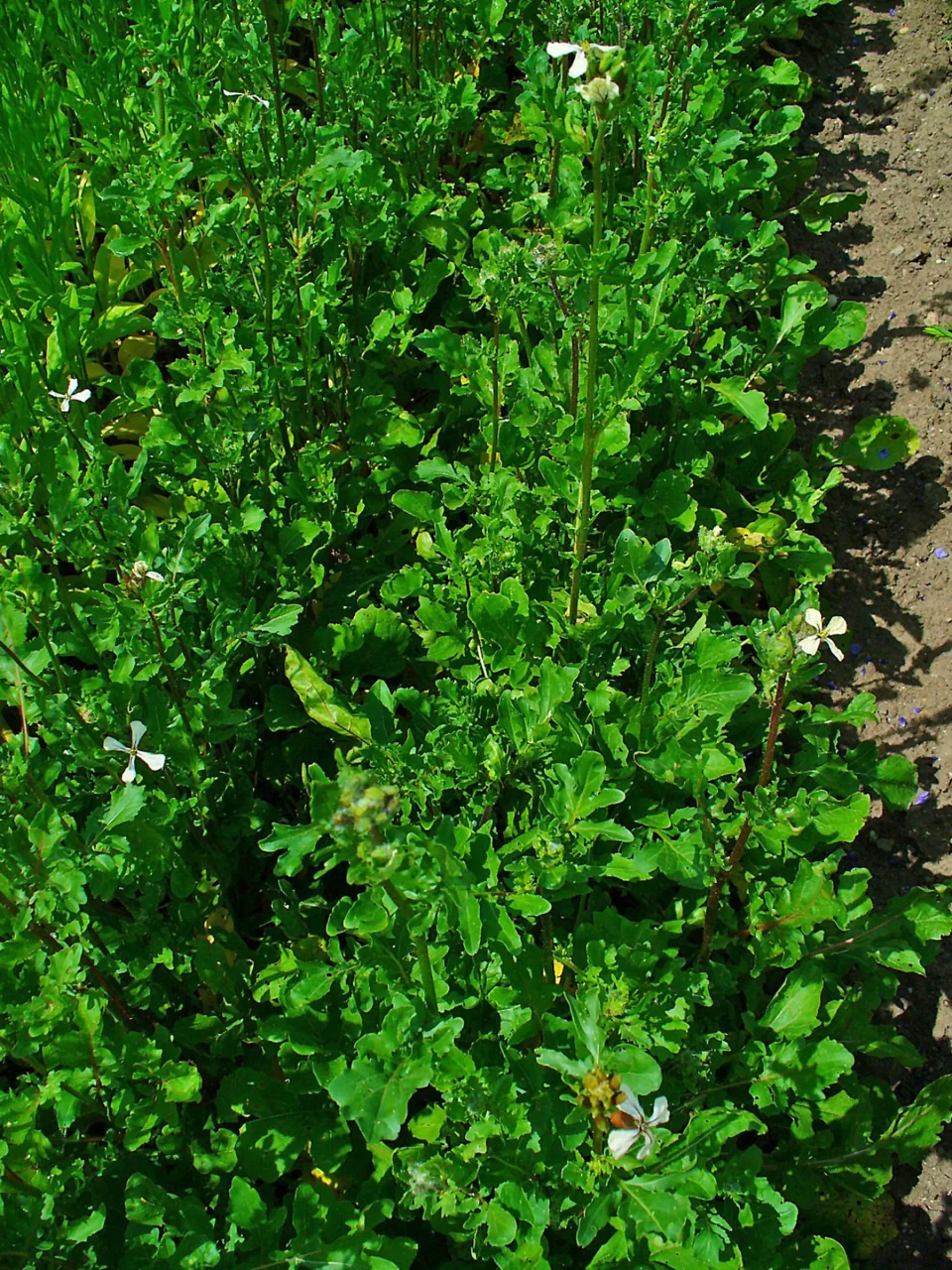
The growth habit of Eruca sativa.
H. Zell / Wikimedia Commons / CC BY-SA 3.0

Photo details
Resized and converted to WebP. No content edits.
Source: File:Eruca sativa 001.JPG
Reviewed . Source identification, photograph and license reviewed. The image illustrates the named plant; it does not verify dimensions or other plant traits.
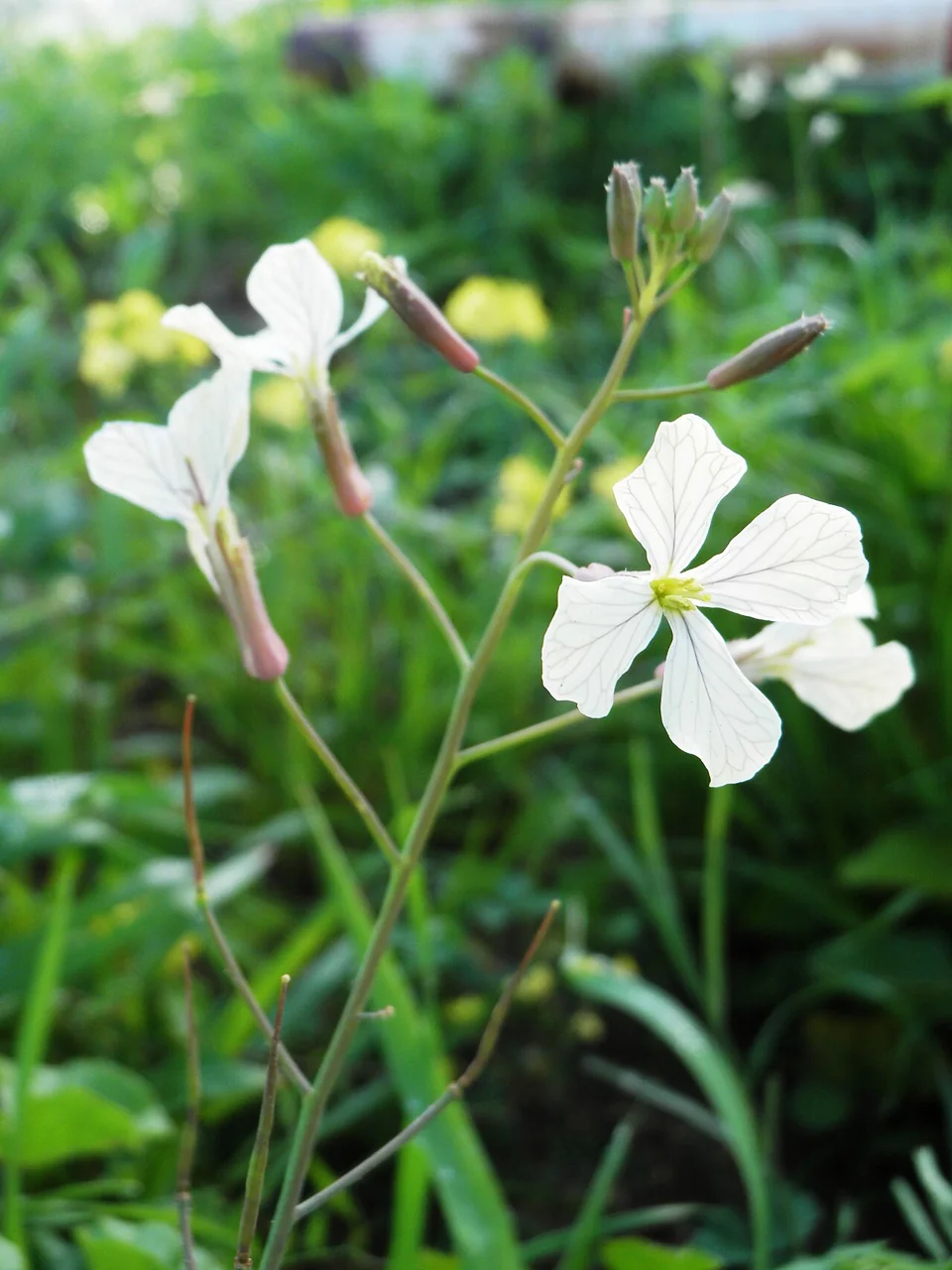
Flowers of Eruca sativa.
Ariel Palmon / Wikimedia Commons / CC BY-SA 3.0

Photo details
Resized and converted to WebP. No content edits.
Source: File:Eruca sativa 1.JPG
Reviewed . Source identification, photograph and license reviewed. The image illustrates the named plant; it does not verify dimensions or other plant traits.
Common names
3 names · 3 languages- EnglishYour language
-
- Rocket
Other languages (2)
- Dutch
-
- Raket
- French
-
- Roquette
Sources & name notes
Names recorded in our plant catalogue, grouped by language. Usage can vary by region.
General information
Accepted in the cited taxonomic treatment. Botanical references may use alternative names.
Sources [1]Plant characteristics
Growing conditions
Well-drained, Moist
Sand (light) Loam (medium) Clay (heavy)
Acidic Neutral Alkaline
Partial shade, Full sun
Uses
Leaves, Flowers, Oil, Condiment
Oil
Description
Young leaves of this plant can be eaten both raw and cooked. They have a strong spicy flavor, especially when sourced from well-maintained plants. Adding a few leaves to a salad is fine, but the taste may be too intense for some people. Older leaves that are too tough to eat raw can be pureed and added to soups. In mild areas, such as parts of Great Britain, it is possible to grow edible leaves year-round by successive sowing, especially if the plants receive some protection in winter. The flowers of this plant can be eaten raw and have a taste similar to the leaves. They make a beautiful addition to salads. The seeds produce a semi-drying oil that is edible and can last up to 6 months, and it can replace rapeseed oil. This oil contains 32% fat and 27% protein and is known as 'jamba oil'. Mustard can also be derived from the seeds; the sharp flavor of mustard comes from an essential oil in the seeds. By adding cold water to the ground seeds, a reaction occurs where an enzyme (myrosin) reacts with a glycoside (sinigrin), producing a sulfur compound that creates the sharpness. If you then stop the enzyme by adding hot water, vinegar, or salt, a milder, bitter mustard is produced.
Harvest
Sources and references
References for the information marked with source numbers on this page.
-
Royal Botanic Gardens, Kew
World Checklist of Vascular Plants, version 16, extracted 4 June 2026
Relevant sections
- Taxonomy: WCVP version 16, wcvp_names.csv: Eruca vesicaria subsp. sativa (Mill.) Thell., name ID 2798761, row 795999; Eruca vesicaria var. sativa (Mill.) Thell., name ID 3279353, row 1387504; Eruca sativa Mill., name ID 2798746, row 1387508
- Botanical family: WCVP v16, wcvp_names.csv row 1387473; name ID 2798706; Eruca Mill.. Family column.
Source checked on .
Source data licence: CC BY 3.0.