Elaeagnus umbellata - Thunb.
Autumn Olive
Explore the size, hardiness, soil, light, edible uses and harvest period of Elaeagnus umbellata - Thunb..
Plant photos
2 photos · Select to enlarge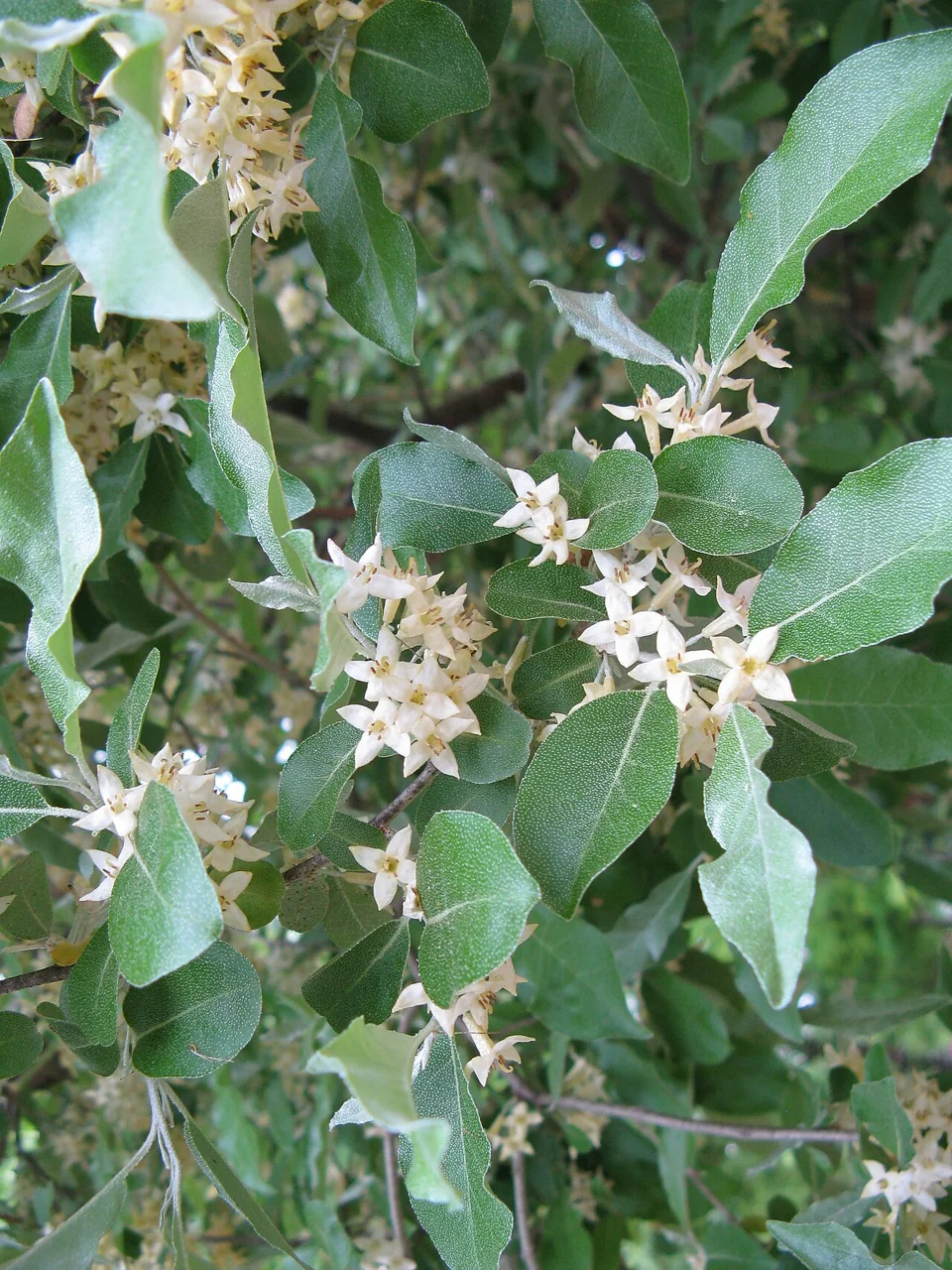
Elaeagnus umbellata in flower.
KENPEI / Wikimedia Commons / CC BY-SA 3.0

Photo details
Resized and converted to WebP. No content edits.
Source: File:Elaeagnus umbellata1.jpg
Reviewed . Source identification, photograph and license reviewed. The image illustrates the named plant; it does not verify dimensions or other plant traits.
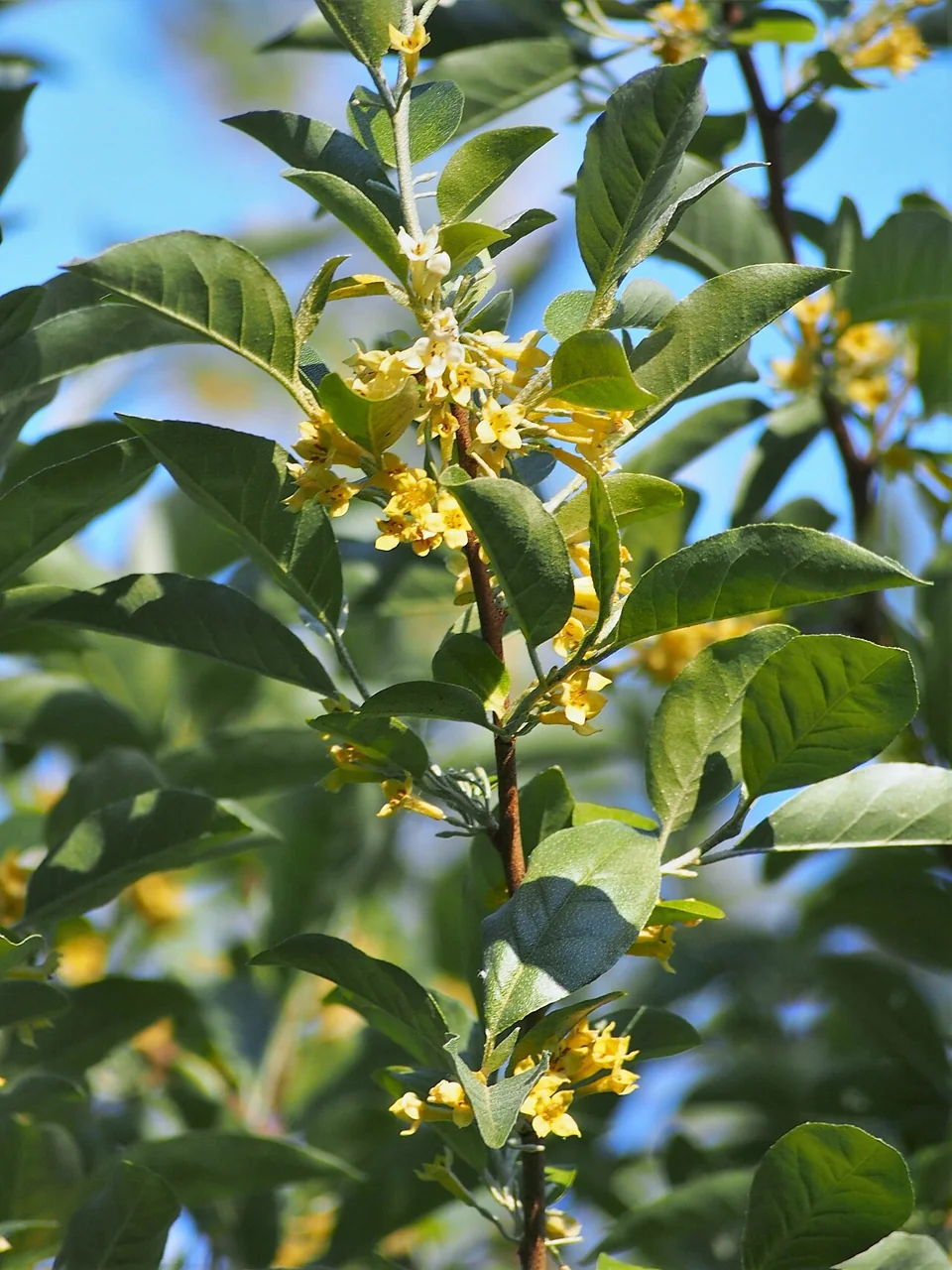
Flowers of Elaeagnus umbellata.
Agnieszka Kwiecień, Nova / Wikimedia Commons / CC BY-SA 4.0

Photo details
Resized and converted to WebP. No content edits.
Source: File:Elaeagnus umbellata Oliwnik baldaszkowy 2021-06-02 01.jpg
Reviewed . Source identification, photograph and license reviewed. The image illustrates the named plant; it does not verify dimensions or other plant traits.
Common names
3 names · 3 languages- EnglishYour language
-
- Autumn Olive
Other languages (2)
- Dutch
-
- Goudbes
- French
-
- Olivier de Bohême
Sources & name notes
Names recorded in our plant catalogue, grouped by language. Usage can vary by region.
General information
Accepted in the cited taxonomic treatment. Botanical references may use alternative names.
Sources [1]Kew's family placement for the genus Elaeagnus (WCVP v16).
Sources [1]Plant characteristics
Growing conditions
Moist
Sand (light) Loam (medium) Clay (heavy)
Acidic Neutral Alkaline
Full sun
Uses
Fruit, Seed
Hedge, Biomass production, Companion plant
Description
Edible applications: The fruits can be eaten raw or cooked. They are juicy and pleasantly sour in taste, enjoyable to eat as is, and also suitable for jams and preserves. The fruits must be fully ripe before they can be consumed raw; if they are even slightly unripe, they will be quite astringent. The fruits contain about 8.3% sugars, 4.5% proteins, 1% ash, and approximately 12 mg of vitamin C per 100 g. In the wild, mature shrubs produce about 650 g of fruit in 2 - 3 harvests. The harvested fruit remains good at room temperature for about 15 days. The fruits are about 8 mm in diameter and contain a single large pit. The seeds can be eaten raw or cooked. They can be consumed along with the fruit, although the seed coat is quite fibrous.
Harvest
Sources and references
References for the information marked with source numbers on this page.
-
Royal Botanic Gardens, Kew
World Checklist of Vascular Plants, version 16, extracted 4 June 2026
Relevant sections
- Taxonomy: WCVP version 16, wcvp_names.csv: Elaeagnus umbellata Thunb., name ID 2785255, row 1380611
- Botanical family: WCVP v16, wcvp_names.csv row 1379863; name ID 2784975; Elaeagnus Tourn. ex L.. Family column.
Source checked on .
Source data licence: CC BY 3.0.