Elaeagnus multiflora
Cherry Eleagnus
Explore the size, hardiness, soil, light, edible uses and harvest period of Elaeagnus multiflora.
Plant photos
2 photos · Select to enlarge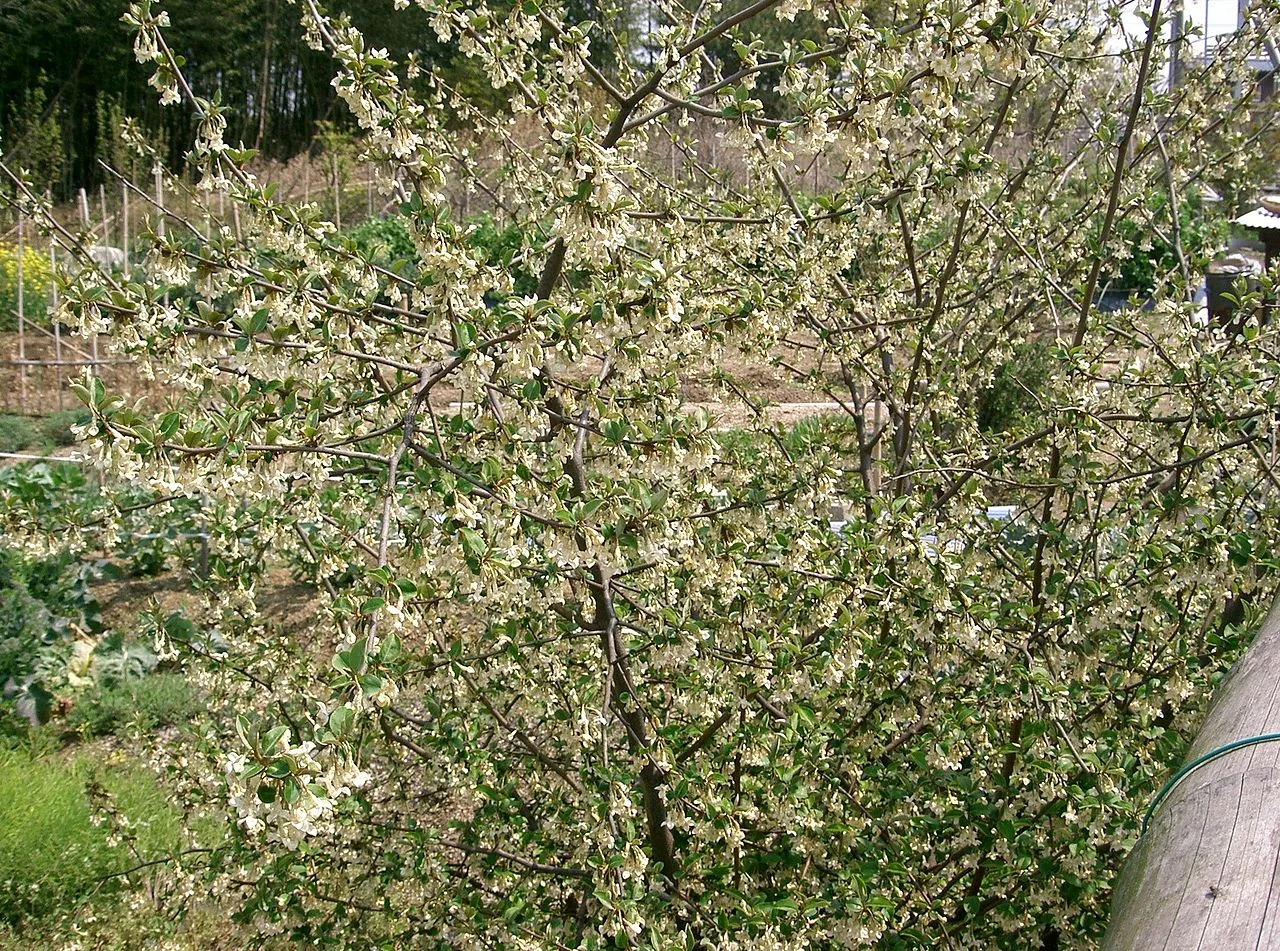
Elaeagnus multiflora in flower.
KENPEI / Wikimedia Commons / CC BY-SA 3.0

Photo details
Resized and converted to WebP. No content edits.
Source: File:Elaeagnus multiflora2.jpg
Reviewed . Source identification, photograph and license reviewed. The image illustrates the named plant; it does not verify dimensions or other plant traits.
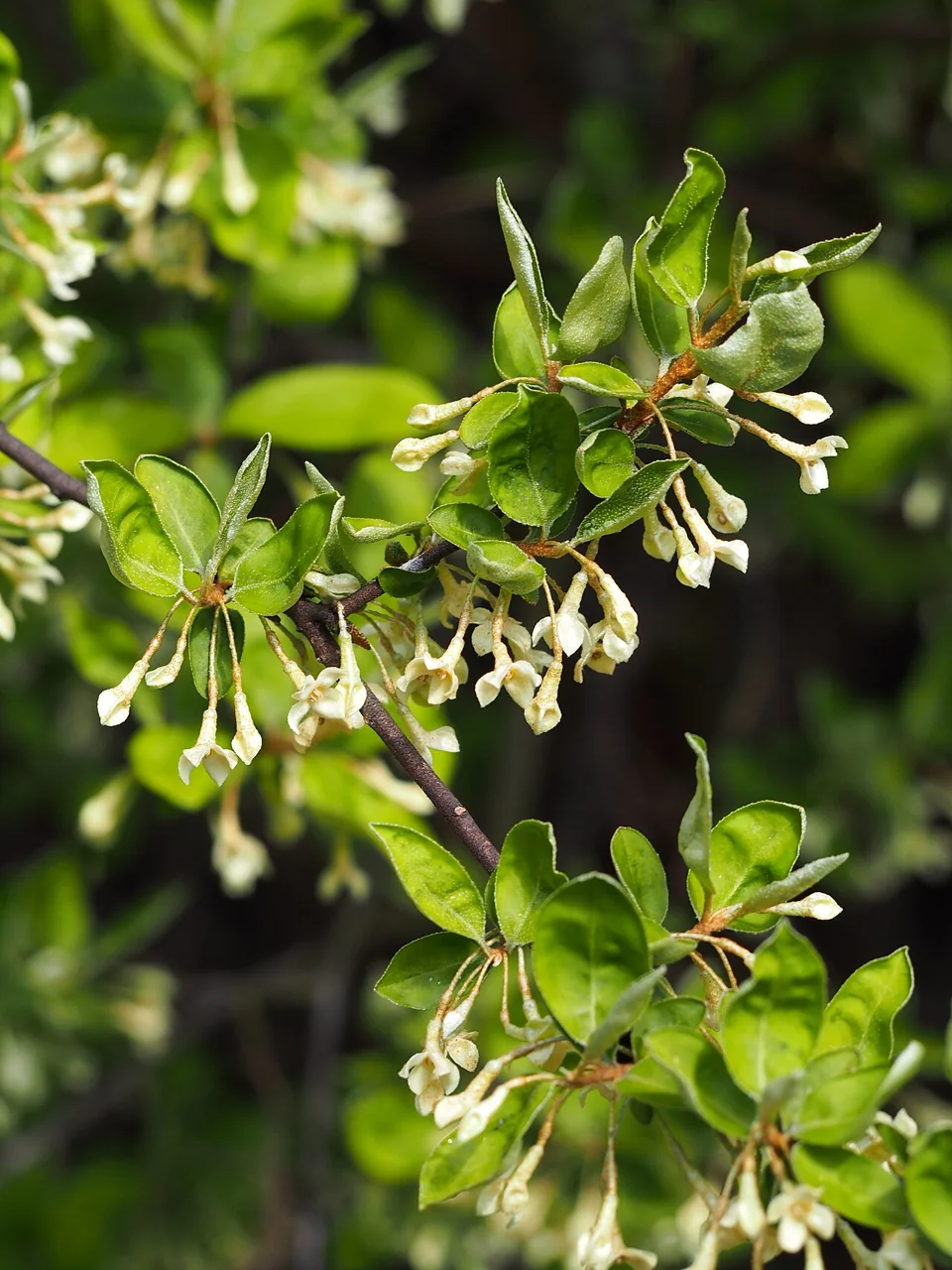
Flowers of Elaeagnus multiflora.
Agnieszka Kwiecień, Nova / Wikimedia Commons / CC BY-SA 4.0

Photo details
Resized and converted to WebP. No content edits.
Source: File:Elaeagnus multiflora Oliwnik wielokwiatowy 2017-05-01 01.jpg
Reviewed . Source identification, photograph and license reviewed. The image illustrates the named plant; it does not verify dimensions or other plant traits.
Common names
21 names · 15 languagesOther languages (14)
- Dutch
-
- Langstelige olijfwilg[2]
- Rijkbloeiende olijfwilg
- Veelbloemige olijfwilg
- French
-
- Goumi du Japon[2]
- Chinese (Simplified)
-
- 木半夏[2]
- Chinese (Traditional)
-
- 木半夏[2]
- Czech
-
- hlošina mnohokvětá[2]
- Finnish
-
- japaninhopeapensas[2]
- German
-
- Reichblütige Ölweide[2]
- Japanese
-
- ナツグミ[2]
- Japanese (romanized)
-
- Natsu-gumi[2]
- Korean
-
- 뜰보리수[2]
- Polish
-
- Oliwnik wielokwiatowy[2]
- Russian
-
- Лох многоцветковый[2]
- Slovak
-
- hlošina mnohokvetá[2]
- Swedish
-
- Japansk silverbuske[2]
Sources & name notes (2)
Names recorded in our plant catalogue and botanical sources, grouped by language. Usage can vary by region.
Numbered references identify names recorded by an external source. Other names are from our plant catalogue.
Common names from World Plants, version 26.05, reproduced in Catalogue of Life 2026-08-20. License: CC BY.
Source records
- Cherry silverberry — VernacularName.tsv, line 167701; taxon 6DZTL.
Community-curated iNaturalist taxonomy; common-name attestation, not an independent botanical determination.
Source records
- Cherry Oleaster — results[0].names[1]; taxon id 162213; Elaeagnus multiflora.
- ナツグミ — results[0].names[2]; taxon id 162213; Elaeagnus multiflora.
- Natsu-gumi — results[0].names[3]; taxon id 162213; Elaeagnus multiflora.
- hlošina mnohokvětá — results[0].names[4]; taxon id 162213; Elaeagnus multiflora.
- Лох многоцветковый — results[0].names[5]; taxon id 162213; Elaeagnus multiflora.
- Goumi du Japon — results[0].names[6]; taxon id 162213; Elaeagnus multiflora.
- 木半夏 — results[0].names[7]; taxon id 162213; Elaeagnus multiflora.
- Langstelige olijfwilg — results[0].names[8]; taxon id 162213; Elaeagnus multiflora.
- 木半夏 — results[0].names[9]; taxon id 162213; Elaeagnus multiflora.
- 뜰보리수 — results[0].names[10]; taxon id 162213; Elaeagnus multiflora.
- Oliwnik wielokwiatowy — results[0].names[11]; taxon id 162213; Elaeagnus multiflora.
- Goumi — results[0].names[12]; taxon id 162213; Elaeagnus multiflora.
- japaninhopeapensas — results[0].names[13]; taxon id 162213; Elaeagnus multiflora.
- Reichblütige Ölweide — results[0].names[14]; taxon id 162213; Elaeagnus multiflora.
- Japanese Berry — results[0].names[15]; taxon id 162213; Elaeagnus multiflora.
- Cherry silverberry — results[0].names[16]; taxon id 162213; Elaeagnus multiflora.
- Japansk silverbuske — results[0].names[17]; taxon id 162213; Elaeagnus multiflora.
- hlošina mnohokvetá — results[0].names[18]; taxon id 162213; Elaeagnus multiflora.
General information
Kew's family placement for the genus Elaeagnus (WCVP v16).
Sources [1]Plant characteristics
Growing conditions
Well-drained, Moist
Sand (light) Loam (medium) Clay (heavy)
Acidic Neutral Alkaline
Partial shade, Full sun
Uses
Fruit, Seed
Nitrogen fixer, Companion plant, Hedge, Rootstock, Fragrant
Description
Fruits can be eaten raw or cooked. They are pleasantly sour when ripe and make a delicious dessert. Although they are often used in pies and jams, they are difficult to harvest without damaging the young shoots. The fruit must be fully ripe to be eaten raw. If the fruit is still somewhat unripe, it will be very astringent. The fruit contains a large seed that can be eaten raw or cooked, although the seed is quite fibrous.
Harvest
Sources and references
References for the information marked with source numbers on this page.
-
Royal Botanic Gardens, Kew
World Checklist of Vascular Plants, version 16, extracted 4 June 2026
Relevant sections
- Botanical family: WCVP v16, wcvp_names.csv row 1379863; name ID 2784975; Elaeagnus Tourn. ex L.. Family column.
- Taxonomy: WCVP v16, wcvp_names.csv row 800526; name ID 2785159; Elaeagnus multiflora Thunb..
Source checked on .
Source data licence: CC BY 3.0.
-
Catalogue of Life
Catalogue of Life 2026-08-20 — Elaeagnus multiflora
Taxonomic data from World Plants, version 26.05, reproduced in Catalogue of Life 2026-08-20.
Supports: TaxonomyRelevant sections
- Taxonomy: COL 2026-08-20, NameUsage.tsv line 2096159, ID 6DZTL: Elaeagnus multiflora Thunb. (accepted).
Source checked on .