Elaeagnus angustifolia
Oleaster
Explore the size, hardiness, soil, light, edible uses and harvest period of Elaeagnus angustifolia.
Plant photos
2 photos · Select to enlarge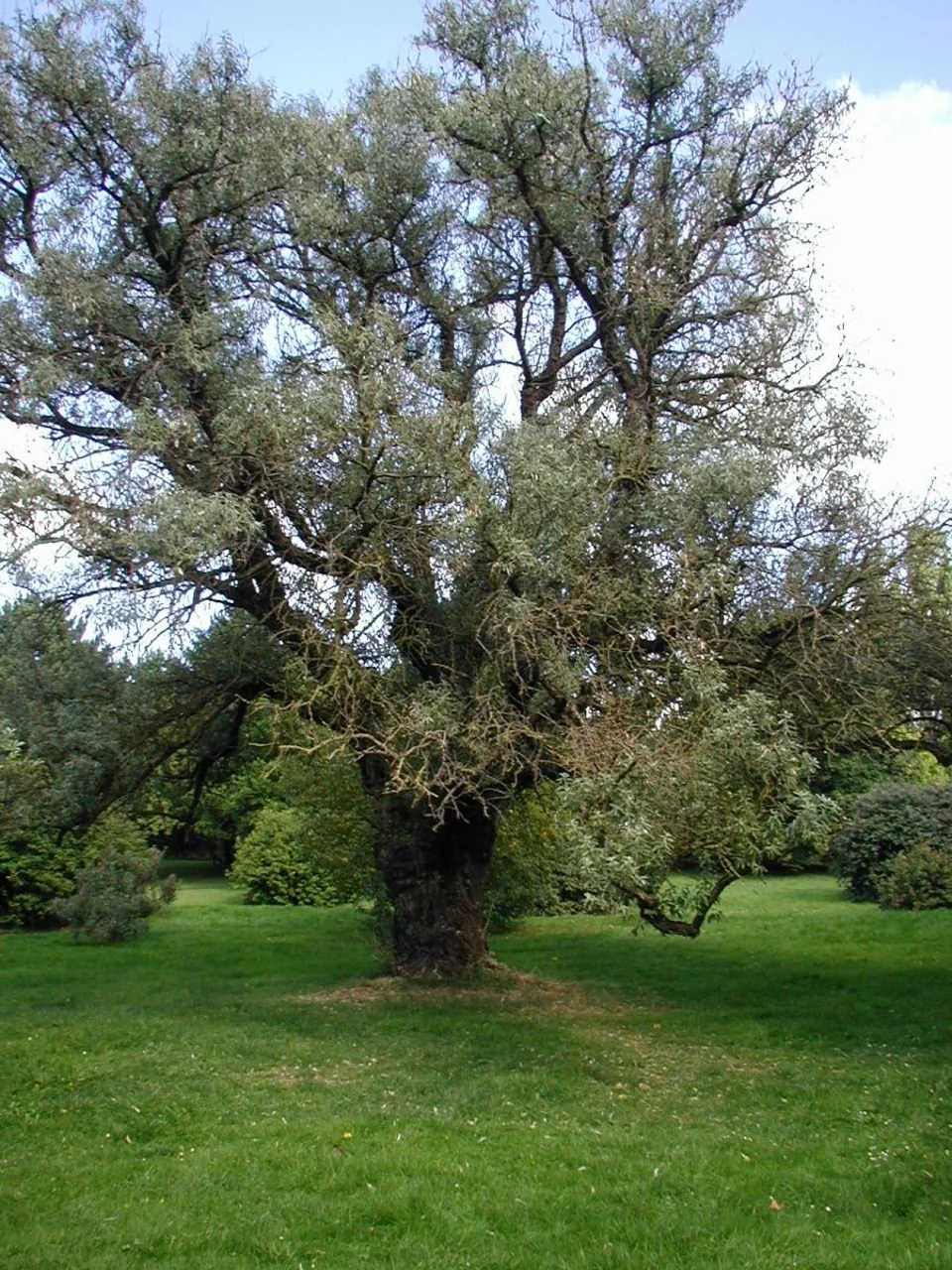
Elaeagnus angustifolia showing its trunk and spreading crown.
Sten Porse / Wikimedia Commons / CC BY-SA 3.0

Photo details
Resized and converted to WebP. No content edits.
Source: File:Elaeagnus-angustifolia-habit.JPG
Reviewed . Source identification, photograph and license reviewed. This image illustrates the named plant; it does not verify dimensions or other plant traits.
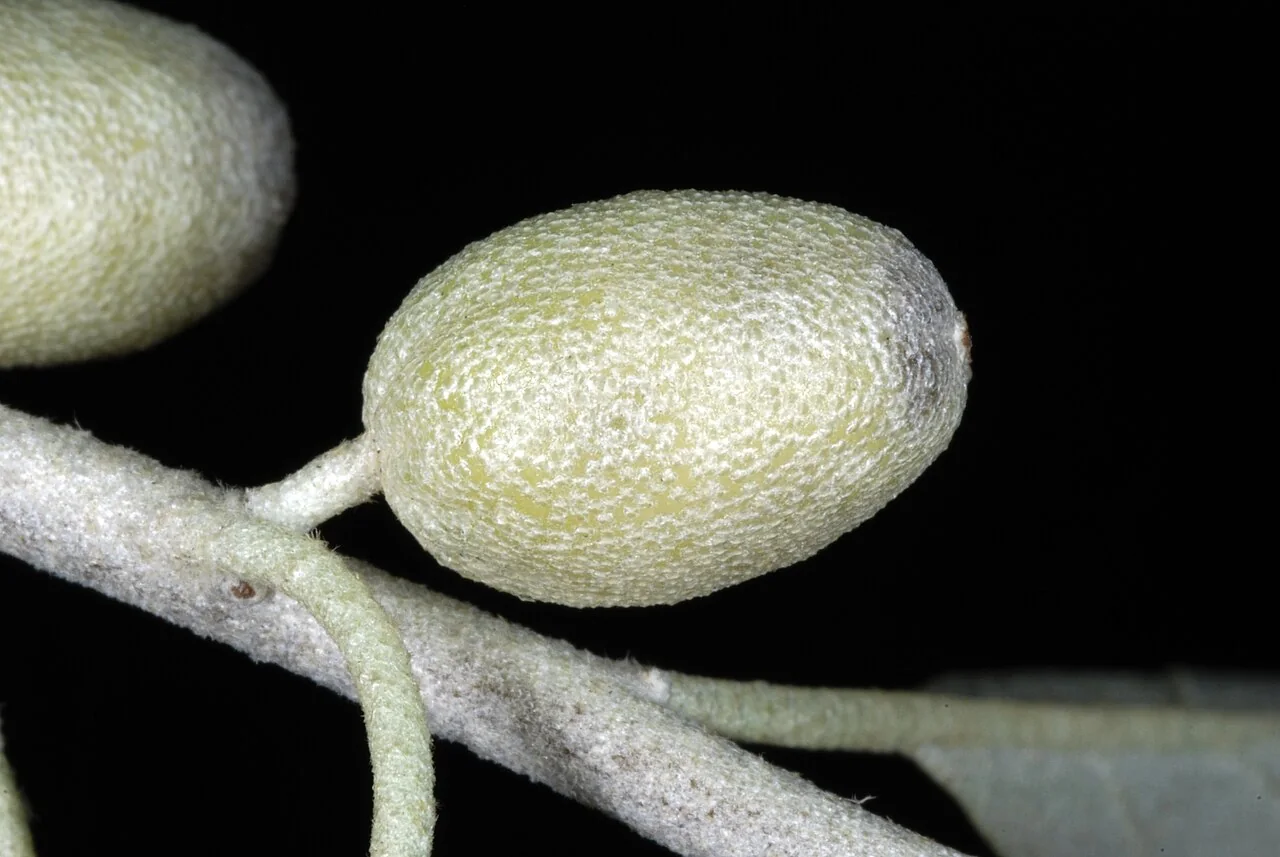
Developing fruit of Elaeagnus angustifolia.
Douglas Goldman / Wikimedia Commons / CC BY-SA 4.0

Photo details
Resized and converted to WebP. No content edits.
Source: File:E angust3.jpg
Reviewed . Source identification, photograph and license reviewed. The image illustrates the named plant; it does not verify dimensions or other plant traits.
Common names
44 names · 34 languagesOther languages (33)
- Dutch
-
- Smalle olijfwilg[1]
- French
-
- Olivier de Bohême[1]
- Armenian
-
- Փշատենի նեղատերև[1]
- Chinese (Traditional)
-
- 東方沙棗[1]
- Czech
-
- hlošina úzkolistá[1]
- Danish
-
- Smalbladet sølvblad[1]
- Estonian
-
- ahtalehine hõbepuu[1]
- Finnish
-
- idänhopeapensas[1]
- German
-
- Schmalblättrige Ölweide[1]
- Greek
-
- Zizyfia[1]
- Hungarian
-
- keskenylevelű ezüstfa[1]
- Italian
-
- Olivagno di Boemia[1]
- Japanese
-
- ホソグミ[1]
- Kazakh
-
- Үшкіржеміс жидесі[1]
- Kurdish
-
- سنجوو[1]
- Latvian
-
- šaurlapu eleagns[1]
- Lithuanian
-
- Siauralapis žilakrūmis[1]
- Navajo
-
- Tsin łibáhá[1]
- Polish
-
- Oliwnik wąskolistny[1]
- Portuguese
-
- árvore do paraíso[1]
- Romanian
-
- Sălcioară[1]
- Russian
-
- Лох узколистный[1]
- Slovak
-
- hlošina úzkolistá[1]
- Slovenian
-
- ozkolistna oljčica[1]
- Spanish
-
- árbol del paraíso[1]
- Swedish
-
- smalbladig silverbuske[1]
- West Frisian
-
- Smelle oliifwylch[1]
Sources & name notes (1)
Names recorded in our plant catalogue and botanical sources, grouped by language. Usage can vary by region.
Numbered references identify names recorded by an external source. Other names are from our plant catalogue.
Community-curated iNaturalist taxonomy; common-name attestation, not an independent botanical determination.
Source records
- Russian olive — results[0].names[0]; taxon id 64694; Elaeagnus angustifolia.
- oleaster — results[0].names[2]; taxon id 64694; Elaeagnus angustifolia.
- Russian silverberry — results[0].names[3]; taxon id 64694; Elaeagnus angustifolia.
- Olivier de Bohême — results[0].names[4]; taxon id 64694; Elaeagnus angustifolia.
- Schmalblättrige Ölweide — results[0].names[5]; taxon id 64694; Elaeagnus angustifolia.
- hlošina úzkolistá — results[0].names[6]; taxon id 64694; Elaeagnus angustifolia.
- Лох узколистный — results[0].names[7]; taxon id 64694; Elaeagnus angustifolia.
- Маслинка вузьколиста — results[0].names[8]; taxon id 64694; Elaeagnus angustifolia.
- idänhopeapensas — results[0].names[9]; taxon id 64694; Elaeagnus angustifolia.
- árbol del paraíso — results[0].names[10]; taxon id 64694; Elaeagnus angustifolia.
- hlošina úzkolistá — results[0].names[11]; taxon id 64694; Elaeagnus angustifolia.
- خلاف ضيق الأوراق — results[0].names[12]; taxon id 64694; Elaeagnus angustifolia.
- زيزفون سوري — results[0].names[13]; taxon id 64694; Elaeagnus angustifolia.
- زيتون روسي — results[0].names[14]; taxon id 64694; Elaeagnus angustifolia.
- Siauralapis žilakrūmis — results[0].names[15]; taxon id 64694; Elaeagnus angustifolia.
- Smalle olijfwilg — results[0].names[16]; taxon id 64694; Elaeagnus angustifolia.
- ホソグミ — results[0].names[17]; taxon id 64694; Elaeagnus angustifolia.
- ahtalehine hõbepuu — results[0].names[18]; taxon id 64694; Elaeagnus angustifolia.
- 沙枣 — results[0].names[19]; taxon id 64694; Elaeagnus angustifolia.
- smalbladig silverbuske — results[0].names[20]; taxon id 64694; Elaeagnus angustifolia.
- Փշատենի նեղատերև — results[0].names[21]; taxon id 64694; Elaeagnus angustifolia.
- 東方沙棗 — results[0].names[22]; taxon id 64694; Elaeagnus angustifolia.
- 东方沙枣 — results[0].names[23]; taxon id 64694; Elaeagnus angustifolia.
- Smalbladet sølvblad — results[0].names[24]; taxon id 64694; Elaeagnus angustifolia.
- Sălcioară — results[0].names[25]; taxon id 64694; Elaeagnus angustifolia.
- ozkolistna oljčica — results[0].names[26]; taxon id 64694; Elaeagnus angustifolia.
- Tsin łibáhá — results[0].names[27]; taxon id 64694; Elaeagnus angustifolia.
- Oliwnik wąskolistny — results[0].names[28]; taxon id 64694; Elaeagnus angustifolia.
- keskenylevelű ezüstfa — results[0].names[29]; taxon id 64694; Elaeagnus angustifolia.
- Лох вузьколистий — results[0].names[30]; taxon id 64694; Elaeagnus angustifolia.
- İğde — results[0].names[31]; taxon id 64694; Elaeagnus angustifolia.
- Olivagno di Boemia — results[0].names[32]; taxon id 64694; Elaeagnus angustifolia.
- Ruska maslina — results[0].names[33]; taxon id 64694; Elaeagnus angustifolia.
- Uskolisna zlolesina — results[0].names[34]; taxon id 64694; Elaeagnus angustifolia.
- Үшкіржеміс жидесі — results[0].names[35]; taxon id 64694; Elaeagnus angustifolia.
- יצהרון מכסיף — results[0].names[36]; taxon id 64694; Elaeagnus angustifolia.
- עץ-השמן המכסיף — results[0].names[37]; taxon id 64694; Elaeagnus angustifolia.
- Zizyfia — results[0].names[38]; taxon id 64694; Elaeagnus angustifolia.
- Smelle oliifwylch — results[0].names[39]; taxon id 64694; Elaeagnus angustifolia.
- árvore do paraíso — results[0].names[40]; taxon id 64694; Elaeagnus angustifolia.
- šaurlapu eleagns — results[0].names[41]; taxon id 64694; Elaeagnus angustifolia.
- سنجوو — results[0].names[42]; taxon id 64694; Elaeagnus angustifolia.
- Kuş İğdesi — results[0].names[43]; taxon id 64694; Elaeagnus angustifolia.
- Çalı Gaga — results[0].names[44]; taxon id 64694; Elaeagnus angustifolia.
General information
Accepted in the cited Kew taxonomic treatment.
Sources [1]Kew's family placement for the genus Elaeagnus (WCVP v16).
Sources [1]Plant characteristics
NC State landscape size range; converted from feet and inches. Size varies with site, age and management.
Sources [2]NC State landscape size range; converted from feet and inches. Size varies with site, age and management.
Sources [2]Growing conditions
USDA zones listed by NC State; winter survival does not establish reliable cropping.
Sources [2]Well-drained, Moist, Occasional Flooding
Moisture and drainage conditions listed by NC State.
Sources [2]Acidic Neutral Alkaline
Uses
Fruit, Gum, Seed
Nitrogen fixer, Companion plant, Essential oil, Gum, Hedge, Wood, Carbon farming, Fragrant
Description
Fruit: the fruit can be eaten raw or cooked. This fruit is dry, mealy, and sweet in taste. It is suitable for making jelly, sorbets, or can be used as flavoring water in soups. Before the fruit can be eaten raw, it must be fully ripe. If the fruit is not yet completely ripe, it can cause astringency in the mouth when eaten. The oval fruit is approximately 10 mm long and contains a large seed. Seed: the seed can be eaten both raw and cooked and is often found together with the fruit. However, the seed can be fibrous.
Harvest
Sources and references
References for the information marked with source numbers on this page.
-
Royal Botanic Gardens, Kew
World Checklist of Vascular Plants, version 16, extracted 4 June 2026
Relevant sections
- Botanical family: WCVP v16, wcvp_names.csv row 1379863; name ID 2784975; Elaeagnus Tourn. ex L.. Family column.
- Taxonomy: WCVP v16, wcvp_names.csv row 1379870; name ID 2784980; Elaeagnus angustifolia L..
Source checked on .
Source data licence: CC BY 3.0.
-
NC State Extension, North Carolina State University
Elaeagnus angustifolia — Extension Gardener Plant Toolbox
Relevant sections
- Height: Dimensions > Height; Height: 12 ft. 0 in. - 30 ft. 0 in.
- Spread: Dimensions > Width; Width: 12 ft. 0 in. - 20 ft. 0 in.
- Growth rate: Growth Rate
- Foliage: Woody Plant Leaf Characteristics
- Light: Light
- Soil moisture: Soil Drainage
- Soil texture: Soil Texture
- USDA hardiness: USDA Plant Hardiness Zone
Source checked on .